
Dry Season 2026 – Met Office
The 2026 dry season in Saint Lucia is developing as a high-impact meteorological event, with characteristics comparable to the severe droughts of 2020 and 2009–2010. Current atmospheric and hydrological conditions show significant departures from the 1991 2020 climatological average, indicating a heightened drought risk and intense pressure on national water resources.
Current Meteorological & Hydrological Conditions
The transition from the 2025 wet season into 2026 was marked by notable rainfall deficits. December 2025 failed to provide the expected transition moisture, with Hewanorra International Airport recording a 41% deficit (58.3 mm) and George F. L. Charles Airport recording a 28% deficit (92.8 mm).
Key climate drivers include:
Temperature Stress: Night-time minimums have stayed elevated between 24°C and 26°C, increasing evaporation rates and domestic water demand.
Atmospheric Suppression: A strong North Atlantic Subtropical High is maintaining a persistent trade-wind inversion, limiting cloud development. ENSO Shift: A 75% likelihood of a mid-winter transition from La Niña to ENSO-neutral conditions has disrupted typical seasonal rainfall patterns.
Drought Monitoring Status – As of January 2026, the Caribbean Institute for Meteorology and Hydrology (CIMH) and the Saint Lucia Meteorological Services have escalated monitoring levels based on the Standardized Precipitation Index (SPI):
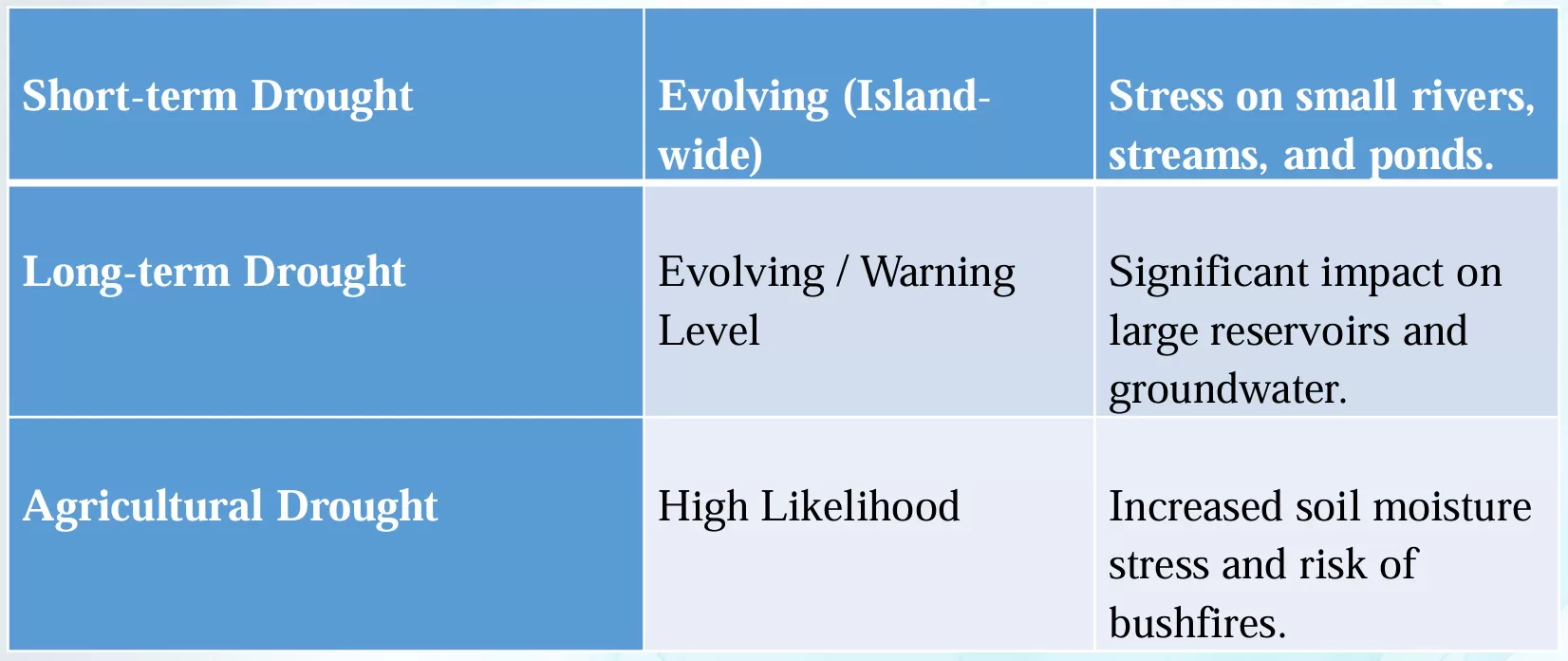
The Water and Sewerage Company (WASCO) has already reported a 50% decrease in production on the southern network and significant intake reductions in the north, particularly affecting the Hill 20 Treatment Plant.
Seasonal Outlook & Expectations (January – June 2026)
While some near-normal rainfall may occur in the immediate January–March
window, the long-term forecast suggests a worsening trend:
April to June: Forecasts favor a drier-than-normal conclusion to the dry season, coinciding with the start of the heat season.
Water Resilience: The 2025 wet season delivered roughly 34% less rain than average. Because the wet season typically provides 70% of the island’s annual water, reservoirs entered 2026 in a “stressed” state with very low resilience for a prolonged drought.
Peak Heat: Peak heat conditions are expected between August and October 2026, which may further complicate water recovery if the 2026 wet season is also delayed.
Public Advisory
Saint Lucia is likely to experience a severe dry season.
The following measures are urged:
1. Water Conservation: Repair household leaks immediately and avoid non essential water use (e.g., power washing, garden hoses).
2. Storage: Utilize rainwater harvesting systems to supplement the central supply.
3. Fire Safety: Exercise extreme caution to prevent bushfires, which are more likely in these cured (dry) vegetation conditions.
Conclusion
Persistent dry and warmer-than-normal conditions will remain the dominant feature of the 2026 dry season. Coordinated water management and active public cooperation are essential to mitigate the socioeconomic impacts of this event.