
Once you carry your own water, you will learn the value of every drop – African Proverb
I have spoken and written so much already about our water situation, starting when I held the responsibility for the water portfolio during the period 2011-2016. However, here are some facts that require repeating:
Surface Water
We receive all our water from surface water. There is no serious groundwater or aquifer use. Professor Frank Dale Morgan and his group at MIT have done some groundwater studies, but the results have been inconclusive.
Watersheds
Saint Lucia has 37 major watersheds. The top ranked watershed in terms of area, annual flow, wet season flow and dry season flow is the Roseau watershed. 10 watersheds account for approximately 90% of the dry season flow, and 15 watersheds account for 99% of the dry season flow.
Many important watersheds have been damaged from deforestation and poor land use. Some are no longer productive. Therefore, any serious water improvement program in Saint Lucia must address the rehabilitation of our watersheds and the absolute protection of those that are still productive.
Non-revenue water
Non-revenue water (NRW) is a serious problem. Over 50% of the water that WASCO produces does not reach the consumer. Not only does this result in wastage of this precious resource, but it also severely reduces the cost-effectiveness of WASCO’s operations. One of the major culprits is the Roseau to Ciceron (John Compton Dam to Theobalds Treatment Plant) raw water line. This vexing problem must be addressed. While we will not be able to eliminate NRW, we should aim for a target of no more than 20%.
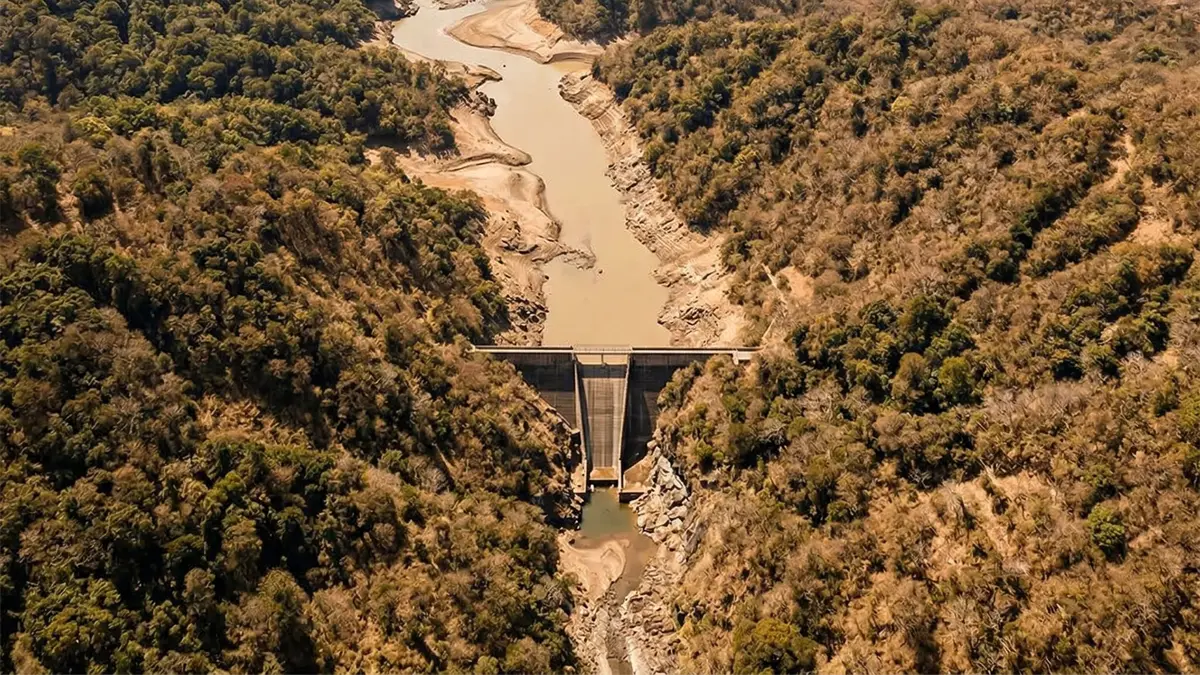
The John Compton Dam must be desilted. This was well on track from 2015, but events between 2016 and 2021 derailed the initiative. This has to become a priority. The Roseau Reservoir and John Compton Dam is the main source of water for the north of the island, which is the most densely populated part of the island.
Storage Capacity
Climate change is already having and will have an even more dramatic negative impact on water availability in the future. Dry spells will become more intense and prolonged, and rainfall will be more sporadic and take place more via flooding episodes than the steady, constant flow that we need. Therefore, WASCO will have to significantly increase its storage capacity.
Our water balance sheet is still positive, in that sufficient rainfall descends on our island to meet our domestic and commercial needs, plus keep our rivers and ecosystems healthy. The problem is we are not storing enough of the rainwater and the treated water so that it becomes available to us during the dry season. Think of it like how you use your bank or credit union to give you access to funds when you need. However, unlike the banking system, we cannot borrow water from the bank if we have not stored it.
Desalination
Also, because the levels of precipitation (rainfall) will become more variable in the future, WASCO must turn to desalination, particularly during the dry season, to augment the supply of water. Additionally, every hotel that is near the coast must be mandated to invest in reverse osmosis desalination plants.
Desalination is expensive because of the heavy use of electricity to operate the plant, but this can be offset through the use of solar photovoltaic plus battery energy storage systems. Even with the high cost of electricity, desalination will be cheaper for the hotels than constantly buying and trucking water.
There is nothing that angers households that have been without water for long periods more than seeing large water trucks transporting water to hotels and villas.
Harvest Rainwater
Every citizen who can, should begin to harvest rainwater and should store that water so that it can be used for non-essential purposes like washing, cleaning, and watering plants. Even better, those who can afford, and every new building, should use dual plumbing so that the stored rainwater can also be used to flush toilets.
Every new building, residential or commercial, must also be mandated to have adequate water storage. Even with significant improvements, there will still be days when WASCO will not be able to supply water to everyone. We need to have our own storage to get us through these periods.
WASCO
WASCO’s operations must be thoroughly reviewed to improve efficiency and responsiveness. WASCO must be required by the National Utilities Regulatory Commission to publish metrics every year on things like the frequency of interruptions, the duration of interruptions for every major community on the island, and responsiveness to problems. LUCELEC is an excellent model for WASCO to seek to emulate in the area of reporting.
The management of the water resource must be placed in a ministry that does not use that resource. The Water Resource Management Agency is an important body that was established to manage how our water resources are used and maintained.
It is expected to do this in conjunction with the Department of Forestry. Both of these departments should be removed from the Ministry of Agriculture and placed in a stand-alone Ministry of Natural Resource Management, which would also have responsibility for climate change, biodiversity, and all the other environment management portfolios.
A ministry that uses water should not also have jurisdiction over how the water resource is managed. While it is not fair to expect WASCO to operate like LUCELEC because WASCO does not have the control over its production processes the way LUCELEC does.
It is much easier for LUCELEC to effect repairs to its overground transmission and distribution infrastructure than it is for WASCO to do with its over 700 miles of largely underground distribution lines, it is reasonable to expect significant improvements in the way WASCO operates and our water resource is managed.
On the question of the hotels importing and barging water from Dominica – no harm, no foul. It assures the hotels a supply of water, which is critical for their operations, the funds to purchase this water are not coming from the government or from the taxpayer, and it will reduce the demand from the hotels for water from WASCO, which makes more water available to all of us.