
Home Blog Page 103

Stable fiscal outlook in the aftermath of Hurricane Irma

Hurricane Irma

Ministry Of Finance Forecasts a Stable Fiscal Outlook In The Aftermath Of Hurricane Irma.

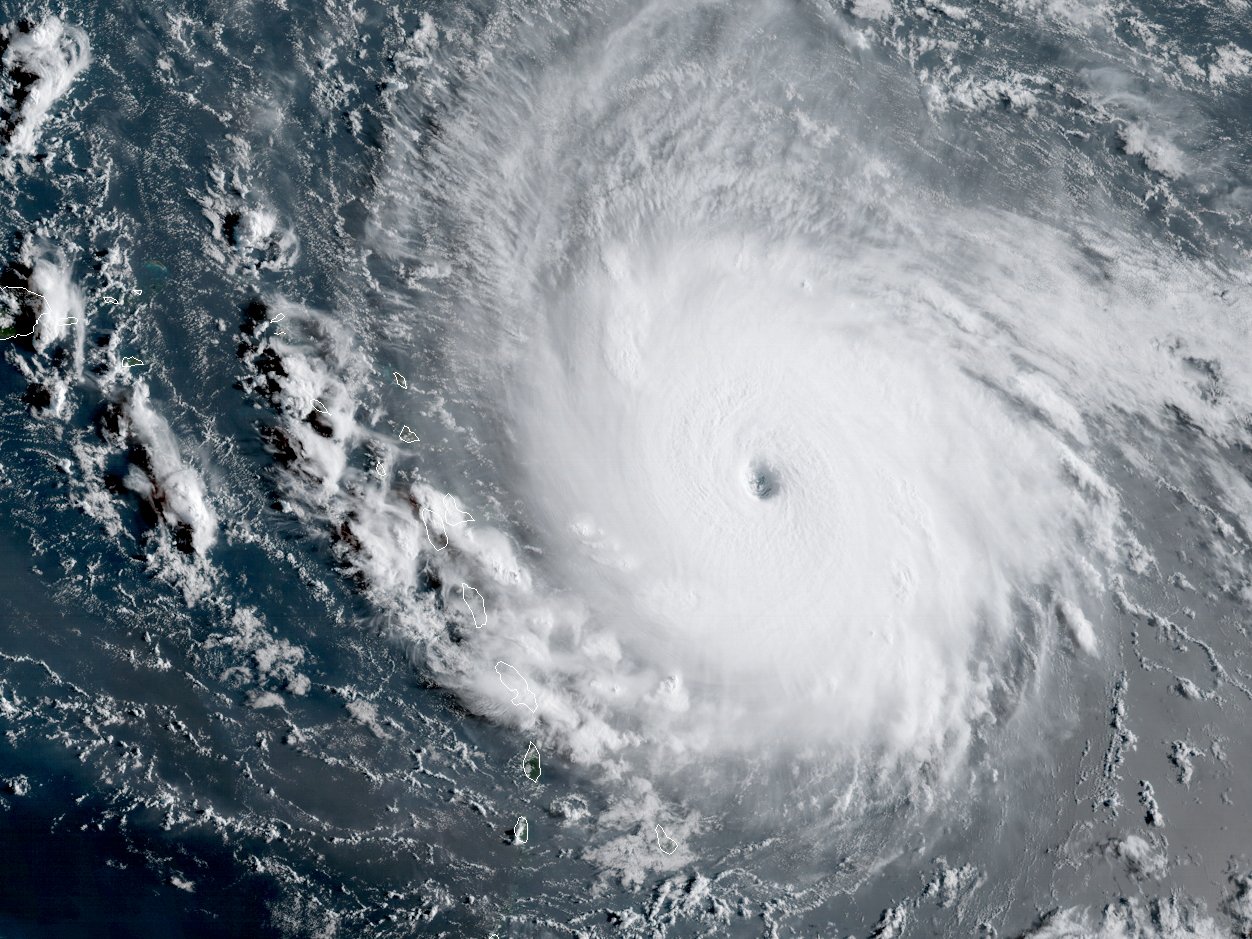
Tuesday 5th September, 2017 saw the passage of the most powerful tropical system on record when Category 5 Hurricane Irma unleashed its wrath on the Northern Leeward Islands including Antigua and Barbuda.
In the wake of this natural disaster, the Honourable Prime Minister and Minister of Finance, Honourable Gaston Browne, declared the country’s commitment to the full recovery and restoration of the Sister Isle.
Apart from private donations, official support has been promised and in some instances already received from: the Eastern Caribbean Central Bank (ECCB); Caribbean Development Bank (CDB); International Bank for Reconstruction and Development (World Bank); Organization of American States (OAS); and Caribbean Catastrophic Risk Insurance Facility (CCRIF) among others. Bi-lateral support has also been promised and expected from a number of countries.
The Ministry estimates that over the next 2 – 4 months these sources could yield conservatively up to US$50 million towards the Barbuda recovery. This will address the immediate cash flow needs and budgetary requirements associated with restoring essential services to Barbuda.
We anticipate that in the medium term upwards of US$50 million more should be negotiated, thus moderating any volatility in the fiscal operations of the government.
The Government of Antigua and Barbuda has scheduled six auctions to take place on the Regional Government Securities Market (RGSM) between 20th September and 4th December, 2017. We wish to remind investors of our stellar record in meeting our RGSM obligations and to allay any concerns of our capacity to continue meeting our commitments. Antigua and Barbuda Treasury Bills, Notes and Bonds remain attractive and viable options for investment and we wish to thank investors for their continued loyalty and support.
The Honourable Prime Minister extends heartfelt thanks to individuals, private entities, development partners, and friendly countries and Institutions which have in any form offered and extended their support. Appreciation is also extended to investors, who continue to demonstrate confidence in the economy of Antigua and Barbuda.
More on Antigua & Barbuda


Dame Pearlette Louisy celebrates 20 years as Governor General

Dame Pearlette Louisy - Governor General of St. Lucia

Dame Pearlette Louisy - Governor General of St. Lucia
Dame Pearlette Louisy – Governor General of St. Lucia

A programme of activities organised by the Dame Pearlette Louisy Legacy Committee in celebration of the 20th anniversary of her appointment as Governor General began in Laborie on Sunday, 10th.September with a Thanksgiving Mass officiated by Msgr. Hon. Dr. Patrick Anthony, and the renaming of the village’s main thoroughfare in her honour.  The La Croix Road where Dame Pearlette was born and where she grew up is now the Dame Pearlette Louisy Drive.
The activities continue on Friday, 15th September with a Service of Celebration at the Minor Basilica of the Immaculate Conception at 10.00 a.m.  On Monday, 18th September, a cultural presentation “Three Stools and a Piano” produced by Dr. Adrian Augier and Ms. Drenia Frederick will take place at the Johnson Centre in Rodney Bay at 8.00p.m., while an “Academic Evening” under the theme “National Service and National Pride” has been scheduled for Tuesday, 19th September at the Financial Administrative Centre at 7.00 p.m.  At that event, the recipients of two Dame Pearlette Louisy Post-Secondary Scholarships will be announced.  All three events are open to the public.
The Programme of Activities will end with a special celebratory event with Staff and students of the Dame Pearlette Louisy Primary School on 22nd September, 2017.
Dame Calliopa Pearlette Louisy, GCSL, GCMG, Ph.D., LL.D. (Hon.) is Saint Lucia’s fifth Governor General and its longest-serving one to date.

Ozone Day to be observed, Saturday

Ozone Day

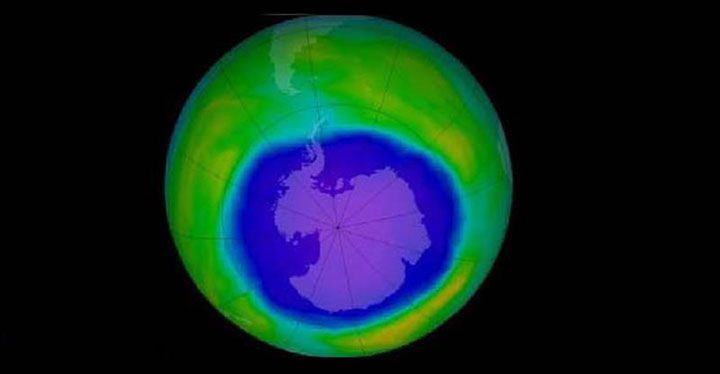
Saint Lucia will join the rest of the world in celebrating the International Day for the Preservation of the Ozone Layer, on Sep. 16.

This day was designated by the United Nations General Assembly in 1994, to commemorate the signing of the Montreal Protocol on Substances that Deplete the Ozone Layer on Sep. 16, 1987.
The ozone layer is the protective shield of ozone gas that surrounds the Earth and protects us from the sun’s harmful ultraviolet radiation. Prolonged exposure to UV radiation can cause skin cancers and eye cataracts in humans. It can also have adverse effects on the marine ecosystem by killing small animal life such as plankton, which play a vital role in the food chain.
Under this international treaty, all countries of the world agreed to implement measures to eliminate the production and use of a group of man-made chemicals called ozone depleting substances (ODS). Chlorofluorocarbons (CFCs) and hydrochlorofluorocarbons (HCFCs) are two groups of ozone depleting substances widely used in refrigerators, air conditioners, fire extinguishers and as propellants in aerosol sprays. The discovery by scientists of a “hole” in the ozone layer in 1987, sparked cause for concern and served as the driver for action aimed at “healing” this damage to the ozone layer.
This year’s International Day for the Preservation of the Ozone Layer marks the 30th Anniversary of the Montreal Protocol on Substances that Deplete the Ozone Layer and is being celebrated under the theme “Caring for All Life Under the Sun”. The theme seeks to celebrate the success of the Montreal Protocol and its critical role in caring for life on Earth over the past 30 years, by phasing out more than 99 percent of ozone-depleting chemicals and significantly contributing to climate change mitigation, as many of these ODS are also greenhouse gases.
During the month of September and in commemoration of Ozone Day 2017, the Department of Sustainable Development will be undertaking a number of activities geared towards public education, awareness and sensitization on the continuing need to protect our fragile ozone layer and the link with climate change. Activities include the broadcasting of the minister’s address on Ozone Day on NTN, publishing of articles in local newspapers, special training for technicians in good refrigeration and air conditioning practices and the launch of UN Environment’s Refrigerant Literacy Course, training for Customs Officers in the enforcement of the Montreal Protocol Regulations, and presentations to various schools.
The department takes this opportunity to remind the public that every action counts in our fight against ozone depletion and climate change. The Minister with responsibility for Sustainable Development encourages all Saint Lucians to pay close attention to purchase only ozone and climate friendly products and equipment and to carefully read labels. The public is also encouraged to purchase solar AC Units instead of a conventional one, to gain double benefits, as well as to hire a Certified Technician to perform repairs on your AC unit, refrigerator or vehicle, asking the technician to produce his or her ID.
For more information please visit the website of the National Ozone Unit at www.estis.net/sites/nou-lc/ and join the #OzoneHeroes campaign, which will be launched on Sep. 14, at http://www.ozoneheroes.org

Education, and other areas of assistance to be discussed at OECS meeting

OECS Flags

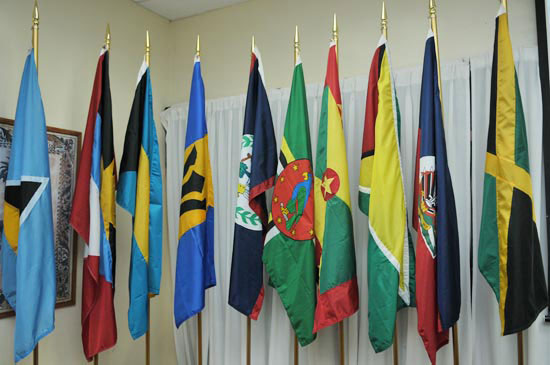
In a Sep. 12 statement to the House of Assembly, Prime Minister Hon. Allen Chastanet, also Chairman of the Organization of Eastern Caribbean States (OECS), outlined the devastation he had seen when he visited some of islands ravaged by Hurricane Irma. In the Caribbean it has been reported that over 30 persons have perished due to the storm; ten of those deaths in Cuba.
On Sunday, the Hon. Prime Minister, along with the Prime Minister of Dominica Hon. Roosevelt Skerrit and the Director General of the OECS Dr. Didacus Jules visited Antigua, Anguilla, St. Kitts and the British Virgin Islands.
Prime Minister Chastanet first expressed condolences to the government and people of Cuba adding: “I want to reassure the Cuban Ambassador and the government and people of Cuba have Saint Lucia’s total support and sympathy in what has transpired.”
Prime Minister Chastanet noted that the OECS will convene a meeting on Wednesday to discuss the situation further and deliberate on providing increased relief to those affected. Saint Lucia’s Prime Minister noted that from the outset of the impending hurricane Saint Lucia was mobilizing to assist the region.
“Saint Lucia, as you know, has been offering all kinds of assistance to the affected countries. We have offered free landing fees and we have offered to keep our airports open. Clearly the road to recovery is going to be long and arduous and extremely expensive.”
Saint Lucia has also been seeking out nationals in the affected countries and assisting families in making contact. In some cases, evacuation to Saint Lucia has been arranged for some as well as accommodation.
An important aspect of the recovery, the Prime Minister noted, was the impact on the studies of students.
“Clearly most of the families here in Saint Lucia would recognize that September is the beginning of a new school season,” stressed the prime minister adding that he was especially concerned about continuity for students in forms four and five of secondary school in the devastated countries.
“The good news is we do have a precedent that was established when we had hurricane Ivan in Grenada, in which the OECS and CARICOM countries adopted kids from Grenada to assist them during that one term while Grenada was in recovery and we may have to do something very similar in this instance.”
This and other areas of assistance will be discussed at the OECS meeting.
Saint Lucians who wish to donate to the effort or require more information can contact the National Emergency Management Organization (NEMO) http://nemo.gov.lc or visit http://www.cdema.org/.

Department of Commerce office will be closed

Department of Commerce

The public is hereby informed that the Department of Commerce, International Trade, Investment, Enterprise Development and Consumer Affairs will be closed from 12:30 p.m. on Friday, Sep. 15.
The office will be reopened to the public on Monday, Sep. 18. Any inconvenience caused is regretted.

Turks and Caicos Islands to receive US$13.6 M from CCRIF

Turks and Caicos Islands (TCI) to receive US$13.6 million from CCRIF Following the Devastating Impacts of Hurricane Irma.

Grand Cayman, Cayman Islands, – CCRIF will make payments totalling US$29.6 million to 6 Caribbean Governments impacted by Hurricane Irma under their tropical cyclone insurance policies. 

Hurricane Irma has triggered payments from CCRIF SPC (formerly the Caribbean Catastrophe Risk Insurance Facility) totalling approximately US$29.6 million to the Governments of Antigua & Barbuda, Anguilla, St. Kitts & Nevis, Turks & Caicos Islands, Haiti and The Bahamas on their tropical cyclone (TC) insurance policies that they hold with CCRIF. 

Preliminary calculations of the payments for all six countries are shown below and will be received by the countries within 14 days of the event as mandated by CCRIF’s operational guidelines. CCRIF continues to assess if any excess rainfall (XSR) policies of its member countries were triggered by the rains from Hurricane Irma.Countries may possibly receive a second payment under their XSR policies. The assessment for XSR policies takes a few days longer than the assessment for TC policies, which are based on wind and storm surge.Payments on CCRIF members’ Tropical Cyclone policies due to Irma (US$)(September 9, 2017)Antigua & Barbuda 6,794,875
Anguilla 6,529,100
St. Kitts & Nevis 2,294,603
Turks & Caicos Islands 13,631,865
Haiti  162,000
The Bahamas 234,000

Total US$ 29,646,443


Context

It is important to note that for both Haiti and The Bahamas, their TC policies were not triggered by Irma. However, the payments that are due to both countries are based on the Aggregate Deductible Cover (ADC).
At the start of this policy year, CCRIF introduced the ADC as a new policy feature for its members. The ADC represents a means by which CCRIF can help its members when modelled losses fall below the attachment point but where there are observed losses on the ground.
CCRIF’s parametric insurance policies for earthquakes, hurricanes and excess rainfall are insurance contracts that make payments based on the intensity of an event (for example, hurricane wind speed, earthquake intensity, volume of rainfall) and the amount of loss calculated in a pre-agreed model caused by these events.
Losses are estimated using a model based on wind speed and storm surge (tropical cyclone policies), ground shaking (earthquake policies) or amount of rainfall (excess rainfall policies). Hazard levels are then applied to pre-defined government exposure to produce a loss estimate.
Payment amounts increase with the level of modelled loss, up to a pre-defined coverage limit. Therefore, payments can be made very quickly after a hazard event. This is different from traditional indemnity insurance settlements that require an on-the-ground assessment of individual losses after an event before a payment can be made – a process that can often take months.
Thus, a key advantage for governments in having CCRIF policies is the immediate access to liquidity which is critical for countries post disaster.
The international community provides ex-post relief, which can take between 4 and 12 months to mobilize. Government borrowing and budget reallocations also take time.
CCRIF members consistently indicate that these rapid payments are an invaluable benefit of membership. Almost immediately after an event, CCRIF is able to inform countries if policies were triggered and if so, the approximate payment amount. These infusions of cash within two weeks after an event are critical for immediate repair and recovery activities.

Background

Between 2007 – when CCRIF was formed – and 2016, the facility made 22 payments to 10 member governments, totalling approximately US$69 million, on their tropical cyclone, earthquake and/or excess rainfall insurance policies.
These new payments following Irma bring the total payments to almost US$100 million. Four of the countries receiving payments under their TC policies following Irma – Anguilla, St. Kitts & Nevis, TCI and Haiti – have received CCRIF payments in the past. This payment would be Anguilla’s 3rd and the 2nd for both St. Kitts and TCI. In fact in 2008, one year after CCRIF was formed, TCI received a US$6.3 million payment following the impacts of Hurricane Ike and in 2010, Anguilla received a payment of US$4.2 million for Hurricane Earl; St. Kitts received its first payment in 2014 of a little over US$1 million under its excess rainfall policy following a trough system that passed over the island; in 2016 Haiti received CCRIF’s largest single payment to date, US$20.4 million, under its tropical cyclone policy for Hurricane Matthew and also received a payment of approximately US$3 million under its excess rainfall policy. Haiti has received 3 payments from CCRIF since its inception – excluding this current payout under the ADC.
Governments that have received CCRIF payments have used them in a variety of ways to assist with post-disaster relief including: clean-up such as clearing of debris and fallen trees that oftentimes block critical roadways, repairing critical infrastructure, e.g. roads and bridges; providing general budget support including covering the salaries of key emergency personnel.
For example, following the passage of Hurricane Matthew in 2016, the Government of Haiti reported that it was able to help 1.4 million persons affected by the devastating hurricane with about 50% of the CCRIF payment which totalled US$23.4 million. Some of the uses of the funds included: provision of food and shelter; purchase of medication especially for children; unblocking of main roads and the purchase of tarpaulins for over 18,000 houses in the south of the island.
Smaller countries such as those in the Caribbean and most small island developing states with high debt burdens can no longer afford to self-finance disaster risk. Ex-ante financing/pre-disaster financing instruments, such as those offered by CCRIF, are a key part of countries’ fiscal policy and disaster risk management policies – enabling governments to advance debt sustainability by reducing public debt and sources of macroeconomic instability by obtaining quick financing for rehabilitation after a disaster.

Feature address at The BHTA’s quarterly breakfast meeting

BHTA

Attorney General and Minister of Home Affairs, Adriel Brathwaite, will deliver the feature address at the Barbados Hotel and Tourism Association’s quarterly breakfast meeting, tomorrow, Wednesday, September 13, at Hilton Barbados, Needham’s point, St. Michael. It will run from 8:00 to 11:00 a.M. You are invited to send a representative to cover this event.

Government committed to renewable energy

Renewable Energy

Minister of Industry, International Business, Commerce and Small Business Development, Donville Inniss, has reiterated government’s commitment to renewable energy.
He made this assertion while pointing out that continuous use of fossil fuels was not sustainable at the official launch of the Small Business Association’s Solar Transport Project in National Heroes Square, The City, last Friday.
The Minister of Commerce told his audience that the Government, in recent years, had started to roll out an “eco system including a legislative framework that ensures that we are able to identify, grow and develop the renewable energy sector and to remove our dependency on fossil fuels in Barbados”.
Mr. Inniss contended that despite the naysayers, there had been new jobs created in the renewable energy sector in the design, implementation, maintenance and management of the projects.
In fact, the Minister disclosed that the Government was on a trajectory to become almost 100 per cent efficient in renewable energy by 2045.
“I think this little island [Barbados] has a lot that we can showcase to the world when it comes to renewable energy.  We did it in the 1970’s and I want to thank James Husbands and those who went before with the solar hot water system, and I don’t think that we celebrate individual like these.  Additionally, Senator John Watson and his team also blazed a trail with respect to the [development] of the industries,” he stated.
The Minister also alluded to the Barbados Investment and Development Corporation’s (BIDC) plan to lease 421,000 square feet of roof space to generate   8.5 million kilowatt hours power system with a total capacity of 5,529 kilowatts.
“I want to commend the CEO and the board of the BIDC for being actively involved in making use of this space that they have, to help us with our thrust towards renewable energy going forward,” Mr. Inniss added.

Men’s health group to discuss iridology

IRIDOLOGY

Iridology – Another Perspective to Health Care will be the topic of discussion when the Men’s Health Support Group at the Branford Taitt Polyclinic meets on Thursday, September 21.
Guest speaker will be Chantel Selman. The meeting begins at 6:00 p.m. in the main waiting area of the polyclinic, Black Rock Main Road, St. Michael.

Governor General receives donation of musical instruments

Governor General Receives Donation of Musical Instruments

At the Belize House in Belmopan, Ambassador of the Federal Republic of Germany to Belize H.E. Mr. Harald Peter Klein made a donation of musical instruments to the Governor General of Belize H.E. Sir Colville Young. The musical instruments which included a clarinet, an oboe, a trumpet and a saxophone will benefit the Governor General’s Music in the Schools Programme.
The Ambassador was joined by his Honorary Consul Ms. Kay Menzies.

Audio Theme