The Caribbean Development Bank (CDB) recently partnered with the Caribbean Water and Wastewater Association (CWWA), to host the largest gathering of water and waste management specialists from across the Caribbean at the CWWA 2016 Conference and Exhibition.
“Clean water is one of the key pillars of human development and its importance cannot be overstated. The use and management of water impacts all of today’s leading global challenges, including: energy generation and usage; food security; natural disaster management; and the management of the environment. CDB therefore, has a vested interest in the well-being of the water and sanitation sector because it is key to us achieving our development mandate,” said L. O’Reilly Lewis, Portfolio Manager, CDB during the opening ceremony for the CWWA Conference.
The Bank sponsored a High Level Forum (HLF) for Water Minsters in the Caribbean, which included presentations from CDB representatives, and also engaged with Conference attendees at its booth in the exhibition hall.
The High Level Forum is a key mechanism for water-sector-related policy dialogue, bringing together government ministers and senior officials from across the Caribbean, as well as development partners and key stakeholders.
“CDB was instrumental in the establishment of HLF, playing an integral role in the planning and financing of the first forum in 2005 in Barbados…There is a commonality of challenges facing Caribbean countries and recognition of the fact that the sharing of experiences, expertise and knowledge—including best practices–is key in promoting more strategic approaches at the regional and national levels,” said Daniel Best, Director of Projects at the CDB.
Topics covered included economic drivers that must be considered in investments in the water and wastewater sector in the Caribbean, promoting the regional water agenda linked to the Sustainable Development Goals (Goal 6) and SAMOA in the context of climate change and disaster reduction and case studies, focusing on drought conditions in Jamaica and the impact of Tropical Storm Erika on the water sector in Dominica. CDB also participated in a panel discussion on how countries can access concessional funding, specifically through the Adaptation Fund, and the Green Climate Fund, which recently accredited the Bank as a partner institution. “This important policy dialogue on climate financing for the water sector is central to the Bank’s Strategy…This forum provides the Bank with a timely opportunity to build awareness of its role as an accredited body to facilitate access to concessional financing from the Adaptation Fund, and the Green Climate Fund, for much needed water infrastructure investments in the Caribbean,” said Best.
The CWWA Conference took place from October 25-27, at the Hyatt Hotel in Trinidad and Tobago. This is the 25thyear that the conference is being held.
Queen’s Park is being upgraded to coincide with Barbados’ celebration of its 50th anniversary of Independence.
Speaking at a press briefing this morning following a tour of the park, Minister of the Environment and Drainage, Dr. Denis Lowe, stated that not only did the refurbishment project aim to promote the park’s rich history, but also to “encourage increased utilisation of the park and its numerous amenities”.
The project is being sponsored by CIBC First Caribbean International Bank under its “adopt-a-park” programme to the tune of BDS $80,000.
Pointing out that Queen’s Park is one of the major urban green spaces nestled within Historic Bridgetown and its Garrison, Dr. Lowe noted that it continues to be heavily used by the Barbadian public for recreation, relaxation and cultural expositions.
He said that with the inscription of Bridgetown on the World Heritage List, it was of paramount importance that appropriate signage and related information was displayed prominently.
Meanwhile, General Manager of the National Conservation Commission (NCC), Keith Neblett, lauded the initiative, and noted that as the country was in the process of celebrating its golden jubilee, the NCC had contributed significantly to the island’s development for 46 out of those 50 years.
“During the past 46 years, we have seen the transformation of the Park and Beaches Commission, where emphasis was placed more on the maintenance of parks and beaches to the National Conservation Commission, an entity that has a wide and varied mandate with much more emphasis on the preservation and conservation of our natural environment,” he stated.
Some of the changes to Queen’s Park include fabricating and installing signage for the interpretive trail, which comprises 10 interpretive signs; constructing and installing 26 seats and seven benches; painting the curb wall; painting the park gates; procuring and installing six cast iron seats; and placing three welcome signs near the main entrance – the Governor General’s Gate, and at the Nelson Gate and the Queen’s Gate.
Honorable Prime Minister, central bank governors, and distinguished guests, good morning! It is a pleasure to join all of you here.
I am so pleased to be able to join you on my first official overseas visit in my new capacity as IMF Deputy Managing Director. This visit provides the opportunity to see the beauty of Antigua and Barbuda—and to learn more about a region rich in history and culture.
To see a country so dependent on the linkages between financial services and tourism and other sectors provides an immediate understanding of the importance of today’s conference.
The discussions yesterday and today highlight a serious problem that relates to a lifeline for your economies—the withdrawal of correspondent banking relationships, also known as CBR.
Indeed, this problem is not only observed in the Caribbean. Countries in Africa, Asia, Europe, and the Middle East are also losing banking services that keep them connected to the global financial system.
This issue received substantial attention during the IMF Annual meetings earlier this month. Policy makers, regulators, and bank representatives attended a conference there to discuss solutions to the problem. This is a collective problem that calls for a collective solution.
And I understand that this is the reason why we are gathered here today once again to make headways in solving this problem.
In my remarks this morning, I would like to address three themes:
First, to outline the scope and sources of the problem;
Second, to take stock of the policy response here in the Caribbean region, and, more broadly, from the international community;
Finally, I would like to discuss some of the issues that need to be addressed going forward.
What is the scope of the problem?
The Caribbean Association of Banks says that almost 60 percent of member institutions that it has interviewed report a loss of such relationships.
This is creating a difficult situation for some affected countries. For example, banks in Belize with assets equivalent to half of GDP are affected.
In some cases, while Caribbean banks have been able to hold on to their correspondent relationships, key services have been discontinued. These include check clearance, trade finance, and wire transfers.
Some banks face higher costs for the remaining services.
In many other cases, global correspondent banks have withdrawn from transactions involving money transfer operators. But these operators traditionally have been the intermediaries for remittances, which are a crucial source of income for the most vulnerable people in the Caribbean.
If the trend is not arrested, it could damage not only financial stability, but also economic growth, financial inclusion, and other development goals. Of course these potential consequences are worrisome.
Moreover, the continued loss of legitimate correspondent banking services may drive legitimate transactions underground.
This would encourage transactions in cash and increase other forms of informality.
So the end result could be to undermine the objectives of the progress we have seen in the effort to supervise and regulate the financial sector services and activities, including the effort to fight money laundering and combat the financing of terrorism. What is driving this trend?
In short, the withdrawal of CBRs is partly a reflection of cost-benefit tradeoffs growing out of increased regulation and enforcement affecting international banks, global banks.
Regulatory reforms have produced increased bank capital and liquidity requirements. This has contributed to reduced profitability of correspondent banking.
In addition, compliance costs have increased because of the intensified efforts to combat money laundering and terrorism financing.
Banks also have to respond to efforts to promote international tax transparency.
The bottom line is rising expenses, relative to the potential benefits associated with banks’ engagement in the region.
Global banks acknowledge that decisions to withdraw some services have been driven partly out of fear of large sanctions.
They point to a risk-assessment of respondent banks’ ability to implement adequate customer due diligence.
The tendency toward drastic action has been more likely where regulatory expectations are unclear and risks cannot be mitigated. How to deal with this problem?
Let’s look at what has been done.
Caribbean authorities and those in other affected countries have been actively addressing this policy challenge in global meetings and in interactions with developed country officials.
This already is having significant results: regulators in the home countries of global banks are becoming more proactive in clarifying their regulatory expectations.
For example, the U.S. Treasury Department is putting considerable resources into educating financial institutions on the precise nature of transactions and behaviors that are subject to sanctions.
In the region, reports of the Caribbean Financial Action Task Force indicate that countries are making progress bringing their AML/CFT frameworks to international standards.
However, effective implementation and enforcement remain a challenge.
To this end, ECCU countries have decided to consolidate their national AML/CFT work into one regional operation, under the responsibility of the ECCB.
Most countries have also signed an intergovernmental agreement with the United States to facilitate compliance with U.S. tax law.
They also are committed to implementing the OECD Common Reporting Standards. The first information exchanges are targeted for the next two years.
The international community has also been active in looking for solutions to this challenge.
The Financial Stability Board has a four-point action plan on correspondent banking.
These include: establishing regular data collection and monitoring; clarifying regulatory expectations; capacity building; and strengthening tools for customer due diligence. These are clearly areas where the Caribbean will most need the support of the international community.
The Financial Action Taskforce has just issued a new guidance specifying that the principle of “knowing your customer’s customer” is not generally required in international banking.
However, respondent banks may be required to answer queries from correspondent banks about their customers in a timely manner.
For the private sector, banks world-wide continue to invest in employee training and implementing better AML/CFT platforms.
Some global banks have launched multi-year projects to build comprehensive databases and develop technology for universal customer coverage.
These innovations will allow banks to improve “know-your-customer” frameworks, better monitor transactions, and identify patterns of illegal activity.
All these responses and the progress so far are welcome and indeed encouraged. But there is a lot more to be done. So what are the next steps?
We know by now what the problems are. We also know that while there is “no quick fix” to the problem. There is an urgent need for action to mitigate the impact on affected economies. How can we then best address these issues collectively?
Here, I would like to lay out three areas that I think we should explore further, discussing pros and cons, in order to move forward toward concrete actions:
addressing the problem of economies of scale;
mitigating cost and technical limitations;
improving information flows.
First, on the economies of scale.
As small states, the Caribbean countries are likely to offer relatively small volumes of CBR transactions. This makes it difficult for banks to generate economies of scale–and therefore higher profits from CBR activity. How can small institutions adapt?
We need to determine whether small Caribbean banks can bundle transactions to create the scale required for global banks to maintain banking services.
For example, one could explore if there is scope for some consolidation of banking systems in the region. If there is, how to do it? Can it be done through public or private initiatives, or some combination of the two? In each of these options, what are the benefits and costs?
Second, on cost and technical limitations. Technology can be part of the solution by reducing compliance costs and strengthening “know-your-customer” frameworks.
On the one hand, various industry solutions can be considered in the region to reduce the cost of compliance.
For example, one approach is to take advantage of “know-your-customer” software utilities, which store customer due-diligence information in a single repository and allow easy access to bank customer information.
This may help respondent banks to reply to correspondent banks’ requests in a comprehensive and timely manner. They may also help correspondent banks to identify and mitigate risks.
On the other hand, global banks should continue to work toward building comprehensive databases and developing technology for universal customer coverage. This will allow them to better monitor transactions and to identify illicit activity. Some governments are also pursuing similar innovations.
The third issue is information sharing. Durable solutions will likely take a long time. Thus, it is essential to find interim approaches to improve the information flow between correspondent banks and respondent banks, and then make sure the channels are strengthened in the long run.
I have already mentioned the broader use of “know-your-customer” utilities as a possible step forward.
There is also a need to tackle legal and contractual obstacles to sharing information across institutions and borders. These include data privacy laws and diverging regulatory frameworks.
One further option is for banks to make more widespread use of the Legal Entity Identifier to identify corporate customers. The Legal Entity Identifier, or LEI, is designed specifically to help the authorities around the world clearly identify the entities that transact across markets, products and regions, and thus make it easier to recognize trends and risks and take appropriate corrective action.
Problems, issues, and solutions can go beyond the three areas I have just outlined. The overarching objective is to safeguard the integrity of financial systems, and at the same time address the unintended consequences of and collateral damages from stronger regulation.
For our part, the IMF is committed to helping you resolve this problem.
We can facilitate candid and constructive dialogue among all parties to achieve practical solutions.
We will continue to encourage standard-setting bodies to take into account the impact of CBR policies—particularly when there are unintended negative consequences like we are discussing now.
We will also encourage our member countries to work closely with correspondent banks to promote greater transparency on their exit decisions.
For example, it is important to ensure that they do not terminate a wider range of relations because of perceived problems with only a few respondent banks.
Needless to say, we will continue to provide technical assistance and build capacity. In particular, we will continue to work with you to strengthen and effectively implement your national AML/CFT and financial regulatory and supervisory frameworks in line with international standards.
We will build on ongoing efforts to identify concrete policy options. In this regard, I am pleased to note that IMF staff is in the process of preparing a paper on this very issue, for which your views from this conference will be very useful for our deliberations. Once approved by the IMF Executive Board early next year, we will work with you to implement it effectively.
Before I complete my remarks, I would like to reiterate that we at the IMF stand ready to work with you on this issue until it is resolved. It is essential to our partnership that we find solutions together.
Thank you.
The Government of Belize (GOB) welcomes today’s Supreme Court ruling declaring illegal the secret contract made by the People’s United Party (PUP), and which gave control of the IMMARBE and IBC registries to the Ashcroft alliance for 25 years.
The court’s decision, rejecting the Ashcroft alliance’s claim for $90 million for GOB’s take back of the registries, is a vindication of GOB’s position and a triumph for the rule of law and the constitution of the country.
As this current administration has always maintained, it is politically, morally and legally repugnant for the PUP to have handed over control of Belizean assets and revenue to the Ashcroft enterprise. It amounted to a scandalous diversion of monies that could only properly have gone into the Consolidated Revenue Fund, and is yet another instance of the corruption that accompanied all the PUP secret deals. GOB contrasts this with the upholding of sovereignty, Belizean ownership and our financial laws, which has characterized this administration’s stance in dealing with all the Ashcroft’s concerns and GOB’s relations generally with foreign investors.
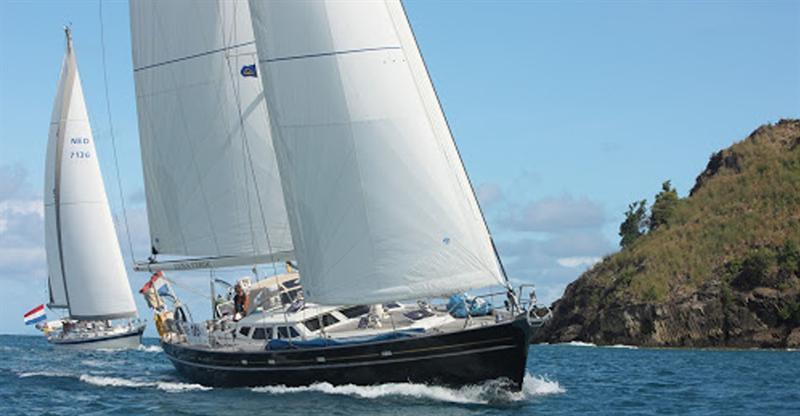
Up to 300 boats will sail under the ARC banner this November—the biggest migration ever to sail with the rally, to the Caribbean shores of Saint Lucia.
Both route options for the 2016 Atlantic Rally for Cruisers (ARC) are at capacity with waiting lists in place for the first time since the creation of ARC+ in 2013.
ARC sailors have a choice of routes with the introduction of ARC+ Cape Verde, and two starts are planned for 2016. ARC+ will depart Las Palmas de Gran Canaria on Sunday, Nov. 6 with approximately 75 boats sailing to Mindelo, Sao Vincente, Cape Verde for a three to five-day stopover, before the restart to Saint Lucia on Nov. 16. The larger ARC fleet of over 200 boats will start its own Atlantic adventure on Nov. 20, sailing directly to Saint Lucia.
Knowing your electricity bill balance and paying the St. Lucia Electricity Services Limited (LUCELEC) just got faster and easier with a free online service called MyAccount.
Through this service, LUCELEC customers can register for 24-hour access to their electricity account, manage multiple accounts (domestic and/or commercial) and pay online through participating banks. The system also allows customers to view their payment and consumption history over a 12-month period.
Future plans for MyAccount include the ability to make fault reports and other service requests through the online platform. LUCELEC’s Customer Service Manager Jennifa Flood-George says the new online service gives customers additional options for accessing information about their electricity account and receiving their bills.
“Beyond the instant access to their electricity account without having to come into or call the LUCELEC offices, the online service gives LUCELEC the opportunity to improve its efficiency in processing customers at its customer service locations. Staff who would normally be tied up with responding to these queries are now available to attend to the in-store traffic, thereby reducing the time customers may have had to wait,” she explained.
Signing up for the MyAccount service is quick and easy. Customers must access the internet to visit myaccount.lucelec.com, select the “Register” button and sign up. The process requires customers to enter their LUCELEC account number and meter number (available on the LUCELEC bill) to register.
During sign-in, customers can also choose to receive an email notification of when their bill is ready for payment.
The banks providing online payments that can facilitate MyAccount are Scotiabank, CIBC First Caribbean International, Bank of Saint Lucia, Royal Bank of Canada and First National Bank.
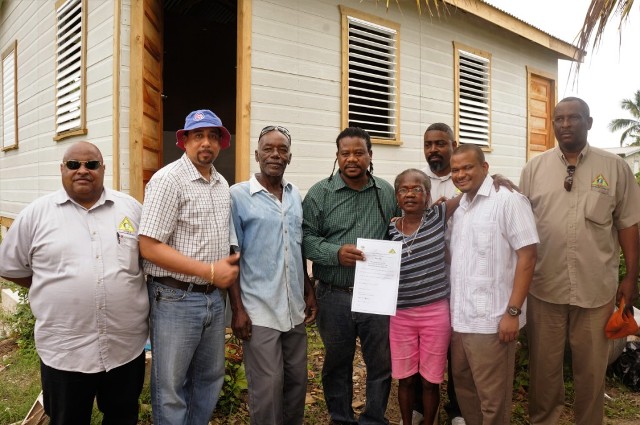
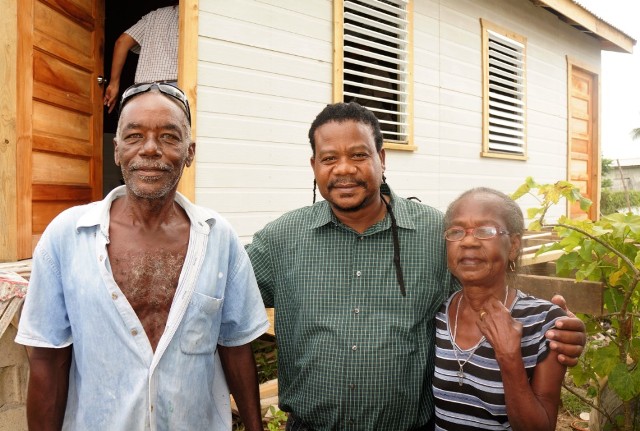
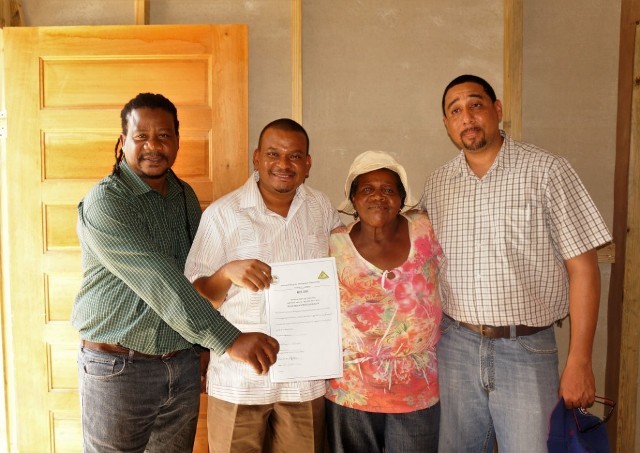
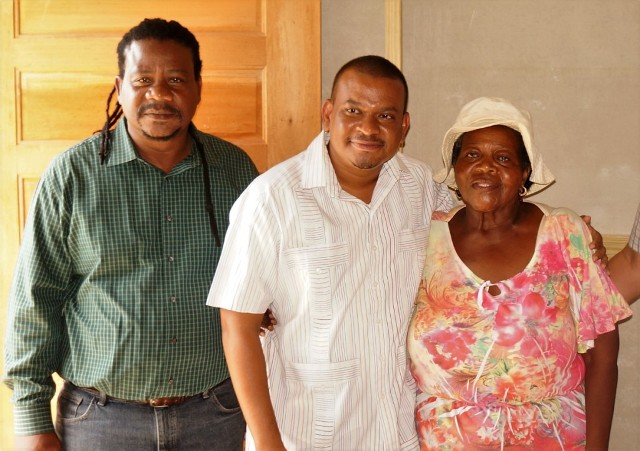
Deputy Prime Minister and NEMO Minister deliver houses to Hurricane Earl victims in collect division of Belize City.
Minister of National Emergency Management Hon. Edmond Castro yesterday joined Deputy Prime Minister and Area Representative for the Collet Division Hon. Patrick Faber as they officially handed over a number of houses to Hurricane victims in that Belize City constituency.
The houses delivered in the Collet Constituency are among over 125 that are being built by the Government of Belize (through NEMO) throughout Belize City and a total of over 200 to be constructed throughout the four districts most affected by Hurricane Earl, namely Belize District, Cayo, Orange Walk and Stann Creek.
The two ministers led an entourage from house to house, which also included Belize City Councillor Phillip Willoughby who heads the City Emergency Management Organization (CEMO), NEMO National Coordinator Colonel Shelton DeFour, NEMO Operations Manager Captain Lionel Cuthkelvin, and NEMO Regional Coordinator Al Westby.
They were joined by representatives from most of the major media organizations in Belize City, including Channel 5 Television, Love Radio & Television, Krem Radio &Television, Amandala, The Reporter Newspaper, Wave Radio & Television, and Guardian Newspaper.
The Caribbean Development Bank (CDB) has approved funding of USD3.7 mn to support at-risk youth in Saint Lucia.
The Youth Empowered for Life Project will expand access to existing social services, as well as develop new social programmes to target young people and their families in selected communities across Saint Lucia.
Saint Lucia is faced with an increasing crime rate, driven in part by inadequate social infrastructure and limited access to social services. Youth in Saint Lucia face disproportionately high levels of unemployment and underemployment, which can lead youth to turn to crime and gang violence. The Project will focus on mitigating risk factors that can lead to criminal behavior, enhance employability, and support community safety and security. “Through this Project, we hope to divert young people away from crime and violence, and enable them to make positive contributions to their households, communities and wider society. The Project was designed to meet the needs of different age groups and genders, and we are optimistic about the outcomes it will achieve,” said Deidre Clarendon, Division Chief, Social Sector Division, CDB.
The project includes the expansion of existing Youth Court Diversion Programmes, which target youth who have committed minor crimes, in an effort to prevent reoffending. Community-based programmes will also be implemented, including after-school and summer programmes, workshops which focus on skills such as leadership development and training, and the inclusion of sports and expressive arts in communities. The Project will also look at options for redevelopment of the George V Park in Castries, which will provide a safe public space for children, young people and families.
In collaboration with the government of Saint Lucia, CDB will also host a regional symposium on community-based policing. This will allow regional stakeholders to share experiences and discuss challenges, lessons learned, and opportunities for addressing crime and insecurity in the Region.
The Project meets CDB’s strategic objective of supporting inclusive and sustainable growth and development, and integrates gender equality, a cross-cutting theme in its Strategic Plan (2015-2019).
EU support to the Community of Latin America and Caribbean States (CELAC) During the EU-CELAC ministerial meeting held in Santo Domingo on 25-26 October 2016, the European Union is announcing new programmes of over €74 million to support sustainable development in Latin America (€30 million) and the Caribbean (€44.2 million).
Brussels, 26 October 2016
During the EU-CELAC ministerial meeting held in Santo Domingo on 25-26 October 2016, the European Union announced new programmes to support sustainable development in Latin America and the Caribbean amounting to over €74 million. Overall, the EU committed over €710 million in 2016, in key sectors such as climate change, trade, private sector and investment, security and governance. By doing so, the EU wants to improve the populations’ living conditions and to achieve the Sustainable development goals by 2030.
The programmes signed in Santo Domingo will focus on the following areas: For the Caribbean, €44.2 million were announced: €9.2 million have been allocated for the technical assistance programme for sustainable energy in region (TAPSEC). The programme intends to support the region in its effort of achieving a transition towards sustainable energy and a low-carbon economic growth path.
The assistance will be clustered in three main lines of action:
(1) In adopting and implementing regulatory frameworks that enable investments in new renewable energy and energy efficiency technologies,
(2) In improving the availability of energy information and statistics, and
(3) In establishing financing mechanisms for the development of renewable energy and energy efficiency projects.
For Dominican Republic, two programmes were signed: one in support to more efficient public administration through institutional strengthening and improving quality of services (€14 million). Another project will aim to improve the competitiveness of small and medium enterprises in the country (€11 million).
For Dominica, a new €10 million programme will assist the country’s rehabilitation efforts following the tropical storm Erika in August 2015. The main objective of the programme is re-establishing the provision of basic services to the public, such as providing clean water infrastructure and sustainable energy.
For Latin America, new programmes amounting to €30 million were announced. These programmes include the new continent-wide security programme EL PACTO (€10 million). EL PACTO covers all 18 Latin American countries eligible under the Development Cooperation Instrument (Argentina, Bolivia, Brazil, Chile, Colombia, Costa Rica, Cuba, Ecuador, El Salvador, Guatemala, Honduras, México, Nicaragua, Panamá, Paraguay, Peru, Uruguay and Venezuela). It is the first EU cooperation programme in Latin America that covers the whole penal chain: police, justice and the penitentiary system. The second one supports South-South and triangular cooperation initiatives in fields such as agriculture and private sector development. The programme aims at supporting the consolidation of 2 peer-learning among countries in the LAC region and promoting joint cooperation with emerging donor. Furthermore, the EU announced disbursements of over €31 million, under the following existing programmes: The Guyana Sugar Accompanying Measures programme focuses on critical areas to assist the country in its efforts to reform and diversify the sugar industry. These include the conversion of fields to mechanically friendly layouts, drainage, expansion of the participation of the private cane farmers in the sugar industry, upgrading of factories, and improvement of agricultural operations. The forthcoming disbursement of € 24.4 million, aims to assist the country in its efforts to reform and diversify its sugar industry in particular to improve opportunities in employment and education.
The Barbados programme for the diversification of the economy away from the sugar industry disburses its final payment of almost € 4 million. The programme has assisted the country in the implementation of its human resources development strategy, which focuses on the promotion of sustainable growth and poverty alleviation through increased competitiveness. It has among other created better alignment between the needs of the labour market and the education system, as well as improving the professional development of public officers.
In Paraguay, the programme in support of public policy for social development disburses € 3.4 million. The programme focuses on social inclusion and poverty and inequality reduction through the implementation of a social protection system. It has contributed to the reduction of extreme poverty in the country from 10.47% to 9.97% since 2014. The European Union and Latin America and the Caribbean have enjoyed privileged relations since the first bi-regional Summit, held in Rio de Janeiro (Brazil) in 1999, which established a strategic partnership. They are natural partners linked by strong historical, cultural and economic ties.
The Ministerial Council of the Caribbean Regional Fisheries Mechanism (CRFM), the top policy and decision-making arm of the CARICOM agency, is meeting today in Grand Cayman for its 6th Special Meeting.
The meeting is being held as part of the Caribbean Week of Agriculture, which is being hosted in Cayman under the theme, “Investing in Food and Agriculture.”
High on the Ministerial Council’s agenda are plans to develop marine capture fisheries and aquaculture across the Caribbean, with the aim of reducing the region’s US$4 billion food import bill, while building a Caribbean seafood cuisine brand that the region and the world can embrace as a safe and healthy choice.
The 17-member Council is meeting at The Westin Grand Cayman Seven Mile Beach Resort & Spa for a three-hour session, to advance proposed legislation and guidelines which will support an enabling environment for a harmonized regime of food safety.
At the Ministerial Council’s recent meeting in Jamaica, chairman Karl Samuda, Minister of Industry, Commerce, Agriculture and Fisheries of Jamaica, urged the region to explore the untapped market of open-sea fish and aquaculture and to lock in a bigger share of the US$136-billion global industry.
Today, the fisheries ministers are looking at strategic interventions which the region can make to develop the full potential of its marine capture fisheries and aquaculture, in line with the current push towards the Blue Economy and Blue Growth, which aims to maximize benefits from the region’s expansive maritime spaces.
With the recent battering of some CARICOM countries by hurricanes and storms during this hurricane season, the need for the region to establish better mechanisms to provide risk insurance for fishers is also a high priority. The Council is reviewing the progress made towards the activation of the Caribbean Ocean Assets Sustainability Facility (COAST), which includes a risk insurance facility for fishers.
The Caribbean Risk Insurance Facility (CCRIF) is developing a new sovereign parametric policy for the fisheries sector, and a micro-insurance policy for small-scale fishers based on the template for the existing Livelihood Protection Policy (LPP) that targets farmers and labourers. Fishers will soon be able to purchase the policy and obtain quick payouts when they experience losses due to storms, heavy rainfall, high winds and other climate related variables.
The CRFM Ministerial Council is also discussing a model protocol for responding to the influx of sargassum seaweed that has been affecting fisheries, coastal and marine ecosystems and other economic activities in the waters of Caribbean countries. The initiative by the Western Central Atlantic Fishery Commission of the Food and Agriculture Organization (FAO/WECAFC) to establish a Regional Fisheries Management Organisation in the Wider Caribbean Region and a proposal by South Korea for the establishment of a World Fisheries University are also being considered by the Ministerial Council.
The meeting of the Council precedes the 62nd Special Meeting of CARICOM’s Council for Trade and Economic Development (COTED), scheduled for Friday. The CRFM—which is represented at the meetings in Cayman by Executive Director Milton Haughton—has lead responsibility for the development of the marine fisheries and aquaculture industries, highlighted by COTED as priority commodities.



 LUCELEC’s Customer Service Manager Jennifa Flood-George says the new online service gives customers additional options for accessing information about their electricity account and receiving their bills.