The Public Sector Reform Unit in the Office of the Prime Minister will be co-ordinating Public Servants Patriotic Week 2016, from Monday 24th to Wednesday 26th October under the theme, “Cherishing Our National History to Promote Greater National Pride in the Public Service of SVG.
The objective of the week is to engender a sense of national pride, love and respect for fellowmen and country.
Three (3) activities are planned for the Week:
Office Independence Décor and the wearing of national colours by Public Servants on Monday 24th.
‘Hats Off to Independence’ Exhibition on Tuesday 25th at the demolished site of the old Treasury building, Kingstown, from 10:00 a.m. to 2:00 p.m.
A Patriotic Moment – viewing of a documentary of the 1979 Independence signing ceremony on Wednesday 26th.
Petite Savanne MP praises Gov’t for its response to his constituents post Tropical Storm Erika.
As the debate in the House of Parliament continued on Thursday, October 20th, the Hon Minister for Health and Environment, Dr. Kenneth Darroux, voiced his support for the supplementary appropriation of over one $103m now before the house.
A large amount of that sum was spent to assist those affected by Tropical Storm Erika.
The Petite Savanne Constituency was the area worst hit by the storm. As Member of Parliament for that constituency, Hon Darroux expressed gratitude particularly for the affected families of Dubique who were relocated to Center in Grand Bay just one year after the storm.
Hon Darroux says this is a clear sign for a vote of full confidence in the Hon Prime Minister.
“The residents of Dubique and the vast majority of the residents of Petite Savanne has a motion of full confidence in our Hon. Prime Minister. In fact, since Tropical Storm Erika we hosted a number of regional and sub-regional meetings in Dominica. One of the side events was a tour to the areas affected, Petite Savanne and Dubique. Centre, the area of Grand Bay where the Dubique residents are relocated was one of the areas we visited. I remembered some of my colleagues asking me what are the arrangements and how are they [the families] are going to pay for these houses.
When they were told the houses are going to be given free of charge…they could not believe it. We have 50 families who are now owners of new buildings in a prime area in Grand Bay. If this isn’t enough, one year after Tropical Storm Erika, to move a motion of full confidence in the Hon Prime Minister I don’t know what is.”
Hon Darroux also refuted the Opposition’s notion that Petite Savanne is habitable. He reaffirmed Government’s decision to relocate the community for its safety.
“It is through no fault of anyone that Tropical Storm Erika came. Experts have advised that Petite Savanne is uninhabitable…the whole area is compromised. We are expecting a team from the University of the West Indies and other institutions to do a review [of the Petite Savanne Community].”
The Petite Savanne Constituency has also largely benefitted from the National Employment Programme. Close to 100 individuals from that constituency were added to the programme this year.
CARIFESTA is an opportunity for Caribbean cultural entrepreneurs to showcase their services and their goods to the world.
This view was expressed by Culture Minister, Stephen Lashley, who implored entrepreneurs to make use of the upcoming Caribbean Arts Festival as a platform to further their brands.
He was delivering the feature address at the media launch of the Global Entrepreneurship Week, held at the Cave Hill School of Business under the theme “Building Sustainable Businesses”.
Mr. Lashley urged entrepreneurs to consider the benefits of developing a strategy to promote their products and services during the 10-day festival.
“I hope you’ve thought a lot about the creative sector. There are many opportunities, within the CARIFESTA experience…I want you to factor in how business and entrepreneurs will respond to the opportunity of CARIFESTA,” he said.
Minister Lashley also advised entrepreneurs that such creative ventures should be leveraged for international visibility, as their success will soon become a more mainstream source of economic development.
“This event is not just another CARIFESTA, it focuses on the empowerment of men and women through the creation of business ideas that can be transformed into products and services the rest of the world wants,” the Culture Minister noted.
According to the Mr. Lashley, the country now has to “rely even more on creative [sectors] to drive economic development.”
One way persons may market their goods and services during the regional arts festival, is by taking part in the CARIFESTA XIII Grand Market and Buyers’ Shopping Mall.
For more information, interested persons may contact the Cultural Industries Development Authority’s Senior Business Development Officer, André Hoyte, at 621-2700.
CARIFESTA XIII will be held in Barbados from August 17 to 27, 2017. jamal.weekes@barbados.gov.bb
On October 13, 2016, the Board of Directors of the Caribbean Development Bank (CDB) approved an additional loan of USD3 mn to the Government of Dominica, to support the development of a reliable potable water supply for persons within the Water Area-1 (WA-1) network in that country.
WA-1 is the most important water system in Dominica, serving approximately 36 percent of the population.
CDB had previously approved a loan to Dominica in 2012, to upgrade its water supply systems. This additional loan will assist in integrating climate-change resiliency in the design of the Project, drawing on lessons learnt by the passage of Tropical Storm Erika in 2015.
“Tropical Storm Erika caused extensive damage to the water and sewage system in Dominica. It also led to the need to look at the existing infrastructure in that country, and reinforced the need for climate change resilience to be built into design standards and specifications. This loan supports the revisions needed to ensure that Dominica’s water supply system is less susceptible to natural disasters,” said Daniel Best, Director of Projects, CDB.
When completed, it is expected that approximately 25,000 people will benefit from the project. The majority will be in the capital, Roseau, in the parish of St. George, with the remainder spread across the western sections of St. Paul and St. Joseph and the entire parish of St. Luke. St. George had the largest number of affected communities as a result of Erika. It also encompasses the country’s main health care, residential, commercial and industrial centres.
The Project is expected to be completed in 2018. It is being executed by the Dominica Water and Sewerage Company (DOWASCO).
The OECS Commission has joined thousands of organizations globally in support of Breast Cancer Awareness Month to highlight the importance of early detection, education and research in combating one of the most commonly diagnosed cancers among women.
The Commission has partnered with Massey Stores and other businesses in supporting initiatives to encourage greater awareness of breast cancer and to encourage those with any concerns to seek early screening.
Project Management Specialist and OECS Social Committee organizer, Lisa James said it was important that people were aware that Breast Cancer could affect anyone and that the month of October was also about educating the public as to what treatments and support systems were available.
“The OECS Social Committee organizes a range of activities to encourage healthy lifestyles in recognition of the importance of preventative health measures and we take this opportunity to encourage all sectors of the community to become more aware of Breast Cancer, to ask questions and to unite in the fight against this disease”, said Lisa James.
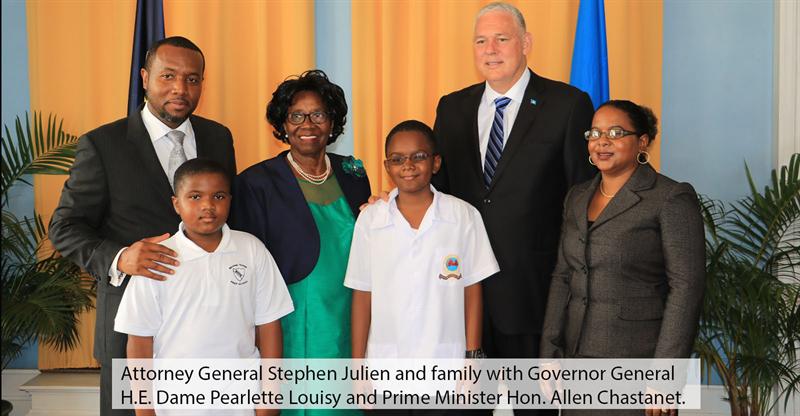
Stephen Julien, a former magistrate, previously served as Consul General to Saint Lucia in Toronto, Canada.
Stephen Julien, a former Magistrate, was officially presented to the nation by Governor General Dame Calliopa Pearlette Louisy, after he took the Oath of Office and Allegiance at Government House, yesterday. Mr. Julien was accompanied by his wife Sherry Ann Julien and his two sons.
The new Attorney General said he is ready to get to work on improving the productivity of the departments which fall under his purview, and in creating better synergy with other government departments.
“I am deeply honored to have been chosen to serve as Attorney General. During my tenure I will oversee various departments which have the responsibility to provide services, such as the general administration of the Attorney General’s Chambers, advice and litigation on civil matters to central government, legislative drafting and the Registry of Companies and Intellectual Property. My first order of business will be to meaningfully engage these departments with a view to assessing their particular needs,” he said.
One of the first issues the Attorney General wanted to address was staffing.
“I have been reliably informed that understaffing remains a recurring issue in some departments but this is especially so where Crown Counsels are concerned, and this has had a negative impact on overall productivity. One can imagine that without this source of support and that human resource that the courts and government can significantly slow down to our detriment. It is for this reason I will depart from the usual protocol of these proceedings and use this forum to make a special plea to our Hon. Prime Minister for the allocation of these and other resources for the aforementioned departments which collectively form the Attorney General’s Chambers; as we all agree that the functions which we perform are essential to the government.”
Prime Minister Hon. Allen Chastanet said that the government recognized the issue of understaffing.
“Clearly there is a need to hire additional lawyers and administrative staff in those departments. If we are to ensure transparency and good governance and if we are to be a viable destination for investment the rule of law is critical. It is the intention of this government, as difficult as it is going to be in the coming months and years, to find the resources to make this happen. I give you the assurance, I give Her Excellency the assurance, and I give the people of this great country the assurance that we will find the resources to ensure that we deliver.”
Mr. Julien was called to the Bar in Saint Lucia in 1998 and holds a Legal Education Certificate from the Sir Hugh Wooding Law School. He also holds a Bachelor of Laws from the University of the West Indies. He previously served as Consul General to Saint Lucia in Toronto, Canada.
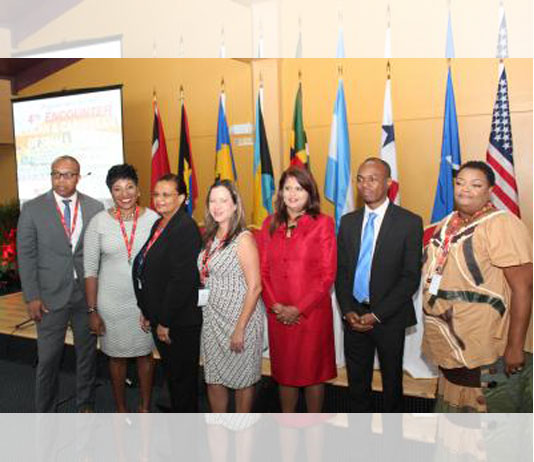
Tourism practitioners gathered on October 20 & 21, 2016 at the University Inn and Conference Centre, UWI St. Augustine Campus for the Fourth Encounter of the Inter-American and Caribbean Network of Small Hotels (INCAPH).
This is the first time that an INCAPH Encounter was held in a Caribbean nation. The theme of this year’s Encounter was Sustainability, Marketing and Competitiveness of Small Hotels and saw participation from Antigua & Barbuda, Barbados, Dominica, St Lucia, St. Vincent and the Grenadines, Honduras, Ecuador, Bolivia, Costa Rica, Columbia, Panama, Guatemala and Trinidad and Tobago.
Special guest of honour at the conference was the Honourable Dominic Fedee, Minister of Tourism, Information and Broadcasting in St. Lucia, who emphasised that “the growth of small hotels is essential to the success of the Caribbean tourism. With improved airport capacity and infrastructure, expanding airline networks with a focus on low-cost carriers, and a changing consumer dynamic, there is huge demand for affordable options. Operators across the region are now looking at how they can do their part to attract new market segments, including younger families, millennials travelling in smaller budgets and younger travellers in general.”
Noting that small and medium hotels represent 90 percent of the accommodation establishments in the Caribbean region and employ nearly 70 percent of the workforce in the hotel sector, Mrs. Vidiah Ramkhelawan, Permanent Secretary of the Ministry of Tourism explained that “small hotels brings significant value in terms of a personalised and authentic experience to the tourism industry”.
Through the Small Tourism Enterprise Project (STEP), the TDC, the implementation agency of the Ministry of Tourism, work with small accommodation property owners in Trinidad and Tobago with less than 75 rooms to enhance their competitiveness, profitability and sustainability. Training programs, designed to build capacity and foster innovation and efficiency, are also undertaken for this particular accommodation niche.
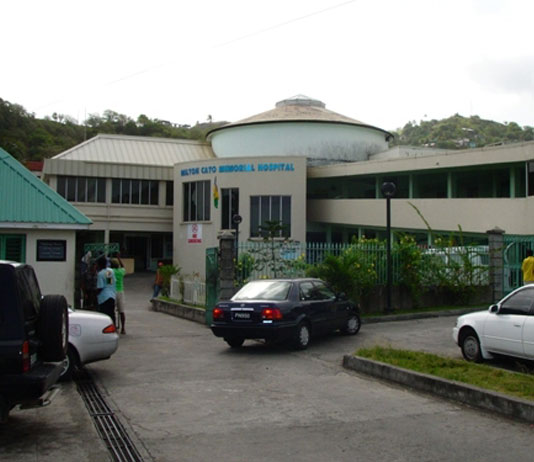
The Milton Cato Memorial Hospital is the recipient of 200 sheets and 100 pillow cases compliments SVG’s High Commissioner in London, His Excellency Cenio Lewis, and President of the New London Association for Vincentians, Mr. Denzil Winsborough.
These resources were handed over to the Hospital on Thursday, 20th October by Minister of Foreign Affairs and Deputy Prime Minister, Sir Louis Straker.
Sir Louis Straker noted that he has been soliciting equipment and supplies for the Milton Cato Memorial Hospital from His Excellency Cenio Lewis. He noted that His Excellency made contact with the President of the New London Association for Vincentians, Mr. Denzil Winsborough, who was able to accumulate the 200 sheets and 100 pillow cases for the hospital.
“We are extremely grateful to his Excellency Cenio Lewis and to the President of the New London Association of Vincentians for making the sacrifice and being so considerate in knowing that these things are always needed at the hospital, and going out of their way to work so hard in order to have them for the comfort of the patients at the hospital”, Sir Louis said.
The Minister further noted that His Excellency assured him that this is not the end of assistance for the hospital, as the Redding Association of Vincentians has pledged to donate 200 sheets and 100 pillow cases to the hospital before year end.
In her remarks, Hospital Administrator, Sister Grace Walters, expressed gratitude to Sir Louis Straker for facilitating the donation of the much needed resources to the hospital. “When we see linens at the hospital, those of us who are in administration, it is like a child opening presents on Christmas morning, because we can never have too much linens,” Sister Walters said. She noted that, in a hospital, one patient may use up to five linens in a period of four hours, therefore linens are never too much to be donated to a hospital.
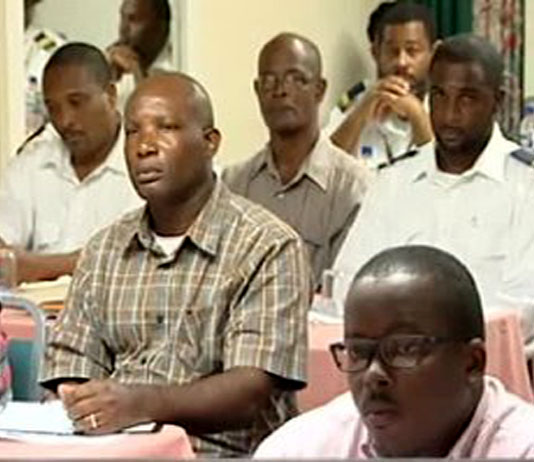
A one day basic training course in customs and trade facilitation was hosted by the Ministry of Trade, Energy and Employment on Thursday, October 20th.
The aim, to enhance the ability of customs officers and other agencies in implementing the Caribbean forum of African and Pacific States (CARIFORUM)-European Union (EU), Economic Partnership Agreement (EPA) and to facilitate enhanced professionalism and harmonization of customs procedures within the CARIFORUM region.
The course is one of the activities under the CARIFORUM- EU, capacity building project on competition, public procurement and customs and trade facilitation funded under the 10thEuropean Development Fund.
The main objective of the project is to support the beneficial integration of CARIFORUM member states in the world economy.
At the opening ceremony. EPA coordinator Yvanette Baron-George described the aim of the EPA.
“The EPA aims to promote trade and investment in an effort to enhance sustainable growth, employment and development. It takes into consideration the socio-economic circumstances in CARIFORUM states by offering asymmetric rights and obligations, specific safeguards as well as transition periods for taking on the commitments under the agreement. The EPA also promotes dialogue and cooperation in areas such as technical barriers to trade, sanitary and phytosanitary measures, competition, procurement and customs and trade facilitation.”
The one day session was prompted by a training needs assessment carried out in customs and trade facilitation within the CARIFORUM countries.
“Dominica like all the other member states of CARIFORUM intends to honor the commitments made in the EPA to seek to take the advantage of opportunities created by the agreement. However, like all the other member states of CARIFORUM we face a variety of challenges in implementing the agreement and in fully exploiting the opportunities which may be created by it. The project is designed to deliver training at three levels and in all three of the focal areas.
The level one basic training which is being conducted is geared towards addressing implementation capacity deficit in the specific area of custom and trade facilitation. It is targeted towards public officers as well as private sector agencies with responsibilities for trade. It will enhance the human and institutional capacity to better allow CARIFORUM states to honour their commitments and attain the objectives of the EPA,” she explained.
During the course, participants focused on customs valuation; customs tariff classification; post clearance audits; risk management; customs management; coordinated border management; and strategic trade control.
Deputy Comptroller of Customs Roderick Irish represented the comptroller Roderick Dechamps.
“I have been informed reliably that we will be given full explanation of the key areas of trade facilitation measures containing the EPA during this workshop. We will also discuss some of the challenges associated with the implementation and also the non-compliance of the EPA within the region. You will learn about specialized areas in the modern customs environment such as risk management, post clearance audit, rules of origin and how the knowledge and application contributes positively to improving the trading environment,” Irish noted.
He hopes following the training, stakeholders will have a higher level of awareness of the important issues addressed and take steps to resolve them.
The Division of Economic Affairs has advised that civil society organisations will soon be able to apply to the United Nations Democracy Fund (UNDEF) for funding for projects which advance and support democracy.
The annual proposal window will be open from Tuesday, November 15, to Thursday, December 15, at www.un.org/democracyfund. Only on-line proposals, in either English or French, will be accepted during this period.
UNDEF projects are for two years and applicants may request a grant of a minimum of US$100,000 or a maximum of US$300,000. UNDEF supports projects that strengthen the voice of civil society, promote human rights, and encourage the participation of all groups in democratic processes.
Projects fall under one or more of seven main areas: Community Activism; Rule of Law and Human Rights; Tools for Knowledge; Women’s Empowerment; Youth Engagement; Media and Freedom of Information; and Strengthening Interaction with Government.
The majority of UNDEF funds go to local civil society organisations – both in the transition and consolidation phases of democratisation. Proposals are subject to a highly rigorous and competitive selection process, with fewer than two per cent chosen for funding. To obtain more information, members of civil society organisations should visit http://www.un.org/democracyfund/application-materials. (SA/BGIS)