
Home Blog Page 174

Twenty new confirmed cases of the Zika virus

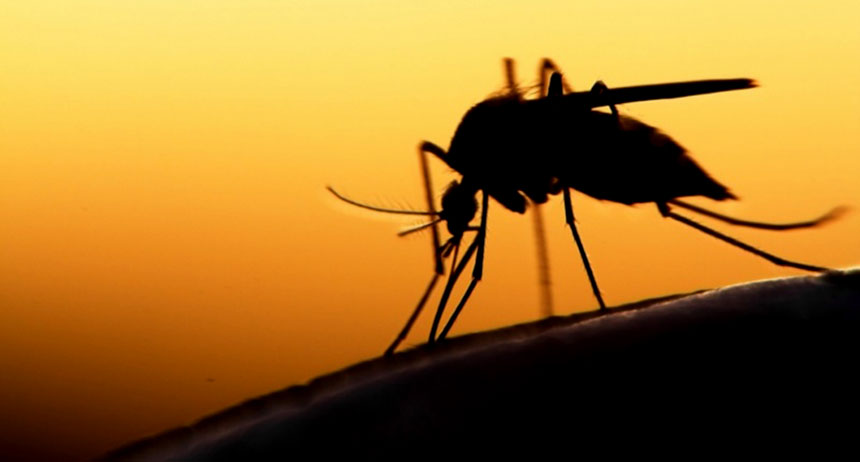
Biting Mosquito

The Ministry of Health, Wellness and the Environment advises that there are twenty (20) new laboratory confirmed cases of the Zika virus infection from samples collected between 23rd May and 6th June, here in St. Vincent and the Grenadines. Included in these cases is one pregnant woman.

These recent cases have increased the overall number of laboratory confirmed cases to a total of twenty-eight (28).
To date, one hundred and eight (108) serum samples have been sent to the Caribbean Public Health Agency (CARPHA), for ZIKA testing. Fifteen (15) of the most recently confirmed cases have come from Bequia, one (1) each from Lodge Village, Indian Bay and Layou and two (2) of unknown addresses.
The Ministry of Health, Wellness and the Environment has implemented the necessary care and monitoring of the pregnant patient and her unborn baby. It has even further intensified ongoing efforts and will continue to focus surveillance and response activities on addressing the rising number of cases. This was indeed anticipated, given the onset of the rainy season.
The Ministry urges the general public to continue to take the necessary steps to protect themselves.
The Aedes aegypti mosquito transmits the Zika virus and lives in and around houses and reproduces in any object containing still water. The incubation period is seven (7) to ten (10) days, and once hatched the insect can live up to six (6) weeks. Prevention requires persons being aware of individual environmental responsibility by turning over drums, screening water tanks, protecting tires, securing septic tanks and generally keeping the environment clean.
The Chief Medical Officer, Dr. Simone Keizer-Beache, reiterates that it is critical that citizens continue to take all measures to protect themselves from mosquito bites and that they work feverishly towards source reduction, which is critical in the fight against Zika.
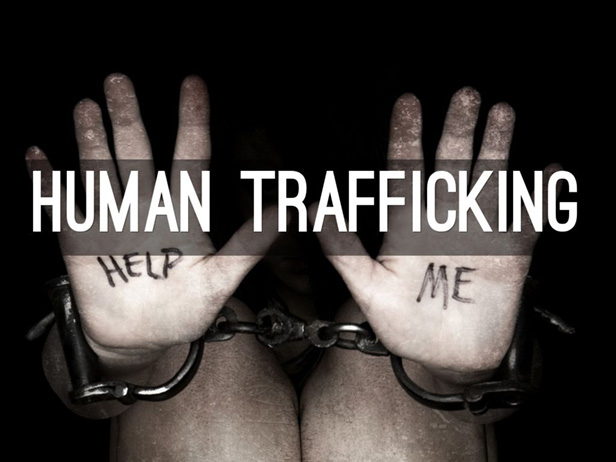
Human Trafficking Conference Underway

Human Trafficking

Caribbean Human Trafficking Conference Underway in Montego Bay.

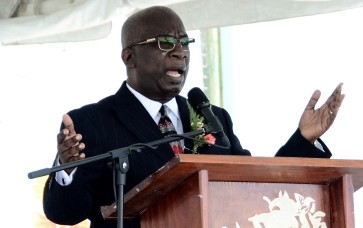
Permanent Secretary in the Ministry of Justice, Carol Palmer, says Jamaica stands to benefit from expertise in tackling human trafficking.
She made the statement while speaking at a regional conference on human trafficking now underway at the Hilton Rose Hall Hotel in St. James.
The week-long event, which is being led by INTERPOL, aims to strengthen the capacity of the Caribbean in the fight against trafficking in persons.
“It is for immigration officers, police and others who directly relate to persons who may be trafficking victims,” Ms. Palmer told JIS News at this morning’s opening ceremony (June 13).
“It is to get everyone to understand the ingredients involved in the crime and how to detect perpetrators and victims, and also make the region more equipped,” she added.
The government of Canada is sponsoring the event, which is being attended by representatives from St. Lucia, Turks and Caicos Islands, Belize, Trinidad and Tobago, Barbados, and Jamaica.
INTERPOL is the world’s largest international police organisation with 190 member countries.
Its role is to enable police across the globe to work together to make the world a safer place, through the provision of technical and operational support.
 

Agricultural Project Can Lead To Food Security

Agriculture Project
Minister of Education, Ronald Jones

The launch of an agricultural project on Monday at the Samuel Jackman Prescod Polytechnic (SJPP) has been accepted by Education Minister Ronald Jones as timely, as the region has to feed its people.

Speaking at the launch ceremony for the Organization of American States/SJPP initiative at the Wildey institution, Mr. Jones said at this critical time, the region needed to look forward and be developmental, ensuring all was done to mobilise its citizenry “to achieve the various things for regional food security”.
Reflecting on the 1930s and 1940s, he said Barbados was able to maintain high levels of agricultural production despite severe crises like World War II. He intimated that this could be attained once people did not turn away “from the foods that have kept us alive over centuries of cultivation”.
The US $150,000 project is funded by the OAS, and already there are demonstration sites in Guyana and St. Kitts and Nevis, with others soon to come in Haiti and Trinidad and Tobago. It is entitled: Provisions: Organic, Hydroponic, and Hybrid-System Growing for Caribbean Schools and Model for Local Caribbean Entrepreneurship.
Stating that the project’s effort in the area of research was not to be discounted, the Minister said it was tied to other initiatives at The University of the West Indies (UWI), St. Augustine and Cave Hill campuses.
He said as we looked towards food security and the work being done at the UWI, the SJPP, the Barbados Community College, secondary schools, the 4-H Movement and the Hope Agricultural Training Institute, ideas had to be transformed into meaningful production.
The Education Minister also praised the project team led by Director of Employee & Program & Research from the Clarence Fitzroy Bryant College in St. Kitts, Dr. Leighton Naraine. He noted the project’s contributions to the young people of the region and its use of science, technology and innovation.
Meanwhile, OAS official, Erika Watson, said the project, which was under implementation since 2014, was a collaborative effort on the part of higher educational professionals, community-based organisations, governmental ministries and non-governmental specialists in sustainable development in the participating countries.
Explaining its objectives, she said: “The project seeks to address adaptation to climate change through a focus on hydroponics, organics and hybrid-based systems as a model for local Caribbean entrepreneurship that is innovative agricultural production systems…
“The system is important because it can continue to grow crops even with adverse weather conditions and other natural disasters, allowing farmers to continue to put food on the table and shelves within 40 days. Most importantly, it allows crops to grow independently of the seasonality of the rainfall conditions.”

Discovery of a Stela at the Xunantunich Mayan Site

Belize Press Office

The Ministry of Education, Culture, Youth and Sports is inviting you to the following events:

Event One: Discovery of a Stela at the Xunantunich Mayan Site
Date:  Tuesday, June 14th, 2016
Time: 3:00 p.m.
Where:  Xunantunich Mayan Site, Succotz Village
Event Two: Graduation of 4H Centre students
Date: Wednesday, June 15th, 2016
Time: 10:00 a.m.
Where: 4H Centre, Belmopan

ECGC To Host Livestock Husbandry Seminar

Livestock Husbandry Seminar

The East Caribbean Feeds will collaborate with the Ministry of Agriculture, Industry, Forestry, Fisheries and Rural Transformation, to host a livestock husbandry seminar here.

The seminar, facilitated by Dr. Robert Thomas, an experienced Veterinary Consultant from Jamaica, will convene at the Methodist Church Hall from Tuesday to Thursday, 14th – 16th June. It will focus on poultry production, pigs and small ruminants, a release from the company said.
Additionally, Dr. Thomas, accompanied by staff from the Ministry of Agriculture and ECGC, has scheduled visits to various livestock farms on the island, which started from Monday 13th through to Thursday 15th June to gain a deeper understanding of the practices of local farmers.
East Caribbean Feeds is dedicated to supporting the livestock farming community, through relevant training and the supply of top quality animal feeds.

Climate Change Partnership Project Launches

Japan-Caribbean Climate Change Partnership

The Japan-Caribbean Climate Change Partnership Project Launches.

A media event to launch the local arm of the Japan-Caribbean Climate Change Partnership Project takes placed here this Wednesday 15th June from 9:00 a.m. at Murray Heights Hotel. The main address will come from Minister of Economic Planning, Sustainable Development, Industry, Information and Labour, Hon. Camillo Gonsalves.
The main aim of the initiative is to minimise barriers that will affect the implementation of climate-resilient technologies. The project is headed by the United Nations Development Program Sub-regional Office for Barbados and the OECS.
The local launch follows the regional project launch in Barbados earlier this year, and it brings together policymakers, experts and representatives of affected communities, to encourage policy innovation for climate change.

Improving Saint Lucia's yachting sector

Yatching

Agencies collaborate with a view to making the yachting sector more competitive within the Caribbean region.

The Ministry of Tourism, Heritage, and Creative Industries, and the Saint Lucia Tourist Board (SLTB) have partnered to enhance the island’s yachting sector.
The two agencies convened a meeting on June 1 with officials from the Saint Lucia Air and Sea Ports Authority (SLASPA), the Soufriere Marine Management Association (SMMA), and the customs and immigration departments to discuss issues specific to yachting facilitation. Many issues facing the yachting industry where highlighted and discussed with a view to making the sector more competitive within the Caribbean region.
As a first step to address issues relating to the sector and in particular, product enhancement, yachting facilitation, and data collection, the parties agreed to reactivate the yachting committee to serve as the mechanism to pull all related agencies together with the objective of growing the yachting sector.
The first meeting of the yachting committee is slated for the first week of July.
 

Customs Guide for 2016 Olympic Games in Rio

Olympic Games
Photo courtesy www.brics-info.org

Customs Guide for 2016 Olympic Games in Rio

June 13, 2016: The Embassy of the Federative Republic of Brazil in Port of Spain advises that the Federal Revenue of Brazil has published the second edition of the Customs Guide for the Olympic Games in addition to information guidelines for international media professionals, athletes and other members of foreign delegations on the following website:
http://idg.receita.fazenda.gov.br/sobre/acoes-e-programas/grandes-eventos/jogos-olimpicos-e-paralimpicos
The Customs Guide provides information about the customs procedures for foreign delegations in respect of travel baggage and cargo for the sporting events and the peculiarities of the importation and exportation of goods. The Guide is also useful for foreign media who may wish to bring professional equipment for media coverage of the events.

SIDS Fellowships in Water Management

SIDs - Water Management

ST. GEORGE’S, GRENADA, JUNE 9, 2016 – GIS: The Grenada National Commission for UNESCO announces that UNESCO-IHE will provide 23 key water professionals with MSc level education, on relevant topics in water management, for the Small Island Developing States (SIDS).

This is as a result of the Ministry of Foreign Affairs of the Kingdom of the Netherlands and the UNESCO-IHE Institute for Water Education’s joint launch of the ‘Strengthening Small Island Developing States’ capacity in the water sector to cope with the effects of climate change” project.
The project aims to strengthen the capacity of professionals and decision makers to improve water management in SIDS, to better address future challenges, such as coping with the effects of climate change.
The 18-month MSc programmes include 12-month taught education in Delft, the Netherlands and a 6-month field based research, to be conducted on specific problems in the home country of the participant. Furthermore, UNESCO-IHE will provide 55 water professionals and decision makers with specific expertise on relevant topics, by enabling them to enroll in 3-week short courses that start in 2016 and 2017.
The fellowship covers the cost of tuition fees, accommodation and travel.
Interested candidates from Grenada, who meet UNESCO-IHE’s admission criteria, are advised to register as soon as possible. The deadline for SIDS Fellowships for the masters programmes that start in October 2016 is July 1, 2016.
The first of three deadlines for SIDS fellowships for the short courses is 15 June 2016, for the other deadlines and more information about the program visit:
www.unescoihe.org/sidsfellowships?utm_source=april&utm_medium=email&utm_campaign=sids
Interested candidates may also contact the UNESCO desk, in the Ministry of Education and Human Resource Development, at 473-440-2737.
UNESCO-IHE is the largest international graduate water education facility in the world and is based in Delft, the Netherlands. The Institute confers fully accredited MSc degrees, and PhD degrees, in collaboration with partner universities.

Climate Smart Agriculture Training

Smart Agriculture

GIZ Implements Phase two of Climate Smart Agriculture Training.

St. George’s, 13th June 2016 – The Ministry of Agriculture and the German Agency for International Cooperation (GIZ) launched the second phase training of the Capacity Development and Dissemination programme for Climate-Smart Agriculture (CSA).
The objective of the CSA Dissemination Programme is to disseminate knowledge on CSA by training the extension and technical officers on sustainable agricultural practices and by supporting the transfer of that knowledge to the farmers and other stakeholders.
The first phase was a ‘Training of Trainers workshop’, based on the “Modules for Sustainable Agriculture” a tool developed by GIZ.
The training was conducted in September 2015 in collaboration with the Inter-American Institute for Cooperation on Agriculture (IICA).
Twenty Five (25) agricultural officers were trained on how to use the tool in their advisory work to help farmers adapt to climate change and also develop their ability as trainers.
The second phase which began in June 2016, saw five of the twenty-five trainers from the first training facilitate a workshop in which twenty new agricultural technical officers participated.
The training was a combination of classroom sessions at the TAMCC Mirabeau Farm School, field implementation exercises at the Mirabeau Propagation Station and two private farms.
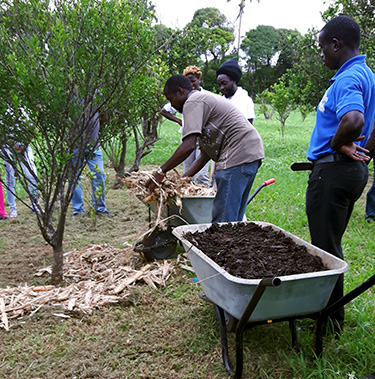
The field implementation exercises included soil and water management practices such as composting, mulching, drainage, terracing, intercropping and rainwater harvesting.
The implementation of the CSA practices at the Mirabeau Propagation Station is the first step in establishing a CSA demonstration and learning plot for usage by both agriculture officers and farmers.
Another training will be facilitated in Carriacou for the agricultural technical officers and include the implementation of more CSA practices, convene monthly meetings, share experiences and monitor on-farm implementation results.
The CSA-CapDiP programme was developed under the Integrated Climate Change Adaptation Strategies (ICCAS) pilot programme.
The ICCAS programme, is funded by the German Federal Ministry for the Environment, Nature Conservation, Building and Nuclear Safety (BMUB) within its International Climate Initiative (IKI), it is implemented by the Ministry of Agriculture, Lands, Forestry, Fisheries and Environment (MALFFE), the United Nations Development Programme (UNDP) and GIZ.

Audio Theme