Stakeholder consultations on new tourism health and safety standards ongoing
Watersports Operators, Tour Operators and Accommodation Sector Engaged
The Ministries of Tourism and Civil Aviation and Health and the Grenada Tourism Authority (GTA) are holding consultations with stakeholders to get their feedback on the new draft industry health and safety standards. This is part of the blueprint of creating a new way of doing business in Tourism in Grenada, Carriacou and Petite Martinique. In a meeting chaired by Permanent Secretary, Mrs. Arlene Buckmire-Outram and attended by Tourism Minister Hon. Dr. Clarice Modeste-Curwen, Minister for Health Hon. Nickolas Steele, COVID-19 Coordinator Dr. George Mitchell and over 60 stakeholders on Tuesday June 9, protocols for the accommodation sector were examined in detail. The health and safety standards covered all aspects including cleaning, sanitization, dining and requirements for staff and guests including the wearing of face coverings and the practice of social distancing.
Minister Modeste-Curwen says the protocols were developed with critical guidance from the Ministry of Health and international agencies such as the World Health Organization. She stated that “Grenada is looking at all of the options and best practices for the ease of doing business in Tourism while protecting staff and visitors.” The Minister further added “that the protocols were not set in stone and consideration would be given to feedback from stakeholders”. Health Minister Steele and Dr. Mitchell made significant contributions to the discussion and answered technical questions.
The Tourism Minister further announced an extension and amendments to the small hotels fund launched in 2019 to assist properties with fifty rooms or less with improving their COVID-19 readiness and competitiveness. Administered by the Grenada Development Bank (GDB), the terms and conditions have been eased to facilitate greater access. Additionally, the loan ceiling has been lifted from 200,000 to 300,000 EC dollars. This funding can be used to facilitate physical upgrades, training, procurement of health and safety equipment and marketing among other requirements.
In the meantime, Watersports operators including dive shops were trained in the new health and safety protocols for their subsector in a zoom meeting on Tuesday, facilitated by the Ministry of Health’s Dr. Shawn Charles. Dr. Charles emphasised proper sanitization, mask wearing and social distancing as well as establishing contact tracing programmes.
Another training session was hosted on Tuesday for Tour Operators on the new way of doing business. The meeting attracted over 80 participants and was facilitated by Environmental Health Officer Deryck Ramkhelewan. Following, the meeting draft protocols were sent to this group for review and feedback. The process of stakeholder consultation organised by the GTA will continue as protocols are fine-tuned under the guidance of the Ministry of Health and Grenada gets ready to open its borders in the coming weeks.
FRENCH 3 (General)
PORTUGUESE 3 (General) SPANISH 3 (General) Oral Examinations to begin (see Note 4) MUSIC 2 (General)
Practical Examination to begin (see Note 14)
Tuesday
28 July
MUSIC 2 (General)
Practical Examination to end (see Note 14)
Friday
21 August
FRENCH 3 (General)
PORTUGUESE 3 (General)
SPANISH 3 (General)
Oral Examinations to end (see Note 4)
Monday
13 July
FRENCH 2
General – 2 hr 15 min
BIOLOGY 3/2***
General – 2 hr 10 min
Tuesday
14 July
**ENGLISH A 3/2**
General – 2 hr
**ENGLISH B 3/2***
General – 2 hr
MATHEMATICS 3/2***
General – 1 hr
Wednesday
15 July
GEOGRAPHY 1
General – 1 hr 15 min
*
GEOGRAPHY 3/2***
General – 1 hr 45 min
PRINCIPLES OF ACCOUNTS 1
General – 1 hr 30 min
*
PRINCIPLES OF ACCOUNTS 3/2***
General – 1 hr 30 min
Friday
17 July
INFORMATION TECHNOLOGY 1
General – 1 hr 15 min
*
INFORMATION TECHNOLOGY
3/2*** General – 2 hr
Monday
20 July
HUMAN AND SOCIAL BIOLOGY 2
General – 2 hr
HUMAN AND SOCIAL BIOLOGY 1 General – 1 hr 15 min
Tuesday
21 July
SOCIAL STUDIES 1
General – 1 hr 15 min
*
SOCIAL STUDIES 3/2***
General – 1 hr 10 min
Wednesday
22 July
INTEGRATED SCIENCE S/A 3/2***
General – 2 hr 10 min
THEATRE ARTS 1
General – 1 hr 30 min
OFFICE ADMINISTRATION 1
General – 1 hr 15 min
*
OFFICE ADMINISTRATION 3/2***
General – 1 hr 45 min
Thursday
23 July
ELECTRONIC DOCUMENT
PREPARATION & MGT 1
General – 1 hr 30 min
*
ELECTRONIC DOCUMENT
PREPARATION & MGT 3/2 ***
General – 1 hr 50 min
MUSIC PAPER 1
General – 1 hr 30
SPANISH 2
General – 2 hr 15 min
Friday
24 July
PRINCIPLES OF BUSINESS 1
General – 1 hr 15 min
*
PRINCIPLES OF BUSINESS 3/2***
General – 1 hr 15 min
PHYSICS 3/2***
General – 2 hr 10 min
PORTUGUESE 2
General – 2 hr 15 min
Monday
27 July
MATHEMATICS 1
General – 1 hr 30 min
Tuesday
28 July
ENGLISH A 1
General – 1 hr 30 min
Wednesday
29 July
ENGLISH B 1
General – 2 hr
CARIBBEAN HISTORY 1
General – 1 hr 15 min
*
CARIBBEAN HISTORY 3/2***
General – 2 hr
Thursday
30 July
TECHNICAL DRAWING 1
Technical – 1 hr 15 min
ECONOMICS 1
General – 1 hr 15 min
*
ECONOMICS 3/2 ***
General – 1 hr 30 min
PHYSICAL EDUCATION & SPORT 1
General – 1 hr
ADDITIONAL MATHEMATICS 1
General – 1 hr 30 min
*
ADDITIONAL MATHEMATICS 3/2***
General – 1 hr 30 min
Friday
31 July
PHYSICS 1
General – 1 hr 15 min
RELIGIOUS EDUCATION 1
General – 1 hr 15 min
INDUSTRIAL TECHNOLOGY 1**:
BUILDING AND FURNITURE
ELECTRICAL AND ELECTRONIC
MECHANICAL ENGINEERING
Technical – 1 hr 15 min
SPANISH 1
General – 1 hr 15 min
Monday
03 August
CHEMISTRY 1
General – 1 hr 15 min
PORTUGUESE 1
General – 1 hr 15 min
FRENCH 1
General – 1 hr 15 min
BIOLOGY 1
General – 1 hr 15 min
Tuesday
04 August
INTEGRATED SCIENCE S/A 1
General – 1 hr 15 min
FOOD, NUTRITION & HEALTH 1
Technical – 1 hr 30 min
FAMILY & RESOURCE MANAGEMENT 1
Technical – 1 hr 30 min
**AGRICULTURAL SCIENCE D/A 1
**AGRICULTURAL SCIENCE S/A 1
General – 1 hr 15 min
Copyright: Every application to register for the examination will be deemed to constitute an assignment by the candidates to the Council of the future copyright of all their examination work, practical or written. * A 15-minute break must be allowed between Papers ** A Common Paper *** For PRIVATE candidates only. NOT for candidates registered in schools and recognized fulltime educational institutions
PM (1 hr 15 min)
AM (2 hr 15 min)
Period of oral exams
14. Geography
(General)
1
3/2**
15 July
15 July
AM (1 hr 15 min)
AM (1 hr 45 min)
15. Human and Social Biology
(General)
1
2
20 July
20 July
PM (1 hr 15 min)
AM (2 hr)
16. Industrial Technology
Industrial Technology:
Building and Furniture
Electrical and Electronic
Mechanical Engineering
1
31 July
PM (1 hr 15 min)
17. Information Technology
(General)
1
3/2**
17 July
17 July
AM (1 hr 15 min)
AM (2 hr)
18. Integrated Science S/A
(General)
1
3/2**
04 Aug
22 July
AM (1 hr 15 min)
AM (2 hr 10 min)
19. Mathematics
(General)
1
3/2**
27 July
14 July
AM (1 hr 30 min)
PM (1 hr)
20. Music
(General)
1
23 July
PM (1 hr 30 min)
21. Office Administration
(General)
1
3/2***
22 July
22 July
PM (1 hr 15 min)
PM (1 hr 45 min)
22. Physical Education & Sport
(General)
1
30 July
PM (1 hr)
23. Physics
(General)
1
3/2***
31 July
24 Jul
AM (1 hr 15 min)
PM (2 hr 10 min)
24. Portuguese
(General)
1
2
3
03 Aug
24 July
13 July –
21 August
AM (1 hr 15 min)
PM (2 hr 15 min)
Period of oral exams
25. Principles of Accounts
(General)
1
3/2***
16 July
16 July
PM (1 hr 30 min)
PM (1 hr 30 min)
26. Principles of Business
(General)
1
3/2***
24 July
24 July
AM (1 hr 15 min)
AM (1 hr 15 min)
27. Religious Education
(General)
1
31 July
AM (1 hr 15 min)
28. Social Studies
(General)
1
3/2***
21 July
21 July
AM (1hr 15 min)
AM (1 hr 10 min)
29. Spanish
(General)
1
2
3
31 July
23 July
13 July –
21 August
PM (1 hr 15 min)
PM (2 hr 15 min)
Period of oral exams
30. Technical Drawing
(Technical)
1
30 July
AM (1 hr 15 min)
31. Textiles, Clothing & Fashion
(Technical)
1
16 July
AM (1 hr 30 min)
32. Theatre Arts
(General)
1
22 July
AM (1 hr 30 min)
*** Alternative Paper
CSEC Timetable 2020
NOTES TO JULY- AUGUST 2020 TIMETABLE
1. **Indicates a common paper.
2. The time indicated on the Timetable includes:
(i) Reading Time.
(ii) Ten minutes Reading Time and 10 minutes to “warm-up” on the computer
prior to the start of the examinations for Electronic Document Preparation and
Management Paper 3/2.
3. Starting times for all centres within a territory are 0900 hr and 1300 hr. If at any
centre the number of candidates is greater than can be accommodated in one
session, the Local Registrar may arrange to administer the examination in two or
more sessions, ensuring that suitable arrangements are made to preserve the
integrity of the examinations.
4. French, Portuguese and Spanish Oral Examinations (Paper 3) in each territory will
be conducted during the period 13 July – 21 August in accordance with the Local
Registrar’s schedule.
5. Visual Arts: all candidates will be required to submit a Reflective Journal.
6. All Paper 1 examinations are multiple choice in format.
7. Attention is drawn to the rule that silent non-programmable scientific calculators
may be used in the following examinations:
Additional Mathematics
Chemistry
Economics
Geography
Industrial Technology: Building and Furniture
Industrial Technology: Electrical and Electronic
Industrial Technology: Mechanical Engineering
Integrated Science SA
Mathematics – Paper 3/2 only
Office Administration Paper 3/2 only
Physics
Principles of Accounts
Principles of Business Paper 3/2 only
8. The use of geometry sets (mathematical instruments) is permitted in Geography
Papers 1 and 3/2, Mathematics Paper 3/2, and Social Studies Paper 3/2.
9. The Alternative Paper (3/2) to SBA in Biology, Chemistry, Integrated Science and
Physics is a practical examination – laboratory facilities will be required. 10. Candidates will not be required to have earphones/headphones for the Paper 01
examination in Theatre Arts.
11. Alternative Paper to SBA (Paper 3/2) must be written by private candidates
who opted not to complete the SBA assignments. Papers 1 and 3/2 must be
written in the same session with a 15-minute break between them except in
cases of the science subjects, Mathematics, English A and English B where the
papers are administered on different days. Paper 1 must be written before
Paper 3/2. Papers 1 and 3/2 in these examinations have been scheduled as
follows:
(i) Geography – 15 July
(ii) Principles of Accounts – 16 July
(iii) Information Technology – 17 July
(iv) Social Studies – 21 July
(v) Office Administration – 22 July
(vi) Electronic Document Preparation and Management – 23 July
(vii) Principles of Business – 24 July
(viii) Caribbean History – 29 July
(ix) Additional Mathematics – 30 July
(x) Economics – 30 July
12. Industrial Technology Paper 1 is a common paper to all three options: Building
and Furniture, Electrical and Electronic, and Mechanical Engineering.
Candidates are permitted to register for all three options at any one sitting.
13. Candidates who register for English A Paper 3/2 and English B Paper 3/2 during
the same sitting will be required to take only one examination since both papers
will be offered as a common examination.
14. The Practical Examination in Music (Paper 2) in each territory will be conducted
during the period 13 July – 28 July in accordance with the Local Registrar’s
schedule.
15. Headphones/earphones will be required for the French, Portuguese and Spanish
Paper 1 electronic examination.
16. The Paper 3/2 in Information Technology will be available at the July sitting for
the first time in 2020. The examination will be offered in the electronic format
only.
The Ministry of Education, Human Resource Development, Religious Affairs and Information hereby affirms, following its announcement via press briefing on May 26, 2020, that while Grenada will not be facilitating the sitting of the Caribbean Primary Exit Assessment (CPEA) and Caribbean Certificate of Secondary Level Competence (CCSLC) examinations, in 2020, it will facilitate the 2020 CSEC and CAPE examinations.
Based on the feedback from key stakeholders and the fact that the CPEA is not as high stake an examination as others in the CXC suite, the Ministry of Education recommends that Grade 6 students should not sit the scheduled assessment, but transition to secondary schools based on a COMPOSITE SCORE for each student, to be derived from the following:
● Internal CPEA assessment scores from CXC’s Online Registration System (2020)
● The students’ Minimum Competency Test (MCT) scores.
Given that the CXC assessment framework allows students to sit the CCSLC exams in higher grades, these have been deferred to 2021.
In consultation with CXC, it has also been decided that the more critical placement exams (CSEC and CAPE), the postponement of which could come at a cost and cause major disruption to the education system and stakeholders involved, will be conducted during the period July 13 to August 4, 2020.
This Ministry therefore presents CXC’s revised schedules for its 2020 CSEC and CAPE
Examinations/Assessments, which are hereby attached.
This Ministry thanks the public and all stakeholders, for their continued understanding and
cooperation, as we endeavour to safely, but effectively move forward, in the midst of the COVID-19 pandemic, while ensuring that our students’ educational progress is not compromised.
The Public is hereby notified that in keeping with changes in international oil prices and Government’s application of the modified market pass-through petroleum pricing mechanism, the retail price of diesel, LPG 20, 22 and 100 lb cylinders has changed. The retail price of gasoline and kerosene remains unchanged. The price changes take effect from Monday, June 8, 2020.
GASOLINE remains unchanged at $2.53 per litre or $11.50 per gallon
Kerosene remains unchanged at $1.57 per litre or $7.15 per gallon
Diesel decreased from $2.62 to $2.30 per litre or $11.92 to $10.44 per gallon
20 Pound Cylinder (9.07 kg) decreased from $26.19 to $25.82 per cylinder
22 Pound Cylinder (9.98 kg) decreased from $ 28.80 to $28.40 per cylinder
100 Pound Cylinder (45.36kg) decreased from $147.71 to $144.05 per cylinder
The Public is informed that the next adjustment of the retail price of fuel products will be on Monday, June 29, 2020.
The results of 41 COVID-19 tests received on may 27, were all negative.
As of May 26, 2020 the World Health Organization reported a total of 5, 404, 512 confirmed cases of COVID-19 globally, with 343, 514 deaths. Within the region of the Americas there was a total of 2, 454, 452 cases, with the number of new cases across the region still trending upwards.
On May 27, 2020 the Ministry of Health received the results of 41 COVID-19 tests that were conducted, all of which were negative. This is the 24th consecutive day, out of a total of 382 tests conducted, that we have received no positive cases. The last case was recorded on May 3, 2020.
Although this data is encouraging, our health care providers continue to remain vigilant, screening and testing people who present at our facilities with flu-like symptoms, as we know the public health threat posed by COVID-19 is not over. We encourage everyone to monitor their individual state of health and that of their loved ones. If experiencing symptoms which include fever, coughing, sore throat, loss of their sense of smell, take no chances. Please seek care at our community respiratory clinics or outside their normal hours of operation, at the Victoria Hospital and St. Jude Hospital.
In the coming week we will have the return to school for our Grade 6 and Form 5 students in preparation for their examinations. During that week we shall also be reopening our national borders to travelers. These changes will result in a greater volume of movement of people and with that we note the potential for increased transmission of the virus.
As such, the Ministry of Health, in collaboration with the relevant sectors, has been preparing for these changes and the risks that potentially accompany them. This includes instituting of protocols, site assessments to determine capacity for infection prevention and control, as well as surging of our stocks of personal protective equipment.
With all this in place we also require the support of every citizen in maintaining the recommended infection prevention and control measures to further strengthen our readiness. We ask that everyone continues to sanitize their hands by either hand washing or using an alcohol-based hand sanitizer, wearing their masks while undertaking daily activities out of the home and maintain the required 6 foot distance. Also, be sure to cover mouth and nose with disposable tissues or clothing when coughing and sneezing. These simple and inexpensive actions will make a meaningful difference in preventing the spread of infection.
The Department of Health and Wellness will continue providing regular updates on COVID-19. For more information please contact the Office of the Chief Medical Officer or the Epidemiology Unit, at 468-5309/468-5317 respectively.
OECS Commission convenes virtual Living Standards Measurement Committee Meeting.
A special meeting of the Living Standards Measurement Committee (LSMC) was convened virtually over two half-days on 22 and 23 April 2020 in lieu of the fifteenth meeting of the LSMC.
As the steering body for the Enhanced County Poverty Assessment (CPA) Project, the LSMC meets bi-annually to discuss issues, make decisions and recommend actions to advance work of the OECS Sustainable Household Data Collection Programme (SDP).
This Special Meeting was convened to receive updates from Member States on the impact of COVID-19 on implementation of the SDP and to determine and make programmatic adjustments accordingly. The meeting focused on, inter alia:
The implementation of the Enhanced CPA project activities;
Updates on the project activities and the new challenges and opportunities posed by the COVID-19 pandemic; and
Challenges, opportunities, and recommendations for managing operations of the national statistical offices (NSOs), in the current and post COVID-19 environment.
Dr. Gale Archibald, Head of the Statistical Services Unit, OECS Commission, welcomed participants and encouraged them to focus on the opportunities, despite the challenges faced by the COVID-19 pandemic. She stated
“The global community for statistics understands national statistics offices (NSOs) in small island development states (SIDS) will be comparatively more affected by COVID-19 than those in developed countries. The community stands ready to support these NSOs to navigate a multiplicity of challenges while at the same time exploiting the opportunities for statistical development.”
Mr. Elbert Ellis, Operations Officer (Social Analyst) at the Caribbean Development Bank (CDB), and the Project Supervisor of the Enhanced CPA Project, observed how “COVID-19 has taught us the importance of data”, and in his address to the meeting expressed the Bank’s commitment and readiness to support its borrowing member states; and to work with other partners to invest in data collection and analysis to ensure that countries have data for policy responses.
Mr. Alexandru Narteau, Monitoring and Evalution Specialist, UNCEF expressed UNICEF’s willingness to support Member States to produce social protection data. Despite the challenges, he stated “NSOs are open for business” and where possible, work continues in the Member States. The World Bank representatives also expressed the Bank’s commitment to support countries and encouraged them to apply for the needed support.
Ms Lori-Rae Alleyne, Chief Statistician, Anguilla Statistical Department, expressed her concern for the budget cuts being faced by NSOs across the region due to reduced revenue and the reallocation of resources to finance national COVID-19 responses and recovery interventions. The meeting agreed that policy-makers need to be mindful of how reduced investment in statistics will further exacerbate the data availability problem that confronts the OECS Member States. Moreover, the COVID-19 protocols to manage the spread of the diseases, such as social distancing, means the countries now have to reschedule household surveys – such as the population and housing census, the labour force survey, the household budget survey and the survey of living conditions.
The Commission is planning a follow-up meeting with development partners to craft a post COVID-19 programme of support for statistical development in the OECS region.
The meeting was attended by Permanent Secretaries, Directors, Chief Statisticians, the CDB, the ECCB, the World Bank, UNICEF, Turks and Caicos Islands and the Commission staff including from the Statistical Services Unit, Social Development Unit and the Finance and Accounting Unit.
Saint Lucia Electricity Services Limited (LUCELEC) supports Education through OECS’ COVID-19 Response
The COVID-19 pandemic has forced the Eastern Caribbean’s education system to adjust to a new norm in curriculum instruction. The academic term, which commenced on April 20, 2020 will be administered across the region through an online classroom environment, particularly as the need for social distancing has become a mandatory protocol to contain the spread of COVID-19.
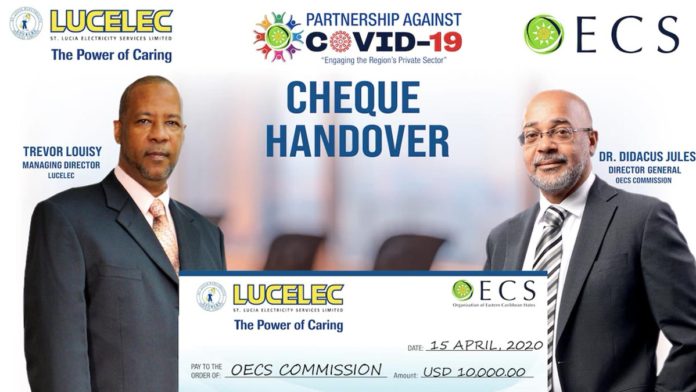
The OECS Commission recognises that the success of this approach to learning can only be realised if students are equipped with the requisite tools. The Commission is therefore pleased to announce its partnership with Saint Lucia Electricity Services (LUCELEC). The company donated US$10,000.00 to supply tablets to schools across the region.
Managing Director, Mr. Trevor Louisy says this gesture of goodwill is in keeping with LUCELEC’s inclusive growth strategy:
“We exist as part of a community. Our Power of Caring is not just a slogan. It’s an integral part of our value system and culture that shapes how we do business and how we relate to our various stakeholders. So, we’re totally invested in this collective challenge that is COVID-19 and how we respond as a part of the local business community, the country and the region.”
Director General of the OECS, Dr. Didacus Jules underscored the aim of the OECS’ COVID-19 Response, which is to supplement national efforts in Member States by helping to fill gaps where they exist. In this regard, Dr. Jules expressed gratitude to LUCELEC for their contribution to support the regional education initiative.
The Director General indicated that the OECS is seeking to undertake joint procurement of tablets and other learning devices in order to help bridge the digital divide and reduce the cost of purchase to Member States. It is expected that through joint procurement the cost per unit will be considerably less and any contributions received from the private sector by the OECS will be sunk against the overall procurement cost to further reduce the per unit costs to governments.
LUCELEC encouraged other private sector entities to be part of the regional effort to tackle the COVID-19 pandemic:
“The private sector in the region has always stepped up in times of national or regional crisis to support and take care of their employees and their communities. We are certain they will do whatever is within their means to do, bearing in mind this crisis and its impact on the private sector, national economies and the region is still unfolding. How we all come out of this will require a collective and coordinated effort at all levels.”
Regional and international institutions and agencies interested in pledging support to the ongoing OECS’ COVID-19 Response should contact the Development Cooperation and Resource Mobilisation Unit at the OECS, via telephone 1-758-455-6354 or through email at dcrm@oecs.int.
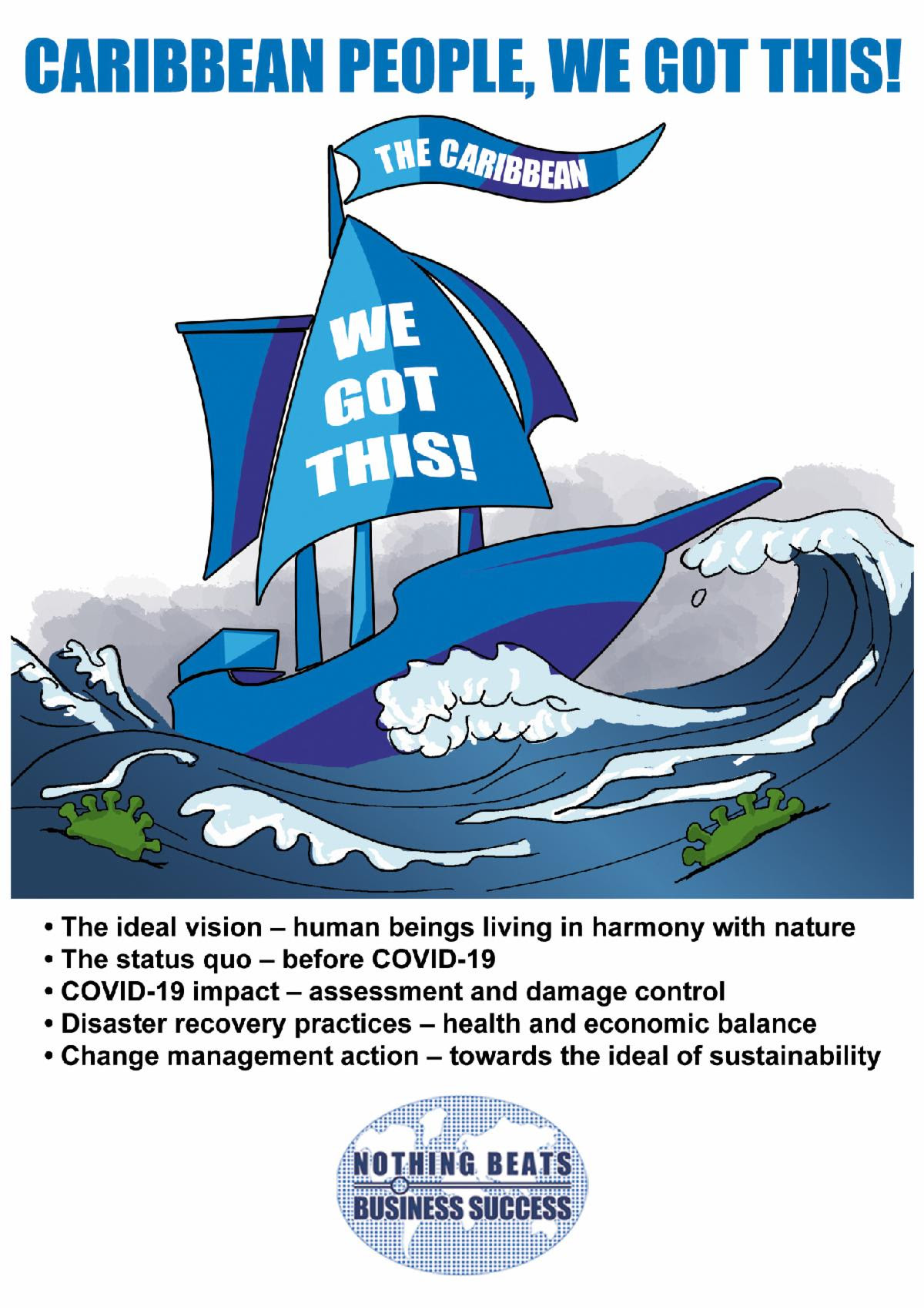
The secret formula, which underpins the way forward as we vision and plan our future post-COVID 19 dispensation, is to be found in the inspiring Caribbean video “We got this”.
The message is powerful – unity is strength and hope springs eternal in an environment where God is Love. One Caribbean, no fears, do not worry about the madness, let us take our chances, look out for our neighbors, we will rise again nourished by the Caribbean sun. If we miss the importance of unification this time around, well, we only have ourselves to blame.
The ideal world psychological environment is for human beings to live in harmony with nature in keeping with Maslow’s hierarchy of needs, namely physiological, safety, love and belonging, esteem, and self-actualization. Above all we must recognize that we are spiritual beings attempting to master an earthly experience. Globally, we must look out for each other and nationally we should have “all hands on deck”.
Before the COVID-19 pandemic the world was in disarray, which frustrated the growth of small island states and coastal communities. Examples of these weaknesses are youth behavior, legislation, entrepreneurship development, foreign exchange reserves, economic stagnation, vulnerable communities, food imports, food insecurity, housing shortages, water woes, domestic disorder, drug and gangsterism culture, world trade, regional unity, corporate governance, investment finance, human resource development, branding, operational efficiency and technology innovation.
Attempts to strengthen some of these weaknesses are manifested by the 17 United Nations 2030 development goals for sustainable development. The aspirations of these goals have been frustrated by greed, corruption and weak moral global leadership.
As if this were not enough, along with the threat of the impact of climate change, the advent of COVID-19 has been disastrous in the context of the socioeconomic well-being of small states. It has resulted in economic shutdowns, business closures, increased unemployment, personal stress and greater national debt – the full measure of which will only be determined after the phased relaxation of the curfew constraints and the opening of our borders.
It is often mentioned that small businesses drive the economy. Whereas, they are an integral part of an economic gearing system, we can see clearly now that this is not the case.
The disaster recovery strategies have been challenging because the disease aggressively attacks and is spread by human beings which frustrates the implementation of optimal governance solutions due to conflict between public health and the stimulation of economic growth. The public health management performance has been stellar, so now we have to imaginatively address the challenges of getting employment going again to stimulate growth in the new economy.
Change management action therefore must be carefully implemented as we monitor its effect on the spiritual, human, physical, social and economic aspects of our lives. At the individual, institutional and country levels, we are in fact trying to effectively shift gears from chaos and despair to harmony and hope.
May I remind you of the adage which I have found to be very useful over the last 25 years: “Vision without Action is mere fantasy; Action without Vision is folly; Neither Vision nor Action reeks of irresponsibility; Vision and Action induce synergy”.
Now, it’s time to rally around the refrain presented by our leading regional musicians: “Caribbean people, we got this!”
Human Trafficking, Sex Work and COVID-19 in the Caribbean Region
The Other Side Of The Coin: by Milton J. Coy
The issues are coming to the forefront within national, regional, and global conversations.
Human trafficking and all the linkages with it, have been growing societal concerns in the
region, even before the COVID-19 pandemic. How do we respond NOW?
During the pilot and stakeholders consultations held in Grenada, August 2019, it was revealed that human trafficking which involves sexual exploitations, forced labour and domestic servitude is on the rise in the region. Consultations were coordinated by the Canadian firm, Dunn, Pierre, Barnett & Company Canada Ltd.
During these consultations, it was noted that the scope and nature of trafficking in persons within the region may have slight variations in terms of higher prevalence of internal vs cross-border trafficking and nationality of victims identified. However, what remains consistent is that the most prevalent form of human trafficking across the region involves the sexual exploitation and forced labour of primarily women and young girls.
Additionally, many countries experience internal as well as cross border trafficking. Most of the cross-border trafficking occurs intra-regionally within CARIFORUM and the broader Americas. Increasing migrant flows due to political instability in Venezuela and Haiti has resulted in an upsurge of vulnerable Venezuelan and Haitian nationals being trafficked in the region. Structural factors in addition to political instability, such as poverty and unemployment have also been determined as some of the root causes based on the profile of victims identified in the region.
Traffickers have preyed on these vulnerabilities, luring victims primarily through false job
opportunities and the marketing of “HOPE”; using deceit to mislead them.
Another interesting conversation is the response to sex workers – especially during this COVID-19 experience. Will they be given considerations – stimulus packages etc, as other sectors of society? Obviously, they would have lost incomes!
Justine Pierre – Migration and Human Trafficking Consultant
According to Dr. C. Justine Pierre, Migration and Human Trafficking Consultant and the lead
researcher on the CARIFORUM/CARICOM Human Trafficking research project, who said during a Panel Discussion on “Prostitution in the Caribbean in the times of COVID19” that the region has the highest percentage of prostitutes (sex workers) per population in the world . He said “the Caribbean also has one of the world’s largest Brothel”. Furthermore Dr. Pierre sited that we have more than 30,000 prostitutes operating in over 83 Brothels with five or more sex workers.
“We may not like what they do, however these women provide a very essential service to the region: firstly to serve and comfort persons in the military, people who work in the mines and oil rigs, the sailors on boats, transportation workers such as truck drivers, and many of the Tourists that frequent the Caribbean. The most interesting findings which was revealed, he said that there is a high local demand for sex and prostitution in most of the CARIFORUM and CARICOM countries.
He also revealed that 37 percent of their customers are married men. The question is being asked ‘is sex considered an essential service now’?
There are reports of some regional governments providing work permits to sexworkers. They are provided with the opportunity to do business for specified times and are expected to return to their home country. Upon return to their homeland they can engage in educational, vocational and other capacity building and development programs or projects from the economic gains of the industry. This has turned out to be a positive experience for the workers whose livelihoods are being empowered through self employment and community development.
That is the reality, the new normal. We all have a free will. People are people! remarked a
Human Right and Sex Work advocate. Noting that “everyone is entitled to a temporary space on earth… Whether you earn $40,000.00 a week or $4.00; as priest or prostitute, you are not leaving earth with it..!”
According to statistics human trafficking and prostitution are major businesses in the region.
There is a Caribbean Sex Work Coalition (CSWC) for which Grenada participates.
Miriam Edwards – Founding member of the Guyana Sex Work Coalition (GSWC) and co-chair of the Caribbean Sex Work Coalition
Executive Director Miriam Edwards, founding member of the Guyana Sex Work Coalition
(GSWC) and co-chair of the Caribbean Sex Work Coalition said on the social media platform
that “CSWC currently works with sex workers in Guyana, Jamaica, Suriname, Trinidad,
Antigua, Grenada and Dominican Republic. “We have links with non-sex worker organisations in Haiti such as ANAPFEH (L’Association nationale de protection des femmes et enfants haïtiens) to do work when necessary.
Adding, “Currently, we are partnering with the Organisation of Eastern Caribbean States (OECS) to work in other smaller islands such as Barbados St. Kitts/Nevis and St. Vincent,” stated Miriam. “In the countries that we work in, the countries have laws and policies that prohibit sex work and solicitation. For example, in Grenada, an individual can get up to ten years in prison for sex work. Sex work is not regulated in the Caribbean. Sex workers work whenever and wherever.”
A recent article in the Jamaica based LOOP News Caribbean – dated May 1, 2020, described (sex work) the world’s oldest profession, as floundering in the wake of the coronavirus pandemic which has single-handedly, in only a few weeks, curtailed an industry that has been around for millennia.
The article featured an interview with a sex worker, quoted as saying “I feel like running away”.
According to the article, sex workers are seeing firsthand the negative impacts of the pandemic. Even the sex workers who plied their trade in massage parlours and exotic clubs, now find themselves pushed onto the streets, where they are more vulnerable to violence, sexually transmitted infections (STIs) and even human trafficking. Others, especially the marginalised street walkers, have been severely impacted by curfews and the paranoia surrounding a disease which is a killer and about which little is known.
Sex tourism is an aspect of revenue generation for several regional governments. This sector, undoubtedly, can be considered a ‘high-end activity’ within the industry that’s very secretive and undercover. The World Tourism Organization, a specialized agency of the United Nations, defines sex tourism as “trips organized from within the tourism sector, or from outside this sector but using its structures and networks, with the primary purpose of effecting a commercial sexual relationship by the tourist with residents at the destination”.
Is it a case of stigma and discrimination or highly judgmental? This COVID-19 virus is not
discriminating against professions or disciplines. Why are we? They are people too!