

(CARICOM Secretariat, Turkeyen, Greater Georgetown, Guyana) Amid the unfolding of a number of major geopolitical issues, Foreign Ministers from the Caribbean Community (CARICOM) will hold the Nineteenth Meeting of the Council for Foreign and Community Relations (COFCOR), 9 – 10 May 2016 in St. Vincent and the Grenadines.
The Meeting will provide the Ministers the opportunity for a periodic review of a range of diplomatic matters involving CARICOM’s relations with Third Countries and International organisations. COFCOR will examine the implications for the Caribbean Community of several emerging issues including the reshaping of the United States relations with Cuba and the pending British referendum on European Union membership.
As the Community seeks to reinforce relations with multilateral organisations, COFCOR will discuss matters regarding the United Nations, the Organisation of American States, The Community of Latin American and Caribbean States (CELAC), and the Association of Caribbean States (ACS).
Within the packed agenda, COFCOR will also seek to forge and strengthen ties with Third States including Brazil, Sweden, Japan, and The Netherlands on issues of mutual interests.
Following on the heels of last week’s Ninth UK-Caribbean Forum in The Bahamas, CARICOM Foreign Ministers will devote part of their meeting to discussing the critical elements emanating from that engagement. The Meeting will also discuss border issues, and a range of bilateral topics involving Mexico, Cuba and the Nordic States, and the Unites States.
CARICOM Foreign Ministers to discuss implications of major global issues

Appointment of new OSHA Board
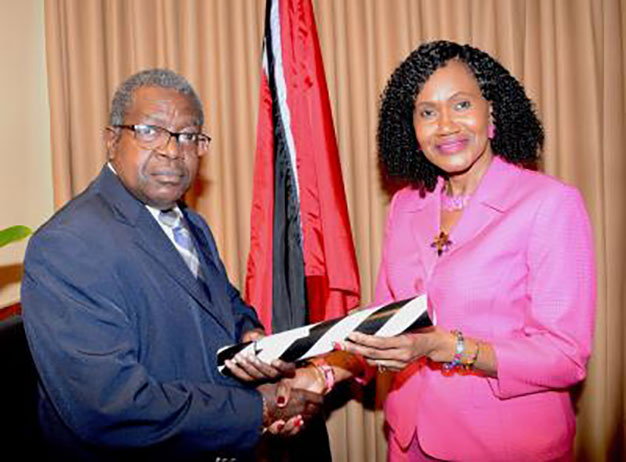
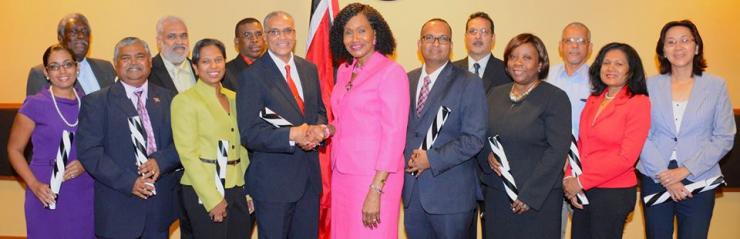
May 6, 2016: The newly appointed OSHA Board received their Instruments of Appointment from Senator the Honourable Jennifer Baptiste-Primus, Minister of Labour and Small Enterprise Development at the Ministry’s Head Office on Wednesday, May 5, 2016.
In her meeting with the Board, the Minister of Labour thanked each member individually for having agreed to serve and expressed her highest confidence in this Board’s ability. The Minister stated that there was need for good governance, accountability and transparency.
Human Resource Development Commission for CARICOM
(CARICOM Secretariat, Turkeyen, Greater Georgetown, Guyana) A Commission, charged with creating a Human Resource Development Strategy for the Caribbean Community (CARICOM), will be launched on Thursday 12 May 2016, in Barbados. The ceremony will be hosted at the Caribbean Development Bank (CDB).
CARICOM Heads of Government took the decision to establish the Commission at their twenty-fifth Intersessional Meeting in 2014. It comprises seventeen specialists and other stakeholders in Education and Human Resource Development, and its work is supported by the CARICOM Secretariat, as coordinator, and CDB, which is financing the establishment of a gender-responsive and socially inclusive CARICOM strategy for harmonised education reform.
The Regional Education and Human Resource Development 2030 Strategy and Action Plan (the Regional HRD Strategy), which the Commission will shape, is intended to form the basis for converged action by Member States. It is expected that the Commission will also develop policy recommendations for education reform in CARICOM Member States.
The Commission will also engage short-term expertise to collect and analyse data to inform the development of the strategy. It will also host two four-day Regional Education Sector Monitoring and Evaluation Meetings to promote ownership for, and build capacity in, monitoring and evaluation at the national level.
Following the development of the strategy and action plan, the Commission will be expected to operationalise the structure for coordinating, monitoring and reporting.
Speakers at next Thursday’s launch will include Assistant Secretary-General at the CARICOM Secretariat, Dr. Douglas Slater, a representative from the Caribbean Development Bank, a member of the HRD Commission and one of the two CARICOM Youth Ambassadors from Barbados. There will also be a Question and Answer session for the media to engage the Commission on various aspects of its mandate.
UNESCO To Assist SKN With Development of Youth Policy and Action Plan
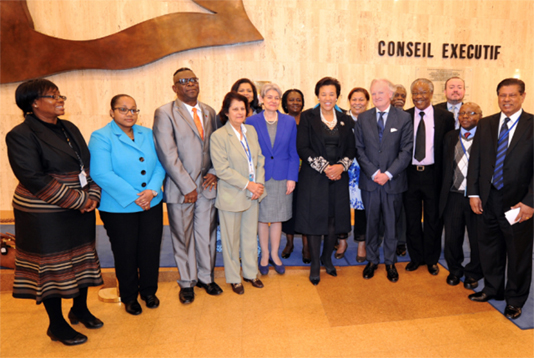
(NATCOM) – Basseterre, 5th May, 2016: St. Kitts and Nevis’ participation in UNESCO’s 199th Session in April 2016 put the Government’s agenda for youth in sharp focus and established it as an action priority in the months ahead.
Secretary General of the National Commission for UNESCO Mr. Antonio Maynard and Permanent Delegate of the Federation of St. Kitts and Nevis to UNESCO, Ambassador David Doyle, presented a number of burning issues affecting the Federation including that of the finalization of a Youth Policy that would necessitate the revision of the existing draft policy.
A substantive meeting lead by Secretary General of the National Commission for UNESCO – St. Kitts and Nevis, Antonio Maynard and Assistant Director-General for Social and Human Sciences Ms. Nada Al-Nashif, centered on UNESCO’s intervention to conduct such a review of St. Kitts and Nevis’ Youth Policy and Strategic Action Plan.
As such, preparations got underway for a planned study visit to St. Kitts and Nevis to be undertaken by the UNESCO Youth Unit to discuss the existing embryonic plan for youth development, through a multi-stakeholder and participatory approach.
In keeping with UNESCO’s very comprehensive strategies, the project will be coordinated with the OECS and CARICOM, given the need for an optimal response that balances national and sub-regional needs in several areas of expressed priority by Caribbean Ministers.
The UNESCO review of the St. Kitts-Nevis youth plan will be the basis of a seminar/workshop organised in the Federation to engage the youth and stakeholders on the evolution of the youth strategy.
Secretary General Antonio Maynard has recorded his appreciation for the very forthright involvement of Minister with responsibility for Education and Youth Hon Shawn Richards in supporting the forward movement of the Youth Agenda.
In response to a recent letter from the Minister of Education Hon Shawn Richards to UNESCO’s Director General for Social and Human Sciences, Ms Al-Nashif wrote. “We fully welcome this initiative and the determination of your government to provide a solid, comprehensive and cross-sectorial response to youth development issues in the country. Your proposal fully aligns with UNESCO’s operational strategy on Youth, which seeks to provide support for national youth policy development through a multi-stakeholder and participatory approach.
Deputy Prime Minister Richards has stated in response to the advise that the UNESCO Mission should be on the ground in St. Kitts and Nevis by June this year, “My government continues to appreciate the expertise and support of UNESCO’s sustainable development goals as a small island developing state and welcomes this team of experts as we seek to chart the way forward for youth development.
EU funds $19 million towards DVRP
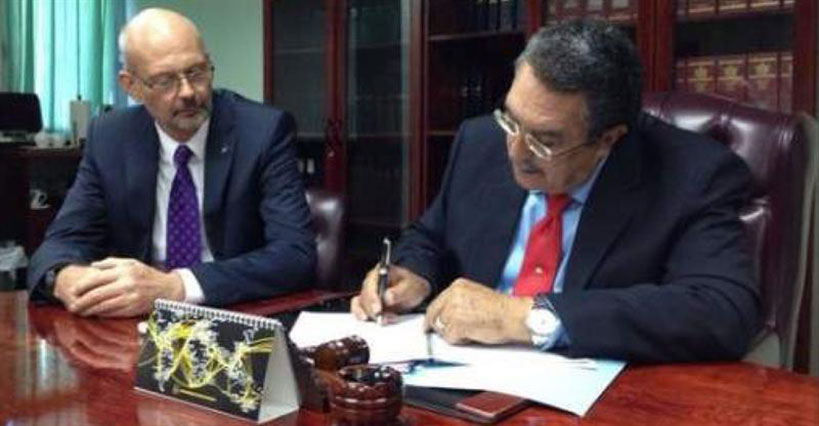
The contribution will go towards the construction of a new bridge at Piaye, and the reconstruction of a road along the west coast in Anse La Raye.
The European Union continues to assist Saint Lucia following the December 2013 trough that caused severe infrastructural damage to parts of the island.
On April 26, EU Ambassador Mikael Barfod signed a $19 million (Euro 6.2 million) financing agreement with Prime Minister Dr. Kenny Anthony, that will go towards the construction of a new bridge at Piaye on Saint Lucia’s west coast; and the reconstruction of a road along the west coast corridor in Venus, Anse La Raye.
The work will be undertaken through indirect management by the World Bank and will be aligned to the government’s US $68 million Disaster Vulnerability Reduction Project.
“This support demonstrates the EU’s commitment to the reconstruction of Saint Lucia,” Ambassador Mikael Barfod said. “It
also underscores the EU’s solidarity with the Caribbean, which we recognize as one of the most vulnerable regions in the world.”
The trough system which affected Saint Lucia in December produced extraordinary heavy rains, with more than 224 millimeters of rain recorded in a two to three hour period. The damage and loss assessment conducted by the Word Bank afterwards estimated the destruction as a result of the floods at $266 million (US$99.3 million), equivalent to 9.9 percent of the country’s GDP.
The current funding is in addition to $1.4 million (Euro 400,000) of emergency humanitarian aid provided by the EU to Saint Lucia immediately after the storm.
Prime Minister Rowley meets with Co-Founder of the Carlyle Group
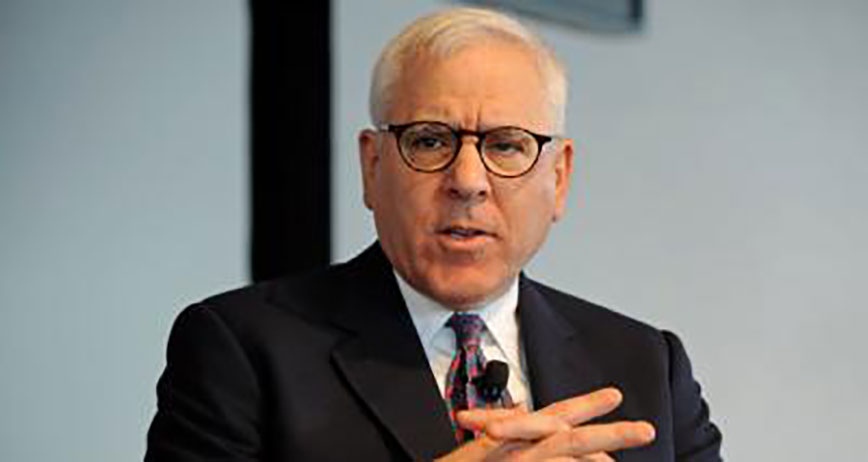
May 5, 2016: Following the close of the US – Caribbean – Central America Energy Summit yesterday (Wednesday May 4, 2016), Prime Minister Dr. the Honourable Keith Rowley met today (Thursday May 5, 2016) with the Co-Founder of the Carlyle Group, Mr. David M. Rubenstein.
The Carlyle Group is an investment conglomerate and the purpose of today’s meeting was to present Trinidad and Tobago to the company with a view to attracting investment. Dr. Rowley was accompanied to the meeting by the Minister of Foreign and CARICOM Affairs, Senator the Honourable Dennis Moses.
Immediately following that meeting, the delegation left Washington D.C. for New York City where Prime Minister Rowley is scheduled to deliver the keynote address at the Medgar Evers College’s Inaugural International Education Awards Ceremony.
On Friday May 6, the Prime Minister and the delegation will leave New York City for London, where he is expected to hold talks with key players in the energy sector.
Vaccination Week in the Americas
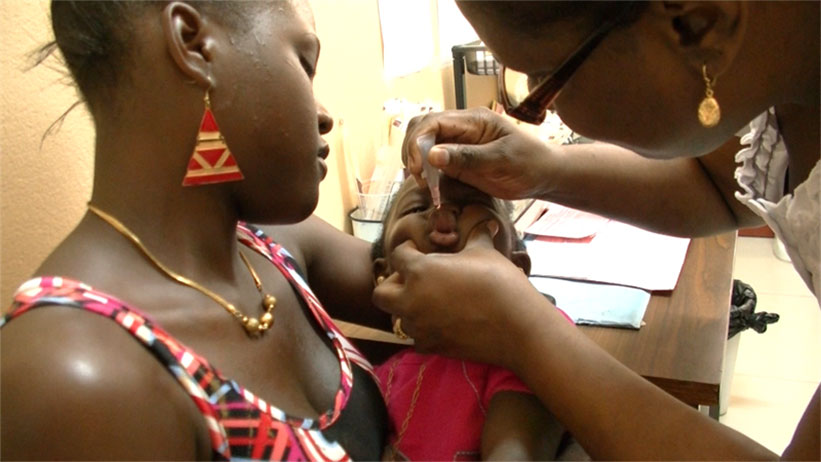
Caribbean health authorities observed Vaccination Week 2016 with a slate of activities.
Health authorities in Latin America and the Caribbean are urging people to clean up potential mosquito breeding sites in and around their homes to prevent the spread of zika and other mosquito-borne diseases.
The focus on mosquito control reflects concern over the rapid spread of zika to countries and territories throughout the Americas and the fact that there is currently no vaccine against the disease.
In commemoration of Vaccination Week, Saint Lucia organized community clean-up campaigns to reduce vector breeding sites.
Sint Maarten sponsored health information sessions on vector control for children 17 and under, and Barbados and Trinidad and Tobago disseminated information on the prevention and control of mosquito-borne diseases in general.
In the wider Caribbean, Bolivia intensified its surveillance of measles, rubella and acute flaccid paralysis in areas where zika is circulating, while in El Salvador, health authorities carried out fumigation. Haiti urged its population to prevent and destroy mosquito breeding sites, and advised women in particular, how to protect themselves against mosquito bites.
“Given the number of mosquito-borne disease outbreaks, namely zika, dengue and chikungunya, many countries took advantage of Vaccination Week in the Americas to share information on personal protection and vector-control activities,” said Carissa F. Etienne, Director of the Pan American Health Organization (PAHO). PAHO coordinated Vaccination Week, the largest international health initiative in the Americas.
Aedes mosquitoes are well adapted to human settlements, preferring to breed in clean water that collects in man-made recipients such as bottles, cans, plastic containers and discarded tires. Successfully eliminating these potential breeding sites requires the active participation of families and communities in environmental clean-up efforts.
PAHO has developed recommendations for preventing and eliminating Aedes breeding sites. The recommendations urge individuals, families and communities to ensure all tanks, water deposits and containers are covered and sealed to keep out mosquitoes; change the water and brush the insides of sinks and water barrels at least once a week; change water in flower vases and pet bowls weekly; safely dispose of unused containers that can collect water and serve as breeding sites; turn over any containers that cannot be thrown away and protect them from rain; pour out water from flower pots and planters and replace with damp sand, keep swimming pools treated according to recommendations; clean all drains and gutters; keep grass short and weed-free, and keep patios clean.
In addition to mosquito-control efforts, at least 21 countries promoted complementary prevention activities during Vaccination Week. The activities include de-worming, vitamin A supplementation, distribution of oral rehydration therapy, chronic disease and obesity screening, prenatal checks, dental health activities, childhood growth and development screening, work, wellness and school health programming, and the vaccination of pets.
Vaccination Week was held from April 23 to May 2.
Cost of fishing in the Caribbean to be assessed under CRFM and FAO study
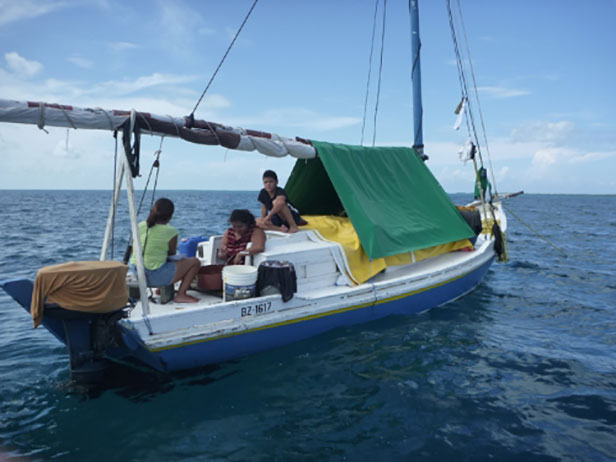
Belize City, Thursday, 5 May 2016 (CRFM)—The Caribbean Regional Fisheries Mechanism (CRFM) is convening a meeting of fisheries experts to chart the course for a new study to look at the impacts of rising cost factors of fishing operations, such as labor, fuel, fishing gear, repair and maintenance, and capital.
The expert working group, which meets in Bridgetown, Barbados today, Thursday, 5 May and tomorrow, Friday, 6 May 2016, will include fisheries experts from CRFM Member States, the CRFM Secretariat, the private sector and the UN FAO, the partner agency for the initiative.
The consultant for the project, Claudia Stella Beltrán Turriago, an economist, will join the experts in Barbados, as they agree on the best methodology to carry out the study. They will also select beneficiary countries which will be targeted for fieldwork and remote surveys, which will entail surveys of small-scale and industrial fishers, suppliers, traders and exporters.
After the study is completed, a policy brief will be prepared for action by Caribbean leaders. The brief will highlight the major findings and recommendations, including policy options and strategies to increase efficiency, productivity and sustainability of the fisheries and aquaculture sector, while reducing economic risks.
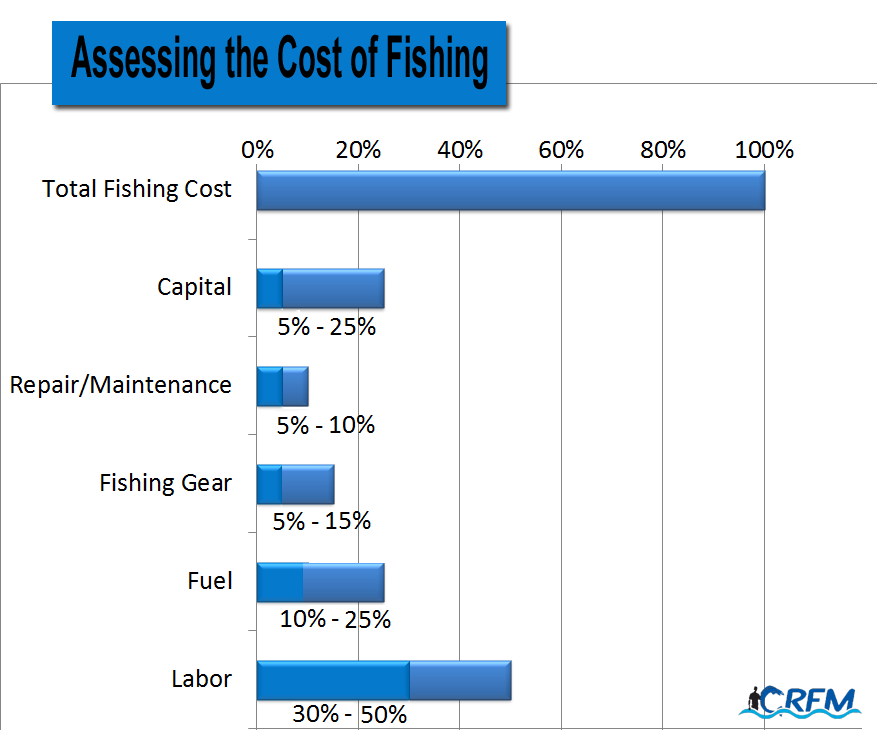
Milton Haughton, Executive Director of the CRFM, notes that, “This study should help fishers and fishing companies to improve profits and income. It is one of the many initiatives being pursued by the CRFM Member States to improve food security. We hope it will also transform, reposition and improve economic and ecological resilience in the fisheries sector, in response to climate change and in keeping with our commitments under the Caribbean Community Common Fisheries Policy.”
The beneficiary countries are the 17 states which are members of the Caribbean Regional Fisheries Mechanism, as well as countries covered by a UN/FAO project on the Sustainable Management of Bycatch in Trawl Fishing in Latin America and the Caribbean (the REBYC-II LAC), funded by the Global Environment Facility (GEF).
The Caribbean region is very susceptible to fluctuations in world food prices due to high dependence on imported products. The region’s food security is furthermore threatened by the adverse impacts of climate change and climate variability, which exacerbate droughts and floods in major agriculture producing nations, and which are also affecting the region’s coastal and marine ecosystems, like coral reefs, and our fisheries.
In highlighting the need for the study, the CRFM notes that, “Member States need to guard against future economic shocks, such as spikes in fuel prices and other inputs; reduce economic risks; modernize with a view to improving the efficiency of the region’s fishing fleets; reduce barriers to accessing new markets; and address price fluctuations for commercially important species by promoting and developing value-added products.”
Fighting non-communicable diseases
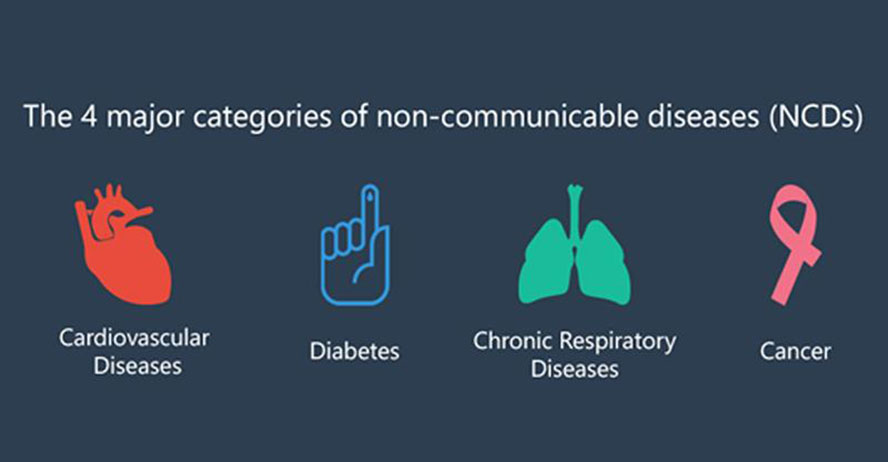
Saint Lucia implements an action plan to reduce the prevalence of chronic non-communicable diseases in the country.
The PAN American Health Organization (PAHO) recently held a two-day consultation in Saint Lucia, on chronic non-communicable diseases.
The National Stakeholders Consultation on Chronic Non-Communicable Diseases Policy and Multi-Sectoral Action Plan brought together a cross section of participants from the ministries of Agriculture, Education, Health, and Social Transformation; the Saint Lucia Blind Welfare Association, the Diabetes and Hypertension Association, faith based organizations and the Lung and Heart Association.
Julieta Joseph, Assistant Principal Nursing Officer in the Ministry of Health said chronic non-communicable diseases is the leading cause of death in Saint Lucia.
“Diseases such as diabetes, hypertension, cardiovascular illnesses, cancers and other upper respiratory diseases like asthma are the leading causes of death in Saint Lucia, cancer being the most common, while almost eight percent of the population has diabetes.
“The collaboration of all ministries and organizations coming together to combat this national problem can result in positive outcomes for Saint Lucia. We may not be able to make non-communicable diseases disappear, although that is our goal, but we can reduce the incidence and prevalence of them in Saint Lucia.”
Dr. Tomo Kanda, PAHO’s Advisor on non-communicable diseases said the prevention and control of such diseases does not reside solely with the Ministry of Health, but requires the cooperation, partnership and commitment of other stakeholders. Saint Lucia has seen increasing morbidity rates due to non-communicable diseases, she added, particularly because of unhealthy food, physical inactivity, alcohol consumption and tobacco.
The multi-sectoral action plan will focus on four major strategic lines of action: surveillance;
the coordination, partnership, and management of the program; the reduction of risk factors and improvement of protective factors; and the health system’s response to non-communicable diseases.
It is expected that the final Policy And Multi-Sectoral Action Plan will soon be submitted to the Cabinet of Ministers for approval.
The workshop was held at the Cardinal Kelvin Felix Pastoral Centre on April 27 – 28.
Tourism Minister Welcomes JetBlue Flight
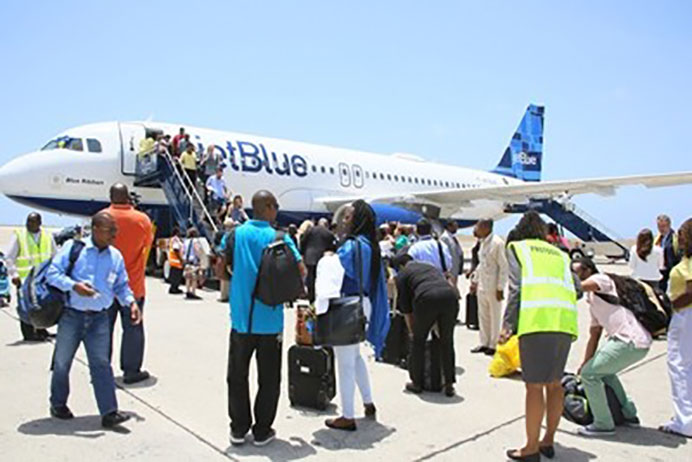
The inaugural JetBlue flight 385 out of Hollywood International Airport in Fort Lauderdale is testament to the commitment of that airline to Barbados.
Minister of Tourism and International Transport, Richard Sealy, made this declaration minutes after the flight landed at the Grantley Adams International Airport, bringing visitors as well as a large delegation of Barbadians from South Florida.
In thanking Chief Executive Officer (CEO) of JetBlue, Robin Hayes, for being a staunch advocate for Barbados and a driving force in the development of the relationship between this country and the airline, Mr. Sealy said that he had seen phenomenal growth in the tourist sector since the introduction of the airline in 2009.
“From that Kennedy flight – one flight a day, we have now moved to the point where we have as many as 25 JetBlue flights a week from now three gateways,” he stated.
The Minister also credited the airline with contributing to the large increase in visitor arrivals from the United States. “In 2015, we saw some incredible increases over 2014, I think it was almost 25 percent, and it’s clear based on how the year has started, and now with the additional 1,000 seats a week we are getting out of Fort Lauderdale, 2016 will increase on 2015. So, we are finally starting to realise a lot of the potential we always knew we had in that market,” Mr. Sealy said.
He also praised Barbadians in the diaspora for the work they did in lobbying for a JetBlue service out of New York, Boston and Fort Lauderdale over the years.
CEO of JetBlue, Robin Hayes, who flew in on the inaugural flight, agreed with Mr. Sealy that his organisation had an excellent long-standing relationship with Barbados. He added that JetBlue intended to come to the assistance of Barbadians and residents in Florida who had suffered from very high fares in the past.
The CEO also suggested that this market could possibly satisfy more than one flight a day from Fort Lauderdale, and indicated that this was an area to be explored in the future.
kim.ramsay-moore@barbados.gov.bb