Effective 11:59 p.m. on Friday, March 20th, all crew and passengers aboard Pleasure Craft and live-aboard will not be allowed to disembark on the shores of Grenada, Carriacou and Petite Martinique.
All passengers and crew are encouraged to make contact via VHF and follow prescribed procedures for receiving their supplies and fuel, as needed.
Prior to 11:59 p.m. on Friday, all vessels already in the State of Grenada will be allowed to remain, but must follow the established health and safety protocols.
According to the Immigration Act of Grenada:-No person shall enter Grenada except at a Port of entry.
A person entering Grenada by sea, shall not disembark without the consent of an Immigration Officer, and the master of a ship shall not allow any person to disembark without such consent.
The Ministry of Health, through the Sanitary Authority says any person who contravenes, or fails or refuses to comply with any of these provisions will be fined or detained.
The Eastern Caribbean Central Bank and the ECCU Bankers Association understand the anxiety that some customers and residents across the ECCU are experiencing over the loss of income due to the COVID-19 pandemic.
The current situation is unprecedented and we recognize the magnitude of the likely impact on our daily lives. Rest assured, we are here to offer guidance and support as we navigate this situation together.
Over the past few days, we have been in discussions to formulate a support programme for customers and residents during this time of difficulty and uncertainty. In view of the projected impact on individuals and businesses across our region, we have agreed to adopt a collective and coordinated approach to help address the economic and social consequences from the pandemic. Consequently, we have agreed that a support programme will be implemented by all member banks in the Eastern Caribbean Currency Union.
The programme will facilitate a loan repayment moratorium for an initial period of up to six (6) months with a possible extension upon review. In addition to the deferral of loan repayments, a waiver of late fees and charges will be applicable to eligible customers during this period.
Each member bank will advise its customers of the details and process for the support programme. Therefore, please contact your financial institution directly for more information.
Given the absolute necessity to avoid large gatherings, customers of financial institutions and residents of the Currency Union are strongly encouraged to use digital and online channels as far as possible. These services are offered, without charge, by most financial institutions. As in all situations, the residents must exercise due care and attention including protecting passwords and keys. Please do not share them with anyone.
The Eastern Caribbean Central Bank and ECCU Bankers Association remain resolute in fulfilling our duty to protect the wellbeing of customers and residents through sound advice, products and appropriate regulatory responses that secure our financial stability now and positon us for a strong recovery and financial future.
Fellow citizens, the pandemic, Covid-19 has resulted in a global crisis that is unlike any we have seen in our lifetime.
Over 250,000 people worldwide, have so far contracted Covid-19.
We are thankful thus far, that no case of the virus has yet been confirmed here in the tri-island State of Grenada. Nevertheless, we know it is only a matter of time, given the introduction of the virus in our region, and its rapid spread around the world. We must, therefore, continue with aggressive measures, designed to lessen the impact, when the virus does hit our shores.
The Ministry of Health continues to lead from the front in this regard, and we are forever grateful to the leadership, and the men and women on the frontlines, who selflessly stand ready to execute their duties. I also want to specially recognise and commend the National Strategic Committee on Covid-19 which continues to meet daily to strategise and coordinate efforts at the national level.
Our government has taken a very aggressive, proactive approach in the fight against Covid-19. By now, you would have seen or received many informational public service announcements, posters, text messages, television and radio commercials, and hundreds of social media posts from the government, encouraging, among other things, proper hygiene, and providing regular updates on government’s efforts to protect Grenada from the contracting and spread of Covid-19.
Last week we began to practise what’s termed as “social distancing”, and moving into this week, you would have seen constant updates on travel advisories, with restrictions for high-risk areas such as the United Kingdom and the United States. We are also currently moving to close our seaports for yachts and leisure boats, in the immediate period.
Screening of passengers allowed to enter Grenada has been aggressive and sustained, at our ports of entry. In these coming days and weeks, you will continue to see heightened measures related to self-quarantine; and when the virus is officially confirmed here on Island – total isolation of confirmed cases.
Sisters and brothers, we have carefully studied the lessons learned from China and other countries hardest hit by this virus. We have twinned those lessons with scientific data from the experts, which support our approach in fighting Covid-19.
Scientific data shows that countries that have been best at managing the outbreak and spread of Covid-19, have done so through a combination of testing, contact tracing, public awareness campaigns and a commitment to abide by quarantines and social distancing protocols. Border protection measures have also proven to be invaluable in this fight.
I am grateful to our friends and partners, who understand that, as a country — and more so, as a small island, we have no choice but to do all we can to safeguard our shores.
I also thank the people of Grenada for doing what we as Grenadians do — come together in a time of need. I realise it has been challenging to make the many sacrifices and adjustments that we have had to make over the past several weeks; but by and large, we all understand the necessity of such timely and comprehensive measures.
Our progress to date, and our continued progress, will depend on our collective commitment to keeping Grenadians healthy, for we are all in this together. Even with all this, the global crisis that is Covid-19, also comes at a tremendous financial and economic cost for citizens, the business community and government alike.
We understand the anxiety for individuals, families and communities. As a government, even while we explore various avenues to ease the anxiety of citizens, and while we anticipate that the private sector will meet payroll obligations at the end of this month, we must push forward with some preliminary concrete measures that are designed, in the interim, to infuse some form of positive financial and mental impact on workers, businesses, and our socially vulnerable.
To that end, for the next 3 months, April through June 2020 in the first instance, the Government of Grenada will take the following actions:
Work tirelessly to avoid staff layoffs and the loss of livelihood in the tourism sector by providing $20 million worth of payroll support to the hoteliers, restaurants, bars, small travel agents and income support to public buses, taxi drivers, tourist vendors and other such identified hospitality-based businesses
Adjust the small hoteliers’ facility at Grenada Development Bank to support all hoteliers by injecting an additional $7 million to this facility
Work with the National Insurance Scheme (NIS) to provide unemployment benefits support due to the fallout of this pandemic initially estimated at $10 million
Suspend the 2% increase in NIS payments for the period
Encourage the trade union movement to work with the business community to support the use of vacation leave as a first option in the event of the businesses having to resort to skeleton staff
Expand the public sector investment programmes in an effort to boost employment at the community level
Suspend the monthly advance payment on Corporate Income Tax for the period
Suspend the instalment payments on the Annual Stamp Tax for the period
Expand the small business soft lending facility at the Grenada Development Bank by an additional $5 million
Place on the price control list certain cleaning items to prevent price gouging at this time. This will include but is not limited to hand sanitisers, bleach, hydrogen peroxide and hand soap
Follow all necessary exemption protocols to provide incentives to private labs and medical facilities procuring items to support the fight against Covid-19
Increase farm labour support to immediately boost agricultural production islandwide. Government is also giving consideration to the support for farmers and fish exporters who have recently been affected as a result of international travel restrictions
Additionally, now that the International Centre for Settlement of Investment Disputes Tribunal has delivered its ruling in the arbitration between the Government of Grenada and WRB, Government commits to ensuring that the cost of electricity will be reduced by 30% for the months of March, April and May in the first instance, to all consumers. This will not apply to a few companies that have special concessionary arrangements. While it will not be reflected on the bill in the immediate period, future billing cycles will highlight this reduction as the administrative process is finalised.
Our financial institutions have also agreed, in principle, to provide a moratorium on principal and interest payments to their clients on condition, for the 3-month period in question, in the first instance.
Friends, the measures outlined are intended to be preliminary, as we continue to work toward longer-term actions, as this crisis unfolds.
We are encouraged by the spirit of cooperation that existed among us, only a handful of years ago, when we went through our Home Grown Structural Adjustment Programme.
Broad-based consultations and support, as we are seeing now, from all stakeholders, including, the business community, trade union movement, churches, non-governmental organisations and civil society, enabled us to achieve a feat between 2013 and 2016, the likes of which we had not seen in our country. A non-existent 2013 economy grew steadily by an average 5% during and after the Structural Adjustment Programme and was set to maintain that pace again this year, prior to this pandemic.
It is that same spirit of cooperation, unity, and resilience that we rely on now, to see us through the current health crisis, which has significant economic and social impact.
As a government, we are grateful for the sacrifices and support of our social partners and citizens over the years. It is because of those sacrifices that we have a small cushion now, that, with support from the international community, can see us through several of the lean months ahead; as we brace ourselves and fortify our country to weather this crisis.
We continue to work with our friends and partners, such as the International Monetary Fund, the World Bank, the Eastern Caribbean Central Bank and other institutions and friendly governments, to pursue any and all avenues that will provide us some measure of stability. We are grateful for their continued support.
Friends, the word “global” has never had more meaning than it does today. We are all currently facing the same crisis and very similar challenges, and no one can afford to be myopic or bigoted in this fight. We have no choice but to work together, and that includes with the rest of the world and with each other, here at home.
We are, for better or worse, our brothers’ keeper through this crisis and we must demonstrate that at every turn, beginning with the simple act of washing our hands frequently with soap and water.
Let me use this opportunity to commend all stakeholders and the general public for the support provided to the Government of Grenada in enforcing, promoting, crafting and adhering to the guidelines provided to help prevent the spread of Covid-19.
Continue to do your part, and the government will continue to work tirelessly to do its part — and more — to create an enabling environment in which we can still live, learn, work and play when this is all over.
May God continue to lead and guide us in these challenging times, as we continue to rely on his wisdom, strength and protection. Stay tuned for more updates from us in the days and weeks ahead.
Saint Lucia extends travel restrictions on travellers and prohibits entry of cruise vessels.
In an effort to restrict the likelihood of introduction of COVID-19 into the Saint Lucian population, the Department of Health and Wellness on February 4, 2020 put in place travel restrictions on non-nationals with a travel history within the last 14 days from Mainland China, (whether in- transit or originating).
The Department of Health and Wellness extended the travel restrictions of persons with a travel history within the last 14 days to Hong Kong, Republic of Korea, Japan, Italy and Singapore effective Wednesday, February 26 at 12 a.m.
We note an escalation in the number of confirmed cases of COVID-19 cases internationally as well as the spread to 122 countries outside of China, including the Caribbean region.
As such, we extend the travel restrictions of persons with a travel history within the last 14 days to include Spain, Mainland France, Germany and Iran and the United Kingdom effective Tuesday, March 17, 2020 at 12 a.m. The Government of Saint Lucia is working with the authorities from Martinique in defining the terms of the commute between the two countries.
Persons who travel from the United States within the last 14 days who develop respiratory signs and symptoms will be isolated and tested for COVID-19.
Any national returning to Saint Lucia with a travel history to any countries restricted above will be quarantined for 14 days. The Department of Health and Wellness also discourages all non-essential travel to the places listed above.
Also, effective Monday, March 16th, 2020 cruise vessels will not be allowed to berth into our ports. The Government of Saint Lucia will continue working to strengthen the local capacities against this global threat.
For more information, please contact the Office of the Chief Medical Officer or the Epidemiology Unit, at 468-5309/468-5317 respectively
CARICOM High Level Team arrives in Guyana to supervise Elections Recount
A CARICOM High Level Team is now in Guyana to supervise the re-counting of ballots from the country’s 2 March 2020 Elections.
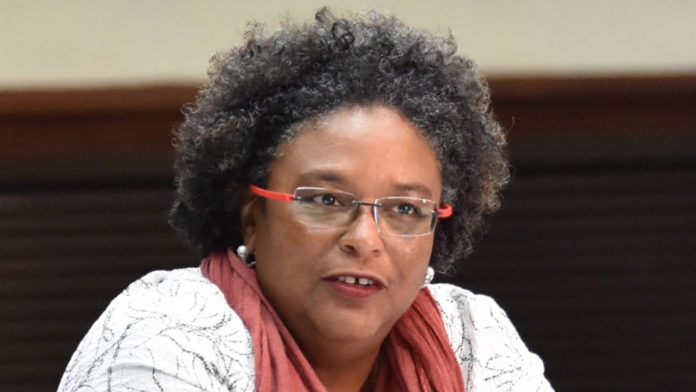
CARICOM Chairman, Prime Minister Mia Mottley of Barbados, on Saturday announced that Guyana’s President Mr David Granger made a request for the Caribbean Community to field an Independent High-Level Team to supervise the recounting of the ballots in all Regions, and that this was agreed to by Opposition Leader Mr Bharrat Jagdeo.
“I’ve spoken directly to both the President and Leader of the Opposition and they have both committed to abide by the results of a fair and transparent recount of each and every ballot, as supervised by the CARICOM Team,” the CARICOM Chairman said.
The Independent High level team is chaired by the former Attorney-General and Minister of Foreign Affairs of Dominica Ms Francine Baron, and comprise former Minister of Finance of Grenada Mr Anthony Boatswain; Senior Lecturer in the Department of Government of UWI Ms Cynthia Barrow-Giles; Chief Electoral Officer of Barbados Ms Angela Taylor; and Chief Elections Officer of Trinidad and Tobago Ms Fern Narcis-Scope.
Consumers call for protection as World Consumer Rights Day 2020 is observed.
The consumer movement marks 15th March with World Consumer Rights Day
every year, as a means of raising global awareness about consumer rights and
needs. Celebrating the day is a chance to demand that the rights of all consumers
are respected and protected, and to protest against market abuses and social
injustices which undermine those rights.
Here in Grenada, The Grenadian Organisation for Consumer Affairs (GrenOCA)
stands in solidarity with consumers everywhere and especially those who are
experiencing market abuses and social injustices.
GrenOCA is concerned about recent developments within the electricity sector,
where consumers can be considered to be caught in the middle of ‘fight’ between
the Government and the present majority shareholder at Grenlec. The consumer
therefore is not protected and can be severely affected. GrenOCA demands that the
rights of consumers be respected and protected.
As we join with the international community for the observance of WCRD 2020
with the theme “sustainable consumer”, we also call on consumers as a bloc or
body of people to ensure that sustainability be included in national development.
GrenOCA believes that consumer awareness and education are the pillars for
consumer protection.
During the past year we have received several complaints from consumers ranging
from expired goods to very poor levels and qualities of customer services. The
need to bring into force the Consumer Protection Act (2017) is more than
important to consumers here in Grenada, Carriacou and Petite Martinique.
It is with a great sense of relief to consumer advocates – here and in the region – to
the intention of Government to do so by July 2020. No doubt, with a Consumer Protection legislation into force, consumers’ confidence rises, knowing there can
now be redress from many of the injustices being experienced.
According to Consumers International (CI), millions are already feeling the effects
of climate change. Consumers have a vital role to play. Firstly, through their
purchasing power – a global study found that 66% of consumers say they’re
willing to pay more for sustainable brands (a figure that rises to 73% for
Millennials). But also, through their ability to push for system change in supply
chains or changes in regulation. Consumers are already making changes to their
lifestyle to be more sustainable – recycling, reducing food waste and avoiding
unsustainable products, and they can make a bigger impact with further support
from businesses and governments.
CI also noted that a recent survey found 37% don’t know how they can help tackle
climate change and 59% feel they do not get enough support from governments,
and 51% from business.
Governments and businesses must also act to give consumers the information,
choice and the infrastructure they need to live more sustainable lives. Consumers
are critical to the success of any transition to more sustainable consumption but
they cannot do it alone.
World Consumer Rights Day was inspired by President John F Kennedy, who sent
a special message to the US Congress on 15th March 1962, in which he formally
addressed the issue of consumer rights. He was the first world leader to do so. The
consumer movement first marked that date in 1983 and now uses the day every
year to mobilise action on important issues and campaigns.
CARICOM Prime Ministers to make post-Elections visit to Guyana.
Prime Minister Mia Amor Mottley will lead a delegation of regional Prime Ministers on a special two-day mission to Guyana, starting tomorrow March 11. The chairman of CARICOM will be joined by Prime Ministers Roosevelt Skerrit of Dominica, Ralph Gonsalves of St Vincent and the Grenadines and Keith Mitchell of Grenada.
In an effort to ease tension in the country and assist in arriving at a resolution to the impasse that resulted from last Monday’s general elections, the delegation will meet with the leadership of all parties that contested the poll.
Additionally, the CARICOM heads will meet with representatives of the Commonwealth, Organisation of American States, European Union and Carter Centre observer missions that were in the country to monitor the conduct of the elections.
World Bank Approves US$20 Million to Strengthen Human Capital Resilience for Youth and Vulnerable in Saint Lucia.
The World Bank Board of Executive Directors approved today a US$20 million Human Capital Resilience Project for Saint Lucia to improve skills relevant to labor market demands and strengthen the social protection system through increasing resilience of the most vulnerable households to shocks. The project will offer skills training, particularly to youth and women, and provide poor households with improved social protection coverage.
“The World Bank is committed to contributing to the Eastern Caribbean states’ development priorities and is delighted to partner in Saint Lucia’s cross-cutting program to build human capital resilience,” said Tahseen Sayed, World Bank Country Director for the Caribbean.
“This project will help better match technical skills with labor market needs to build job opportunities especially for the youth. It will also improve coverage of social safety nets and includes measures for enhancing the responsiveness of the social protection system in case of disasters.”
Small island economies in the Caribbean are highly dependent on tourism. Tourism in Saint Lucia is projected to contribute over 50 percent of GDP and 60 percent of jobs by 2027, and the labor market in this and other productive sectors will require human capital with high quality skills. The project will support the Government’s measures to increase job opportunities for youth and women by expanding the number and quality of technical and vocational education offerings, and sponsor internships and job placements with support from the private sector.
The project aims to support the country’s social protection system to be more efficient by improving social spending and strengthening targeting to ensure appropriate coverage. The project will also contribute to improving social spending and expanding safety nets.
The US$20 million operation is financed by the International Development Association, the concessional financing arm of the World Bank. The interest free credit has a maturity of 40 years, a grace period of 10 years and no interest.