

Home Blog Page 112

Government’s Zero Hunger Trust Fund Initiative

Zero Hunger Trust Fund

Young Persons Equipped And Empowered Under Government’s Zero Hunger Trust Fund Initiative.

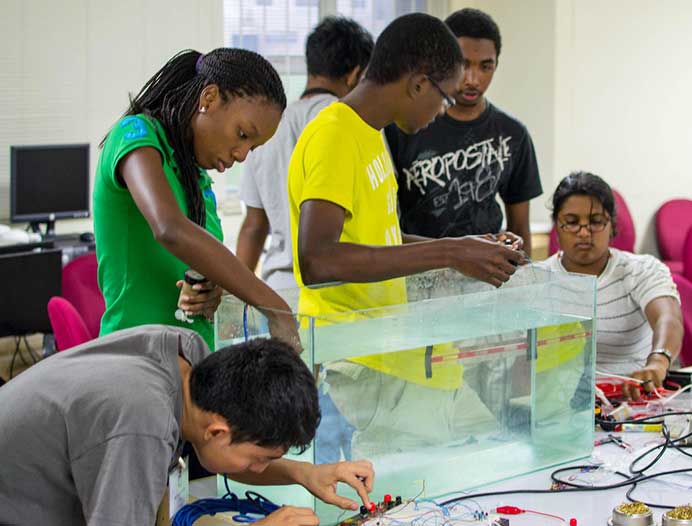
Seventeen young Vincentians have successfully acquired skills in computer networking and repairs after completing the CompTIA  A+ and CompTIA Network+ courses.
The young persons completed the courses under the Rapid Training and Skills Development Programme, a component of Government’s Zero Hunger Trust Fund (ZHTF), Initiative. The computer certification courses lasted approximately 13 weeks and successful participants then went on to participate in a six-month paid apprenticeship programme, which allowed them to benefit from critical on-the-job training. The ZHTF Initiative is being administered by the Ministry of Economic Planning, Sustainable Development, Industry, Information & Labour.
Speaking at a ceremony on Tuesday 27th June to celebrate the successful completion of the first cohort of persons to be trained, Director of Economic Planning Laura Anthony Browne, explained that the project aims to develop skills which are important in improving the employability and potential productivity of the population, noting that this is an important tool in reducing poverty and exclusion.
Browne further outlined that the ZHTF currently executes three programs aimed at poverty reduction and specifically ridding Saint Vincent and the Grenadines of hunger. The programs include the ‘adopt a classroom’ initiative where the ZHTF has adopted seven Kindergarten classrooms in six communities in Saint Vincent and the Grenadines, and provides for them everything they need to attend school consistently.
The second programme offers nutritional assistance to elderly people throughout the country. Under this initiative the ZHTF committee distributes food baskets to the vulnerable elderly who are eighty-five years of age and above. The third programme seeks to fight against unemployability, the main contributing factor of poverty. It is under this particular initiative that the young persons were equipped with the skill-sets to increase their employability.
Speaking at the ceremony, the mastermind behind the ZHTF initiative, Prime Minister Gonsalves explained that a study conducted here in 2008/09 found that Saint Vincent and the Grenadines had done very well, reducing general poverty from 37.5% to 30.2% and indigence from 25.7% to 2.9%. Despite the remarkable progress however, the Prime Minister said that he was still troubled that approximately three thousand persons in the country were still struggling with hunger at certain times. Dr. Gonsalves said that it was then that he came up with this targeted strategic intervention to address the problem and the ZHTF initiative was born.
The Prime Minister then encouraged the young persons who successfully completed the program to make the most of the opportunity, to be focused and forward-thinking. He further advised them to use the training and attachment opportunities as launching pads to further their education and secure their future.
The Republic of China on Taiwan provided some sponsorship for the programme. Speaking at the ceremony, Ambassador His Excellency Baushaun Ger, said that it is a good tool to help in the reduction of poverty. The Ambassador added that the Embassy supports the project and believes that youth employment is an issue of top priority to address, adding that it is a challenge that every country must seek to address.

Beware Of Alcohol Abuse During Festival

Alcohol abuse
As Barbadians approach the height of this year’s Crop Over Festival, they have been warned about the consequences of alcohol abuse.
Acting Senior Medical Officer of Health, Dr. Ingrid Cumberbatch, speaking at a dialogue on The Safe Use of Alcohol in Barbados last Friday, told participants that not only was there evidence of heavy episodic alcohol consumption or binge drinking in Barbados, but the Ministry of Health was aware that there was increased use and misuse of alcohol during Crop Over.
She quoted the 2012 Health of the Nation Study, which revealed that 14 per cent of Barbadians participated in heavy episodic alcohol consumption, with men’s prevalence being five times higher than women. The study also showed that the prevalence was highest in men, aged 25 to 44.
Dr. Cumberbatch called on persons marketing, selling and serving alcohol to be more aware and considerate of the harmful effects, … “recognising when customers have reached their level of intoxication and refusing to contribute to further alcohol abuse.”

The health professional disclosed that the harmful use of alcohol was one of the four major risk factors contributing to the non-communicable disease (NCD) epidemic in Barbados. Additionally, she said, alcohol consumption was associated with mental illness, domestic violence, and injuries and fatalities as a result of traffic accidents.
Citing statistics from the World Health Organisation, the Medical Officer of Health pointed to 3.3 million deaths worldwide every year as a result of alcohol abuse, with 25 per cent of total deaths in the 20 to 39 age group globally attributed to its misuse.
The dialogue at the Savannah Hotel, organised by the National Chronic Non-Communicable Diseases (NCD) Commission, brought together a number of stakeholders, including alcohol distributors, fete promoters, mixologists, youth workers, representatives of substance abuse facilities, psychiatrists, police officers and the media.

Venue Change for Major Carnival Events in St. Lucia

Soleil

The public is advised of venue change for the following major Saint Lucia Carnival Events:

Friday July 14th, 2017 – 8pm – PANORAMA FINALS

From: Daren Sammy Cricket Ground
To: SAB Playing Field/Vigie Playing Field, John Compton Highway

Saturday July 15th, 2017 – 8pm – NATIONAL CALYPSO FINALS
From: Daren Sammy Cricket Ground
To: SAB Playing Field/Vigie Playing Field, John Compton Highway

Sunday July 16th, 2017 – 8pm – NATIONAL SOCA MONARCH
 From: Daren Sammy Cricket Ground
To: SAB Playing Field/Vigie Playing Field, John Compton Highway

SPISE 2017: Two scholars sponsored by ECCB

SPISE 2017: Two scholars sponsored by ECCB for Caribbean Science Foundation Program

This year, twenty-five students have been selected to participate in SPISE (Student Program for Innovation in Science and Engineering​).

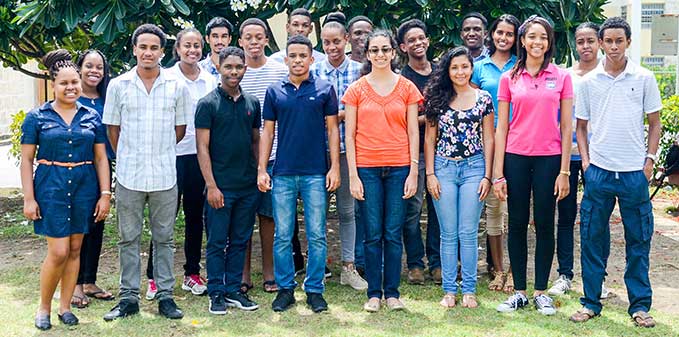
The Eastern Caribbean Central Bank, as one of the official sponsors, has enabled two students – Jason Phillip and Rol-J Williams to enroll in the training program in Barbados in July: 

SPISE is implemented by the Caribbean Science Foundation. Since 2012, it fosters outstanding Caribbean students from 16 to 19 years old passionately interested in Science to expand their talent joining a 4-week intensive summer program.
The next Program will start this month in Barbados. It consists of a full immersion in university-level courses in various disciplines such as calculus, physics, biochemistry but also renewable energy, computer programming and Mandarin. Selected students will benefit from unique mentorship to prepare applications to Ivy League U.S. universities, internships and build financial aid strategy.
This year, fifty-eight students applied to the program and twenty-five received scholarships. Among them are Jason Phillip and Rol-J William, nationals from Grenada and St. Kitts and Nevis.

“I am only the 3rd person from St. Kitts and Nevis to be accepted to
SPISE. I am very excited to have that opportunity because this is a prestigious program recognized in the Caribbean and worldwide. It is also closely linked to a similar program at the MIT Massachusetts Institute of Technology and affiliated with U.W.I. to which I look forward to applying. I believe it will add value to my record and will certainly give me an advantage in terms of ease of admission” said Rol-J.

Rol-J also intends to start a Science club at his college to encourage more students to apply to SPISE. After university, he aspires to start his career in biochemistry and molecular biology.
The participation of both students has been made possible thanks to Eastern Caribbean Central Bank funding. The cost per student is US$ 6.000. Overall, eighty-five students have had the opportunity to take part of SPISE from 2012 to 2016 since the program was implemented.
In recognition of the increasing importance of science based careers, The Caribbean Science Foundation would like to encourage more applicants for future Program intakes.

SPISE 2016 student participant – Arianna Stephenson

SPISE 2016 Class photo. © Caribbean Science Foundation

Two day workshop on Migrant Workers

Migrant Workers

Ministry Of Foreign Affairs, Trade And Commerce to host two day workshop/convention on Migrant Workers.

The Ministry of Foreign Affairs, Trade and Commerce will be hosting a two-day workshop aimed at equipping relevant stakeholders to prepare the National Report to the Committee on the Convention on Migrant Workers (CMW) from July 19-20, 2017 at 9:00 am – 3:00 pm at the Ministry of Foreign Affairs Conference Room.
The Committee on the Protection of the Rights of All Migrant Workers and Members of their Families (CMW) is the body of independent experts that monitors implementation of the International Convention on the Protection of the Rights of All Migrant Workers and Members of their Families by its State parties.
All members of the National Mechanism on Reporting and Follow-up are asked to attend. Additionally, members of civil society and other interested parties may register for the workshop, as there will be a mock dialogue session on day two that mirrors the actual interactive process in Geneva when a State’s Party Report is reviewed by the Committee on the Convention on Migrant Workers.
The workshop will be facilitated by Mr. Bradford Smith, Secretary of the Committee on the Convention on Migrant Workers, and Ms. Michelle Braithwaite, Human Rights Officer in the Office of the High Commissioner for Human Rights in Barbados.
For more information or to register for the workshop, please contact Ms. Jinelle Adams or Mr. Westford Joseph at the Ministry of Foreign Affairs, Trade and Commerce at 456-2060 or office.foreignaffairs@mail.gov.vc.
The deadline for registration is 14th July, 2017.

CXC Hosting Big Data Capacity-Building Workshop

CXC Governance

The Caribbean Examinations Council (CXC), in partnership with the Inter-American Development Bank (IDB) will host its first Capacity Building Workshop on the Big Data project from 29 to 30 June. The theme of the workshop, which will be hosted at CXC’s Headquarters in Barbados is “Cross-national Comparative Surveys in Education: Models and Methods.”
The workshop attendees include statisticians and Education Planning Officers from ministries of education around the region. Fourteen CXC Participating Countries will be represented at the two-day workshop. They are Anguilla, Antigua and Barbuda, Barbados, Belize, British Virgin Islands, Cayman Islands, Dominica, Grenada, Jamaica, Montserrat, St Kitts and Nevis, St Lucia, St Vincent and the Grenadines, and Turks and Caicos Islands.
The aim of the two-day workshop is to give participants an overview of undertaking studies with expansive quantities of structured and unstructured data.
Director of Operations and Examinations Services at CXC, Mr Stephen Savoury explained that the attendees will gain a better understanding of managing and using data through digital platforms. Among the topics to be discussed are data gathering, analyses and data mining.
Savoury stated at that at the end of the workshop, all the participants will go back to their individual territories better equipped to effectively manipulate the raw data provided to them by CXC.
The workshop will be facilitated by Mr Eugenio Gonzalez, Director of the International Association for the Evaluation of Educational Achievement (IEA)/ETS Research Institute in Germany.  The institute facilitates activities such as development and implementation of large-scale assessments, professional development and training and dissemination of research findings and information gathered through large-scale assessments.

OECS stakeholders meet in Barbados to discuss public procurement reform

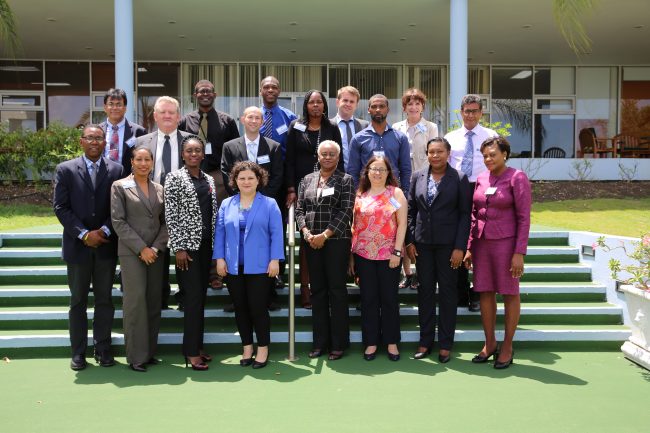
Participants in the OECS Public Procurement Reform Workshop, held at the Caribbean Development Bank from June 20-21, 2017.

Reforming the public procurement process within the Organisation of Eastern Caribbean States (OECS) could allow governments to better manage the use of scarce public funds. Such reforms also have the potential to contribute to inclusive growth by encouraging the participation of small- and medium-sized local businesses. However, many OECS countries have not yet fully implemented the necessary measures to foster reform, which has sometimes led to delays in project implementation and optimum value for money outcomes not being realised.
From June 20 to 21, 2017, the Caribbean Development Bank (CDB) hosted a workshop to support and advance public procurement reform in the OECS, at its headquarters in Barbados. The workshop provided a forum for representatives from OECS countries, the OECS Commission and the Caribbean Community (CARICOM) to review the current state of public procurement and to facilitate agreement on a unified approach to procurement reform within the OECS.
In the OECS, public procurement makes a significant contribution to GDP activity and this, combined with the challenges presented by the fiscal constraints most states faced after the recent global economic downturn, provides an appropriate context to consider possibilities for the enhancement of public procurement.   We acknowledge the progress that a number of the OECS states have made in terms of procurement reform, with a number of new procurement acts and institutions being rolled out in recent years,” said Daniel Best, Director of Projects, CDB.
He noted that the workshop represented the first time that OECS states have come together to discuss public procurement.
Given many commonalities in circumstances and challenges we hope this will provide a forum for the sharing of knowledge and best practice, and an opportunity to consider future procurement reform prospects,” he said.
The workshop aligns with CDB’s strategic objective to further good governance in the Region. CDB’s work in public procurement has included the development of an online procurement course for Caribbean stakeholders and, in collaboration with the World Bank, support for the establishment of a Caribbean regional procurement centre, to be hosted at the University of Technology Jamaica.
The workshop was hosted in collaboration with the World Bank and attended by DFID and the Inter-American Development Bank. Participants were from Anguilla, Antigua and Barbuda, the British Virgin Islands, Dominica, Montserrat, Saint Lucia, St. Vincent and the Grenadines, and St. Kitts and Nevis.

HBO premieres original documentary, Rock and a Hard Place, on July 3rd

HBO GO

The groundbreaking original documentary, Rock and Hard Place, will premiere in the Caribbean on July 3 at 21hrs AST*, exclusively on HBO. The documentary follows closely the lives of young inmates participating in the Miami-Dade County Corrections & Rehabilitation Boot Camp Program in search of a second chance: the opportunity to negotiate an exchange of a long detention sentence for participation in the program.
A passion project of Dwyane Johnson’s (HBO’s Ballers), Rock and a Hard Place was inspired by his own experiences with the law during his youth.
HBO’s original documentaries are currently available on HBO GO, the digital platform for premium entertainment. HBO GO can be accessed through any mobile device with iOS 7.1+ (iPad, iPhone, iPod Touch) or Android (OS 4.0+) operating system and at www.hbogoca.com. HBO GO can also be enjoyed on the TV screen with Chromecast and Apple TV. The platform is also available as an independent online subscription through the Apple App Store and Google Play Store digital stores, as an on-demand service with participating operators and as an add-on complement at no additional cost with a subscription to the premium pay-TV HBO/MAX package.
 

OECS commit to elimination of HIV by 2030

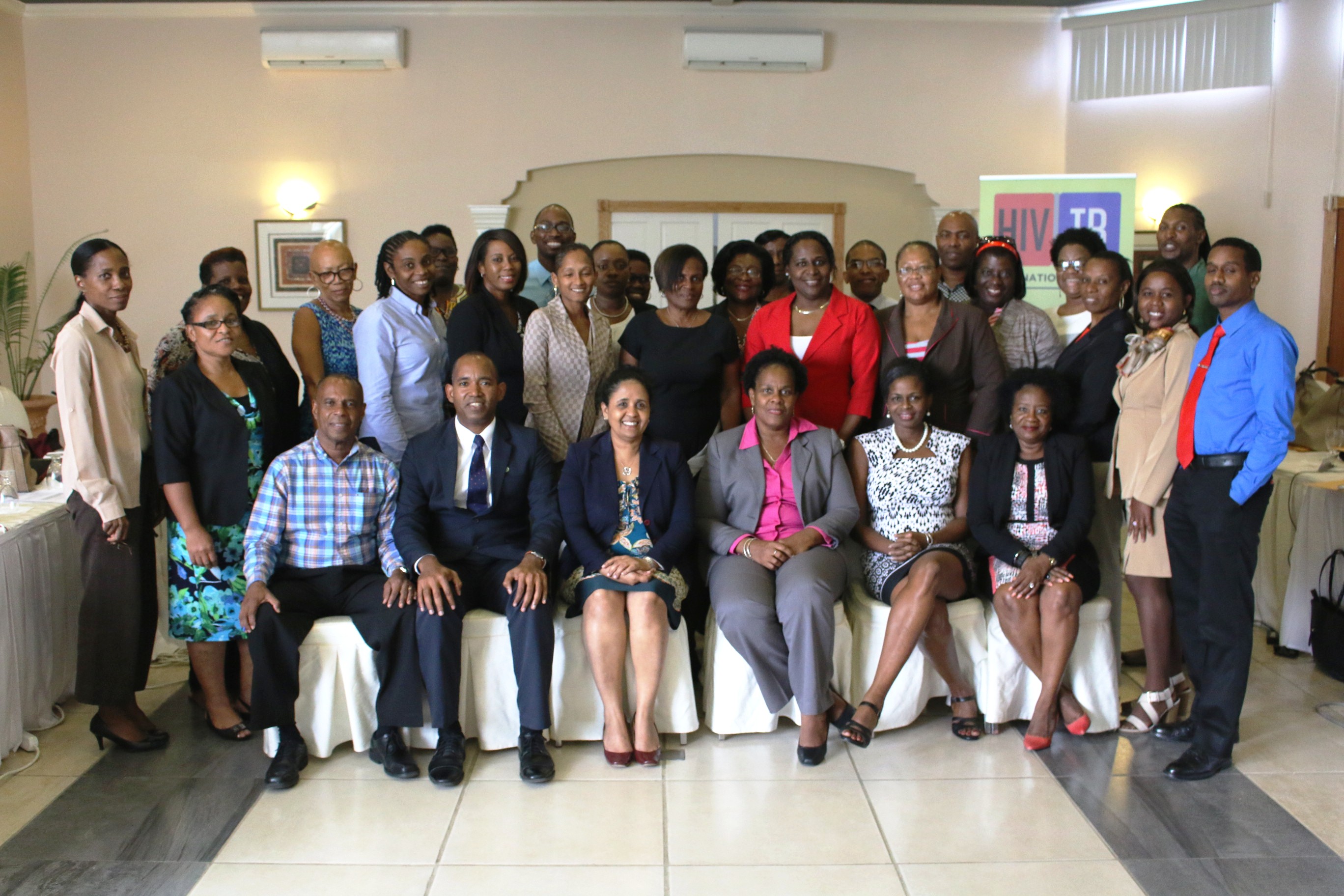
Participants in the OECS HIV/STI Guidelines Working Group

Inspired by successes in response to the Human Immunodeficiency Virus (HIV) epidemic in the sub region, coupled with the knowledge and experience garnered in recent years, OECS Member States have signed on to eliminate HIV by 2030, using UNAIDS/WHO 90-90-90 continuum of HIV care targets.
The OECS has stabilised the HIV epidemic in Member States through significant financial and technical support from donor agencies and technical partners. The funding landscape in the Caribbean region and the OECS is changing however, and necessitates a strong structured approach to preserve gains and to achieve even greater success. This approach will entail a concerted effort to reinforce and develop new systems that would increase the effectiveness of the response to the HIV epidemic.
Updating clinical guidelines and procedures, which would augment treatment care and support for people living with and affected by HIV (PLHIV), is therefore crucial to HIV elimination and controlling STIs.
The OECS HIV/TB Elimination Project (HTEP) began this process on June 20-21, 2017 with the first consultation on the Draft OECS HIV/STI Revised Guidelines, which included key technical resource personnel from each Member State, such as physicians, clinical nurses, pharmacists, social workers, National AIDS Programme Managers, representatives of PLHIV and civil society.  The group worked in close collaboration with members of the OECS HTEP and an independent consultant, who provided general oversight and specific technical guidance.
Project Coordinator of the OECS HIV/TB Elimination Project, Dr. Cleophas D’Auvergne, said that the consultation targeted a broad cross section of the medical community and persons affected by HIV and STIs to achieve consensus on the best practices in the region.
The meeting sought to assess new recommendations proposed for the OECS, ensuring these are in line with current scientific evidence and World Health Organisation guidelines – a key step toward finalisation of the document. The working group also made recommendations for the dissemination and implementation of the new OECS HIV/STI treatment guidelines in OECS Member States.
Sessions were conducted using a blended approach of didactic presentations and group work to facilitate more in-depth review of the guidelines and to ensure the accuracy and comprehensiveness of the technical content.
The main outcome of the meeting was the finalisation of the Draft OECS HIV/STI Guidelines. The finalised document and its implementation will support improved standardised care and clinical practice throughout the region.

Canada Issuing New Policy on Visa-Free Travel

Visa-Free Travel
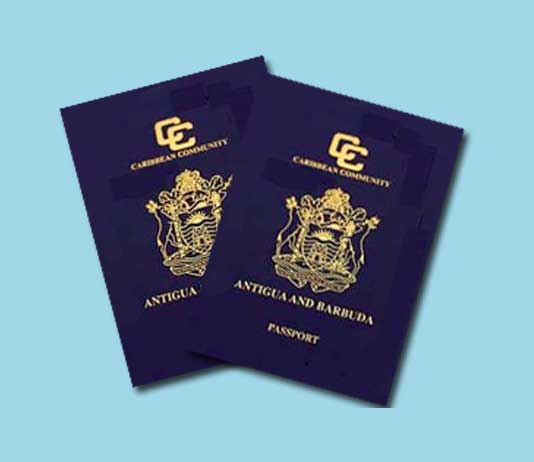
The Government of Antigua and Barbuda regrets to inform its citizens that the Government of Canada has decided to end visa-free travel for citizens of Antigua and Barbuda. This decision relates to concerns over persons who obtain passports under Citizenship by Investment Programmes in the Caribbean.
The Canadian High Commissioner to Antigua and Barbuda, stationed in Trinidad, advised Prime Minister Gaston Browne of this development late on Friday prior to an official announcement today. At the time, the Canadian official said that their concern is that Antigua and Barbuda’s Citizenship by Investment Programme is not a residency programme. In response, Antigua and Barbuda Prime Minister Gaston Browne pointed to the intense vetting of its CIP system, the revenues to the people of Antigua and Barbuda when the terms of trade and aid have declined and the banking system is threatened.
Despite the end of visa-free travel, the official Canadian Government statement said, “Canada continues to welcome visitors from Antigua and Barbuda.” It stated clearly that: “Most approved visa applicants will receive a multiple-entry visa, which allows travellers to visit Canada as many times as they want, for up to 10 years. For each visit, travellers can stay for up to six months”.
Antigua and Barbuda is the last of the countries of the Organization of Eastern Caribbean States from whom the Canadian government has withdrawn visa-free travel, at a time of heightened security over terrorism and refugees. Of all 14 independent CARICOM countries, Antigua and Barbuda, Bahamas and Barbados were the only ones that had continued to enjoy visa-free travel to Canada. The Canadian Government was keen to point out in its official statement that: “Canada remains firmly committed to its partnership with Antigua and Barbuda and values working together on mutual challenges and opportunities”. The statement recalled that “Canada and Antigua and Barbuda share longstanding ties that are rooted in history.”
Antigua and Barbuda Prime Minister, Gaston Browne stated that, at a time of intensified concerns about terrorism and refugees in North America and Europe, including evidence of ISIS recruits in the Caribbean, he recognized the concerns that Canada and other countries might have. He pledged that, as part of the international effort to combat terrorist activity, Antigua and Barbuda would continue to be vigilant with its passports and border security.
The Prime Minister said that the Governments of Antigua and Barbuda and Canada have already started working to make the system of visa applications and approvals for Antigua and Barbuda citizens as efficient and affordable as possible.
Audio Theme