

Home Blog Page 113

Cloud Mobile Music Services Global Market

Cloud Mobile Music Services

Get Detailed Cloud Mobile Music Services Research Sample@ https://goo.gl/MGXSy8
Recent research has announced the addition of the Global Cloud Mobile Music Services Market is expected to register a CAGR of 7.40% during the period 2017–2021. Cloud mobile music services include internet services that help users to upload their personal music collection on the cloud. These (music collections) can be later retrieved from the Internet on laptops, smartphones, tablets, and other devices. A majority of the mobile music service providers have online music stores that offer songs to the user. Cloud-based online music enables listeners to move from the traditional way of owning music to a new model of ‘anytime-anywhere’ access to music. Moving from an ownership model to subscription and ad-supported music is likely to change the music preferences of consumers as they will experiment more with the new forms of music. This will result in a wide variety of music reaching a large and diverse audience.
Browse Full Report With TOC@ https://goo.gl/22JEx7
Cloud Mobile Music Services market is currently in enhancing its dynamics owing to its wide range of scope. The research methodology incorporated in the report helps new entrants to have a proper hold of the present industry scenario. In addition, the research discusses the countries that are leading in the industry within its geographical boundaries. It also explores key manufacturers of the industry, such as Alphabet, Amazon, Apple and Spotify. It also discussed other prominent vendors of the market are Aspiro, Deezer, Guvera, Gamma Gaana, Microsoft, Rhapsody International, Saavn, Stingray Digital Media Group and TriPlay. It explains the industry landscapes in terms of contribution made by the market, such as its revenue and its potential buyers & sellers. It incorporates the Porter’s Five Forces Analysis (PFFA) to understand competitive scenario among big market players. Based on regions, the research segments the industry into Americas, APAC and EMEA.
Get Discount@ https://goo.gl/ug4hYb
The report assesses the factors that facilitate the growth of the global Cloud Mobile Music Services market, such as Increasing use of smartphones and cloud services and For a full, detailed list, view our report. It also evaluates the aspects that hinders the industry which are Music piracy leading to huge losses and For a full, detailed list, view our report. It examines the impact of these factors upon the market. The study gives a considerable significance to the aspects that help to make predictions of the industry which includes industry trends. It provides a decision framework within which helps manufacturers to estimate future possible opportunities. It offers a competitive landscape of key vendors on the basis of criterions set by the experts. This helps the stakeholders to quickly scan the investment pockets. The report includes list of appendixes and abbreviations in the end. The research on the global Cloud Mobile Music Services market enlists the abovementioned parameters in the form of exhibits.
The report takes a closer look at various characteristics that enables the manufacturers, stakeholders, and new entrepreneurs to estimate the consumer behavior of the global Cloud Mobile Music Services market.
Table of Contents
PART 01: Executive summary
PART 02: Scope of the report
PART 03: Research Methodology
PART 04: Cloud Mobile Music Services Market landscape
Market overview
Market size and forecast
Five forces analysis
PART 05: Cloud Mobile Music Services Market segmentation by product
Market overview
Downloading services
Streaming services
PART 06: Geographical segmentation
Overview
Americas
EMEA
APAC
PART 07: Key leading countries
US
UK
PART 08: Decision framework
PART 09: Drivers and challenges
Market drivers
Market challenges
PART 10: Cloud Mobile Music Services Market trends
Rising popularity of analytics in the music industry
Increasing number of M&A and partnerships
Bundled services offered by telecom companies and music service providers
PART 11: Vendor landscape
Competitive overview
Other prominent vendors
PART 12: Key vendor analysis
Alphabet
Amazon
Apple
Spotify

Twenty-Fifth Meeting of the Regional Cultural Committee

CARICOM

The Twenty-Fifth Meeting of the Regional Cultural Committee will take place on Wednesday June 21- Friday June 23 2017

. One of the key topics for discussion at the meeting will be the hosting of CARIFESTA XIII in Barbados on August 17 – 27, 2017.
Your media house is being invited the opening ceremony of the meeting.
Kindly see the details below:
Event:             Opening Ceremony, Twenty-Fifth Meeting of the Regional Cultural Committee
Date:                Wednesday June 21, 2017
Venue:              Staff Lounge, CARICOM Secretariat
Time:                 9:30 a.m.
Speakers:
Hon. Stephen Lashley, Minister of Culture,  Barbados
Ms. Myrna Bernard, Director Human Development, CARICOM Secretariat
Media representatives are asked to arrive at least 15 minutes before the start of this event to facilitate security clearance and to set up for coverage.

Let’s Step Up the Pace of Regional Integration

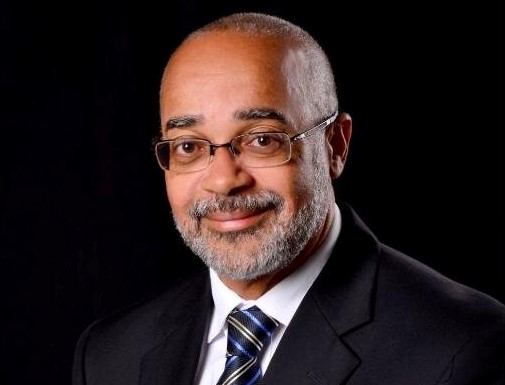
Dr. Didacus Jules

Dr. Didacus JulesWe celebrate, by the Grace of God, 36 years since the formation of the Organisation of Eastern Caribbean States. Even as we give thanks for the many blessings and accomplishments so must we equally acknowledge the several shortcomings and weaknesses of our effort to date.

In today’s fast paced world, small and vulnerable countries such as ours face an uphill and relentless battle against more powerful forces which conspire to keep us marginalised and at the bottom of the international food chain.  The intensity of the global competition for advantage can sometimes lead us to seek individual and independent solutions but the mathematical reality of that situation should compel us to work together and to fight together in order to win together.
The aspiration to regional integration has been a long historical struggle with shining moments of solidarity and with disappointing examples of fracture.  Too often our best emerges only when we are faced with the worst and we are yet to understand that while adversity might provoke the spirit of resistance; it is the will to excel that will fuel the spirit of resilience.
Let us take pride in the accomplishments that we have achieved; some of which have almost invisibly improved our daily lives.
Let us take a minute to itemise some of these achievements:

  • We now have in place the free movement of people in which citizens of the Member States (with the exception of Martinique which is part of the French state) can travel freely within the OECS.  We can move freely for short term or long term, for work or for pleasure with nothing more required than a government issued picture ID.
  • The EC dollar, which is the currency of the OECS, has been and continues to be a strong currency holding a fixed exchange rate against the US dollar.  In bigger and richer Caribbean sister countries, national currencies have fluctuated and mainly been on a downward spiral against the US dollar.  This is an achievement that we take easily for granted but those of us who have travelled to other parts of the Caribbean where the currency has been floating freely, would appreciate what the stability of our currency means to one’s personal income and one’s ability to feed, clothe and care for one’s family.
  • We can drive freely in any OECS Member State using our national driver’s license.  You do not need to get a Grenada driver’s license if you have one from St Vincent or Antigua or Dominica or St. Kitts to drive legally in Grenada, for example.  But there is a bigger aspiration…. Imagine for a moment the day when you can drive your vehicle right on to a regional ferry, travel to the next island for the day, and drive off with your vehicle in that port.
  • The OECS countries buy medicines together and we benefit from that pooled procurement. 840 different medicinal products are bought each year and we save about $5 million from buying in bulk.  You may not realise it but 90% or 9 out of every 10 medicines that are prescribed in public health facilities are provided through this scheme called the Pharmaceutical Procurement Service.  550 of these medicines are listed by the World Health Organization as essential medicines that help us to live productive lives even if we are affected by illnesses such as high blood pressure, diabetes, AIDS and so on.
  • In education the Ministries of Education have been working more closely than ever before to implement the new education reform strategy.  This involves a process of revamping and taking a harmonised approach with an initial focus on literacy and early learning to give our children a good head start.  Our focus is on improving learning in the education system.
  • What we call functional cooperation has been expanded and deepened, especially with the entry of Martinique, in areas which directly impact people to people contact.  In health we are expanding access to specialised health care, cooperation in the control of infectious diseases etc.  In tourism, community tourism is widening and travel between the islands and the French territories has increased with greater involvement of our French cousins in festivals, day shopping and short stay vacations.
  • The OECS continues to play a leading role internationally in the struggle against climate change.  With the assistance of USAID and other development partners, significant work has been done in most Member States in the environmental sector.  We continue to work together on land stabilisation and water harvesting projects to keep homes, communities and infrastructure safe from the effects of climate change.
  • In agriculture, there is the beginning of a quiet revolution.  Over the past year, we have put in place arrangements that involve three refrigerated boats traversing the OECS and the wider Caribbean, exporting a range of fruit and vegetables including squash, dasheen, and livestock within the OECS and between the OECS and the Virgin Islands and Trinidad & Tobago.  Getting to that stage has involved progressively improving our packaging, raising our phytosanitary standards, identifying the greatest value produce needed in the market and forging new links with purchasers in Trinidad, Martinique, and lately the United States and Canada.

In spite of these accomplishments, there are still issues which continue to annoy the average citizen.  Ultimately for regional integration to work, Caribbean people must have confidence in the process and appreciate the ways in which it impacts their daily lives for the better.  Notwithstanding the progress that we have made, there are several things that continue to frustrate the pace of integration.  We recognise these irritants and impediments and continue to work with the relevant governmental bodies in Member States to address them.  These impediments include:

  • Bureaucratic requirements that make the free movement of people less easy than it should be – for example the requirement of completing lengthy immigration paper forms on arrival in each Member State.  We would have gotten there when travelling from country to country is as hassle free as travelling between towns within any Member State.
  • The many frustrations experienced on a daily basis with mobile and broadband.  In today’s global economy, these information technologies are the backbone of the digital economy.  They are no longer luxuries but necessities for survival and progress.  In many advanced countries, access to quality internet service is now deemed a human right!  We have been working closely with ECTEL to strengthen the regulatory authority to ensure that roaming is removed between OECS Member States; that number portability or the right to keep your number as a personal number no matter which provider you switch to is established; that there is no interference with the subscriber’s right to use services such as skype, whatsapp, or any over the top services that enable people to make free internet calls and communicate easily with family and friends overseas or which reduces a business’ communications cost and that the level and quality of service that you are paying for is what you are consistently getting.
  • The high cost of travel within the region, and limited choices continue to be a source of frustration for the people of our region, and this constitutes the single biggest obstacle to OECS integration as it discourages the movement of people, goods and services. Free movement is not only for the benefit of the public, but for the private sector as well, as goods and services are involved. The OECS private sector needs to step up to the plate and help relieve OECS governments of some of the burdens associated with the provision of regional transport.  Air transportation across the region with our challenges of size and population cannot be solely a commercial proposition but is also a public good and a social necessity.

As we enter the 36th year of aspiration towards a single social and economic space, the acceleration of effort is going to be our primary objective.  There are many things that we need to do which are best done together with the wider fraternity of CARICOM and we will be seeking to forge closer and deeper collaboration to achieve them.
In the immediate future, we will see some key initiatives brought to completion.  These include:

  • the OECS Competition Commission designed to protect consumer rights and guard against the negative impact of monopolies;
  • the mapping of health infrastructure across the OECS to create an inventory of health facilities and capacity in the OECS space so that Centres of Excellence for specialist care can be established;
  • Significant engagement with the youth that will culminate in the OECS Youth Strategy that will give prominence to youth development initiatives.  Only three weeks ago we identified – from a field of over 200 applicants – the 30 under 30 Entrepreneurs.  Thirty young persons under 30 years of age who are engaged in amazing entrepreneurial ventures. This group will receive special attention and support from our Business Development Unit to realise their fullest potential.
  • Work continues on the modernisation of legislation pertaining to social justice, juvenile justice, child protection to strengthen the most vulnerable sectors of our society.

So what then is our responsibility as citizens of our national spaces and as members of the OECS?
Know your rights – visit our webpage www.oecs.org and sign up to receive updates on developments in real time; join us on Facebook and Twitter for updates.  Our communications media is geared to respond to the frequently asked questions about how OECS integration works.
Educate your fellow citizens; be a champion in your own community; participate fully in the integration process by offering solutions to the gaps that you experience.  We are listening and we want you to join this journey.

Open Data Readiness Assessment

Data

The Government of Saint Vincent and the Grenadines is partnering with the World Bank to conduct an assessment of this nation’s capacity, inside and outside the Government, to implement a programme to make more of the government’s data available to the public, and to businesses. This would assist with increasing transparency and stimulating business innovation and new business creation.
To this end, the World Bank team has extended an invitation to meet with journalists in Saint Vincent and the Grenadines, on Tuesday 27th June, at 9:45 a.m. at the conference room at the Ministry of Economic Planning, Sustainable Development, Industry, Information and Labour. The meeting will last for approximately 45 – 60 minutes. The team will mainly ask about the aspects of the study framework relevant to Saint Vincent and the Grenadines’ role, and will welcome as well, any other comments or suggestions. The interviews will be confidential.
In addition, the World Bank team will also make a presentation and briefing on Open Data on Monday 26th June at 1:15 p.m. at the Ministry of Foreign Affairs, Commerce and Trade’s conference room.
Media Houses are invited to attend, and to participate in both activities. Please note that media houses are not expected to provide coverage.

Labour Department continues it education initiatives

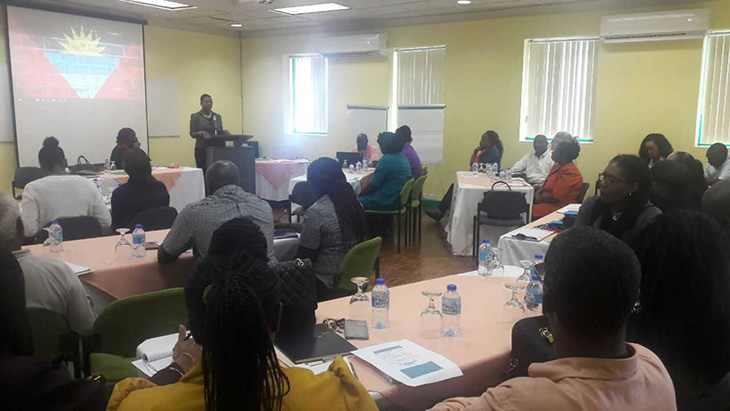
Labour Commissioner Mrs. Eltonia Anthony-Rojas addressing the participants of the workshop

The Labour Department within the Ministry of Legal Affairs, Public Safety and Labour recently held one in a series of ongoing education and capacity building initiatives targeting key stakeholders.
The Occupational Safety and Health (OSH) workshop focused on the collection and use of reliable occupational safety and health (OSH) data, under this year’s World Day for Safety and Health at Work theme “Optimize the Collection and Use of OSH Data”. Hosted by the Antigua and Barbuda Hospitality Training Institute, the workshop was attended by Employer Representatives including Human Resources Managers, Employee Representatives and Staff Members of the Labour Department.
The workshop examined the various pieces of legislations that mandate employers to report to the Labour Department any occupational accidents, or diseases that occur at the workplace, as well as the importance of reporting occupational accident, diseases and dangerous occurrences.
In an effort to assist stakeholders, the Labour Department drafted a number of forms that employers could use internally to collect the data. One of the forms drafted and discussed at the workshop was one that allowed employers to report to the Department occupational accidents, diseases and dangerous occurrences.
It is the objective of the Department for this form to be approved and issued by the Minister for this purpose.
Participants were also informed of the CARICOM Labour Market Information System, which requires CARICOM Member states to report various labour market statistics to include occupational accidents, diseases and dangerous occurrences.
Feedback from the workshop revealed that employers were not aware that it was mandatory for occupational accidents, diseases and dangerous occurrences to be reported to the Labour Department. Some were also not aware that businesses should be registered with the Department.
J. Arlene Martin, Executive Secretary of the Antigua And Barbuda Employer’s Federation commented that the workshop was a meeting of the minds and she hoped for continued collaboration between the Labour Department and its partners on similar issues that affect businesses and are regularly brought before the government Department.

Green Climate Fund Conference (Opening Ceremony)

Green Climate Fund

Dear Media,
You are invited to cover the following event:
What: Green Climate Fund Conference (Opening Ceremony)
Who: Ministry of Foreign Affairs
When:  Monday, June 19, 2017 at 9:00 a.m.
Where:  Belize Ocean Club, Placencia, Stann Creek District

Changes in petroleum prices – June 2017

Pumping Gas
The public is hereby informed that, effective, Sunday June 18th, 2017, the retail prices of petroleum products (Gasoline, Diesel, Kerosene and LPG {Cooking Gas}) in the State of Grenada will be as follows:

Grenada:

Products Old Price New Price
Gasoline $14.31/IG $14.19/IG
Diesel $12.80/IG $12.650/IG
Kerosene $7.39/IG $7.09/IG
L.P.G (Cooking Gas):
20 lbs Cylinder  $40.00 $40.00
20lbs Cylinder (Petrocaribe)* $37.00 $37.00
100 lbs Cylinder $189.15 $184.45
Bulk $1.95/lb $1.95/lb

Carriacou

Products Old Price New Price
Gasoline $14.49/IG $14.37/IG
Diesel $12.98/IG $12.83/IG
Kerosene $7.58/IG $7.28/IG
L.P.G (Cooking Gas):
20 lbs Cylinder $49.00 $49.00
20lbs Cylinder (Petrocaribe)* $46.00 $46.00
100 lbs Cylinder $212.15 $207.45
Bulk $1.95/lb $1.95/lb

Petite Martinique:

Products Old Price New Price
Gasoline  $8.99/IG $8.87/IG
Diesel $7.48/IG $7.33/IG
Kerosene $7.58/IG $7.28/IG

The new Retail Prices are computed based on the average FOB costs: that is; (Ex-refinery prices), for the period, 16th May, 2017 to 15th June, 2017.
Consumers are encouraged to immediately notify the Price control/Consumer Affairs Unit in the Ministry of Finance of any instance of overpricing at telephone number 440-1369.

Ask, Listen and Learn Programme ends in 5 schools

Ask, Listen and Learn Programme
The second leg of the Ask, Listen and Learn programme spearheaded by the Health and Family Life Education Division of the Ministry of Education has come to an end in five schools.
On Thursday, June 15th, a closing ceremony was held at the Dominica Public Service Union building. There students from each school, Roseau Roosevelt Douglas, Penville, San Sauveur and Bagatelle Primary Schools shared their knowledge of what they learned with performances.
Ask, Listen and Learn Programme ends in 5 schools 1The Honourable Minister for Education a, Petter Saint Jean, hopes that the Ask, Listen and Learn programme will be incorporated into Dominica’s Health and Family Life Education curriculum.
“It is appropriate therefore that I endorse the teaching and sharing of the sound values to our children on the requisites to avoid vices such as alcohol abuse. I am convinced that the work that has been initiated is indeed paying a dividend that was clearly demonstrated here this morning by the various performances that were performed by you the students of the five schools.”
Education Officer, Renna Jno Charles, gave an overview of the programme.
“The programme is designed to raise the awareness of the dangers of underage drinking specifically among children ages 8 – 11 years old. It provides invaluable information on prudent lifestyle choices and utilises research, cutting edge technology, partners of industry and athlete mentors to educate children about the dangers of underage drinking.
The Ask, Listen and Learn programme was first piloted in Dominica in 2015 at four primary schools, Sineku, Salybia, Goodwill and Grand Bay primary.
The programme ran for 12 weeks with over 500 participants.
Ask, Listen Learn remains one of the major flagship initiatives in the Caribbean region.


Small Hive Beetle Survey – Beekeeping

Beekeeping in Belize

The Ministry of Agriculture, Fisheries, Forestry, the Environment & Sustainable Development and Immigration in collaboration with OIRSA, Belize (Organismo Internacional Regional de Sanidad Agropecuaria) will be conducting a national apiculture survey from 3rd to 21st July 2017.  This survey will start in Toledo District and followed by the Corozal District.  This diagnostic assessment is to determine the status of apiaries with a special focus on the presence of pest and disease such as Small Hive Beetle (SHB). Last year, SHB was detected in a number of hives which were located along the north-eastern border of the Corozal District. Through this survey, the Department of Agriculture will also map existing apiaries and update the national honey production database. As a result, the Department will continue to make technical recommendations to beekeepers and take measures to contain/mitigate the spread of this pest within the beekeeping industry.
The dates for the field visits per district and respective contact District Extension Officers are follows:

District Dates Contact Person
Toledo 3rd– 6th     July Densford Mangar
Stann Creek 7th               July Edgar Tuyud
Cayo 10th  – 13th  July Jessie Madrid
Belize 14th             July Vicente Tuyub
Orange Walk 17th – 19th  July Federico Chi/Miguel Huertas
Corozal 20th – 21st  July Moises Perez

 
Small Hive Beetle is considered as a high level of threat to the Beekeeping Industry of the country, therefore, the Agriculture Department, asks for the cooperation of all beekeepers when the officers arrive at their apiaries.
For more information, contact
Mr. Mario Howe
Phone #: 804-2079

Germany is seeking Barbados’ Support

Germany

Germany is seeking Barbados’ support for its candidate for the United Nations Security Council 2019 – 2020.

During a courtesy call at Ilaro Court yesterday, Germany’s Special Envoy, Peter Linder, put the case in support of the candidature to Minister in the Prime Minister’s Office, Senator Darcy Boyce, who was deputising for Prime Minister Freundel Stuart. Mr. Linder urged a favourable vote from Barbados on the matter and Senator Boyce consented to convey the request to Prime Minister Stuart.
Ambassador Linder said that Germany was placing great emphasis on issues of international peace and security, as well as climate change, and he stressed Germany’s commitment to the Paris Climate Change Agreement.
Senator Boyce welcomed Germany’s commitment to the agreement, noting that the Caribbean had already seen the negative effects of climate change and was spending “a vast amount of money” to secure its coastlines.
International peace and security was also very high on Barbados’ agenda, he said, particularly because of the island’s dependence on tourism and international business for its economic survival.
He drew to the attention of the Special Envoy the difficulties Barbados has encountered with the Organisation for Economic Cooperation and Development (OECD), in respect of maintaining its status as a clean jurisdiction, despite its compliance with all the regulations pertaining to financial services.  He urged Germany to take the lead in requiring the OECD to be consistent in its approach, and to make it clear that “they can’t keep moving the goal post”.
 
Senator Boyce also raised the issue of a tax information exchange agreement with Germany, which remained unsigned, as well as the possibility of a double taxation agreement between the two countries.
The Minister with responsibility for Energy also told the German diplomat that Barbados would welcome technical assistance in the area of renewable energy and energy efficiency.

Audio Theme