Home Blog Page 118

CERT Training equips 22 To Better Respond To Emergencies

CERT

Twenty-two individuals are now better equipped to handle emergencies after undergoing intense training in Community Emergency Response Team ( CERT ) Training for three weeks at the Office of Disaster Management (ODM).

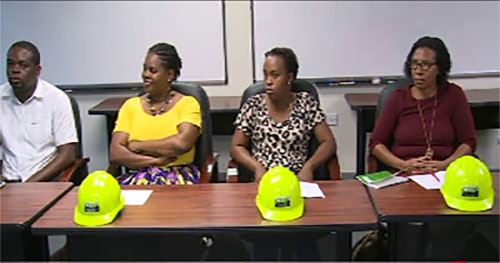
During a closing ceremony at the ODM on Thursday April 13, the individuals received their certificates for the Community Emergency Response Team (CERT) Training.
CERT educates individuals about disaster preparedness for hazards that may impact their area and trains them in basic disaster response skills such as fire safety, light search and rescue, team organization, and disaster medical operations.
This programme also comprises classroom and field exercises.
Chief instructor, Anthony Williams, told participants, “Your ability to clear roads to allow the movement of emergency vehicles to and from medical facilities indicate that our teaching fell on fertile soil.”CERT Participants
Participants were trained in Map reading, basic knot tying, stabilizing injured victims, initial damage assessment and search and rescue among others.
Disaster Risk Management Specialist, Cecil Shillingford, encouraged participants to always be willing to assist in times of disasters as they will be the first responders until professionals arrive on the scene. This was the eighth CERT training course to be completed in Dominica.
 

Grenada PM presents his vision for Small States Forum

Small States Forum

World Bank-IMF Spring Meetings host Small States Engagement Update 2017

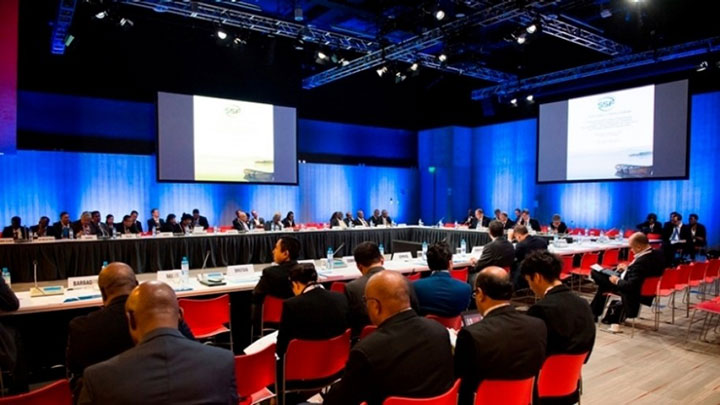
The new chairman of the World Bank’s Small States Forum, Prime Minister of Grenada, Dr. the Rt. Hon. Keith Mitchell, presented his vision for the Forum’s future at the ‘Small States Engagement Update 2017′ held on April 20, 2017 in Washington, D.C. Prime Minister Mitchell outlined the agility of Small States and the need for a change in narrative where small size is not seen as a disadvantage but as a distinct advantage.
The 2015 Paris Agreement (COP21) and the Sustainable Development Goals (SDGs) have shifted the World’s trajectory as it relates to the importance of the role that Small States occupy. Dr. Mitchell noted that some islands have up to 1,000 times more space at sea than they do on land and, as a result, have been at the forefront of the SDG 14 on oceans.
The Grenadian Prime Minister also remarked on the potential for Small States in areas such as the Blue Economy, renewable energy and technology.
“In the Pacific they have created ‘the OPEC of Tuna Fisheries,’ and the ‘Pacific Possible’ initiative seeks new opportunities beyond fisheries.”
“In the Caribbean, our coastal resources have become the main engines of our economies. A new World Bank study values the Caribbean Blue Economy at $409 billion,” Dr. Mitchell said.
Despite the high energy costs that saddle Small States, the new chairman outlined the great potential for these States to produce Geothermal energy, solar energy and wind energy at cheaper rates.
“Compared to large developed economies, the Caribbean is paying 200-500 percent more for electricity. In remote islands in the Pacific, it can be as high as 1,000 percent more.”
“Small States can set an example for the rest of the world. We can make the renewable energy the de facto source of energy for ourselves by 2030,” Dr. Mitchell said.
The new chair also noted the ‘triple trap’ that Small States face with climate impacts, high fossil fuel prices and high levels of indebtedness, stressing the need to develop the Small States Forum into a platform for action as it relates to access to finance and capacity building.
Prime Minister Mitchell said that the International Development Association’s (IDA) 50% increase from 50 billion to 75 billion is a major opportunity for Small States that are eligible for this financing. He stressed the need to quicken processes so that Small States can show successes at the IDA 2018 Midterm Review.
“We propose that the Small States IDA allocation be front loaded and fast tracked. This money should not be used for business as usual projects, but for strategic and transformational projects that can crowd-in private sector investment,” Dr. Mitchell said.
The Grenadian leader also addressed the ineligibility of some Small States to receive concessional finance and proposed that ‘vulnerability’ be a determining criterion that will be mainstreamed into lending operations by October, 2018.
Prime Minister Mitchell concluded with his vision for the Small States Forum to include a Fund of Funds for strategic and transformative Public-Private Partnership (PPP) projects and to serve as a platform for partnerships, finance, innovative solutions, private sector engagement and south-south learning.
Presentations at the ‘Small States Engagement Update 2017’ were followed by a panel discussion that focused on the next steps for the Small States agenda.
http://www.worldbank.org/en/country/smallstates

Small Plant, Big Impact: Powering Anguilla with the sun

Each day as the sun bathes the 35.14 square miles of Anguilla, there is one spot where perhaps its rays are appreciated as more than just the signal of another beautiful day in paradise.

The four-acre spot stands out from the surrounding topography. The green scrub has been removed and replaced with blue and silver solar panels. This is the location where the Anguilla Electricity Company Ltd (ANGLEC) took its first step into the arena of renewable energy by constructing a one megawatt solar photovoltaic (PV) plant.
There is strong renewable energy potential on the island, mainly from resources like solar and wind. ANGLEC CEO, David Gumbs, says the path towards incorporating renewable energy into the electricity generation process, and identifying the right energy source, was a long one.
“It is something that took a lot of learning and researching of the various technologies, particularly here at ANGLEC,” he said.
“We are so small a utility company and so small an island, big things like this make an even bigger impact on us and the services we deliver. So it’s something that we always have to think about thoroughly to make sure that we are getting into the right system,” Gumbs noted.
Gumbs said that eventually, the company chose solar energy but with the caveat that “if we are going to make strides, let’s do it in bite-size steps.”
Small Plant, Big Impact: Powering Anguilla with the sun | Caribbean Development Bank

The company decided that a one megawatt PV plant was a manageable “bite-size” and they approached the Caribbean Development Bank (CDB) for funding. CDB’s Board of Directors approved a loan of USD2.34 million, including funding from EIB’s Climate Action Line of Credit (CALC), and the Government of Anguilla invested USD1 million for the installation and commissioning of the plant. The CALC funds offer an interest subsidy to encourage climate mitigation and adaptation investments.
“For us, one megawatt sounds small but it’s actually huge and it makes a big impact on our system, particularly during the low-peak days, when things are just moving smoothly. So what we said is, economically, we could probably pursue a little more; technically, let’s see how this works,” Gumbs said.
The civil works for the project commenced in January 2016, and on May 21, the plant was integrated into ANGLEC’s power grid. It is projected to save approximately 384,000 litres of diesel fuel and avoid 1,028 tonnes of carbon dioxide emissions on an annual basis.
Gumbs notes that the installation and integration of the PV plant has generated a new level of interest and excitement about renewable energy among the residents of the island.
“There is appetite for even more. A lot of people are excited that we’re in the door, so we’re just going to keep moving,” he said.
The solar PV plant is CDB’s sixth intervention in the energy sector in Anguilla, and supports the Government of Anguilla’s goal of transforming the country into a low carbon economy. The country has set a national target of producing 30 percent of its electricity from renewable sources by 2030 and cutting greenhouse gas emissions.

Day-care Centers Islandwide Receive $20K of Learning Materials

Early Childhood Centers

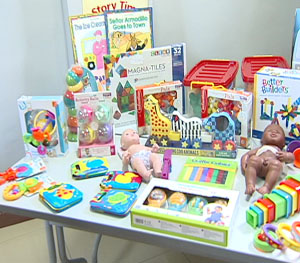
Early Childhood Centers or daycares in Dominica have received twenty thousand dollars worth of early childhood education manipulatives from the Ministry Of Education and Human Resource Development. These manipulatives are for the stimulation and growth of children between zero and three years.
In 2012, the Government of Dominica committed to providing more access to early childhood education. Today the ministry is taking its action one step further to extend its reach to day care centers and the Roving Care Givers Programme.
Speaking at the handing over ceremony on Wednesday morning, the Hon Minister For Education, Petter Saint Jean said not enough emphasis has been placed on children younger than pre-school age – 3 years. He called for a new approach.
“We need to rethink our approach and I wish to remind us that research continues to prove that while early childhood refers to the period of birth to eight years, the first three years are the most critical in ensuring a successful future,” he said.
There are currently 17 registered day care centers in Dominica with a total of 41 care givers for 240 children. The roving care givers programme, which began in july 2016 operates in a number of communities including Penville and the Kalinago Territory.
Hon Saint Jean spoke clearly to those care givers about their responsibility in shaping the next generation.
“This vision begins with you since you are the first institution of learning; you are the key in ensuring that our children receive a solid foundation, a good foundation for life.”
Assistant Education Officer in Early Childhood Development, Veda George says it is critical that children are given the proper stimulants at the right age.
She told care givers that their role must be more than just custodial and stated her expectations following the use of the learning materials.
“It is expected that following the handing over of these manipulatives, the quality of our programming at all our day-care centers will improve and our facilities will be able to meet not only national but regional and international standards.”

Antigua and Barbuda selected as backdrop for film “ Loving Daniella ”

Loving Daniella

Antigua and Barbuda selected as the premier Caribbean backdrop for the film “ Loving Daniella ”.

The Ministry of Tourism Antigua and Barbuda through the Hon. Asot A. Michael has thrown its full support behind the Producers of the African film “ Loving Daniella ” which will be partly shot in the Twin Island State of Antigua and Barbuda.

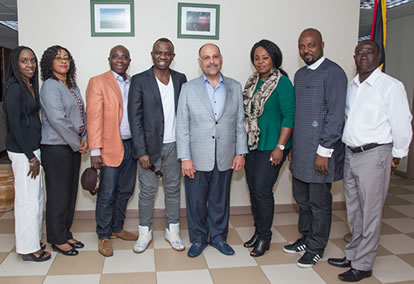
The production group recently met with the Tourism Minister to share the details of the movie which is a love story with a twist set against the backdrop of Lagos Nigeria, Dallas Texas and Antigua and Barbuda.
The Hon. Minister of Tourism pledged government’s support in ensuring that all resources needed by the group for an efficient production while on the ground in Antigua and Barbuda are provided.
Site visits were made on Saturday and the group will return on island in April to commence filming.
“Opportunities such as this presents a tremendous marketing avenue for our destination…film tourism creates a demand in markets that would not otherwise be reached given our limited budgets, stated Minister Michael.
He continued that, “the government of Antigua and Barbuda is currently in the process of targeting the influential and diverse African cities such as Nigeria for Citizenship by Investment opportunities so this film could not have come to our shores at a better time!”
Interviews have already been conducted with local Antiguan and Barbudan actors to fill roles in the production and it is expected that casting calls will be made for support cast.
The film is written by Ike Nnaebue who is a highly celebrated Nigerian Movie Director, Screen Writer and Producer having won a Golden Icon Academy Award for his film False released in October 2013. The film “Loving Daniella” will be produced by Passion8 Communications Limited.

Edmond Castro and Godwin Hulse main speakers at Maskall Village Fair

Maskall Village Fair

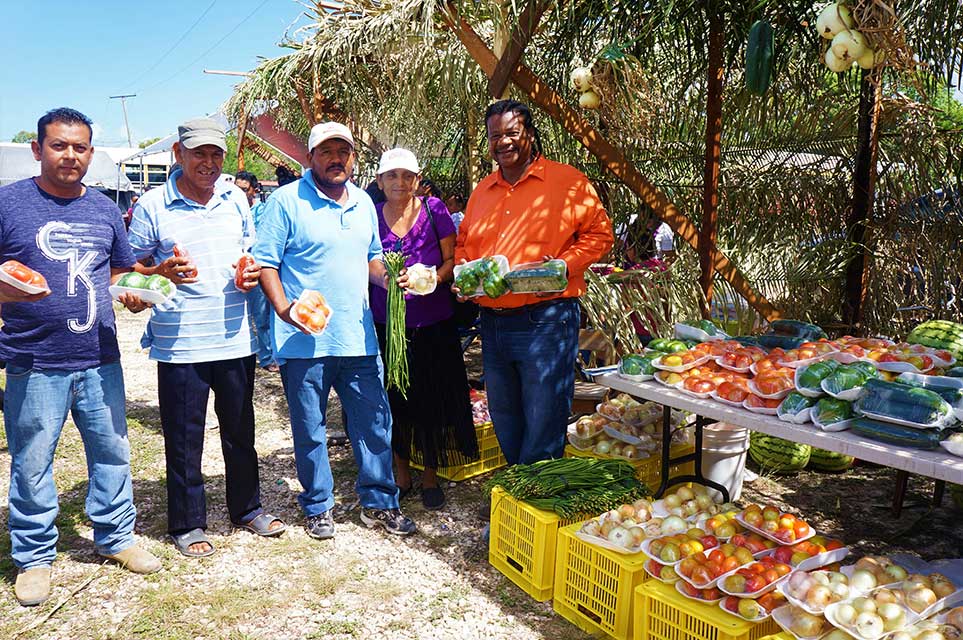
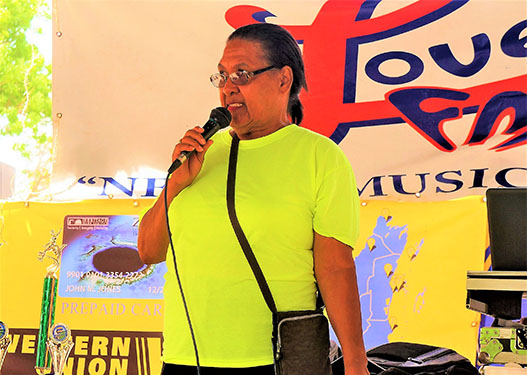
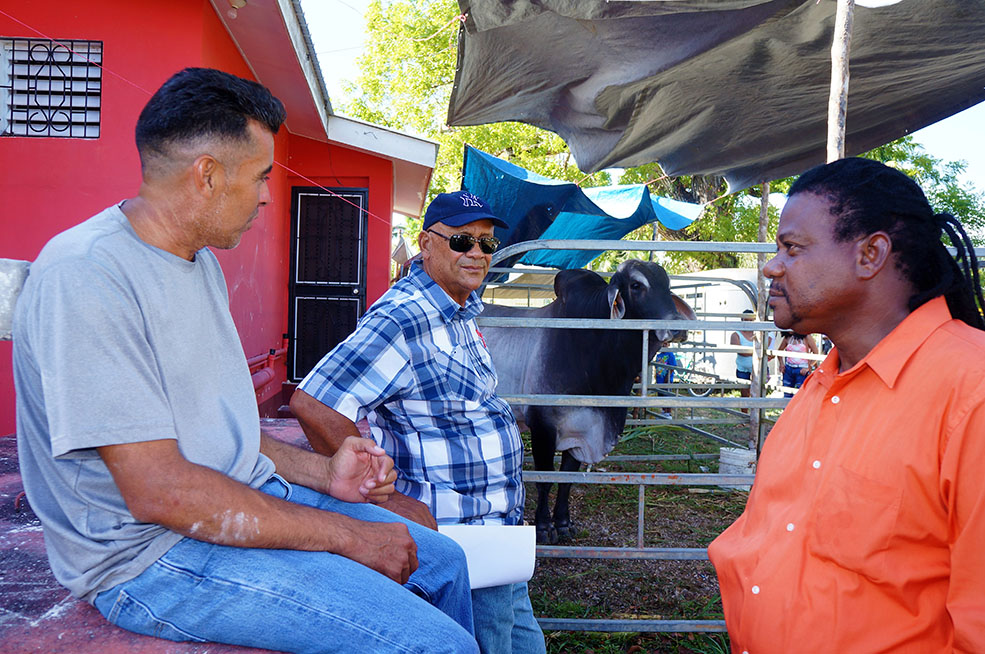
Main speakers at the first ever Agriculture and Trade Fair in the village of Maskall yesterday, March 26th, were Minister of Transport and National Emergency Management Hon. Edmond Castro, who is also Area Representative for Belize Rural North; and Minister of Agriculture Hon Godwin Hulse.
In his address at the opening ceremony, Minister of Agriculture Hon. Godwin Hulse remarked that the event was timely, and he said their newly adopted motto at the Ministry of Agriculture, “LET’S GET GROWING”, fits well with Belize Rural North Area Representative Hon. Edmond Castro’s mission which is, “CLEAR THE LAND”. Put them together, he explained, and you have a full plan of action: “CLEAR THE LAND and LET’S GET GROWING.”
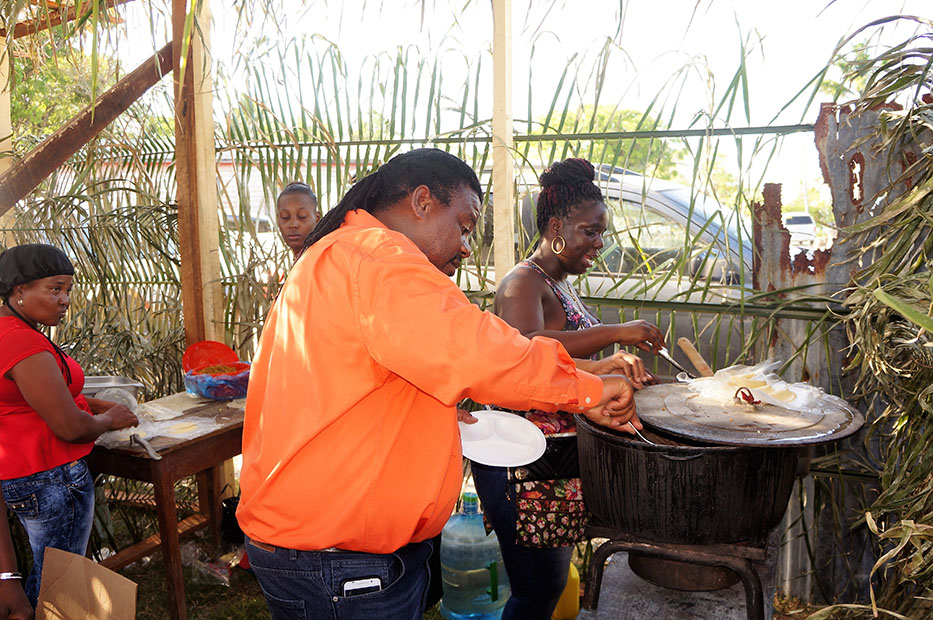
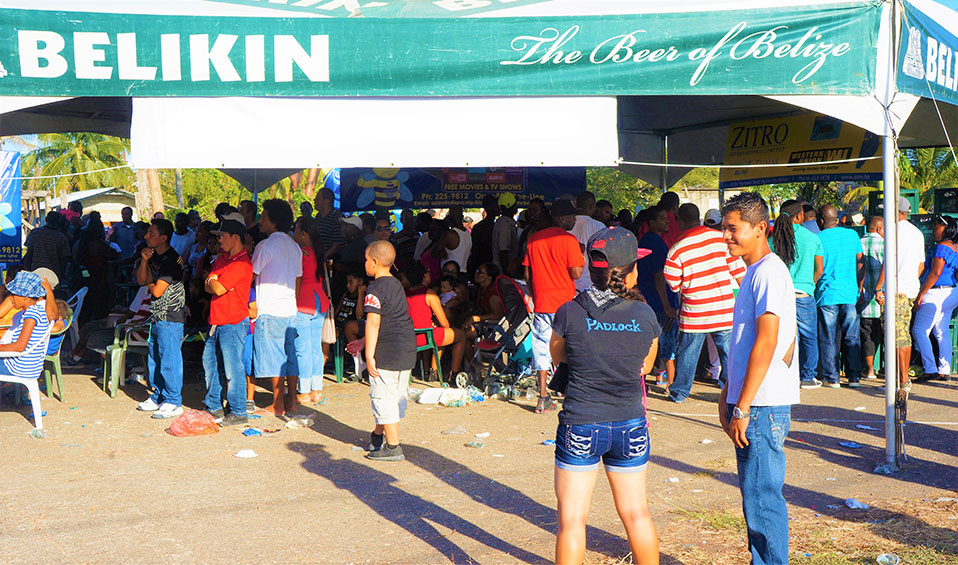
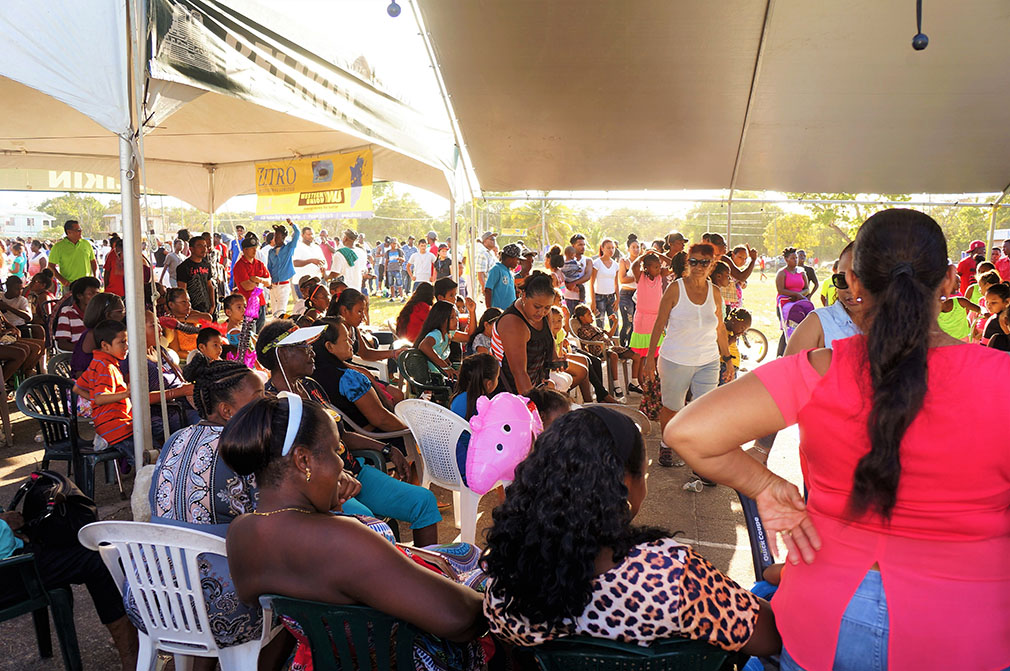
The event included display and sale of agricultural produce and livestock, village style food and drinks, sports and musical entertainment. It was well attended, with a total of over 3,000 persons visiting the show grounds.
Hon. Edmond Castro thanked everyone who attended and participated, and announced that the fair will be held annually on the last weekend in June, with its main focus being Agriculture and Trade.
The Welcome Address was delivered by Maskall Village Chairman Leslie Pascascio, and the Vote of Thanks by Village Councillor Cherry Pascascio.
The event was held in conjunction with Maskall Village Day, organized by Love FM and Beeline along with the Maskall Village Council.

The OECS needs a unified approach to development

The Pane - OECS Economic Growth Forum

The biggest impediment to growth of the economies of the OECS is their small size and scale of production, and the lack of a unified regional approach to development.

That’s the view of Dr. Vanus James, Economist, Statistician and regional Academic. He made the remarks at the OECS Economic Growth Forum in Grenada on Friday March 17, 2017. Citing tertiary education as one of the growth sectors with the greatest potential for growth, Dr. James singled-out Grenada (St. Georges University) as well as Antigua, as leading in Tertiary Education in the OECS. He believes that model must now be replicated across the OECS, in other growth sectors such as the Creative Industries and the ICT Sector, identifying skills gaps and helping to attract foreign investment through a regional approach.

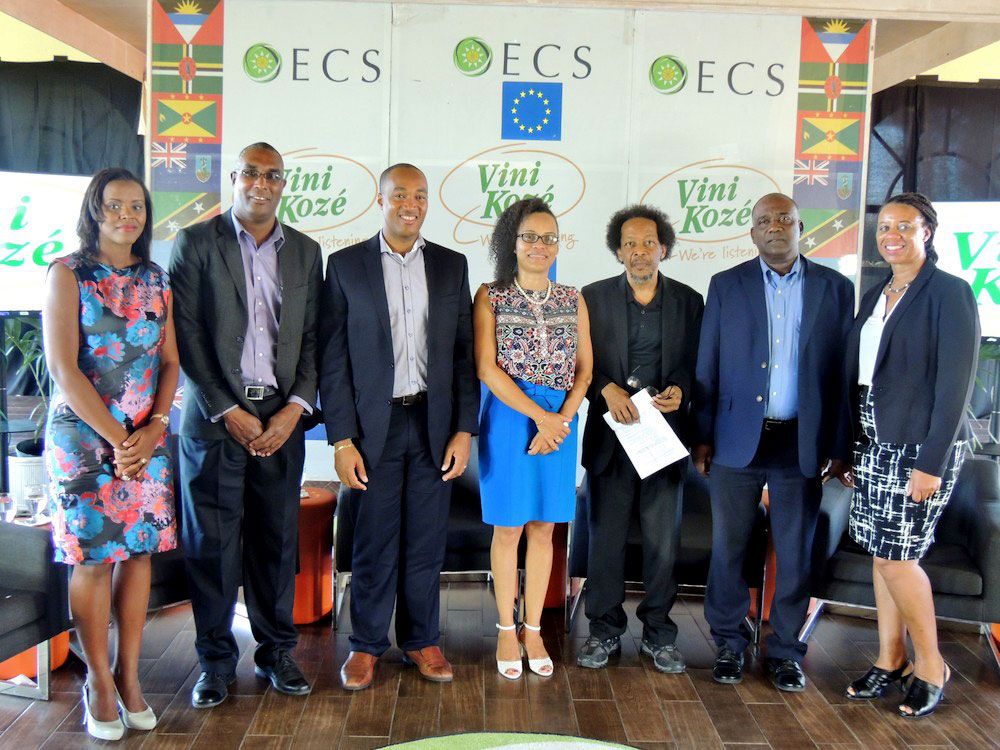
The Grenada Forum was the final in the Public Education Forum Series – Vini Koze – which engaged citizens of the OECS on key development issues such as Education, Climate Change, Agriculture, Youth Empowerment, and Regional Integration.
Vanus James, who has worked as a Senior Policy Advisor to the United Nations Development Programme (UNDP), says with very slow growth in large economies such as the United States, Canada and Europe, which are major source markets for our tourism industry as well as buyers of our exports, the region is at a critical juncture in terms of its economic fortunes. He says these developed countries and traditional allies, are all threatening to close their economies and reduce imports from the region, a factor he  says can “negatively affect our ability to increase our exports, which is what we need as small countries, in order to raise our rate of growth.”
Dr. James surmised that “for the first time, countries of the Eastern Caribbean are at a juncture where they are confronted with the challenge of how to diversify their economies away from tourism, in the context of slow growth and falling imports in the North Atlantic.”
“At this moment in our history, we must create new types of exports by building our domestic capital sector. That’s the most historic challenge we’ve ever faced, from Slavery to now. How to do we create capital with our own capabilities. In that regard, we need new thinking about how to grow our economies.”
Dr. James feels very strongly that as a region, we need to return to the growth strategies we used before globalisation. He explained: “We import most of the assets we use to produce, but if you want to engage the world, you have to build domestic capability, to create demand in the world for the things we export. We must build-up our domestic capital sector. The fundamental problem we have in the Caribbean, is that our domestic sector is too small. We’re not doing enough with the Creative Industries. We’re not doing enough with ICT as exports. And we’re not doing enough with Tertiary Education as an export. To engage with the changing world, we must change the type of exports we offer by building our domestic capital sector.”
Dr. James is adamant that in order to build the domestic capital sector, “we have to confront the historical inequalities in our societies, including the unequal access to power.” He asserts that the people who get access to power and who shape policy in the region, are a select few who have always had access to the levers of power, and who have not invested well in our domestic capabilities. Consequently, he recommended major reform in governance in the OECS and the wider Caribbean. He called for participatory budgeting at the national level and joint policy-making, both of which would ensure more people involvement and people participation in governance.
Hon. Oliver Joseph, Minister for Economic Development, says the Government of Grenada is taking steps to ensure more citizen engagement in national budgeting. He explained: “In the preparation of our National Budget in Grenada, we have consultations where we go throughout the island to get the views of farmers, the youth, and all stakeholders, to hear what they would like to see in the budget and what initiatives they would like the Government to pursue at the community and national level.”
Grenada has just come to the end of a homegrown Structural Adjustment Programme from which it received a passing grade from the International Monetary Fund (IMF), following a recent Country Assessment with significant reduction in its Debt to GDP ratio from 60 percent to 40 percent. Minister Joseph contends: “The only reason we have been so successful is because we continue to listen to our social partners in shaping and implementing national policy. The success we have achieved is because of the participation and ‘buy-in’ we have had from the people.”
In relation to the issue of rising youth unemployment in OECS Member States, Minister Joseph says the era of government being the largest employer is coming to an end. He says the approach should be for government to give incentives to the private sector and seek to attract foreign direct investment to create jobs. Minister Joseph disclosed that in 2016, Grenada spent EC $30 million on Training of young persons through the Grenada Training Institute, where they attained Caricom Vocational Qualification (CVQ) in various skilled areas. He says this training is designed to provide young persons with the tools to create their own employment or to secure jobs in the specialized areas in which they are trained. As it relates to diversifying Grenada’s economy, Minister Joseph says the Economic Commission for Latin America and the Caribbean (ECLAC) has just completed a Study of the Non-Tourism Services Sector which will guide Government policy as it relates to the incentives and skills needed to grow these sectors.
President of the St. Lucia Hotel & Tourism Association, Sanovnik Destang, believes there is scope to expand the contribution of tourism to the economies of the OECS. He told the Forum: “The tourism sector has seen tremendous growth in recent years. We had some rough years in 2008, 2009, and 2010, but we’ve seen steady growth since then. ”
Destang believes the time has come to broaden the contribution of Tourism to GDP beyond arrival figures. He notes that visitor expenditure has a major trickle-down effect in the local economy, and there are millions of dollars to be gained from strengthening linkages between tourism and other sectors such as agriculture. On the home front, the SLHTA has teamed up with local farmers in setting-up a Virtual Agriculture Clearing House (VACH). Destang says this initiative has seen a significant increase in the purchase and use of local produce by hotels in Saint Lucia. He says the system is so advanced, that an App has been developed to forecast the production cycles of farmers to match demand from the hotels.
The Public Education Forum Series is part of the public education component of the Economic Integration and Trade Programme of the OECS region, funded by the 10th European Development Fund. It is being produced by ElShaFord Productions on behalf of the OECS Commission. The series will be edited for broadcast across all OECS Member States, the wider Caribbean, and the West Indian diaspora in the UK, the USA, and Canada.
More: https://pressroom.oecs.org/the-oecs-needs-a-unified-approach-to-development


Invitation to Regional TB Road Map & Findings Workshop

OECS Logo
The OECS Multi-country Strategic Response Towards HIV/TB Elimination project extends an invitation to all media houses to attend its Regional TB Road Map & Findings Workshop on Tuesday March 28th 2017.
The workshop will be held at the Coco Palm Hotel from 8:30am.

Royalton Resort and Spa formally opens

Royalton Resort and Spa

The Royalton Saint Lucia Resort and Spa has created over 800 permanent jobs. The grand opening of the Royalton Saint Lucia Resort and Spa took place last Thursday evening.

Tourism Minister Hon. Dominic Fedee said the opening of the newly-constructed US$250 million Royalton Saint Lucia Resort and Spa is an expression of investor confidence in Saint Lucia. He added that Saint Lucia is especially proud to have such a resort as part of its hotel product.
“I want to begin by offering my own congratulations to this project and to ask you to join me in congratulating the team on a job well done. Now, we have a little more to sell when we go (on promotional tours).”
The luxury resort boasts 1183 suites for families as well as adults only. Guests will have access to exclusive beach areas, 12 thematic bars, a night club and a business and convention center.
Chief Executive Officer of the Royalton, Stephen Hunter, said his personal interest in Saint Lucia dates back 20 years when his father operated a hotel resort on the island.
“As a young man I have spent many Christmases in Saint Lucia, and like anybody that spends time here, I fell in love with the island and, of course, its people.”
Prime Minister Hon. Allen M. Chastanet all welcomed the significant investment that the resort is making to the local economy.
“To invest US $250 million, we here in Saint Lucia have the deepest appreciation for what you have done.”
The Royalton Saint Lucia Resort and Spa  has created over 800 permanent jobs. The resort is located at the former site of the Smuggler’s Cove Resort, at Cap Estate.

Chamber of Commerce discusses CIP changes

Citizenship by Investment Program (CIP)

The CIP board chairman outlined the challenges and vision of the citizenship program, and the rationale for the changes.

The Citizenship by Investment Program was the focus of the Chamber of Commerce, Industry and Agriculture’s executive luncheon, last Wednesday. Changes to the Citizenship by Investment Program (CIP) regulations came into effect on January 1, following an announcement in December by Prime Minister of Saint Lucia Hon. Allen M. Chastanet.
Chairman of the program Board, Ryan Devaux, presented to members of the Chamber the changes as well as the challenges and the future vision of the CIP, and explained the rationale for the changes. Mr. Devaux said a separate Sovereign Fund for the CIP donations and a residency program is being considered.
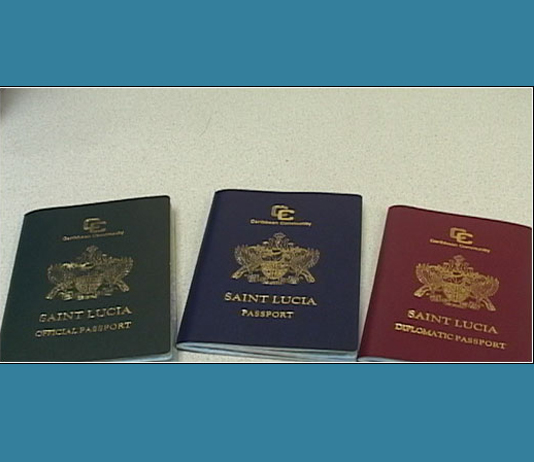
The CIP has absolutely no jurisdiction over diplomatic passports as this is solely the purview of the government.

Audio Theme