
Home Blog Page 119

Stakeholders discuss way forward for Region's Sugar Industry

Sugar Industry

The ability of sugar industry in the Region to survive after the removal of production quotas in the European Union (EU) on 30 September, 2017, will depend on improved competitiveness and pragmatic diversification options, according to a Caribbean Community (CARICOM) Secretariat official.

The end of EU’s quota management for sugar is expected to lead to a fall in prices towards the international sugar price and a decrease in sugar imports from the African Caribbean and Pacific (ACP) states, with particular impact on Caribbean producers.
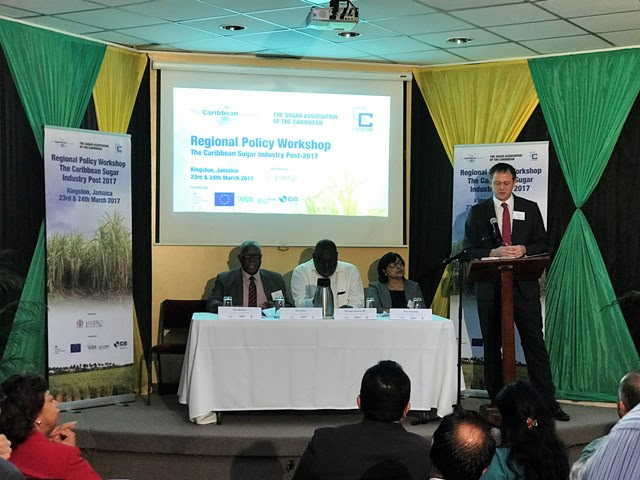
In an address on 23 March to the opening of a Regional Policy Workshop in Kingston, Jamaica, that addressed the Caribbean Sugar Industry Post-2017, CARICOM Secretariat Programme Manager, Agriculture and Industry. Ms. Nisa Surujbally, said that securing more remunerative markets, value addition and an enabling policy regime within the CARICOM Single Market and Economy (CSME) were also very important to the industry’s survival.
“We have witnessed major structural changes in the operations of our sugar industries, including the exit from sugar production of two Member States, Trinidad and Tobago and St Kitts and Nevis. Nevertheless, we are mindful of the vital role and contribution of the sugar sectors to the economies of Barbados, Belize, Guyana and Jamaica. Survivability of these industries, after the removal of production quotas in the EU on September 30 2017, will in no small measure be a function of improved competitiveness, securing more remunerative markets, value addition, an enabling policy regime within the CARICOM Single Market and Economy, and, not lastly, practical and pragmatic diversification options.
“I say this as a technical official while being acutely aware of the emotional associations we have with our Region’s oldest economic sector. This industry is responsible for us being here and has coloured our history from colonisation, to slavery to indentureship and to independence. It is not an easy time! Now is crunch time”, she told the gathering.
The workshop was convened by the Sugar Association of the Caribbean and hosted at JAMPRO with the advice and support of The Caribbean Council, the CARICOM Secretariat and JAMPRO. It was funded by the EU, United Kingdom Foreign and Commonwealth Office, ASR Group, and the Inter-American Development Bank (IDB). It brought together industry leaders and policy-makers to inform and facilitate an in-depth discussion of how the Caribbean sugar industry now needs to adapt to the new market realities and the policy options which are available to both industry and regional governments.
The sessions focused on an outlook of the global sugar market and sugar prices; the 2017 EU sugar reform and short-term threats to the Caribbean sugar industry; access to new markets and opportunities; increasing productivity and competitiveness; managing the politics of transforming sugar industries; and adapting to climate change. Presenters included Mr. Jose Orive, Executive Director of the International Sugar Association, Mr. Paul Ryberg of the International Sugar Trade Coalition, His Excellency David Fitton, British High Commissioner to Jamaica, Mr. Gavin Tench, Deputy Ambasador of the Delegationof the European Union to Jamaica, Mr. Martin Todd, Managing Director of LMC International, Duncan Tate of Tate and Lyle Sugars as well as CARICOM industry officials. There were also panel discussions that explored the trade and tariff policy options that are open to Caribbean policy-makers, as well as the policy measures that Caribbean policy-makers could adopt to support a viable sugar industry.
Ms. Surujbally gave the assurance of the Secretariat’s continued support to the sugar industry of CARICOM through its active participation in the dialogue and framing of the policy options for decision-makers. More recently, the COTED adopted definitions for refined sugar and liquid sugar. CROSQ has also circulated revised quality standards for raw and refined sugar which will be tabled for the approval of the Council of Trade and Economic Development when it meets in May.
Ministers responsible for sugar met for their Sixth Meeting of CARICOM Stakeholders in Sugar a day after the policy workshop and discussed its key outcomes. The industry will present a position paper to COTED with key recommendations on sustainability and competitiveness.
Caption: At the policy workshop, from left are Mr. Karl James, Chairman Sugar Association of the Caribbean, Mr. Donovan Stanberry, Permanent Secretary in the Ministry of Industry, Commerce, Agriculture and Fisheries, Ms. Nisa Surujbally, Programme Manager, Agriculture and Industry, CARICOM Secretariat, and, at the podium, Mr. Chris Bennett, Managing Director of the Caribbean Council


Saint Lucia Jazz kicks into high gear

SOLEIL – the Saint Lucia Summer Festival will kick off May 12-14, 2017 with Saint Lucia Jazz, a celebration of Caribbean and international jazz music. Musical performances will take place across the island culminating with three major concerts at the iconic Pigeon Island National Landmark.
This year’s festival lineup blends island culture, famed musical talent and eclectic music genres. Internationally renowned performers taking center stage this year include Grammy-nominated singer and actress Vanessa Williams and multi-talented Rachelle Ferrell. Additional headliners include pianist, composer and social activist Danilo Pérez; Grammy-winning drummer, composer and bandleader Terri Lyne Carrington; and Kenny Garrett, a Grammy award-winning jazz saxophonist and flautist who was a member of the Duke Ellington Orchestra and Miles Davis’ band.
Tickets for the Saint Lucia Jazz Festival are priced at US$37/EC$100 for Friday night shows and US$65/EC$175 for the Saturday and Sunday shows. For more information on our line-up and updates on ticket availability visit http://www.stlucia.org/jazzfestival/schedule/
Hotels and resorts island-wide are offering free nights, value-added packages and discounted room rates as much as 60% percent off.
Soleil - Saint Lucia Jazz Scedule

Ex-offenders Rehabilitation programmes necessary

Ex-Offenders

Ex-offenders are stigmatised, discriminated against and disadvantaged by their criminal records, and need to be rehabilitated and empowered through biblical and educational teachings.

This view was expressed recently by Minister of Social Care, Constituency Empowerment and Community Development, Steven Blackett, at the closing ceremony of the Prison Fellowship Conference for ex-offenders, at the Church of God of Prophecy, Water Street, Christ Church.
“In numerous instances, many of the incarcerated were not previously habilitated and so, a programme of habilitation ought to undergird our attention and interventions as we seek to empower inmates through biblical and educational teachings and other strategies, in pursuit of redeeming and forgiving the past and positively transforming the future,” he stated.
The Minister noted that stigma could jeopardise the chances of ex-offenders securing employment and other social and economic goods, and stressed the importance of “giving ex-offenders a second chance”.
Mr. Blackett also opined that incarceration not only affected offenders, but also their children and families, and therefore their emotional, spiritual and material needs should be taken into account.
“Against the backdrop of the exponential rise in criminal activity in the region, there will be an increasing and urgent need for programmes, such as your Angel Tree Programme. The incarceration of greater numbers of males and fathers across the region and the southern hemisphere, as a consequence of the rise in criminal activity, presents us with increasing numbers of children who need the care and attention of our societies as a whole,” he stated.
The Social Care Minister emphasised that the relevance and significance of the Prison Felllowship programme could not be overstated, given the social, physical and financial costs attendant with crime and incarceration, and pledged his Ministry’s continued support for their initiatives.

International Women’s Month: Defence Minister Salutes Women

Defence Minister Salutes Women - International Women’s Month

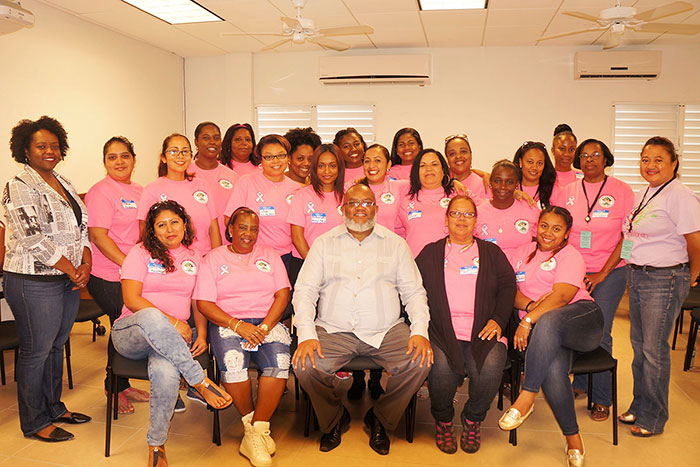
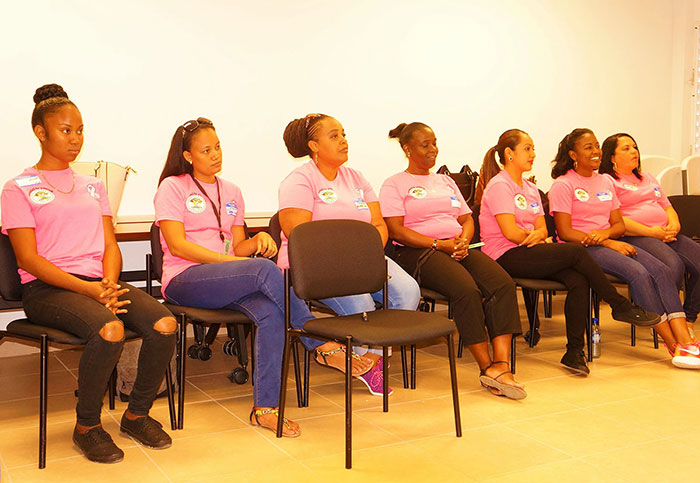
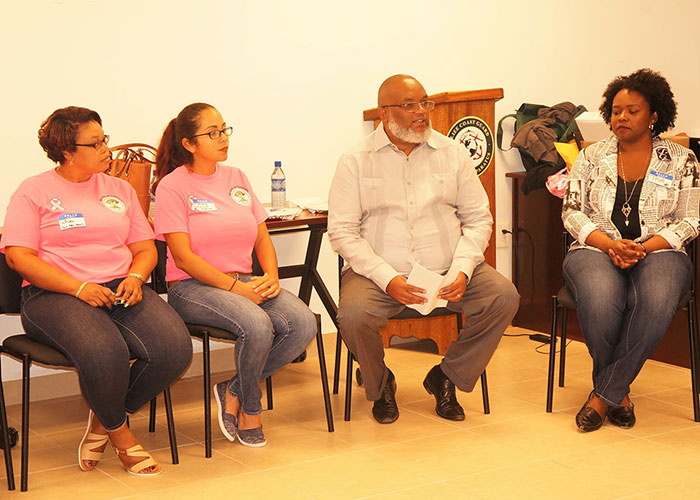
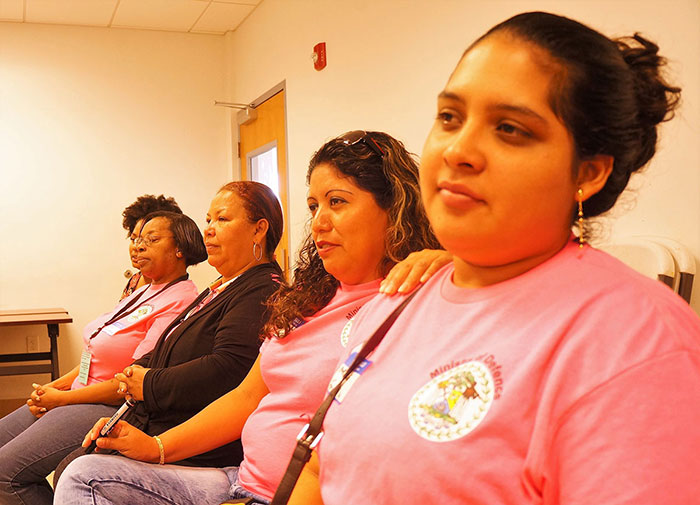
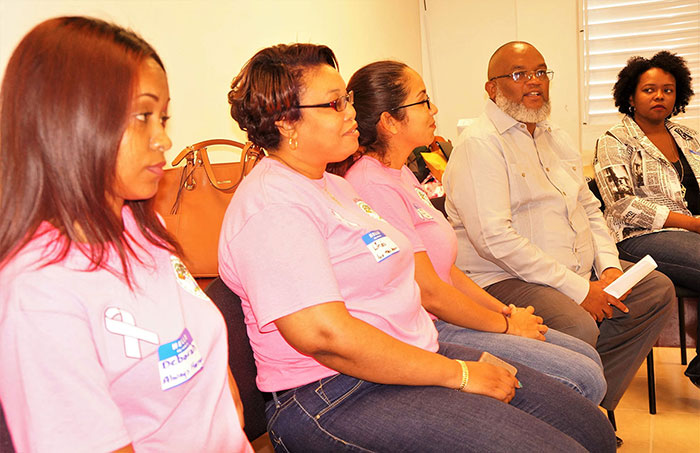
Minister of Defence Hon. John Saldivar this morning addressed a gathering of women who work within his ministry and departments under his command.

The event was organized as part of International Women’s Month activities under the theme, “Women in the Changing World of Work: Planet 50-50 by 2030”.
In his remarks, Hon Saldivar stated, “It is really nice to have a special time for women where they are glorified to the point of being honored, awarded and appreciated. I hope this builds awareness and acknowledgement of the woman’s contribution to life, society, family and work; we salute her strength, resilience and sacrifice. Women empowerment lies in honoring yourself and treating yourself with respect. Remember, “No one can put you down without your permission” – Eleanor Roosevelt. For all you have done and continue to do for the Ministry and the Security Forces, Thank You.”
The event was held at the Belize Coast Guard Headquarters near Belize City on the George Price Highway. Also under Hon Saldivar’s ministerial command are the Belize Defence Force and the Joint Intelligence Operation Centre.
International Women’s Month: Defence Minister Salutes Women 1 International Women’s Month: Defence Minister Salutes Women 2 International Women’s Month: Defence Minister Salutes Women 3 International Women’s Month: Defence Minister Salutes Women 4

EUR 24 M in support to the Caribbean’s Private Sector from the European Union

European Development Fund - Signing

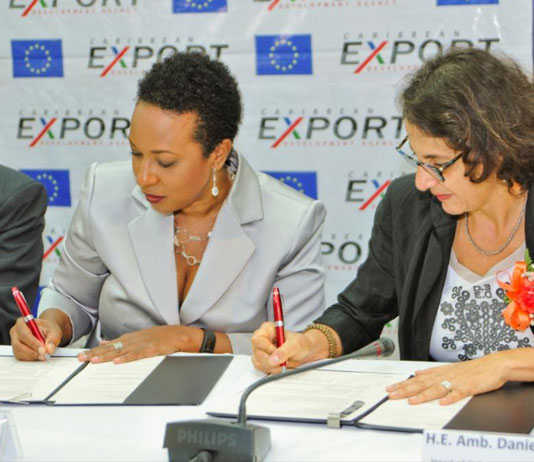
The Caribbean Export Development Agency (Caribbean Export) and the European Union (EU) have signed the 11th European Development Fund (EDF) agreement worth EUR 24 Million to support regional private sector development.

At the 11th EDF launch and signing ceremony, held yesterday at the Lloyd Erskine Sandiford Centre, Barbados, Head of Delegation of the EU to Barbados, the Eastern Caribbean, the OECS, and CARICOM/CARIFORUM, Amb. Daniela Tramacere highlighted that the EU remained the largest grant aid donor in the world and have set aside a total of 364 million euros for regional development; a substantial increase to the amount of aid provided under the previous regional development fund.  Of this current EDF cycle which runs from 2014-2020 the Caribbean Export Development Agency will implement the 24 million euro 11th EDF Regional Private Sector Development Programme (RPSDP).
The Agency which celebrated its 20th Anniversary last year will continue to build upon the two decades of successful EDF Programme implementation and “this new Regional Private Sector Development Programme places even more emphasis on the development of the private sector as both a beneficiary and a partner in the delivery of the EPA” commented Amb. Tramacere
Pamela Coke-Hamilton, Executive Director at Caribbean Export reported that after the signing of the CARIFORUM-EU Economic Partnership Agreement (EPA) in 2008, exports from CARIFORUM to the European Union grew by 10% between 2009-2015, and indicated that countries such as Belize and the Dominican Republic experienced increased European exports: 20% and 34% respectively between the same period. “I would like to thank the European Union for their continued support in investing in private sector development and for being a true partner to the Caribbean region,” concluded Ms. Coke Hamilton.
The previous 10th EDF Regional Private Sector Development Programme (RPSDP) was given a positive overall assessment of medium-high by the EU in their implementation of some 260 programme based activities from which over 6000 SME’s across CARIFORUM benefited.  Under the 11th EDF, focus will be placed on market penetration, supply chain and intelligence frameworks, increased access to finance, the promotion of green energy and energy efficiency as key factors in lowering costs and more targeted approaches to enhancing firm capacity. An extremely critical pillar in the success of this programme will be the improvement of the business enabling environment within CARIFORUM States.
The overall objective of this programme is to increase employment creation, inclusiveness, particularly for youth, women and indigenous groups, and overall poverty reduction in CARIFORUM states through targeted interventions that provide new and innovative frameworks for growth and development.

Statement at the end of a staff visit to Grenada

End-of-Visit press releases include statements of IMF staff teams that convey preliminary findings after a visit to a country. The views expressed in this statement are those of the IMF staff and do not necessarily represent the views of the IMF’s Executive Board. Based on the preliminary findings of this mission, staff will prepare a report that, subject to management approval, will be presented to the IMF’s Executive Board for discussion and decision.

  • Grenada has continued with steadfast implementation of reforms and made progress toward achieving the key program goals.
  • Fiscal adjustment, debt restructuring and robust growth matched by strong policies and establishment of a solid fiscal policy framework.
  • Debt still relatively high, so further effort needed to secure fiscal sustainability and resilience, and much to do to lower unemployment.

An International Monetary Fund (IMF) team led by Nicole Laframboise visited Grenada from March 15-22, 2017 to conduct discussions on the Sixth Review of Grenada’s IMF-supported program under the Extended Credit Facility (ECF). The ECF arrangement was approved on June 26, 2014 for an amount of SDR 14.04 million (then US$19.4 million, or 120 percent of Grenada’s quota at the IMF). Thus far, total resources of SDR 12.04 million (about US$17.5 million) have been made available to Grenada under the arrangement. [1]
At the conclusion of the visit, Ms. Laframboise made the following statement:
“Overall performance during this last phase of the ECF-supported Home Grown program has been strong. The government has continued with steadfast implementation of reforms and made progress toward achieving the key program goals of restoring fiscal sustainability, strengthening the financial sector, and setting the stage for durable growth.
“The staff team has assessed that the government met all of the performance criteria and structural benchmarks due at end-December 2016. All the indicative targets were met, except for a minor under-spending on the World Bank-supported SEED program because of extra time needed to process candidates under the new eligibility system. Nonetheless, it is worth noting that the results so far point to an improvement in the effectiveness and targeting of programs to those most in need.
“Real GDP is estimated to have expanded by 3.9 percent in 2016, implying annual real GDP growth of 5.8 percent on average from 2014-2016. Activity in 2016 was driven by tourism, construction, and some pick up in domestic demand, while agriculture experienced weather-related contraction. Growth is expected to moderate to 2.5 percent in 2017, near its estimated potential. Average CPI inflation rose to 1.7 percent in 2016 and is forecast at 2.6 percent in 2017 as oil and food prices start to rise. With steady tourism momentum, the external position remains stable.
The government achieved a primary surplus (fiscal balance excluding interest payments) in 2016 of 5.3 percent of GDP. Expenditures were kept under firm control, and tax revenues performed well across all categories, driven by improvements in compliance and administration as well as robust activity.
“Grenada has also taken important steps towards completing the comprehensive debt restructuring started in 2014. Of the stock outstanding at program inception, over 90 percent has been restructured. Public debt is forecast to fall to 72 percent at end-2017, a drop of 36 percentage points from its peak of 108 percent in 2013. This sizeable decline in the debt-to-GDP ratio is attributed to all three key factors: debt relief and restructuring, fiscal adjustment, and strong GDP growth.
“While improvements in economic indicators are noteworthy, there is still much to do to improve job prospects. Employment has grown on average by about 4 percent annually since 2014, but unemployment in Grenada is high, particularly for the youth. Labor force statistics suggest an important skills mismatch in the economy. A review of education curriculums and new labor market programs to improve training and job search tools, in collaboration with the private sector, would help address this mismatch.
“To achieve broader-based growth, the government is focusing on structural reforms to improve the supply response. Based on the natural endowments and market brand, the agriculture sector could be a more important source of growth and employment in Grenada. The authorities are moving toward some liberalization in the sector and staff urges them to continue in that direction. The government is also taking steps to remove impediments to doing business, including streamlining property registration processes and customs procedures, and strengthening building quality control and regulation. Further consultations with the private sector in these areas could help identify pressure points to be addressed.
“Despite marked progress, it is important to note that public debt is still relatively high and further effort is needed to reach the medium term target. Grenada is a small open economy susceptible to external shocks, including from natural disasters, swings in key tourism markets, commodity price shocks, as well as potential volatility of Citizen-by-Investment revenues. With these types of vulnerabilities, lower debt and higher reserve buffers will help the country mitigate the impact of external shocks to avoid output losses and setbacks in income and social progress.
“In this light, continued policy resolve will be needed to safeguard the progress thus far and achieve the country’s medium term debt reduction goals. The government agreed with staff on the imperative of adhering to the strengthened policy framework. Follow through on the Fiscal Responsibility legislation and the full set of systems and practices of public finance management developed over the past three years is critical to secure fiscal sustainability for future generations. It will also build credibility in the rules-based policy framework.
“In support of this goal, the government is preparing a strategy to modernize the management of the public sector. This three-year strategy will aid in improving the operations and efficiency of the public sector as well as develop a fair and rational system of compensation and incentives. There will be extensive consultation on the strategy and its implementation with all stakeholders.
“The government and people of Grenada should be commended for their achievements during the Home Grown program, particularly with respect to debt reduction, growth, and the strengthened fiscal policy framework. This success is due in no small part to the strong country ownership and high degree of consultation and collaboration with stakeholders, in particular the Committee of Social Partners and the Home Grown Monitoring Committee. We encourage Grenada to press ahead with its medium term goals and to focus on ways to promote growth further and lower unemployment to improve the economic opportunities for all Grenadians.
“The IMF remains committed to supporting Grenada. The team is grateful for the warm welcome extended to us by the authorities and representatives of the private sector, labor, civil society, and financial institutions, and for the constructive discussions.”

Victoria Hospital responds to mass casualty event in Cul-de-Sac

Explosion in Cul-de-Sac

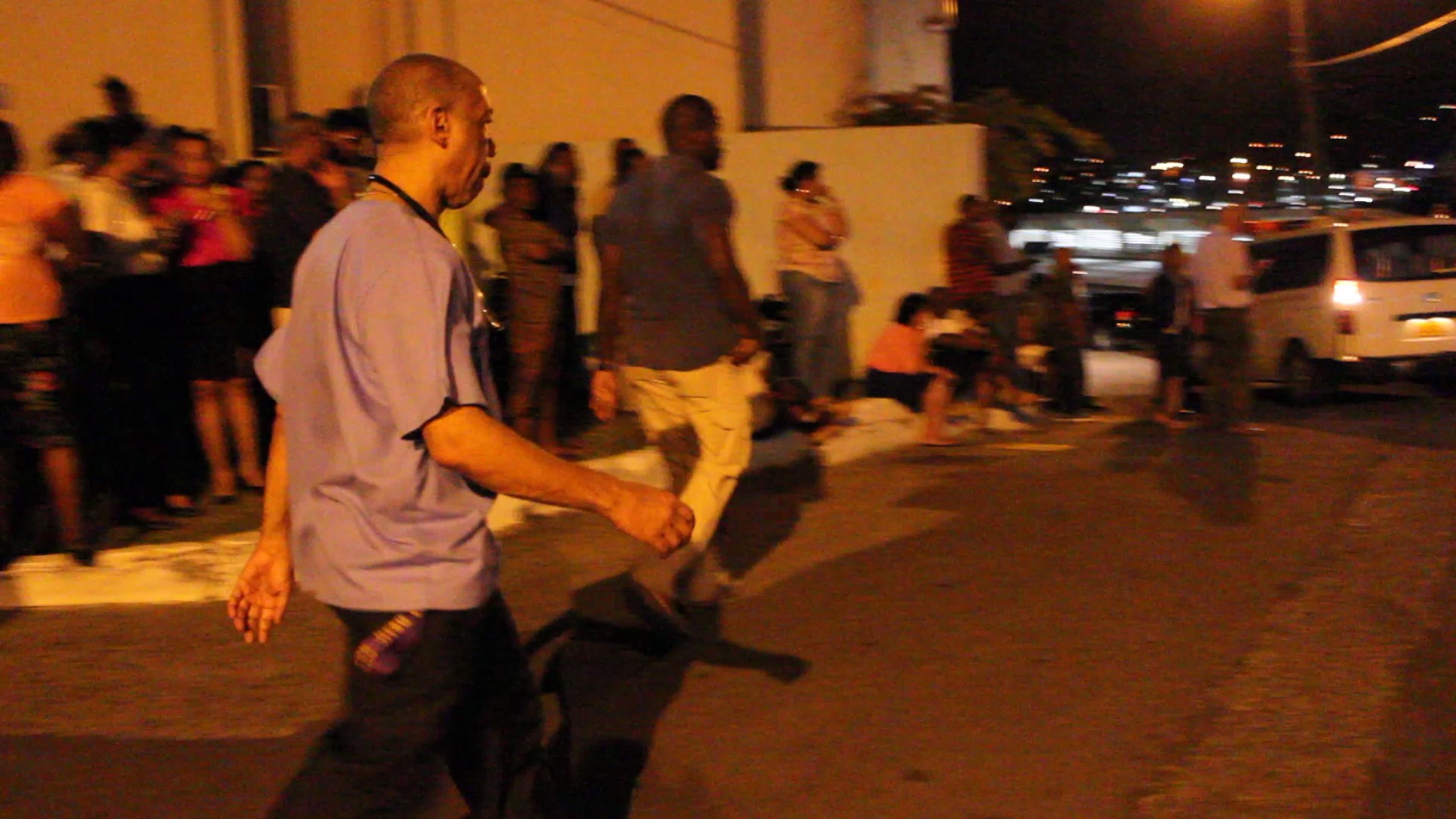
Tuesday’s massive explosion in Cul-de-Sac triggered the full mass casualty response from the Victoria Hospital as the casualties came steaming into the Accident and Emergency Department.


A total of 15 patients presented at the hospital suffering from various injuries with some requiring immediate surgical procedures.  One patient succumbed to his injuries while others were stabilized.  Additional nurses, doctors, ancillary and admin staff responded quickly to manage the injured as well as the friends and family members who arrived on the scene.  It was a baptism by fire for newly appointed Ag. Executive Director of the Victoria Hospital, Brenda Calixte who took up her duties only one day ago.  She was however exceedingly please with the response of the hospital staff to manage the situation.
“From the time we got the news, what we did is we rounded up all the clinical personnel, surgical personnel, the Medical Director, the Nursing Director, all our admin persons are there.  We also got more security personnel to come in. We also got the domestic assistants, the orderlies,  all these persons including our admin persons, accountant and everybody,  all those persons in supplies, the lab, everybody was rounded up and everybody is here… Persons are working and the doctors are really helpful, the doctor are there and they are working.”
The Executive Director sympathized with family members for the sudden shock brought about by this incident but assured that the hospital in adequately managing the situation.
“Right now we have everything under control. We also have the Lamina Hospital in Martinique they have called us to let us know that they are on standby if we need to transfer anybody to Martinique.”
Calixte added that patients on wards who could safely be managed at home were discharged to make bed space available, while other persons reporting to the A&E Department  agreed to wait a little longer to be attended to by medical personnel.
Prime Minister, Hon. Allen Chastanet  and Minister for Economic Development, Hon. Guy Joseph were on site at the Victoria Hospital to provide assistance to staff particularly with respect to travel arrangement to Martinique and to empathize with numerous family and friends gathered at the hospital.
“It is very sad and my sympathies go out to the families especially those who have lost their loved ones and our prayers are with those who are still alive and maybe in a critical condition that things are going to work out and that we are not going to have any more casualties than we have.   It’s very sad when an individual leaves and goes to work and his family expects him to come back home and on the job a tragedy like this happens. It’s a very difficult situation to deal with.”
Minister Joseph indicated that while attending a budget meeting on the Waterfront they received reports that the building had shaken due to a massive explosion  at Farrand Quarry in Cul-de-Sac. The meeting was quickly ended and he and the Prime Minister immediately visited the site where they learnt of two deaths on location and a number of injured persons transported to Victoria Hospital.
“I know the Prime Minister has been in touch with counterparts in Martinique, medical persons and other persons to put measures in place in the event that we need to transport anybody to Martinique. I have been in discussion with the directors at the hospital. As far as we know the response has been very good from the hospital. All the personnel that is required were called in and they responded very quickly and we must really applaud our medical team and our workers for responding with such limited resources as we know the challenges that we have in the health sector to the mass casualties that we have had today.”
The Victoria Hospital provided coffee, tea and water in their staff lounge to family members awaiting the outcome of their loved one’s situation while the Prime Minister organised meals for the hard working staff and volunteers many of whom worked extended shifts.  Four patients were also  airlifted to Martinique for treatment early Wednesday Morning.  Three doctors from Martinique are currently at Victoria Hospital to assist with  patient management.

Ministry of Labour issues warning to persons employed in Saint Lucia illegally

illegal

The Ministry of Labour is embarking on a drive to clamp down foreign nationals working in Saint Lucia illegally.

It has been brought to the attention of the Labour Department, that there are individuals employed at various organizations here without a valid Work Permit.
The country`s Labour Legislation mandates that overseas nationals desirous of employment in Saint Lucia, must first obtain a work permit or exemption where applicable.
According to the Labour Code #37 of 2006 Section 317 “Control of Employment” Subsection 2 “A person shall not have in his or her employment in Saint Lucia a foreign national without there being in force a valid work permit or an exemption for the requirement for a work permit pursuant to this Code or any other law in force in Saint Lucia in relation to that employment”.
Minister responsible for Labor Honorable Stephenson King says this notification serves as a warning to employers and employees engaged in illegal employment.
“The laws of Saint Lucia are clear when it comes to employment, we want people to adhere to the laws or face the penalties” said Minister King.
The ongoing drive is targeted at people who do not have the necessary documentation.
Employers and or employees who are currently in contravention of the law are asked to visit the Labour Department at Barnard Hill to regularize their employment status urgently.
Failure to comply will result in the case being passes on to the Immigration Department for full enforcement of the law.
Employers and employees should note that a foreign national who engages in occupation in Saint Lucia or is employed in Saint Lucia in contravention of the law is liable on summary conviction to a fine not exceeding five thousand dollars or imprisonment for a term not exceeding one year or both. Should the offence continue, the convicted is liable to a further fine not exceeding five hundred dollars for each day the offence continues and or imprisonment for a term not exceeding two years.
The Labour Minister says government will do what is necessary to ensure that Labour laws are upheld.
He says to achieve a level of organization and improvement to productivity and competiveness in the Labour market, government is committed to reviewing existing labour laws, this year, through social partnership.

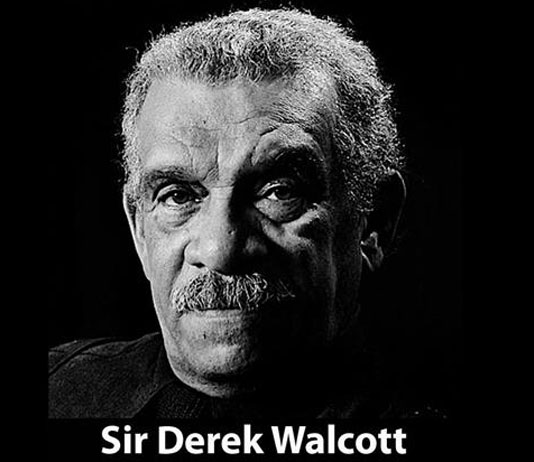
Saint Lucia mourns “a great loss” – Sir Derek Walcott

Derek Walcott

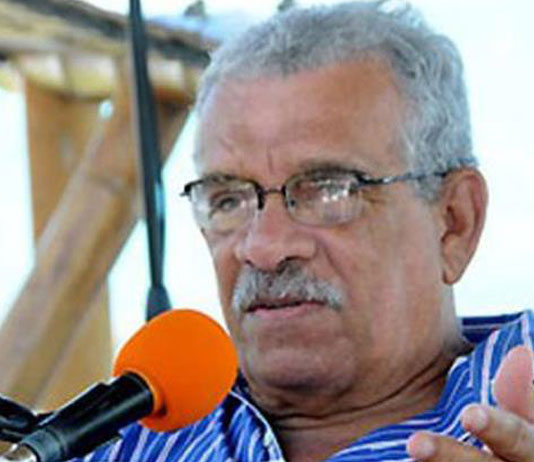
The reknowned poet and playwright, Sir Derek Walcott passed away at 87.

Sir Derek Walcott passed away at his residence on the morning of March 17, 2017. He was 87 years old.
Sir Derek Alton Walcott, KCSL OBE OCC was born on Jan 23, 1930 and was Saint Lucia’s most renowned poet and playwright. The recipient of the 1992 Nobel Prize in Literature, he also served as Professor of Poetry at the University of Essex from 2010 to 2013.
A statement released by his family on the morning of the 17th read: “Derek Alton Walcott, poet, playwright, and painter, died peacefully today, Friday, March 17, at his home in Cap Estate, Saint Lucia. He was 87 years old and will be greatly missed by his family and friends. The funeral will be held in Saint Lucia and details will be announced shortly.”
In the wake of  his passing, Prime Minister Hon. Allen Chastanet also made a statement.
“Today is a very historical day with the passing of Sir Derek Walcott, a household name in Saint Lucia. When anyone speaks about excellence and describes Saint with any form of superlative, clearly the two names that stand tall in Saint Lucia’s history are Sir Arthur Lewis and now Sir Derek Walcott. It has become customary for us to see Sir Derek and know that he was here all the time. He made himself so available and participated in so many national events here in Saint Lucia. Derek truly was a Caribbean patron.
“My deepest sympathies go to his partner, Sigrid, Derek’s family and his children. It is a great loss to Saint Lucia. It is a great loss to the world, but we can now sit back and reflect on his achievements as they are so incredible.”
Derek Walcott self-published his first book, “25 Poems” when he was 18. His body of work includes: The Last Carnival; Beef, No Chicken and A Branch of the Blue Nile (1969), Dream on Monkey Mountain and Other Plays (1970), The Joker of Seville and O Babylon! (1978), Remembrance and Pantomime (1980), The Isle is Full of Noises (1982), Omeros (1990) and The Odyssey: A Stage Version (1992).
The titan of Caribbean literature received numerous awards including a Royal Society of Literature Award, the Queen’s medal of Poetry, and a MacArthur Foundation genius award.
Prime Minister Chastanet has ordered that all flags in Saint Lucia be flown at half-mast until Tuesday.

Nobel Laureate, Sir Derek Walcott, passes

Sir Derek Walcott

Saint Lucian poet, playwright, and Nobel Laureate, Sir Derek Walcott, has passed.

An announcement from the Office of the Governor General noted his passing. “Her Excellency Dame Pearlette Louisy and Chairman of the Nobel Laureate Committee regrets to announce the death of Sir Derek Alton Walcott, SLC, OBE, OCC, Saint Lucia’s second Nobel Laureate. Sir Derek Walcott died peacefully at his house in Cap Estate this morning, March 17.” Sir Derek was 87 years old.
Prime Minister Allen Chastanet, during a brief address, offered condolences to the family of Sir Derek.
“When everyone speaks of excellence, the two names that stand tall in Saint Lucia’s history are Sir Arthur Lewis, and Sir Derek Walcott. As such, today is a historical day, as it marks the passing of Sir Derek,” he said. “His, is a household name, as he made himself so available and participated in many national and local events in Saint Lucia. It has become customary for all of us to see Sir Derek, and to know that he was here all the time. There is one thing that Derek truly was—a Caribbean patron. He was always very consistent about being Caribbean, and being original.”
“His passing is unfortunate, and I know that it is very difficult for his family. My deepest sympathies go out to them and to all the people who have collaborated with Sir Derek over the years. This is a great loss to us in Saint Lucia, and clearly a great loss to the world, but we can still reflect on his incredible achievements. He has made all Saint Lucians and Caribbean people very proud.”
He continued: “In recognition of the statesman that he was, the Government of Saint Lucia will fly the flags at half-mast until Tuesday. I am in discussions with his family and the Saint Lucian artistic fraternity to discuss what tributes we can pay to this icon of a man.
“It is with a heavy heart that we express our deepest sympathies for the family’s loss, and our appreciation at the same time, to the Walcott family.”
Sir Derek received the Nobel Prize for Literature in 1992. On Feb. 28, 2016, was invested with the Knight Commander of Saint Lucia (KCSL).

Audio Theme