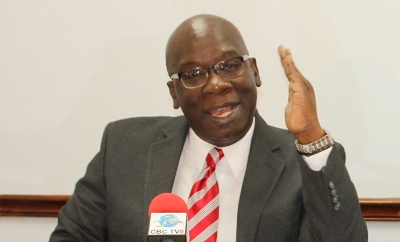
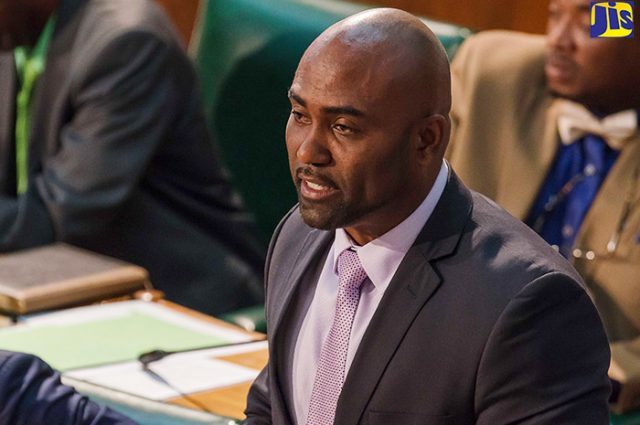
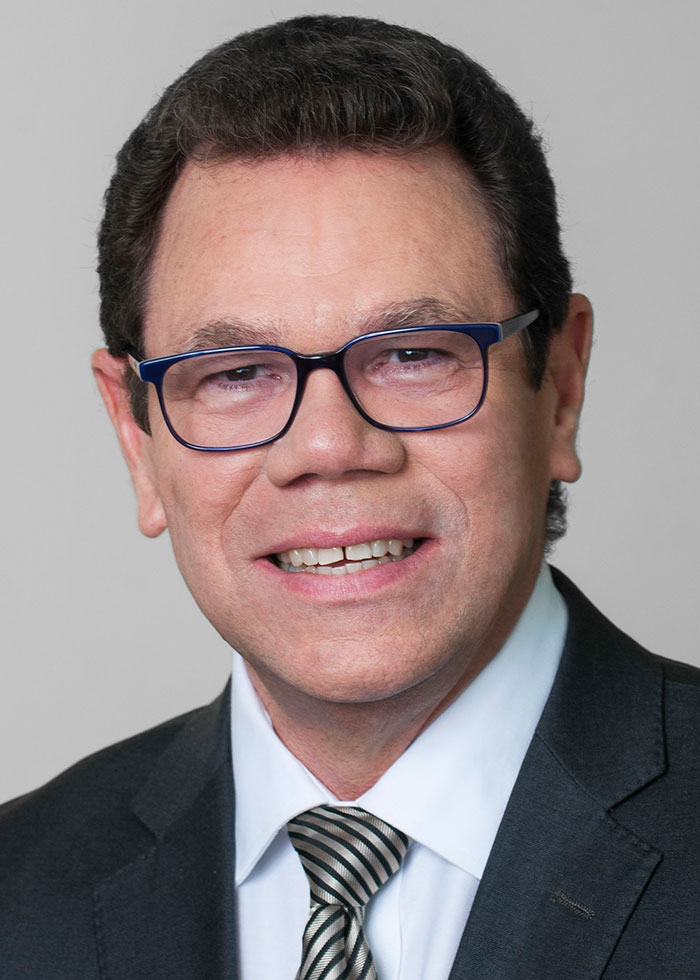
Education Minister Ronald Jones is defending this country’s educational standards against any suggestion that they are not at the same level as before.
Speaking yesterday at the Warrens headquarters of telecoms company FLOW as it launched Flow Study, an e-learning tool, Mr. Jones said much of the current discussion came from the “ill-informed” and the “uninformed” relative to what is taking place in Barbados.
Responding to a question on whether the country was still at 99 per cent literacy rate, the Education Minister said Barbadian young people and students continued to be “quite excellent in our school system”.
Mr. Jones said he was pleased to see their academic and technical vocational progress, and stressed: “Sometimes, I become bothered about how they learn… the time they spend in learning is a lot less than what I would have spent in learning but yet the outcomes or the output are a lot more substantial… that is what we experience and that is what we see…”
Intimating that he would soon speak to this matter, the Minister said sometime this week he would meet with persons and share the data that “we have over the last 23 years to show the movement upward in the learning of our students”.
Mr. Jones said the island had shown a very interesting profile at schools, where students were achieving between 98 and 100 per cent of four subjects or more, in one year in the CSEC May/June.
Other students, he noted, were also in accelerated programmes in some schools, achieving passes in between one and three subjects, before fifth form.
Staff and patients at the Chateaubelair hospital will be more comfortable thanks to a donation of medical supplies and a new Smart Hospital earmarked for construction in the North Leeward constituency.
The donation of medical supplies was made by Government Senator and Deputy Speaker of the House of Assembly, Hon. Carlos James, at a consultation with health officials and residents last Friday 21st October at the Chateaubelair Learning Resource Center.
According to Senator James, the donation was timely as the health ministry makes final preparations to relocate the hospital to a nearby Resource Centre to commence the retrofitting of the hospital into a new Smart Healthcare facility.
The donation, which included four high velocity electric fans, boxes of adult pampers, an electric oxygen tank, diabetic machines and strips, bedpans and urinals, among other medical supplies, was made possible through Senator James’ philanthropic efforts and donor partners, including Carimedix in Kingstown.
“In a few months the Chateaubelair hospital will be temporarily relocated and I thought the donation was necessary to make both the staff and the patients more comfortable during the transition,” Senator James said. According to the Senator, the residents of North Leeward are pleased with the transformation of the hospital into a state-of-the-art medical facility.
The Chateaubelair Smart Hospital Project, which is funded by UKAID and implemented by the Pan American Health Organisation (PAHO), will be retrofitted with solar panels for renewable energy, rain harvesting tanks, as well as improved functional sections for staff and patients, new maternity and pediatric wards, a pharmacy, dental and doctors stations and restrooms for the public.
Senator James noted that this project is a welcomed initiative and thanked the personnel at the Ministry of Health, Wellness & the Environment, for its quick implementation. “Just over a year ago we spoke of plans for a Smart Hospital in the North Leeward Constituency and I am pleased to see its implementation. We have a hardworking team at the Ministry of Health headed by Hon. Luke Browne, and an equally strong focal point team from PAHO, who are delivering this project to the people of North Leeward,” Senator James said.
The Senator also noted that the new Smart Hospital is part of the government’s plan to improve the delivery of healthcare nationally, and North Leeward is not being left out of the mix. Senator Carlos James, Minister of Health Hon. Luke Browne (centre ) family nurse practitioner Judy Haywood (second from right) Senior nursing officer Cecile James-Samuel (left) and Dr. Francis Murray (right)
The Ministry of Health has recently completed a doctor’s quarters in North Leeward as part of its overall policy to improve health facilities in the country.
The Smart Hospital facility is being constructed at cost of some $1.6 million dollars.
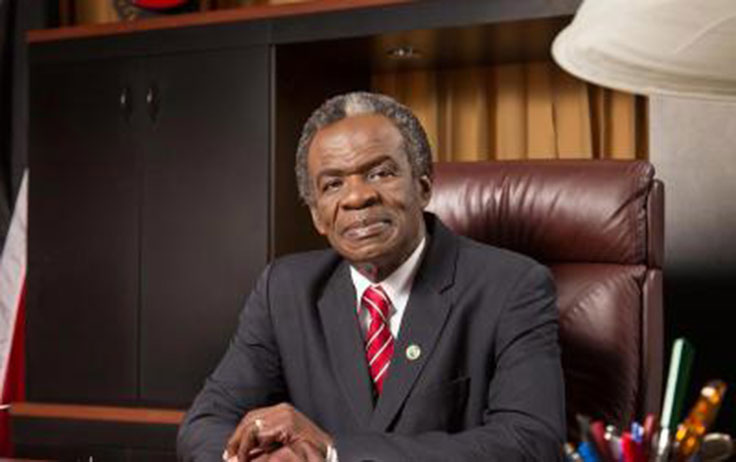
Chief Secretary, Tobago House of Assembly, Orville London. (Photo courtesy lyndersaydigital.com)
Chief Secretary Orville London was honoured on the weekend for his contributions to education in Tobago. And after viewing a video tribute by his family and friends, and receiving an award for his service, as well as a portrait of himself, London revealed that it was his time as an educator that prepared him to lead.
“…I think it’s very significant that I’m standing on this stage speaking to you,” London said at the 2016 Teachers’ Retirement and Appreciation Function, which took place on Saturday October 22 at Signal Hill Secondary School.
“Because it is on the Scarborough Junior Secondary stage and the Signal Hill Senior Comprehensive stage that I was able to develop the attributes that make it possible for me to succeed as Secretary, as Chief Secretary, and as leader, and I want to thank these institutions for really nurturing me and strengthening me and preparing me.”
London also paid tribute to his family for their contributions to his success. During the event, themed “Mirrors: Honouring the Past, Treasuring the Present and Shaping the Future”, the island honoured its
recently retired teachers.
They are Juliana Alfred-Sandy, John Burris, Belinda Dillon, Catherine Douglas-Stewart, Stephanie Quashie, Gangadaye Roopsingh, Nevlyn Renwick, Glenana Thomas-Bernard, Marva Williams and Marilyn Cowie-Clarke.
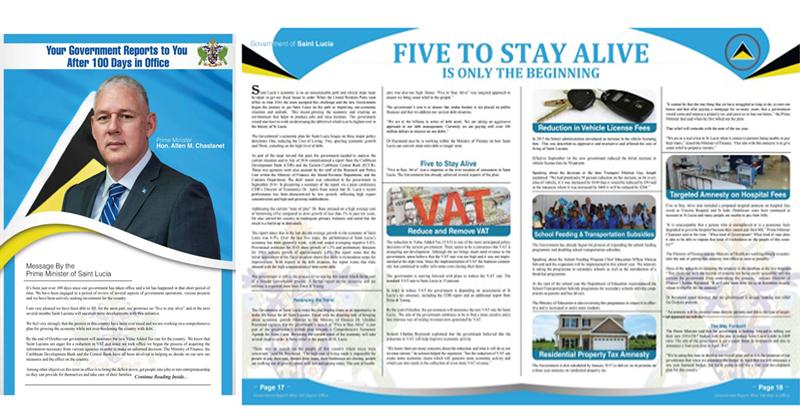
The report chronicles the progress of Five to Stay Alive policies, and other key events. Prime Minister Hon. Allen M. Chastanet and the newly formed Cabinet marked one hundred days in office at the end of September.
To chronicle this milestone, an electronic publication outlining some of the immediate measures and achievements, as well as the progress of Five to Stay Alive policies, and other key events have been published.
The online publication can be found at: http://www.slideshare.net/OPMSaintLucia/government-of-saint-lucia-100-days-in-office-report
The public is encouraged to visit the page and continue to support the government in its commitment to build a prosperous and progressive Saint Lucia for all.
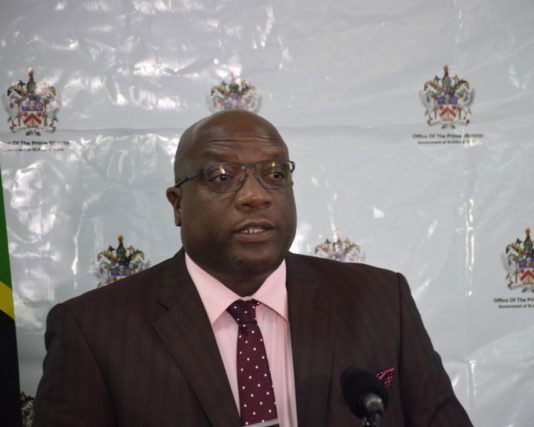
In an effort to continue along the path of transparency and good governance, Prime Minister Dr. the Honourable Timothy Harris has sought to update citizens and residents on the Budget preparation cycle for 2017, which runs from January to December each year and concludes with the presentation of the Budget Address and Draft Budget Estimates in the National Assembly.
Prime Minister Harris was at the time delivering his opening statement at the Prime Minister’s Monthly Press Conference on Wednesday, October 26, at Parliamentary Lounge, Government Headquarters. He noted that the National Consultation on the Economy and the Estimates Committee Meetings are two important events in the Budget preparation process.
“We are well on the way with the preparation of the 2017 Budget, having concluded the Estimates Committee Meetings which provided an important forum for information sharing, decision making and policy formulation,” said Prime Minister Harris, while adding that the meetings were held from October 12-14 with an aim to consider Budgetary proposals from all ministries for the upcoming financial year 2017. “The Cabinet is determined that the Government should continue on its path of fiscal prudence that has led to the realization of a notable surplus on the main fiscal accounts. In addition, the Cabinet has given a commitment that there would be a balanced Budget in 2017.”
The prime minister said that going forward priority would be placed on improving efficiency in the implementation of capital projects and the overall Public Sector Investment Programme.
“This will ensure that the Public Sector continues to directly contribute to the economic growth in the Federation,” he said. “The Cabinet has already approved a number of significant projects involving public infrastructure, education, and the health and security sectors will be pursued early in 2017. Additionally, our comprehensive housing programme will unfold in earnest in 2017 and in our budget address for 2017 we will make an important policy statement with respect to housing development in St. Kitts and Nevis, and the various avenues which we will go to ensure that the wide cross-section of persons at home and importantly abroad are able to benefit from property ownership in the Federation.”
Dr. Harris commented on the three main income generators in the Federation of St. Kitts and Nevis.
“Our revenue would be enhanced by continuing reform initiatives with the Customs and Excise, and the Inland Revenue Departments and of course the Citizenship by Investment (CBI) Unit,” said Dr. Harris. “We expect that the 2017 Budget will be delivered well in advance of the constitutional deadline and the constitutional deadline provides for expenditure to continue up to a period of 120 days from the commencement of the financial year which starts in January. So we are looking in practical terms up to April 2017, nonetheless, we intend by mid-December to deliver the Federal Budget.”
Minister of Science, Energy and Technology, Dr. the Hon. Andrew Wheatley, addresses the House of Representatives on October 25.
The Government has commenced discussions with petroleum marketing companies and other players within the industry regarding compensation for motorists who were affected by contaminated gas last year.
This was disclosed by Minister of Science, Energy and Technology, Dr. the Hon. Andrew Wheatley, in a statement to the House of Representatives on October 25.
Dr. Wheatley said while the final report on the contaminated petroleum faulted no particular entity or individual, the Government supports the position of compensation.
“The results of the analysis came back inconclusive as to the cause of the contaminant and also to lay blame to any particular party,” the Minister said.
“I must also add that the Consumer Affairs Commission (CAC) was a part of the Petroleum Trade Reform Committee (PTRC), and one of the recommendations coming out of this particular deliberation was for compensation,” he added.
Dr. Wheatley further noted that the figure which was calculated by the CAC was $60 million.
“It is a matter that we still support and we are in dialogue with the marketing companies and the other players within the industry to see, even though they are not to be blamed, that as a goodwill gesture we put forward some form of compensation package,” he said.
In the meantime, Dr. Wheatley said several recommendations have been made by the PTRC, which was appointed in January of this year to investigate reports of substandard petrol in the local market.
He also noted that the PTRC was required to make recommendations with respect to the protection of the integrity of the petroleum trade, optimum maintenance of standards, new protocols, legislative amendments, and the adequacy of penalties for offences under the Petroleum (Quality Control) Act and Regulations.
He said the final report of the Committee, which was submitted to Cabinet on May 5, 2016, offered numerous recommendations that call for legislative and non-legislative measures.
It also called for the re-establishment of a Petroleum Inspectorate as a department under the Ministry of Science, Energy and Technology, to regulate, oversee and monitor the petroleum sector.
Leader of Opposition Business in the House, Phillip Paulwell, said the Opposition “supports compensation for those persons who suffered”.
He said the recommendations of the PTRC “will enable a far better system than we now have, and so we commend the Government and hope that it will be effected and promulgated speedily”.
Changes are on the cards for Barbados’ criminal justice system as policymakers continue striving to improve its efficiency and reduce backlogs.
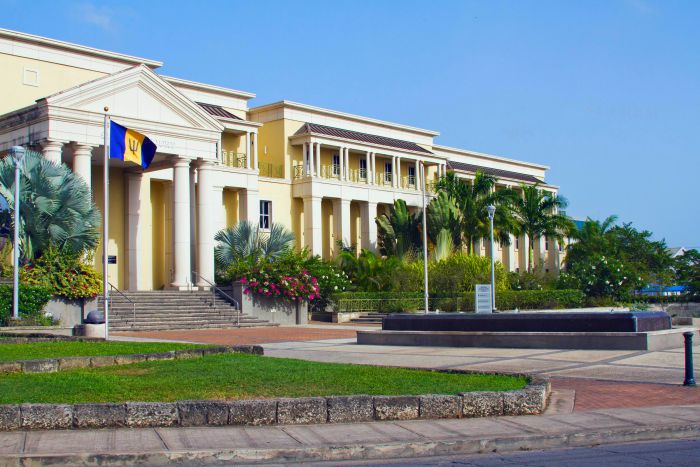
Some of these changes were highlighted by Attorney General, Adriel Brathwaite, as he contributed to a panel discussion hosted by the Criminal Justice Research and Planning Unit on the topic: Building a More Efficient Criminal Justice System, at Solidarity House last night.
Among the changes on the cards is the move to have all indictable matters, both from the Magistrates’ Court and the High Court, prosecuted through the office of the Director of Public Prosecutions (DPP).
Mr. Brathwaite explained that under the proposed plan, the Police Prosecutors who presently prosecute cases in the Magistrates’ Courts would do so from the office of the DPP.
“I believe that this will enhance the process considerably, and even strengthen prosecutions because we will have a larger cadre of trained individuals to lead prosecutions,” he said, while noting that The Bahamas had also adopted a similar position and was seeing a higher level of convictions and guilty pleas.
The Attorney General also signalled his intention to relook legal aid and how it presently works, so as to make it more efficient and reduce the time spent waiting on accused persons to find an attorney.
Mr. Brathwaite explained what currently obtained was that a “handful” of attorneys did criminal matters, but accused persons preferred only to be represented by a small number of them in court.
“That cannot go on,” the Minister declared, stating that notwithstanding human rights and other issues, there came a point when the State still had to decide what was most reasonable.
“Do we allow them to hijack the system or do we do what I am proposing to do and change the system?” Mr. Brathwaite queried. His solution was for the establishment of a pool from which accused persons could choose an attorney, failing which, they would go before a judge and have one assigned.
However, Mr. Brathwaite told those present that much of their challenges would be addressed through the embracing of information technology. “In 2016 I lament the fact that we are not leveraging the use of information technology… It makes no sense to having it available and not utilising it,” he contended.
He suggested that information technology, through an electronic solution, could be used in reducing the backlog of traffic cases, freeing up the court to deal with the more serious cases.
In addition, Mr. Brathwaite disclosed that the Magistrates’ Courts were set to start receiving equipment by this Friday to alleviate magistrates having to write every statement made. All the courts, he added, were expected to come on board with the technology by next year.
That, he said, coupled with the abolition of preliminary inquiries, should result in a speedier turnaround time at the Magistrates’ Courts.
Representatives from the Royal Barbados Police Force, the Supreme Court of Barbados, the Probation Department, the Barbados Prison Service and the Forensic Sciences Centre also made presentations during the panel discussion.
New Sarteneja Health Centre Will Provide Better Access to Healthcare for over 2,000 Belizeans in Sarteneja, Corozal.
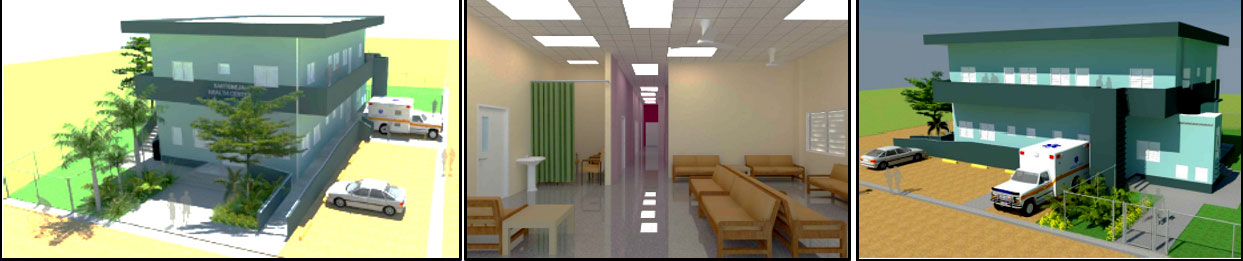
This means men, women and children of Sarteneja will have easier access to quality health care, preventive and curative services; emergency deliveries, and epidemiological surveillance thanks to the Government of Belize who is financing the new health project at an estimated cost of $789,300.00 through a loan from the Caribbean Development Bank under the Bank’s Health Sector Program. Hence, the Government will significantly contribute to the reduction of the prevalence of Non-communicable diseases such as diabetes, obesity, cardiovascular disease and certain cancers among others. The new two-storey Sarteneja Health Center will be equipped with rooms for consultation, examination, treatment, pharmacy/dispensary, laundry, an asthma bay area, sterilizing room, waiting area for patients, and male and female bathrooms measuring 32 feet wide and 58 feet long encompassing a total floor area of approximately 3,730 square feet.
The completion of the health project will also conform to the Ministry of Health’s Primary Care Outpatient Standards which defines a health center as a facility with part time doctor, resident rural health nurse, and caretaker. The first floor of the health center will serve as quarters for doctors and nurses. Thus; medical services will be provided on a daily basis to all Belizeans in the Northern District of Corozal and its surrounding communities.
Ground breaking Ceremony for the new Sarteneja Health Center will be held at the site at 2 pm on October 26, 2016. Officials at the event will include the Minister of Health, Hon Pablo Marin, Executive Director, Belize Social Investment Fund, Mr William Lamb Jr, and senior officials, Ministry of Health among others.
Completion of the new health center is scheduled for the first quarter, 2017.
Barbados is serious about the commitments it has undertaken at the international level, says this island’s Acting Minister of Foreign Affairs and Foreign Trade, Steven Blackett.
According to Mr. Blackett, the country has made a concerted effort to ensure that it could live up to those obligations by focusing on improving their implementation at the national level. “Our goal is to build a just, equitable, resilient society supported by a sustainable green economy,” he stated.
He made the comments last evening at United Nations (UN) House, while delivering remarks at the launch of the UN Day Exhibition, which captures in visual form the development of the relationship between Barbados and the United Nations over the years. The exhibition also coincides with Barbados’ 50th Anniversary of Independence celebrations.
This country was admitted to membership of the UN on December 9, 1966, shortly after attaining independence on November 30, 1966.
The Minister noted that Barbados had benefited from its membership of the UN and had also made a significant contribution to the work of that organisation.
He pointed out that Barbados had hosted the first UN Conference on the Sustainable Development of Small Island Developing States (SIDS) in 1994. “That conference was a major accomplishment and is an example of the significant contribution that small states such as Barbados can make to large organisations like the UN,” he remarked.
Mr. Blackett said the international community was currently facing myriad challenges and Barbados, as a Small Island Developing State, was particularly vulnerable to those global tests. He stressed, however, that the UN had been at the forefront of efforts to address those challenges.
He noted that over the years, Barbados had actively engaged with other UN member states and important stakeholders at a number of major high level conferences.
He explained that the result had been the creation of an international infrastructure consisting of instruments such as the SAMOA Pathway, the 2030 Development Agenda for Sustainable Development and the Paris Agreement. He stressed that Barbados was one of the first UN member states to sign and ratify the Paris Agreement when it was opened for signature in April 2016.
He added that this country also signed and ratified the Arms Trade Treaty in time to participate in the First Meeting of States Parties in August 2015. A number of primary and secondary school children are expected to tour the exhibition which ends on Saturday, December 10. (SA/BGIS)
The Caribbean Development Bank (CDB) is now an accredited partner institution of the Green Climate Fund(GCF). Through the accreditation, CDB now has better access to funding to support low-emission and climate-resilient programmes and projects in its Borrowing Member Countries (BMCs).
“As an accredited partner institution of the GCF, CDB has the opportunity to mobilise and improve the flow of resources to its BMCs to tackle the pressing challenges of climate change. This accreditation will help us build on the work CDB is already doing to help communities across the Caribbean improve their resilience to natural hazards, reduce their electricity bills through the adoption of green energy solutions, and accelerate economic and social development across our Region,” said Dr. William Warren Smith, President, CDB.
As part of the accreditation process, CDB was assessed on a range of criteria against the standards of the GCF. The Fund examined the Bank’s policies, procedures, track record, and capacity to undertake projects and programmes using various financial instruments. In addition, the assessment evaluated CDB’s capacity to manage environmental and social risks and gender concerns.
The GCF was created by the United Nations Framework Convention on Climate Change in 2010, and is a leader in the global response to climate change. The Fund places particular focus on the needs of societies that are highly vulnerable to the effects of climate change, including Small Island Developing States.
The announcement of CDB’s accreditation by the GCF was made earlier this month at the 14th meeting of the Fund in Songdo, Republic of Korea, where it is headquartered. This follows CDB’s accreditation by the Adaptation Fund (AF) in May 2016, which also improved the Bank’s access to resources to address climate change and mitigate the impact on its BMCs.
Partnerships with institutions like the AF and the GCF help CDB accelerate progress on meeting the targets articulated in its Climate Resilience Strategy. One of these targets is assisting BMCs and regional institutions to mobilise financing and implement strategies, which enable BMCs to achieve their sustainable development objectives.