From the very day that she emerged into the world on January 22, 1991, Shereena Richardson showed all the signs of a daring, undaunted, high-spirited being.
And throughout the course of her 25 years she has matched and even surpassed this projection. Lurking beneath her sheer quietness is one teeming with great talent, yet overflowing with compassion. She is fun to be around and is always at the ready to take on a good challenge.
Shereena is a multi-talented individual. She loves the stage!
“Being on stage is like second nature to me and of all the talents that I possess, singing – especially calypso – is undoubtedly my passion – my heartbeat!”
And one can understand just why. She began singing calypso at the tender age of twelve in 2003. However, it was not until 2007 that she won her first National Junior Calypso Monarch crown, which she retained in 2008.
She went on to capture two National Female Calypso Monarch titles in 2011 and 2012. In 2012, she also won the island’s Senior Calypso Monarch title – a feat she considers to be one of her greatest accomplishments. In that same year, she represented her country in the Leeward Islands’ Calypso Competition, held in Anguilla; and the Caribbean Female Calypso Competition in Montserrat and placed 2nd runner up in both shows.
Shereena is the female vocalist for one of the leading soca bands in Anguilla, Pantha Vibes International. She shares her band’s success in capturing three carnival Road March titles. Since joining the band in 2009, she has also helped to secure three Band Clash titles.
With a strong desire to see calypso live on, she began hosting a calypso training camp for Junior Calypsonians in 2012. She also uses this as a mechanism to inspire young Calypsonians to always strive for greatness on the stage and life in general. She feels that calypso helps youngsters to become confident individuals and gives them a sense of purpose at a very young age.
Shereena latest work is the soca song “Born This Way” which she plans to use to compete in this year’s Soca Monarch Competition.
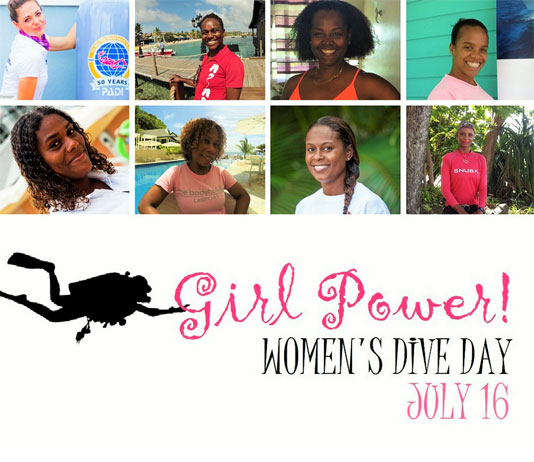
SAINT LUCIA (July 22, 2016) – The Saint Lucia Tourist Board is pleased to have joined divers around the globe on Saturday July 16th, 2016 to celebrate the second annual PADI Women’s Dive Day.
Last year, PADI Women’s Dive Day featured events across 65 countries and all seven continents. Men and women from Alaska to Argentina, France to the Philippines enjoyed a day of diving together to celebrate the contributions of women to the sport. PADI Women’s Dive Day espouses that scuba diving is about community, as diving is a great way to network and share experiences with friends or family. The event was promoted locally with a competition for the female divers. Hoteliers and Dive Shops around the island were invited to submit a nomination of their best female diver(s) and their accomplishments and provide a reason why these women should be recognized for PADI Women’s Dive Day. Nominations were received from the following:
Dive Saint Lucia – Wendy John
Dive Saint Lucia – Dawn Shewan
Body Holiday – Nikelia Williams
Body Holiday – Merlissa Brown
Anse Chastanet Hotel – Zita Glace
Sandals Grande – Nathalia Clement
Sea Adventures Inc – Hardasher Agdomar
Eastern Caribbean Diving – Eget Martyr
The nominees were asked to submit a video and a biography and were assessed based on Dive knowledge/experience, overall presentation of the submission, and video content. 1st place went to Dawn Shewan (Dive Saint Lucia), in 2nd place was Nathalia Clement (Sandals Grande) and 3rd place went to Zita Glace (Scuba St. Lucia). The SLTB’s Marketing Manager for Niche Markets Jemima Lorde expressed delight that Saint Lucia seized the opportunity to recognize its women folk in this capacity. Lorde, a former PADI Master Scuba Diver Trainer, EFR (Emergency First Response) Instructor as well as a swim coach, highlighted the “struggles and hardship that one must endure (especially as a female) in becoming a professional diver let alone making it a lifelong career.” The following hotels have partnered with the Saint Lucia Tourist Board to provide prizes for the participants: Ti Kaye Resort & Spa, Bay Gardens Hotel, Royal St Lucia Resort & Spa and BLU Hotel.
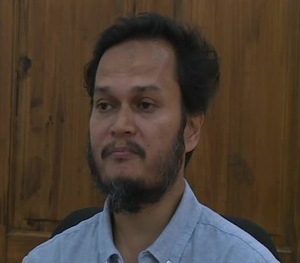
Acting National Epidemiologist, Dr. Shalaudin Ahmed, says the Ministry of Health in collaboration with the Ministry of Agriculture has seen the need for backyard gardening in La Plaine.
A Backyard Gardening Project or Farmer Field School was implemented in 2013 following a study by the Ministry of Health in 2011 which revealed that anemia is a pressing issue in that area.
“Through this study we were able to identify the prevalence of an iron deficiency anemia in the La Plaine district and we found that people especially women 17-49 showed the highest prevalence of anemia followed by children 1-4 years old…
“Following that, the Ministry of Health developed an intervention through an inter-sectoral approach of the Ministry of Education, the Environmental Health department and the community itself,” he reported.
He says backyard gardens are indispensable.
“Backyard gardening provides the meals and the knowledge to sustain the nutrition to mitigate anemia in the community.”
Dr. Ahmed says participants of the Farmer Field School Backyard Garden Project also learn about anemia and meal planning.
Residents of Laronde and Cas O’Gowrie are currently engaged in the training.
This project is just one component of the One Health Project.
“It’s a small scale national project [led] by participants of the National One Health Leadership Series. This series is an activity of the One Health, One Caribbean, One Love Project funded by the European Union and managed by the University of the West Indies in collaboration with CIRAD, the Ministries of Agriculture of Guyana, Grenada and St. Kitts and IICA.
“The goal of the leadership series is to create a sustainable network of One Health Practitioners of leaders in the Caribbean.”
Backyard gardening is encouraged islandwide as a cost-effective way of eating healthy.
Alarm Bells due to Slippage in AIDS Response in the Caribbean.
“Complacency is largely responsible for the slippage in the AIDS response in the Caribbean”. This is the view of the UN Secretary General Special Envoy for HIV in the Caribbean, Dr Edward Greene who was speaking from Durban, South Africa where over 18,000 scientists, practitioners and members of civil society are meeting at the 21st International AIDS Conference.
Dr. Greene was referring to the recent 2016 Prevention Gap report issued by UNAIDS just before the Conference began on 18 July. That report shows that after years of steady decline, the Caribbean saw a 9% rise in new infections between 2010 and 2015 and only Eastern Europe and Central Asia with a rate of 57% had a higher increase. The Caribbean statistics compared with a 2 % increase in Latin America, 3% in Asia and the Pacific 4% in the Middle East, North Africa , Eastern and Southern Africa for the same period. In Western and Central Europe, North America and Western and Central Africa there have been marginal declines in new infections.
This global situation has caused Michel Sidibé, Executive Director of UNAIDS to sound the alarm that ” if there is a resurgence now, the epidemic will be impossible to control. The world needs to take urgent and immediate action to close the prevention gap”.
Elaborating on the situation for the Caribbean, Dr Greene said that it is necessary for a thorough analysis of the causes and direction of the prevention gap. Based on his close monitoring of developments in the region, he identified the possible causes as: inadequate attention to testing and treatment, including late testing of people with HIV, lack of care centers and fall in the rates of retention of infected people in care. These he said are compounded by equity in access to care especially for the vulnerable populations including men who have sex with men, sex workers, transgender people, those who inject drugs and prisoners.
” In the Caribbean generally, HIV related stigma and discrimination is one of the major barriers for key populations’ access to prevention options, since people do not feel safe or have the means to access combination services. Each time you describe this as a violation of human rights there are some `elements’ that equate this with pushing a gay agenda. Now we are seeing the consequences which could be devastating for the Caribbean” he said.
According to Dr Greene, the complacency and/or inefficiency on the part of several governments has resulted in inadequate supplies of medicines and inadequate treatment regimes which fail to immediately treat those that have been diagnosed as HIV positive, one of the cardinal principles of arresting the spread of the disease.
In addition, he feels strongly that in too many countries in the region, sex education in being insufficiently promoted or implemented This is a major problem especially at a time when the evidence points to early sexual initiation of both boys and girls –as early as 14 and 15 years — and when the incidence of rape and sexual violence places the Caribbean among the highest in the world. A recent UNFPA study shows that one in every five females has been the victim of sexual abuse. For this reason, he expressed delight that “the recently concluded 37th Conference of Heads of Government in Guyana endorsed the “Every Caribbean Girl, Every Caribbean Woman Initiative”. Dr. Greene explained that the initiative was championed by the First Ladies of the Region and places emphasis on policies and programmes designed to eliminate sexual violence, cervical cancer, trade in persons, which effect young girls in particular, and mother to child transmission of HIV.
The Special Envoy also leveled blame for this situation on the growing funding gap resulting from a drop in international donor support. Whereas five years ago the PANCAP Caribbean Partnership Against HIV and AIDS (PANCAP) attracted donor support of over US$ 50M, in this current period, together with the Caribbean Vulnerable Communities Collective, it has received approximately US$22M. Hence prevention and treatment programmes have been seriously compromised.
Once again he believes that the CARICOM Heads of Government must be commended for their resolution to continue to advocate for filling the funding gap. But he added “Heads must resolve to take action in ensuring that they reduce their dependency on external funding if they are seriously committed to the Nassau Declaration that the health of the region is the wealth of the region”.
Dr Greene who participated in several panels promises to provide a full interview on the major issues of concern to the Caribbean arising out of the 21st International AIDS Conference which ends on 22 July, 2015.
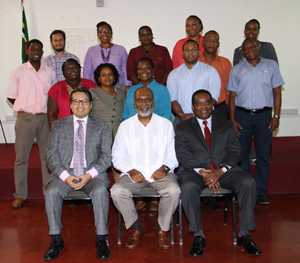
Names of the SLTB Board of Directors for 2016 – 2018
1. Mrs. Agnes Francis (Chairperson) 2. Mr. Leathon Khan (Deputy Chairperson) 3. Ms. Carmelita Xavier 4. Mr. Sanovnick Destang 5. Mr. Celestin Laurent 6. Mr. Mark Maraj 7. Mr. Winston Anderson 8. Ms. Erwin Louisy 9. Mr. Mark Adams 10. Permanent Secretary, Ministry of Tourism 11. Mr. Louis Lewis
Cellular phones have been blamed for a lot of time wasting in the labor force.
This view was expressed today by Senior Assistant General Secretary and Human Resource Manager of the Barbados Workers’ Union, Gillian Alleyne, as she participated in a symposium on labour and productivity.
Suggesting that some people had made themselves slaves to these devices, Mrs. Alleyne said: “We have to get our faces up out of those devices. The technology is good but we have to learn to operate without them.”
She also stated that poor management contributes to poor productivity, noting that as a result of a lack of communication, management did not always clearly set out the plan and so employees were unaware of the objectives.
“There are many people on autopilot in organisations and there is no clear focus and even if there is, sometimes it resides in the head of one or two people and it does not trickle down to the people who have to get on with the business,” she contended.
In his contribution, Chief Labour Officer, Vincent Burnett, said there was a need to educate the workforce more on productivity matters.
Mr. Burnett told his audience: “A lot of people might not necessarily trust the outcomes of whatever productivity measures are put in place, maybe because of a lack of understanding, [or] maybe because they are not made aware of why these things are supposed to happen. If there is that understanding, then we are on the road to ensuring that we are able to have sustained development.”
He emphasised the importance of trust, saying when parties were willing to share information, have open discussions and be transparent, then that would augur well for the development of trust.
During the opening ceremony, Principal of the BWU Labour College, Doreen Deane, underscored the importance of productivity, saying it was linked to the standard of living and the quality of life enjoyed by citizens.
Mrs. Deane continued: “In most recent years, there has been a renewed focus on productivity levels in Barbados, the call to ‘step up productivity’ being expounded in all sections of the media. There has been, however, a disturbing body of opinion that seems to put the onus on improving productivity squarely on the shoulders of lower level workers with little or no emphasis on the responsibility of management and owners of business to contribute in various forms.”
Today’s panellists also included Labour Management Advisor at the Barbados Employers’ Confederation, Brittany Brathwaite; and Chief Programme Manager at The Productivity Council, Anthony Sobers. Hosted by The Productivity Council and the BWU, the Symposium was held at Solidarity House.
Preparations for St. Lucia’s biggest cultural festival are in an advanced stage.
Under the direction of the Folk Research Centre (FRC), the most widely celebrated cultural event in St. Lucia, Jounen Kwéyòl, will take place on Sunday October 30th this year. Barring any major natural disaster, the country will be celebrating Creole Heritage Month (CHM)/Jounen Kwéyòl for the thirty-second time. The continuous celebration of the event which began in 1984 in Mon Repos was affected only once in 2010 with the passage of hurricane Tomas.
Jounen Kwéyol which is the brainchild of the Folk Research Centre is celebrated in recognition of Jounen Kwéyòl Entonnasyonal (International Creole Day) which is observed on October 28th of each year.
Jounen Kwéyòl aims to make the St. Lucian society aware of the strength and value of the Kwéyòl language and to assist in the understanding and development of its rich cultural resources.
From February this year the FRC made approaches to four communities for hosting CHM/ Jounen Kwéyòl. The policy of celebrating this major cultural event in the four cardinal points of the country guided the targeting of the four host communities. There were other communities which expressed interest in hosting Jounen Kwéyòl, however owing to FRC’s attempts at ensuring that communities don’t monopolize the hosting of the event year by year, a new policy of targeting certain areas was adopted.
The FRC is adding a new feature this year whereby each host community will be highlighting a cultural area for which the community is famous. These cultural areas comprise inter alia Agriculture, Fisheries, Craft and Music. Details on these activities will be provided at a later date. The launch of Creole Heritage Month/Jounen Kwéyòl 2016 will be held on Sunday September 25th at the FRC’s premises at Mount Pleasant. This will take the form of a Mini Jounen Kwéyol and will be a whole-day affair.
FRC is pleased to announce the four host communities for Creole Heritage Month/Jounen Kwéyòl 2016 and they are:
1. Gros Islet : in the North
2. Choiseul : in the South-West
3. Belle Vue : in the South-East
4. Jacmel : in the West
(for further information contact Hilary La Force 4522279)
ST. GEORGE’S, GRENADA, JULY 21, 2016 – GIS: The Vector Control Division Ministry of Health invites members of the media to a mini tour of a popular mosquito breeding ground, which will be followed by an on-location press briefing, tomorrow Friday, 22 July, 2016 near the Clarkes Court Bay area from 9:30 am.
This activity forms part of the Ministry’s ongoing efforts to rid the country of mosquito breeding sources given the zika vrial illness and the threat of yellow fever.
The purpose of the tour and briefing is to sensitize and educate the public about the dangers of mosquito breeding and importance of maintaining a clean environment.
For further information please contact the following person;
Mrs. Carvel Frederick – Senior Environmental Health Officer – 410-1366,
Mr. Kenny James – Senior Environmental Health Officer – 449-9302
Mr. Keville Frederick – Information Officer – 415-9463.
We anticipate your usual cooperation.
Hon. Guy Joseph is aiming to make home ownership more attainable.
A new Housing Board has been established.
Minister for Economic Development, Housing, Urban Renewal, Transport, and Civil Aviation, Hon. Guy Joseph, said the board will address a multitude of issues facing the sector.
“The new Housing Board will be established this week. It will conduct a general review of the housing stock available on the island, and assess the demands of the housing sector,” Minister Joseph said.
He added that a major issue to be tackled is that of affordable housing.
“One of the things that I want to be measured by is the affordability of housing, because usually people become ministers and they just go with the norm of doing things and nothing changes in terms of pricing.
“We want to make affordable housing available whether it be in subsidies or in any other form. In as much as it is so easy to own a vehicle in this country, I want to make it as easy to own a house and land. I would much rather see young people investing in housing and land that appreciate in value, rather than in areas that do not bring the desired benefits that they may be looking for.”
The minister said affordable housing should be available to everyone.
Front left: Dr. Fernando Lavandenz; Centre: Former National Epidimiologist, Dr. Paul Ricketts, Right: Dr. Reynoldo Holder
A team from the Pan American Health Organization (PAHO), the World Bank and the Inter-American Development Bank is impressed with Dominica’s response to the global Zika emergency.
The team visiting for a week is here to conduct a Rapid Needs and Cost Assessment of Dominica’s healthcare systems as it relates to managing Zika.
On Monday, July 18th, staff of the Ministries of Health and Finance met with the team for tabletop exercises as part of the assessment.
World Bank Senior Health Specialist, Dr. Fernando Lavandenz, commended Dominica on its ability to respond satisfactorily to Chikungunya, Dengue and Zika in emergency situations.
“The urgency is solved or in the process of being solved however we notice that in the long-term, sustainability is needed. Immediately, we can say that Dominica has responded very well to the emergency but in the long term there is a challenge and maybe Dominica will need some support.”
The World Bank specialist identified human resource planning and the capacity of health systems to respond to epidemics mainly in terms of laboratories, intensive care units, neurologists, epidemiologists and entomologist as challenging areas.
He also identified the need for cost and needs assessments in varied areas.
Dr. Lavandenz shared that PAHO is collaborating with the World Bank to provide technical and financial support to aid countries in managing these viruses.
“Dominica should be in a position to improve its capability to clearly define objectives and targets for the next four to five years.”
Meanwhile PAHO Advisor of the Hospital & Integrated Health Care Delivery Services Unit, Dr. Reynoldo Holder revealed that PAHO and the World Bank are working collaboratively in different countries to assess their capacity to respond to epidemics such as Zika, Dengue and Chikungunya.
“In that process, we visit the country and work with the technical teams at the highest levels of health, finance and others to identify need for improvement in the capacity of health systems overall and health services in particular to better respond to these emergencies which seem to be coming one after the other on a more frequent basis.
“We hope that the outcome would also be joint projects [with the partners] that will allow us to assist countries like Dominica to strengthen their capacities to respond to these emergencies in the immediate, mid and long term and to have stronger systems which are more resilient.”
Dr. Holder confirmed that an assessment was finalized after over eight hours of discussion with the technical teams from the Ministries of Health and Finance.
On Tuesday, July 19th, the PAHO and World Bank officials met with more local officials to share the results of a technical staff evaluation and to discuss the way forward.
“I’ve consistently seen the move forward to strengthen health services and address the needs of the people of Dominica,” Dr. Holder said. “I think the Ministry of Health has consistently gained strength and capacity and is always looking for ways of improving. That’s a good thing for Dominica because it means that your technical people are always looking out for the health and wellbeing in this country.”