

Home Blog Page 156

Government Finalising Plan For Small Businesses

Regus Managing Director, Mark Linehan; Customer Service Rep, Cheria Kippins; Businessman, Ralph "Bizzy" Williams; Finance Minister, Christoper Sinckler and Regus General Manager, Stuart May cutting the ribbon to officially launch the new Business Centre at One Welches, St. Thomas. (C.Pitt/BGIS)

Government is in the process of finalising its national Strategic Vision and Plan for the development of the Small and Medium Size Business sector in order to take it before Parliament.

This was revealed by Minister of Finance, Christopher Sinckler, who without going into specific details about the plan described it as “the most far reaching and innovative road map for the development and sustainability of the (Small and Medium-size Enterprise) SME sector in Barbados in well over three decades”.
Mr. Sinckler was at the time addressing the launch of the Regus Business Centre at One Welches, St. Thomas on Tuesday.
He said Micro, Small and Medium Size Enterprises (MSMEs) formed the bulk of Barbados’ private investors and played an important role in generating employment and enhancing economic development.
As a result, he lauded Regus’ selection of Barbados as its first location in the Caribbean. “Government considers that the opening of this global business centre will provide numerous benefits to businesses of all types and scales,” he said.
The Minister said that the Regus Business Centre could be used by startups and small businesses to help start them off on the “right footing”, while allowing them to portray a professional image to their clients and staff.
He added that the establishment of the Centre fell in line with Barbados’ Growth and Development Strategy 2013 to 2020 which promoted a vision that would develop an environment for business that engendered an innovative and flexible private sector to expand the growth of the domestic business sector.
That strategy, Mr. Sinckler said, would allow individuals and businesses to seize opportunities to improve people’s living standards. These included promoting an entrepreneurial culture; greater access to finance by MSMEs and an export culture among the MSME sector and enhanced competitiveness.
During his address, Managing Director of Regus, Mark Linehan, said that from a business perspective, the project was off to a good start with clients occupying space from day one of its opening three weeks ago.
He added that there were also plans to replicate the centre in other Caribbean islands, with one expected to open in Trinidad by year end, and another in Barbados next year.
Regus is the leading global workspace provider, offering companies of all sizes with a range of efficient work solutions. The Centre has 46 offices of varying sizes, 135 work stations, three meeting rooms including a board room and a business lounge.

Embassy of Brazil, Re: Rio Olympics

Rio Olympics

The Olympic Games in Brazil, a country that welcomes the world with open arms.

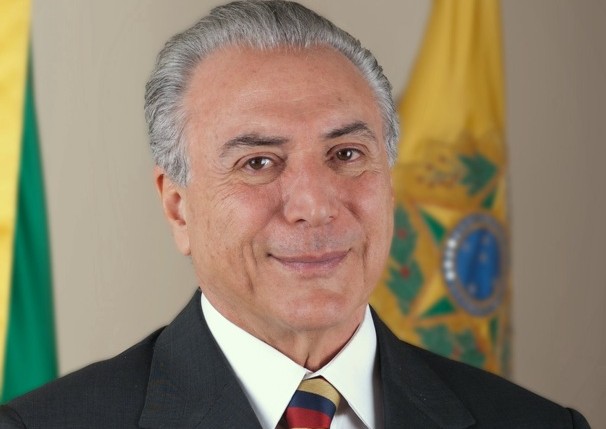
Michel Temer – Interim President of the Republic

Today, exactly thirty days before the world’s greatest sporting event is scheduled to begin, Brazil can say with confidence: we are ready to host the first Olympic and Paralympic Games to take place in South America.
The Olympic Village, housing more than 17,000 participating athletes in one of Rio de Janeiro’s most beautiful settings, has just been inaugurated. All sports facilities, especially those serving the Olympic Park in the Barra da Tijuca neighborhood, are also up and ready.
The country has put together a solid security program of 85,000 federal, state, and municipal government personnel to ensure that sporting events take place in an atmosphere of absolute peace and tranquility.  This contingent of security personnel will work in an integrated fashion, overseeing the protection of athletes, coaching staffs, heads of state, government officials, local residents, and journalists.
This will not be Brazil’s first opportunity to show the world its capacity for organization, and to welcome visitors warmly to a secure environment. Over the past few years, our country has developed an expertise in hosting mega-events on an international scale. We hosted the World Cup, the Pan-American Games, the World Military Games, World Youth Day, and the Confederations Cup—all unanimous successes, which we conducted in a spirit of excellence, dedication and with the characteristic Brazilian joie de vivre. And now, another success is on its way.
The Games will show the world one of the major global economies at work in a mature democracy: a country with great business potential that at the same time has set the standard for policies to fight inequality. Rio de Janeiro is expected to receive approximately 500,000 visitors from Brazil and abroad during the Games, while the five “Soccer Cities”—São Paulo, Salvador, Manaus, Brasília and Belo Horizonte—will also find themselves inundated with local and foreign fans. Hosting events on this scale represents both a momentous accomplishment for the Brazilian people and a source of immense national pride.
It should be emphasized that 60 percent, 7.07 billion reais, of the total investment in the Olympic facilities were financed by the private sector. These resources and efforts will remain as legacies to the entire country. For instance, the Games will disseminate throughout Brazil the hallmark values of competitive sports: cooperation, solidarity, discipline, and resiliency. As a more concrete benefit, Brazilians throughout the country’s five geographic regions will also inherit a national sports training network of world-class facilities for both sports beginners and high-performance athletes. Finally, in Rio de Janeiro, the Games have greatly influenced the implementation of public policy, causing the city to fast track, expand and even initiate many municipal infrastructure and mobility projects. The direct, favorable impact of these policies on the quality of life of the city’s residents is evident.
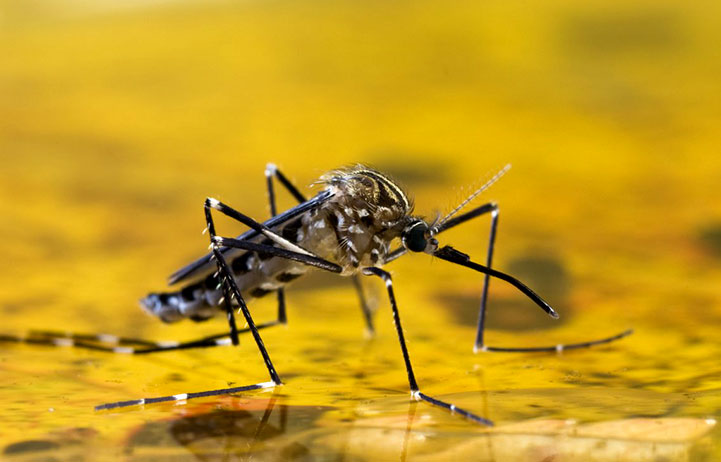
Over the past few weeks, rumor of the possibility of an outbreak of topical-disease during the Games has circulated. We can assure you—as has the World Health Organization—that the risk of Zika infection during the Games is practically non-existent. Historically, an extremely low incidence of disease transmitted by the Aedes Aegypti has been recorded during the winter season in the Southern Hemisphere. Indeed, there has been a dramatic decline in cases of Zika infection in Rio de Janeiro and throughout Brazil in the past few weeks. I recall a similar prediction of epidemic during the 2014 World Cup tournament in Brazil, when we hosted 1.4 million foreign visitors. No epidemic occurred. Then as now, tourists can be assured of favorable health conditions during the Olympic Games.
Brazil is ready to receive all of the visitors who will be enjoying the pleasure of watching the world’s elite international sports athletes compete, and, surely, we will have a great deal to show the five billion viewers from around the world who will be watching the Games as well.
Brazil awaits you with open arms.

Commerce Department Recalls More Products

product recall

The public is asked to note that the Department of Commerce and Consumer Affairs is aware that a number of products have been recalled.

These include a selection of Protein Drinks comprising Protein Plus Shakes with ‘best by’ dates between 6/20/16 to 9/18/16 by Bolthouse Farms; and four specific flavours of Nature Valley Protein Chewy Bars and Nature Valley Simple Nut Bars by General Mills.
However, the Standards Administration Unit of the Department is currently working with importers and distributors to ascertain whether the affected items have been imported into Barbados.
All persons who have travelled and bought any of these products from overseas for their personal use should check to confirm that they do not have any of the recalled products. Detailed information relating to the products affected can be obtained by visiting here.

Securing Funds for Aquaponics & Organic Agricultural Farm

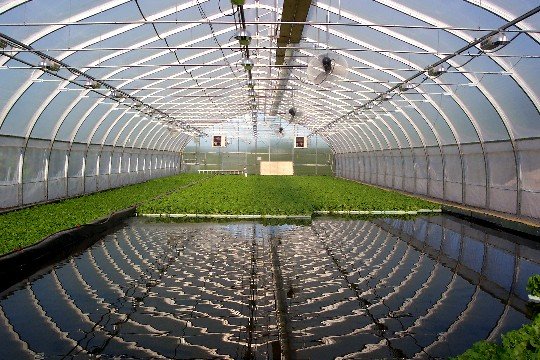
Aquaponics
Photo Credit: socialearth.org

The Ministry of Education, Science and Technology has moved closer to securing funds for the new Aquaponics and Organic Agricultural Farm which will be established at the St. Mary’s Secondary School.

Ms. Miho Harada, a Consultant-Grant Assistance for Grass-Roots Human Security Projects from the Embassy of Japan in Trinidad met with Mr. Craig Cole, Education Officer of Agricultural Science (ag), Mrs. Ezra Knowles Special Project Consultant for the Ministry of Education Science and Technology, the Principal of the St. Mary’s Secondary School Mr. Casey Phillip, Mr. Adolph Audain a specialist in Aquaponics and Organic farming and the teachers responsible for agricultural science at the school.
Ms. Harada toured St. Mary’s Secondary School and was briefed on the plans for the proposed Aquaponics system. The project once implemented; will not only serve the St. Mary’s School, but all primary and secondary institutions, along with the farming community. The project is designed to increase the nation’s understanding about climate smart agriculture practices. Once complete, St. Mary’s Secondary School will be the first school in the Caribbean to house a commercial level research aquaponics facility.
During Ms. Harada’s courtesy call with Minister of Education, Science and Technology, Michael Browne, she expressed how impressed she is with the proposed initiative. Minister Browne reiterated the importance of such partnership for assisting Antigua and Barbuda in promoting national food security.
This undertaking will support the ministry’s effort to establish thematic secondary school; with St. Mary’s secondary school focusing on (climate smart) agriculture.

Updated Yellow Fever Advisory from Jamaica

Yellow Fever

The Ministry of Health in Jamaica is now advising Barbadians travelling to that country that they will not require a yellow fever vaccine certificate if they will be in transit for 12 hours or less through a country listed by the World Health Organisation as requiring proof of vaccination for entry.

Earlier this week, the Ministry of Health in Barbados advised travellers to Jamaica who were transiting through Trinidad and Tobago or Guyana that they would need to provide a yellow fever vaccine certificate to enter Jamaica.
In a statement sent to the Ministry today, the Jamaican authorities said: “Persons transiting through countries listed by the WHO as requiring yellow fever vaccinations will not be required to provide proof of vaccination if stay is for 12 hours or less.” It advised that this new instruction superseded and replaced all previous advisories.
It explained that only individuals travelling directly from countries listed on the WHO 2016 list of countries requiring yellow fever vaccines were required to provide proof of vaccination for entry. The Jamaican authorities further advised that anyone arriving from Angola, directly or indirectly, must provide proof of yellow fever vaccination.

CRFM and JICA discuss new fisheries initiative

socio-economic survey
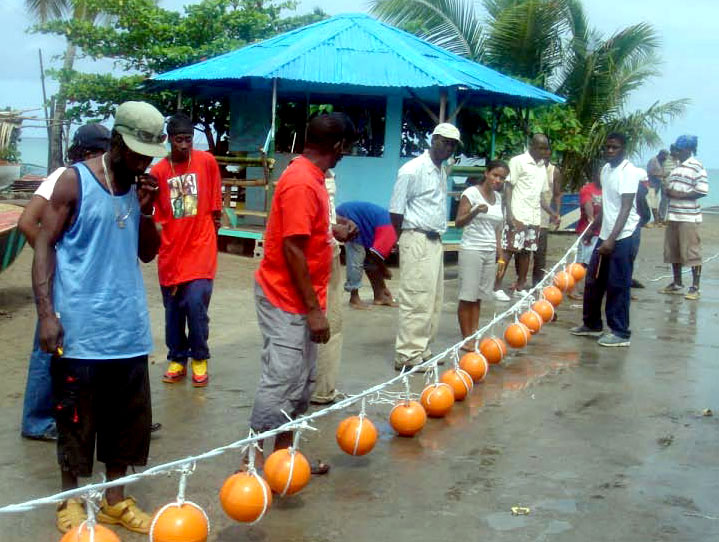
FAD construction in Grenada

CRFM and JICA discuss new fisheries initiative for co-management and socio-economic survey.

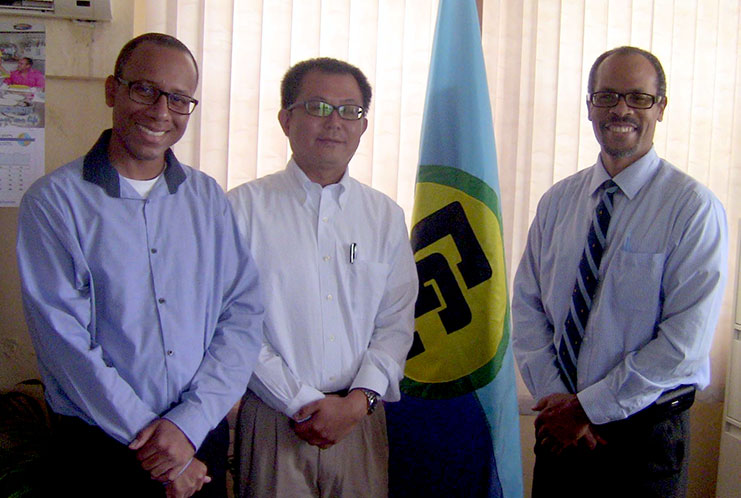
Belize City, Tuesday, 5 July 2016 (CRFM)—Milton Haughton, the Executive Director of the Caribbean Regional Fisheries Mechanism (CRFM), met today at the CRFM’s Secretariat in Belize City with Mr. Masaru Honda, Team Leader of the Japan-funded Caribbean Fisheries Co-management Project (CARIFICO) and Chief Advisor in the Fisheries Department in St. Lucia.
“The CRFM welcomes Mr. Honda to Belize to meet with us, and we thank the Government of Japan for their continued commitment and support for the sustainable development of the fisheries sector of the Caribbean region,” Haughton said.
Honda, whose ties with the Caribbean go back 17 years, when he worked with a JICA funded Regional Fisheries Project implemented by the Caribbean Fisheries Training and Development Institute (CFTDI) in Trinidad and Tobago, said that he has enjoyed working with the Caribbean to foster the development of co-management arrangements with fishing communities.
Haughton and Honda discussed the region’s progress in implementing the multi-million-dollar CARIFICO project, funded by the Japan International Cooperation Agency (JICA), which focuses on improving the co-management of fisheries in the region, in order to improve the socio-economic status and the welfare of fishers and fishing communities.
They also discussed two new initiatives under the project: (1) the strengthening of co-management of the conch fishery in St. Lucia, and (2) a survey of the socio-economic status of fisheries in the region, using 6 countries in the Eastern Caribbean as pilot sites. The results of the survey will be presented at a regional workshop slated for 2018, at which time the findings of the survey and the outputs of the pilot projects will be the center of deliberations by CRFM Member States.

socio-economic survey
(From left to right) Mikhail Francis, Administrative Assistant for the CARIFICO project; Masaru Honda, Chief Advisor in the Department of Fisheries in St. Lucia; and Milton Haughton, CRFM Executive Director

Haughton said that in Japan, co-management arrangements are well developed, and through the CRFM-JICA partnership, milestones have been achieved in Dominica, Grenada, and Antigua and Barbuda in the sustainable development of pelagic fisheries using fish aggregating devices (FADs).
Furthermore, the Government of Japan has provided direct grants to some CRFM Member States for the deployment of mega-FADs, which are larger and more durable, and enable higher production of larger tunas. The support from Japan has helped the region to diversify its fisheries sector while targeting pelagic species in a more cost-effective manner. Fishers are able to save money with the reduced costs of operation, since they can troll for fish at the FADs where target species aggregate.
Haughton said that through the initiative, CRFM and JICA have partnered in promoting co-management through the establishment and management of the FAD fishery with expertise and technology transferred to the region by the Japanese. The CARIFICO Project is also assisting with the development of co-management arrangements for the pot/trap fishery in Antigua and Barbuda, and the queen conch fisheries in Saint Lucia.

Productivity High on Mental Wellness Nurses Agenda

Mental Wellness Staff At Retreat

There’s a popular saying that goes, “You can’t pour from an empty cup.”  When a cup is empty, no amount of work or wishing could produce a drop out of it.

In the very same way, as individuals, when we push ourselves beyond our limits (emptying our physical and mental reserves) and more is required of us, we are then unable to produce in a manner that is efficient.
The notion of productivity is steeped in the ideals of efficiency, continuous improvement and excellence.   In fact, the Business Dictionary defines productivity as the “measure of the efficiency of a person, machine, factory, system, etc., in converting inputs into useful outputs.”
In a field like nursing, where the work never ends, achieving maximum productivity is a difficult feat. A normal/typical day does not exist in the life of a nurse. As primary caregivers, nurses are often found balancing diverse tasks to ensure that their patients are well cared for, all while putting their own needs aside. Regrettably, the effects of caregiving on their health/well-being and output are often considerable.
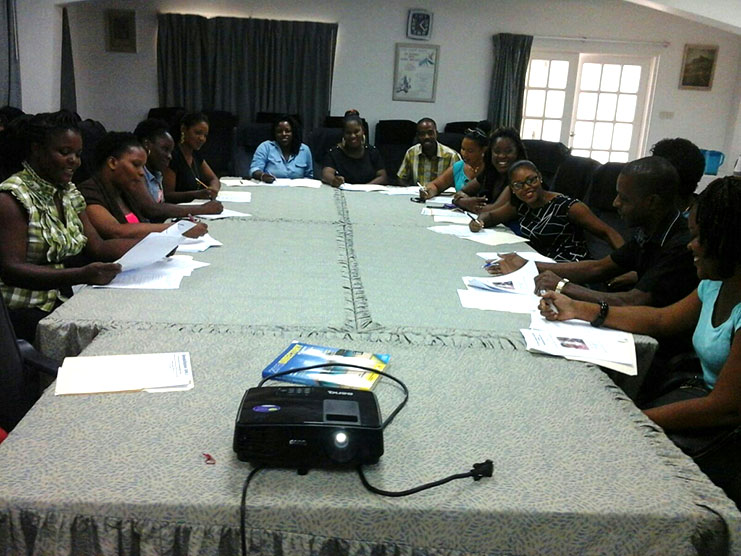
The nurses of the Rehabilitation Unit #3 of the St. Lucia National Mental Wellness Centre provide mental health care services to the patients on the unit.  Their patients include long stay patients who are sometimes geriatric and independent patients who have been undergoing treatment for periods exceeding ten (10) years. Their primary goal is to prepare patients for re-entry into society by ensuring that they adhere to their stipulated treatment regime. The delicate nature of their work means that the nurses are constantly on the go.
The team of nurses who service the unit came to the stark realization that continuing in the current “always on the go” fashion would do more harm than good to their overall job efficiency. It was with this in mind that on June 24th, 2016, the nurses broke away from their usual work setting and decided to invest in their own self-care and development.  
In an attempt to boost overall staff morale and productivity at the Centre and by extension help them to achieve even greater results on the job, the idea of a teambuilding retreat was birthed. The activity which was observed under the theme ‘Celebrating Our Achievements, Striving to Give our Best’ opened with a debriefing session facilitated by Mr. Martin Weekes, a training and management consultant professional. During this session, the nurses had the opportunity to examine where they were at professionally and personally and where they would like to see themselves advance and the required actions to needed for their advancement.
The highlight of the day however was a presentation on “Productivity in the Workplace” by Mrs. Fiona Hinkson, Executive Director of the National Competitiveness and Productivity Council. Having identified productivity as critical to improving the existing work environment at the National Wellness Centre, when Unit Manager, Ms. Enda Edward approached the Secretariat, the response was a resounding yes.
The presentation sought to give the nurses an overall understanding of what productivity is, the existing productivity climate but more so as it pertained to the health sector, the importance of productivity and most importantly ways to improve it. Mrs. Hinkson was very pleased at the level of interest and interaction during the presentation and in closing applauded the Unit for taking the initiative to improve their productivity. “You cannot pre-empt how any given day is going to unfold or the number of patients that you may have to care for. However, there is so much that you can do to take care of your own personal well-being and ensure that your needs are met,” Mrs. Hinkson stated in her opening remarks to the participants.
“Understanding productivity and what impacts it, means that you now have the tools to work in a manner which is more efficient and will yield greater results. While you strive for greater output, you must not neglect the quality of that output. Your investment in yourselves today, is reflective of your willingness to be better at what you do and I applaud that. Today is a step in the right direction which can only augur well for the health sector.  The NCPC urges you to continue to invest in yourselves so that your patients can continue to receive an even higher quality of health care.”
Productivity continues to be a major impediment to organizational efficiency, growth and development. More often than not, a lack of understanding of the part that each individual has to play in improving productivity is what creates barriers. As we pursue productivity on a national level, we must continue to challenge current mindsets and highlight the need for continued efforts at attaining excellence.

CODICADER Games Opening Ceremony

Belize Press Office

Belmopan. July 6, 2016.
The Ministry of Education, Culture, Youth and Sports invites you to attend the following:
Event: CODICADER Games Opening Ceremony
Date:  Thursday, July 7, 2016
Time: 4:30 p.m.
Where:  Marion Jones Sports Complex, Belize City  

Republic of China (Taiwan) supports Macaws conservation

Scarlet Macaws

Last year the Forestry Bureau of the Council of Agriculture of the ROC (Taiwan) through its Embassy in Belize provided financial assistance for the conservation of scarlet macaws in Belize.

This year, the Embassy has announced the further support of the program through a financial support of US$10,000.00.  
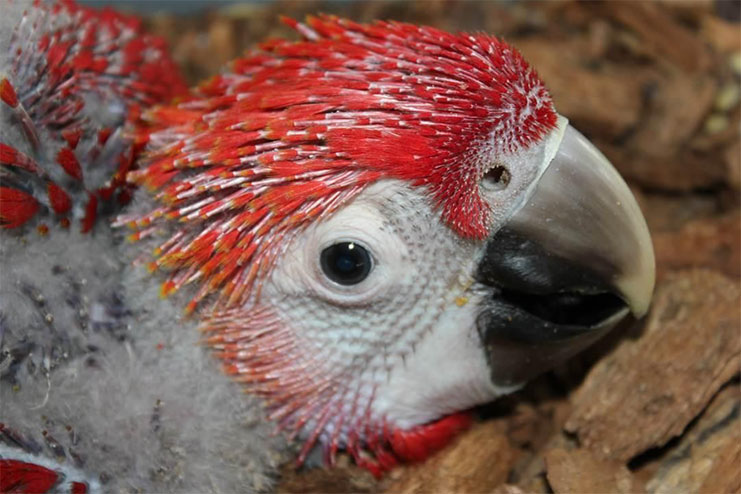
 Scarlet Macaws (Ara macao cyanoptera) are the largest of the parrots in Belize, with a national population thought to be fewer than 200 individuals. It was once thought to occur over much of the central forested areas of Belize, but is now considered to be restricted to the Chiquibul/Maya Mountains area, with a nesting range concentrated in the Chiquibul Forest. The major threat to the survival of macaws in Belize has been determined to be poaching for the pet trade. To address this situation, FCD has been monitoring macaw nests annually for a period of 7 months. Last year thanks to the Government of the ROC (Taiwan) we started an in-situ conservation program whose aim was to hand rear chicks that were highly at risk of being stolen from their nests. Young macaws in Guatemala are sold for more than 15,000.00 quetzales and therefore the race is to contain the illegal pet trade from occurring across the borders.          
The funds provided by the Government of the ROC (Taiwan) will be used for upgrading the laboratory setting and strengthening the patrol effort as an anti-poaching strategy to help reduce any illegal extraction of parrots for the pet trade.  To do this FCD will purchase solar panels, plumbing materials, a laptop for data entry and processing, and interior furniture. In addition FCD will acquire field equipment for rangers in order to operate in the field for a period of three months.     
Although the scarlet macaw breeding season started late last year compared to previous years, a total of 15 chicks were able to integrate themselves into the wild population. Seven of these chicks were raised by their parents in the wild, while 8 were raised by research field staff in an in-situ rustic laboratory and finally soft released. The Forestry Bureau of Taiwan was instrumental on this success since it provided the necessary funds to start up the laboratory, flight cage and educational materials. This year’s financial support will further build on this conservation success.

Framework Agreement Signed Between Belize and Guyana

Belize and Guyana

Belmopan. July 6, 2016. Today, the nations of Belize and Guyana signed a Framework Agreement to deepen commercial, economic, technical and cultural cooperation between the Government of Belize and the Government of the Cooperative Republic of Guyana.

Signing on behalf of the Government of Belize, was Minister of Foreign Affairs Hon. Wilfred Elrington, and on behalf of the Cooperative Republic of Guyana, was Vice-President Carl B. Greenidge.
Areas targeted to deepen cooperation include trade, investment, tourism, energy, marine affairs, education, agriculture, sports, culture, security, youth affairs and any other area deemed to be of mutual interest by the two countries.
Guyana, also involved in its own boundary dispute, has been and remains a key ally of Belize, and has always maintained strong views in support of Belize on the Guatemala-Belize territorial issue. The signing of the Agreement took place during the 37th Regular Meeting of the Conference of Heads of Government of the Caribbean Community (CARICOM) held in Georgetown, Guyana earlier today.

Audio Theme