

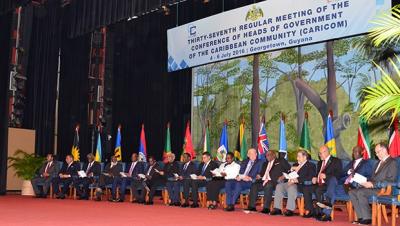
July 5, 2016: The Commonwealth will offer strength, stability, solidarity and practical assistance to its member states and in particular will advocate for small and vulnerable economies, who are less able to withstand the impact of climate change and changes in the global economy, Commonwealth Secretary-General Patricia Scotland said yesterday as the Caribbean Community (CARICOM) reacted to the shockwaves of the UK’s exit from Europe.
Leaders speaking at the opening session of the conference have pledged to tackle issues around crime and security and find solutions to the looming crisis that threatens the Caribbean banking sector as international banks react to changing finance policies and regulations. But it was the UK’s decision to leave the European Union (EU), popularly known as ‘Brexit’, that topped the agenda at the opening.
CARICOM’s Chair, Dominica’s Prime Minister Roosevelt Skerrit, expressed “serious concern” about the impact of Brexit on CARICOM’s 15 member states, 12 of which are also Commonwealth countries.
Stressing the importance of Britain as a trading partner and a vital source of assistance in legal and financial matters, he urged CARICOM leaders to urgently respond to the “seismic eruption in the European Union” and the consequences, which he believes would inevitably cause a shift in international relations.
During her exchanges with governments and regional organisations at CARICOM, Secretary-General Scotland will underline the Commonwealth’s determination to speak up for the Caribbean, and remind Commonwealth Caribbean members of the benefits of integration and partnership.
“My message to Caribbean countries is that I understand the concerns about the potential impact of Brexit on small and vulnerable economies,” she said today. “I want to remind them that Cyprus and Malta, Commonwealth countries, are European nations, and it is our intention to continue our close partnership with the EU through their membership.”
“My aim is for the Commonwealth to be a steadying anchor in these turbulent times, and to offer support to strengthen, stabilise and unite our countries, as well as give targeted and practical assistance to help every member states reach their development goals.”
The Secretary-General was applauded by the audience at the CARICOM meeting yesterday, after St Lucia’s Prime Minister, Allen Chastanet praised the achievement of the “incredible” CARICOM citizens who lead regional and international development organisations.
He said: “I know we have women leaders at the head of the Commonwealth and the Association of Caribbean States. We need to applaud Baroness Scotland,” and seek closer collaboration with the Commonwealth. The Prime Minister also called for a “review of the structures that hinder equality”.
During the two-day conference, the Secretary-General will meet with development partners and Commonwealth Caribbean representatives to discuss specific Commonwealth support and partnerships. She will make available a Commonwealth policy paper which addresses the unintended consequences on the Caribbean’s banking sector and migrant remittances of regulatory measures to prevent money laundering and the financing of terrorism.
From Guyana, Secretary-General Scotland will fly to Jamaica, where she will launch a new Commonwealth collaboration on youth leadership with Common Purpose, a development charity, and the University of the West Indies. The Secretary-General said: “This initiative will really give young people, who represent 60 percent of the Commonwealth’s more than two billion population, a voice on key national, regional and global issues, equip them with leadership skills and provide them with the networks and opportunities to really make a difference in their communities and across the globe.”
She added: “I have set these young people the immense challenge of finding solutions to the challenges and barriers that the world is grappling with in achieving its sustainable development goals. I believe they have the talent and creativity to devise solutions for the 22nd century and their generation.”
The Commonwealth an anchor in turbulent times
E-Government Master Plan Soon

The E-government Master Plan being formulated for Barbados will soon be completed.
So says Permanent Secretary (PS) in the Ministry of the Civil Service, Alyson Forte, as he revealed that his Ministry had contracted the Company Deloitte to create the plan that is now in its final stage.
Mr. Forte shared this information yesterday as he addressed Deputy Permanent Secretaries and Heads of Departments at the opening of a Certified Knowledge Manager (CKM) three-day Workshop/E-Learning Programme under the Barbados Human Resource Development Strategy.
Speaking to the development of an Integrated Knowledge Management System (KMS) for Barbados, he noted that this along with the introduction of a Wide Area Network (WAN) were intended to improve efficiencies within the public service.
“Indeed, both the WAN and KMS are expected to play a big role in the Human Resource Development Strategy now being implemented. Knowledge distribution, both formal and informal will also help to enhance economic performance.
Indeed both the WAN and the KMS will help to provide access to timely and reliable information which is important to timely and efficient decision making in both the public and private sectors,” he stated.
The Permanent Secretary pointed out that a suite of legislation was required to help promote transparency and accountability in this age of new digital technology and to facilitate the implementation of the Knowledge Management System.
He pointed out that in order to aid this, the Freedom of Information Bill had been drafted and was still being developed under the Governance Unit of the Ministry of the Civil Service. In respect of the Bill, he added that the Ministry of the Civil Service was currently in discussions with the Office of the Chief Parliamentary Counsel to clear up a few related matters, including the treatment of the Official Secrecy Act.
It was further stated that changes may have to be made to the Statistics Act, which limits the ability of the Statistical Department to disseminate basic data to other ministries and departments. He said that the situation was quite similar to that of health data which was collected by the Health Ministry.
With respect to the WAN, Mr. Forte explained that work associated with the contract, which was recently signed between Government and Digicel at a cost of $2.4 million, was progressing smoothly. According to him, in the first phase it covers 32 sites accounting for 70 departments and ministries while the second phase, scheduled to start soon, was expected to have some 25 additional sites.
The development of an Integrated Knowledge Management System (KMS) for Barbados is one of the five pillars in the Barbados Human Resource Development Strategy being administered by the Ministry of Labour, Social Security and Human Resource Development.
The training is being delivered by the Knowledge Management Institute (KMI) one of the global leaders in Knowledge Management (KM) Certification and training. It is designed to support the development of the KMS, as well as a cadre of persons in the public sector to lead the transformation of ministries into learning organisations that would effectively leverage the knowledge of its human resources to meet their respective objectives.
New Parliamentary Secretary A Welcomed Assignment

The Minister of Works and Housing Honourable Eustace Lake and the Departmental Heads within the Ministry welcomed Parliamentary Secretary, Senator Michael Freeland to his newly appointed post on Tuesday.
The Parliamentary Secretary who is appointed by the Prime Minister will assist Minister Lake with his parliamentary duties.
Under the direction of Minister Lake, Senator Freeland will handle routine matters ensuring that the Ministry fulfils its mandate as part of the Government’s Developmental Strategy.
Minister Lake says he is pleased with the assignment of Senator Freeland as Parliamentary Secretary for the Ministry of Works and Housing and assures him of maximum support:
 “The highly motivated individual brings a wealth of talent and experience to the table that will complement the existing strengths of the Ministry of Works and Housing.”
Senator Freeland who welcomes the opportunity to serve and to be assigned Parliamentary Secretary adds that he is looks forward to working with the team of professionals at the Ministry of Works and Housing.
For More Information Contact:
Shawn Thomas
Communications Specialist
Tel: (268) 562-7782 (Office)
Tel: (268) 464-4483 (Mobile)
Email: shawn.thomas@ab.gov.ag
Saint Lucia PM calls for deeper dialogue in CARICOM
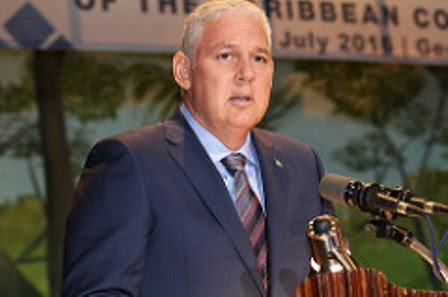
Prime Minister of Saint Lucia, the Hon. Allen Chastanet on Monday called attention to the need for deepened engagement among Caribbean Community (CARICOM) Heads of Government, to find solutions to challenges and to further strengthen the regional movement.
Delivering his inaugural address at the opening of the 37th Meeting of the Conference of CARICOM Heads of Government, at the National Cultural Centre in Georgetown, Guyana on 4 July 2016, the newest member of the Conference said, with the blessing of the people of Saint Lucia, he, like all previous Prime Ministers of his country, reaffirm its commitment to an effective and efficient Caribbean Community.
“I believe that we do not take enough time to meet with each other outside of Conferences, we need to listen more and bond with each other, and maybe then, we will be able to find win-win solutions that will benefit us all as a Region.”
In underscoring the importance of CARICOM to the national development, Chastanet said the recent mandate given to his government by the people of Saint Lucia was based on a focused and ambitious manifesto to alleviate poverty, rebuild communities, reduce tax burden, youth empowerment and development, rebuild productive sectors and generate revenue for social services.
“Such a heavy mandate from a Member State means that we will have to collectively find immediate solutions that are cost effective. This Community has made a commitment to the people of the Region, and they must feel the tangible benefits of that,” the Saint Lucian Prime Minister stated, adding, “Our excuse that progress is hampered by consensus is no longer convincing or acceptable.”
Noting that the recent referendum which set Brexit in motion has put the survival of integration movements into focus, he stated that CARICOM’s decision must give effect to the goal of a better life for all.
In this vein, he suggested that CARICOM Councils and work teams should be given the legitimacy to become “more engaged and committed to implementation” of decisions.
“We have an excellent human resource in the Region, let them help us deliver the promise of a better life. Good governance must be at the heart of the Reform Process. People must be at the heart of that process,” the Saint Lucian Prime Minister stated.
“Saint Lucia has always been a member of the Community because it believes in the dream of one Caribbean facing the bold challenges, united in a dream for a better Region. These bold challenges are beating down at the survival of Small Island Developing States. We need this Community to be a buffer, to focus on the things that we do well … We need this community to create efficiencies that will reduce cost and improve the ability the deliver,” he added.
Emphasising the achievements and the impressive international standing of CARICOM, he noted the Region’s deep involvement in the development of sustainable development goals for HIV-AIDS, Non-Communicable Diseases. He also noted the CARICOM nationals who currently occupy the helm at: The Commonwealth; African, Caribbean, Pacific Group of States (ACP), Association of Caribbean States (ACS), the Caribbean Development Bank (CDB), CARICOM and the Organisation of Eastern Caribbean States (OCES). This standing in the international arena, he suggested, should be used for strategic engagements for the benefit of the Community.
Mr. Chastanet also emphasized the critical importance of the tourism industry to the sustainable development of the Region, noting that efforts should be directed at developing “a world class industry that attracts more than one and a half of percent of global tourism.”
On the issue of correspondent banking, which is engaging the attention of CARICOM Heads of Government at their meeting in Georgetown, Guyana, Prime Minister Chastanet said that the Community must put together a “more effective lobby approach,” building on the successful campaign it had with the United Kingdom on the issue of Advance Passenger Duty (APD).
Addressing work related stress
Occupational Safety and Health Week, observed July 4 – 8, will draw attention to work-related stress and its impact.
Saint Lucia observes Occupational Safety and Health Week (OSH) this week, under the theme “Workplace Stress: A Collective Challenge.”
The week of activities will be hosted by the Ministry of the Public Service in collaboration with public and private sector partners, and will seek to draw attention to current global trends on work-related stress and its impact.
Bomb threat simulation exercises, a fitness session, and seminars are some of the activities planned in observance of OSH 2016.
The highlight of the observance will be a health fair on Thursday, July 7, at the Greaham Louisy Administrative Car Par from 9 a.m. -3 p.m. The general public is encouraged to take advantage of the myriad services to be provided at the fair such as: blood sugar and blood pressure screening, visual and dental screening, hearing test, rapid AIDS test, influenza vaccinations and nutritional consultation among others.
“In recent years, there has been growing attention to the impact of psychosocial risks and work-related stress among researchers, practitioners and policymakers,” the International Labor Organization states. “Work-related stress is now generally acknowledged as global issue affecting all countries, all professions and all workers both in developed and developing countries.”
Occupational Safety and Health Week will be observed in Saint Lucia from July 4 – 8.
9th edition of Staycation & Summerlicious offer more deals to local & visitors
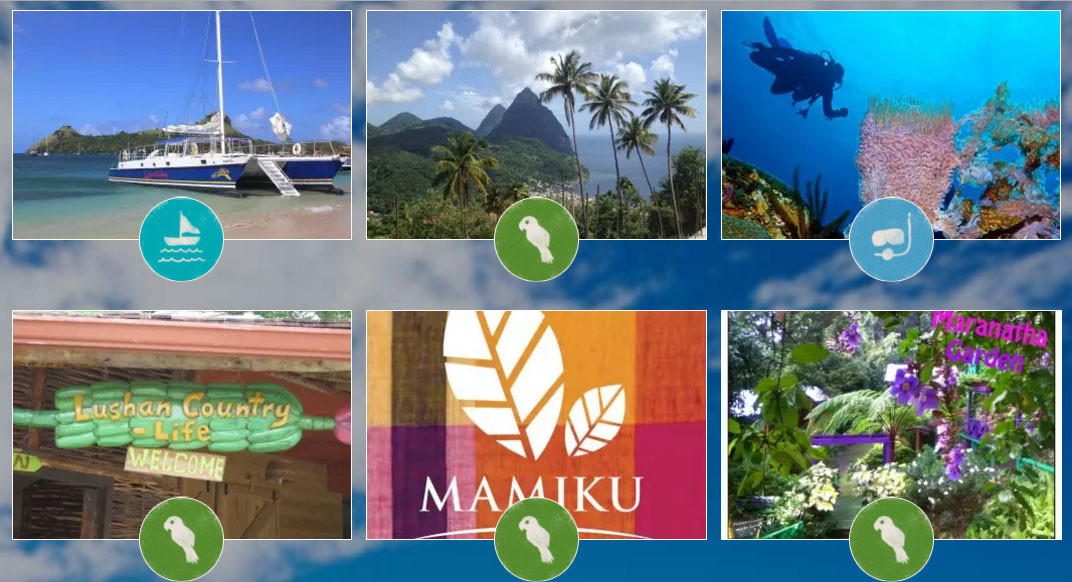
The Saint Lucia Tourist Board is pleased to welcome all Saint Lucians to the ninth edition of the highly anticipated sizzling summer deals package for Staycation 2016.
The Saint Lucian citizenry is being invited to come and experience a summer like no other with unbelievable deals starting from July 1 to September 30, 2016 under the Staycation and Summerlicious packages.
Offers start from 5% up to 50% discount at resorts and world-renowned restaurants throughout the island. Persons are being invited to Indulge in exhilarating tours, rejuvenate their minds and bodies at some of Saint Lucia’s finest spas. In addition to Staycation and Summerlicious, patrons are also being invited to take advantage of the new ‘Dine-Around’ initiative. An exciting experience created to entice the palates of guests staying at various hotels around Saint Lucia.
Saint Lucia’s Dine Around program offers persons the luxury of enjoying some of the island’s finest dining experiences at award-winning restaurants.
Customers will have the option of experiencing appetizing meals from Mediterranean style dining to Indian fusion, French cuisine among other restaurant offerings.
Tourism Director Louis Lewis says Staycation & Summerlicious offers that unique opportunity for nationals; and in the case of Summerlicious visitors alike, the chance to experience the island’s varied tourism product.
Guests can enjoy scrumptious meals at 55USD for a three course meal (Dinner) at any one of 18 independent Restaurants and hotels. Dine-Around vouchers can be purchased at participating hotels, tour operators and destination management companies.
Scores of acclaimed hotels and fine restaurants alongside some of the most exciting tours and attractions on Saint Lucia, are again preparing to offer their legendary service, warmth and hospitality to an eagerly anticipating local clientele revving to take advantage of the special summer vacation excursion dubbed ‘Staycation.’
A complete listing of Staycation and Summerlicious partners can be found in the weekend edition of the Star and Voice Newspapers. For more details about these fantastic offers visit: www.stlucia.org/staycation Or call 1-758 452-4094.
A reflection on the lessons of Brexit for OECS integration
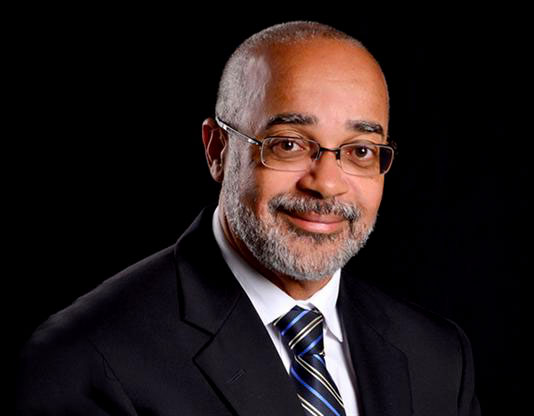
The OECS Commission assesses the impact of BREXIT and reflects on the lessons of Brexit for regional integration in the Caribbean and in the OECS in particular.
We have all been saturated with news and views on the British vote to exit the European Union in the past week and there is much more to come by way of analysis and revelation as things unfold. Not unexpectedly, the Brexit has created the opportunity for those who are opposed to regional integration efforts all around the world to find comfort. Not unexpectedly in the Caribbean there are also those who seek to mimic the British and are also calling for exit of sorts from regional integration.
These calls are nothing new – almost fifty years ago Sir Arthur Lewis, the intellectual author of OECS integration, was very clear about the main impediments to the realization of regional integration:
“What has stood in the way of Federation is not the sea… The real stumbling block has been the opposition of small local potentates. The larger and more far seeing capitalists realize the immense advantages that would flow from Federation, and advocate it. But it is the small potentate – planter or merchant [one might add: politician] – fearful that his voice, a big noise in a small community will be unheard in a large federation and has so far succeeded in preventing it.”
Whatever position one may hold on the Brexit question, it is now becoming painfully clear that this divorce will be a long, protracted, painful process in which much will be lost.
Ian Bremmer of the Eurasia Group summed it up adequately:
“You are talking about the diminishment of the most important alliance of the post war order, the transatlantic relationship which was already before Brexit at its weakest since World War II. You’re talking about not only the removal of the UK from the EU but you’re also talking I think reasonably likely about the eventual disintegration in further part of the UK itself. And you’re talking about a severe diminishment of what the European Union actually means, its footprint globally, its common values, and its ability to continue to integrate.”
There is much work to be done to determine the implications and impact of Brexit on the Caribbean’s relations with Europe and with Britain but the situation provides us with a special opportunity to reflect on the lessons of Brexit for regional integration in the Caribbean and in the OECS in particular.
Lesson 1 – Connecting the people to the process
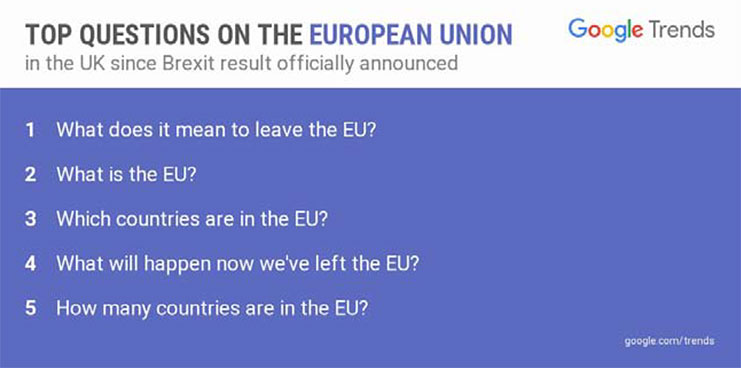 From all of the analyses of the post referendum public sentiments, it is clear that Brexit was a rejection of an integration process that the average person in the street did not apparently understand. Google’s announcement that the most searched queries in the aftermath of the referendum were “What does it mean to leave the EU?” and “What is the EU?” is a very disturbing indication of the failure of public education on the matter. A referendum assumes that the electorate is provided with extensive information with the pros and cons thoroughly argued so as to arrive at an intelligent decision. As electoral campaigns tend to go, the battle is often to win the hearts more than the heads of voters and the results of referendums do not always suggest that there has been that deep introspection.
The moral of that Brexit story for the OECS is that connecting the people to the process must be a continuous commitment not simply to giving and sharing information but also an obligation to listen to people. Integration processes must connect not only with people’s dreams and aspirations but also listen to and address their fears.
The OECS Communications Strategy which is currently being rolled out in phases seeks to put this capacity to share and to listen in place. It involves among other initiatives, the launch of a new interactive website that links social media with a communications platform that enables outreach to the widest universe of stakeholders from the highest to the humblest across the full spectrum of economic and social interests.
Lesson 2 – Engaging and Empowering the Youth
One of the most glaring contradictions exposed by the Brexit referendum is the near perfect correlation of age with voting position and also with educational level. The Wall Street Journal reported that 68% of those voting to leave were persons who did not graduate from high school; while 70% of those voting to remain in Europe were college graduates. As the BBC graph shows, the relationship between voting in favour of Brexit and age is strong – young persons voted to remain; older persons voted to leave. The unfortunate reality of this situation is that those who voted to remain will have to live with the consequences of Brexit much, much longer than those who instigated it.
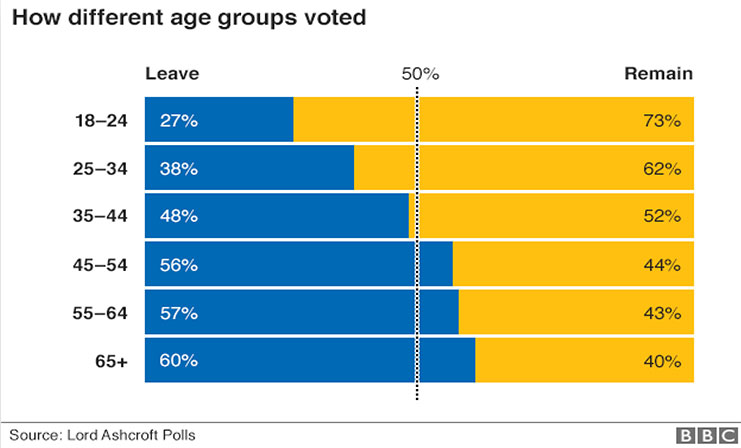
The lesson of that reality is the importance of empowering and engaging youth. Regional integration projects are essentially about creating a very different future – by removing the barriers within the geographic space, they alter the mental geography and consequently the range of opportunities available. It also points to the difference in perception that education makes – higher education predisposed most British youth to seeing themselves as European. It can be argued that narrow insular identities are inherently restrictive if they embody a closed mentality. The challenge of that experience to us in the region is whether we are educating our youth to see themselves as global citizens with a Caribbean identity that is rooted in their national consciousness. Accomplishing this is a complex task that requires a fundamental reengineering of our education systems and how this can be done (easily) will require a separate discussion. Suffice it to note that the nexus of age and education points to an emerging global divide – older and less educated citizens have experienced the disadvantage of globalization while the younger more educated citizens recognize the opportunities that it presents. For a regional integration effort to be meaningful to the people, it needs to connect that divide.
With the world becoming increasingly smaller and interconnected through new and emerging technologies, we must work through a new education paradigm to empower youth to recognise that they are indeed the custodians of a better tomorrow. History has demonstrated the power of youth to affect change through the shaping of public debate and policy. Whether it be the Young Women’s Christian Organisation pioneering race relations, labour relations and the empowerment of women across early America, to radical student activism reviving the issue of racial-apartheid in conservative South Africa in the 1980’s, a collective youth voice has always remained omnipotent.
The cost of inaction in not educating and empowering youth far outweighs the cost of action. The long term potential human cost from right wing and nativist groups across Europe being emboldened by the Brexit move illustrate this point. While the Caribbean does not share this exact same dynamic, the fact remains that until seventy years ago a fragmented European continent was at war almost continuously for a thousand years. Any moves that result in a discord to the unity enjoyed by Europe over recent years will only help fuel ill-informed nationalistic groups, present in every European nation. These groups by their very nature frequently attract pliable young people andthe disenfranchised seeking a populistcause often manifested in a myopic anti-immigration platform. It is from this platform in which they seek to vent and justify their call for isolationist policies and a homogenous society devoid of those from other cultures, ideals and backgrounds. This could have serious and direct implications for the Caribbean diaspora.
Lesson 3 – Respecting the Sovereignty of Member States
The issue of the sovereignty of Member States is always a touchy matter because at some point in every integration process – even when it is limited in scope – the process will necessitate a decision on whether or to what extent national priorities will prevail or yield to regional imperatives. And not every proposition may be a win-win.
How this is handled invariably revolves around the calibre of political will around the table. It takes leaders of exceptional vision to look beyond the immediate to the strategic and to invest their political capital in the decision. History has recorded such moments. It was demonstrated by Nelson Mandela when he decided to throw the support of his new Government behind the South African Springboks and the sport of Rugby – both endemic symbols of Afrikaner culture. By this singular act of courage he won over many Afrikaans to the rainbow nation. It was demonstrated in the OECS in the signing of the Treaty of Basseterre 35 years ago when leaders such as Maurice Bishop of revolutionary Grenada found common ground with an infinitely more conservative Eugenia Charles of Dominica. Despite deep differences, they were able to commit to a Treaty that has stood the test of time out of which institutions of demonstrable value have emerged.
In the Brexit scenario, Brussels was portrayed in some quarters as an overarching and overbearing supranational authority that trampled on the traditions and rights of national governments. Regional organizations such as the CARICOM Secretariat and the OECS Commission need to be mindful of such perceptions and to ensure that our way of working engages Member States in manner that is respectful of their differences. At the OECS Commission, the approach is to maintain an ongoing dialogue with national authorities and to shape the agenda jointly with execution being done through engagement of expertise within both Commission and Member States.
Lesson 4 – A Facilitating Role for the Commission
The fourth lesson is also related to the portrayal of the European Commission as an intrusive and imposing bureaucracy by the forces opposed to integration.
The OECS Commission has adopted a more facilitating role in its management of the integration agenda. The Councils of Ministers meet twice a year in face to face mode but have agreed to meet as often as is necessary via video conferencing. Working Groups involving experts from the respective portfolios in Member States meet as often as needed largely via video conferencing to prepare harmonized policy briefs, develop project proposals, and define specific collaboration actions. The OECS Commission in this context plays a facilitating role in convening these meetings but the agenda is constituted by all participants prior to the meeting.
By working synergistically with line ministry expertise both process and product are more acceptable to Member States.
Lesson 5 – The Four Freedoms are Indivisible
The fifth lesson is expressed in the warnings of the European leadership that the four freedoms on which the European Union is built are indivisible:
- Freedom of movement of people
- Free circulation of goods
- Free movement of capital
- Free movement of services.
This indivisibility makes it difficult for countries to “cherry pick” those elements that they deem more favourable to them while rejecting others. This challenge is also at the heart of the difficulties faced by the CSME and to a lesser extent the OECS Single Space. Big businesses welcome the opportunity for the free circulation of goods and capital because it gives them access to a much bigger demographic. In the case of the OECS, the Anglophone OECS is a demographic of 600,000 and with addition of Martinique that figure moves to 1 million. Free movement of goods and capital within such a market – in the context of the small states that constitute it – is a real boon to doing business. The free movement of people however is a different challenge as the same arguments are raised whether in Brexit or CSME – the coping ability of Member States for a large influx of persons from economically stressed parts of the union to another. Certainly the free movement of services is hampered without the free movement of people and it is the genuinely free movement of people that will ultimately create a regional mind-set. As more and more people travel to work, lime and reside in different parts of the economic union, their mental geography changes and they begin to belong to all parts.
What has compounded the European situation has been the unusual wave of migration resulting from wars and instability in adjoining regions. In the case of the Caribbean, it can be argued that the prosperity and global “relevance” of countries such as (Antigua & Barbuda?), Sint Maarten and Cayman Islands is underpinned by their relatively large migrant populations.
Conclusion
As the drama of Brexit unfolds, it is imperative that we go deeper in our analysis of that experience for two reasons: firstly in order to better re-position ourselves and advance our interests/relationships and secondly in order to learn the lessons of the European experience to improve our own integration effort. From the OECS perspective, there is an additional political dynamic that must be brought to center stage and that is the consequence of Brexit for the British Overseas Territories. Brexit means that they will be losing their EU citizenship and access to all opportunities that emanate from the EU because of someone else’s decision (the British Electorate). The people of Anguilla, the British Virgin Islands, and Montserrat did not have a say in this decision and, given the extent of what is at stake here, it is incumbent on the OECS to stand in solidarity with these Member States in the assertion of their right to some self-determination on this question.
CDB Launches Historic Bond Offering in the Swiss CHF Market
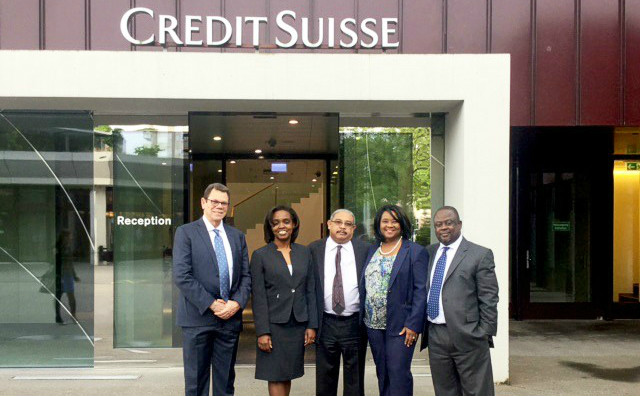
The Aa1/AA/Stable-rated Caribbean Development Bank (CDB) has launched its inaugural bond offering in the Swiss Franc ( CHF ) market.
The 12-year CHF145 mn bond offering carries the lowest coupon rate, 0.297%, achieved by an international public sector issuer for this tenor, in the CHF market.
Launched on Wednesday June 15, 2016, the bond offering was facilitated by the global private bank and wealth manager Credit Suisse, which acted as sole bookrunner on the transaction. The offering also marks the first time that a borrower from the Caribbean region has accessed the CHF market successfully.
“The decision to enter into the Swiss market allows CDB the opportunity to diversify its investor base away from traditional sources. The bond offering was oversubscribed in a very short period of time, demonstrating that there is strong investor confidence in CDB, even in light of the less than optimal market conditions, including volatility due to Brexit concerns,” said CDB President, Dr. Warren Smith.
The bond offering followed meetings in Geneva and Zurich between investors and a delegation of senior CDB officials. Investor feedback was positive, allowing for the execution of the transaction immediately afterwards. Due to the strong interest shown, the order book was three times oversubscribed in 15 minutes. The final coupon rate of 0.297% was the lowest ever in CHF by an international public sector issuer (i.e. sovereign, supranational or agency) in a maturity longer than 10 years. With over 60 accounts participating, the investor base was dominated by asset managers and banks, with the rest of the trade going to pension funds and insurance companies. The successful issue in the Swiss CHF market was attributable to the inherent strength of the Bank, which is reflected in its strong public rating.
CDB’s most recent bond issue prior to this one was in 2012, when the bank raised USD300 million through the placement of a 15-year bond in the U.S. capital markets. Earlier this year, international credit rating agency, S&P Global Ratings, affirmed the Bank’s rating as ‘AA/A-1+’ with a ‘Stable’ outlook. The Bank is also rated Aa1 with a stable outlook by Moody’s Investors Service.
Guyana, SVG win male, female CARICOM 10k title

Four time CARICOM 10k winner Cleveland Forde of Guyana copped his fifth title in the latest edition of the CARICOM 10k Race on Sunday morning (July 3) in his native Guyana.
He completed the race in 32:39 minutes. Linda McDonald brought victory to St. Vincent and the Grenadines in the female category with a time of 37:57. The second place in the male category went to Curtis Cox of Trinidad and Tobago clocking in at 32:56 while Winston Missingher of Guyana raced to third place with a time of 33:28.
Second place for the females went to Euleen Josiah-Tanner from Guyana who finished at 39:46 and Guyanese Andrea Foster got third place with a time of 40:37.
This was the twelfth staging of the CARICOM 10k race which was held under the theme “Promoting Healthy and Peaceful Societies”. The start line was the CARICOM Secretariat, while the end point was the Guyana National Park where a presentation ceremony was held. In addition to the main event, there were three supporting events – a 5K race, a 1500m race for schools, and a special race for athletes with disabilities.
The first place male winner in the 5k race was Ricky Williams, while second and third went to Tyrese Yensen and Joel Williams respectively. All three athletes were from Guyana. In the female category first place went to Joana Archer second place to Tabitha Benman and third to Kissanna Glen, all from Guyana.
Of special note were the two eldest participants in the 10k and 5k races Mr. Franklin Archer and Mr Phillip Beckles, both of Guyana, who completed their races with commendation.
There were four participants in the 1500 m race for schools and the youngest participant was Jalani Cheddi. The winner in that category was Ezekiel DeSouza, while second and third went to Khelani Glen and Jeremiah Harrison respectively.
The event was attended by CARICOM Chairman and Prime Minister of Dominica Hon. Roosevelt Skerritt, Secretary General of CARICOM Ambassador Irwin LaRocque and Minister in the Ministry of Sports, Guyana, Hon. Nicolette Henry.
In his remarks at the awards presentation ceremony Prime Minister Skerritt commended all of the participants for their efforts. He said physical activity was critically important within the region which continues to deal with the challenges of Chronic Non-Communicable Diseases (CNCDs). He also commended the CARICOM Secretariat for including all levels of society in the event.
“All levels of society need to be involved in physical activity to prevent CNCDs,” Prime Minister Skerritt said.
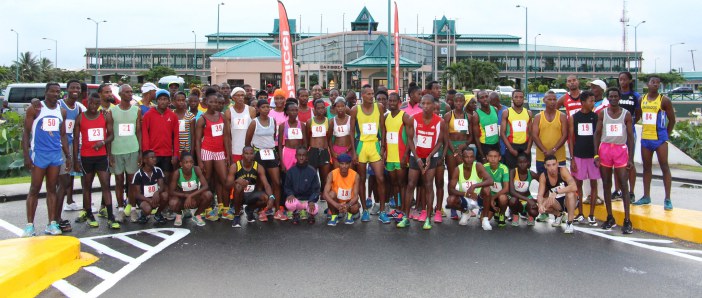
Secretary-General LaRocque in his remarks said everyone who took part was a winner. He also used the opportunity to thank the sponsors and partners which included Digicel Guyana, Courts Guyana, Demerara Distillers Limited, Eureka Laboratories, CARICOM Rice Mills Limited, the Guyana Athletics Association, Guyana Ministry of Sports, Guyana Defence Force, Guyana Police Force, Guyana Ministry of Public Health, Guyana Ministry of Public Infrastructure and the Guyana City Engineers.
Guyana’s Minister of Sports, Hon Nicolette Henry said it was wonderful to see the high number of participants. She said those who participated were examples of how commitment and dedication pays off for health and well being.
The race was held to coincide with the 37th Regular Meeting of the Conference of CARICOM Heads of Government which will be held in Georgetown, Guyana, 4-6 July. The opening ceremony will be held tomorrow at the National Cultural Center at 5:00 p.m.
Statement on the passing of Mr Patrick Manning
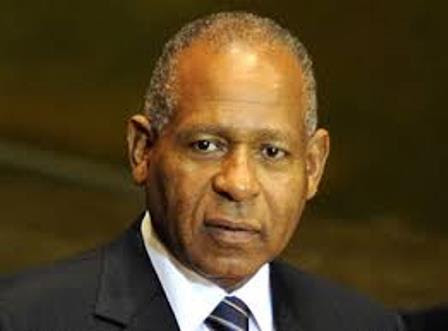
Statement by CARICOM Secretary-General Ambassador Irwin Larocque on the passing of Mr Patrick Manning, former Prime Minister of The Republic of Trinidad and Tobago.
(CARICOM Secretariat, Turkeyen, Greater Georgetown, Guyana) The Caribbean Community (CARICOM) mourns the passing of the former Prime Minister of Trinidad and Tobago, Mr Patrick Manning.
Mr Manning was one of the true champions of CARICOM. He believed in integration and was genuinely committed to it. He often referred to his years as a student at the Mona Campus of the University of the West Indies as the kindling of the fire that lit his integration spirit.
He had a keen sense of Trinidad and Tobago’s place in the Community and he believed that it had to play a supportive role given its resources.
His contribution to our Community stemmed from his conviction that integration was the best response to the challenges faced by our Region of small states. His initiatives included the establishment of the Petroleum Fund which allowed Member States to benefit from Trinidad and Tobago’s oil revenue.
It was Mr Manning who led the way in addressing the dangers, highlighted by the Region’s experts, that Non-Communicable Diseases posed to our Community and was host to the groundbreaking Special Summit of CARICOM Heads of Government on NCDs. This recognition led to CARICOM leading the global charge by initiating a United Nations High Level Meeting on combatting NCDs.
As Lead Prime Minister for Security in the CARICOM quasi-cabinet, Mr Manning engineered the formation of the CARICOM Task Force on Crime and Security. Its recommendations broadened the scope of co-operation within the Community in that area resulting in Security Co-operation being adopted as the fourth pillar of our integration movement.
In myriad other ways, his calm and deliberate interventions enhanced the tone of discussions at the level of the Conference of Heads of Government.
The Caribbean Community extends its deepest sympathies to his wife Hazel, their children and other members of the Manning family as well as to the Government and people of Trinidad and Tobago. Their loss is our loss. May his soul rest in peace.