Home Blog Page 165

New CFBC Agribusiness Management Programme

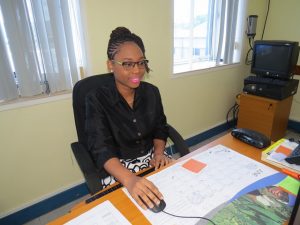
Permanent Secretary
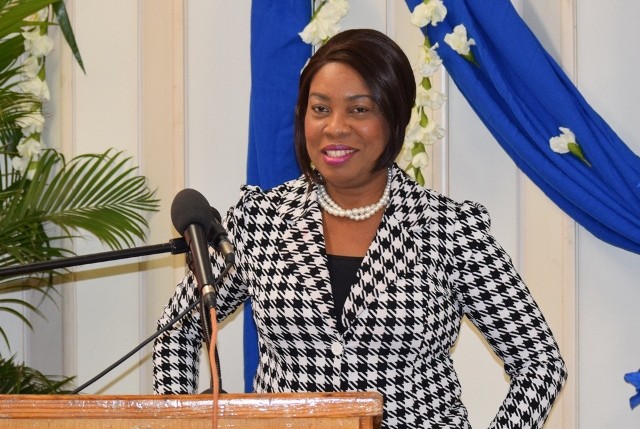
Permanent Secretary of Education, Lonie Liburd-Willett

Government has high hopes for new CFBC Agribusiness Management Programme.

Basseterre, St. Kitts, June 23, 2016 (SKNIS):  The Ministry of Education in St. Kitts has welcomed the launch of the Agriculture Business Competency-based Programme to be administered by the local Clarence Fitzroy Bryant College (CFBC) in collaboration with the Faculty of Agriculture at Dalhousie University in Canada.

The course is geared towards candidates in the agriculture value chain who wish to market and distribute agricultural products and services locally, regionally and internationally. It offers a competency-based education programme, which will allow candidates to develop technical and theoretical skills to develop or grow their business by advancing innovation in products, processes, and business models.
At the programme launch on Tuesday (June 21), Permanent Secretary in the Ministry of Education, Ionie Liburd-Willett, extended commendation to Dalhousie University and other partners.
“This programme is of great significance as it is an opportunity to revitalize agriculture by becoming food self sufficient, create agrobusinesses and jobs, [and] change to healthier lifestyles with organic foods,” Mrs. Liburd-Willett said, adding that this translates into a lifestyle revolution of eat what you grow and grow what you eat.
Participants that enter the programme must have good communication skills and experience working within the agricultural industry. The course covers: creating market opportunities, financial management and accounting, delivery of customer service, sales and marketing of agriculture products and services, pricing of products and services, human resource management and business plan development.
“I’m pleased to note that prospective adult students who are already in the agricultural field are afforded the opportunity to access this programme through prior learning assessment and recognition,” the permanent secretary said. “They will not be left behind but will be positioned to make a difference in the development of our economy.”
According to Andrew Abraham, Dean of the Technical, Vocational, Education and Management Studies (TVEMS) of the CFBC, the Agriculture Business Competency-based Programme is “the first of its kind in the Federation and the wider Caribbean Community (CARICOM) region. The programme is described as a “rigorous, skills-based programme and participants will require high levels of motivation to be successful.”
The launch was attended by Hugh Heyliger, Director, Institutional Development, CFBC; Dr. Clare Bowen O’Connor, Programme Coordinator, CFBC; Jackie Ferracho Williams, Vice President of Finance and Administrative Affairs, CFBC; and Suzanne Johnson, Manager of International Projects, Dalhousie University.

DDA training to improve tourist arrival

The facilitator for this training, Bonita Morgan,

DDA training to improve tourist arrival

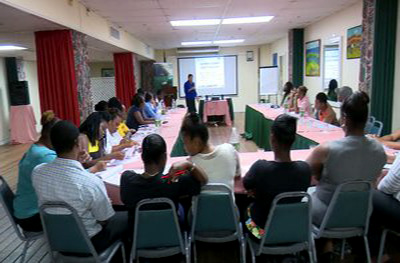
The fourth in the series of five training sessions on positive visitor interactions to visitor satisfaction ended here on Wednesday, June 22nd.
30 employees from Dominica Air and Sea Port Authority, Forestry and the Hotel Industry completed the training.
The sessions were held in the months of January, April and June 2016, and were hosted by the Discover Dominica Authority, (DDA), with facilitators from the Caribbean Tourism Organization, (CTO).
The aim of the DDA is to get as many people as possible exposed to this type of training so they can improve their skills in a practical way when they return to work.
The facilitator for this training, Bonita Morgan, says the session on service excellence and what is required of frontline personnel was a refresher for participants.
Morgan stated that the Caribbean must step up its game in the international tourism industry.
“What we may think of as being good service in somebody’s eyes who is visiting for the first time maybe just mediocre service. We have to look at things through the eyes of the customer and our customer is many times a regional and international traveller who has been many places in the world and had very diverse experiences. We have been telling them in the sessions that tourism business is about creating positive memories and experiences for the visitor because we want them to come back and even if they don’t come back they share their positive experiences and memories with friends and family and encourage them to come to our part of the world.
DDA TrainingWe really have to be on top of our game in terms of delivering excellent service. We have to know what that means and we have to know what is our role in being able to deliver that excellent service…”
Morgan believes that people in the private and public sector need to make the connection between tourist arrivals and the roles they play to help the country to grow and flourish for their benefit.
“If people understand the connection between the visitor coming in to our part of the world spending money and having those ‘wow’ experiences… then as we said they will spread the word that this is a place to come and to do business or to come for recreation and so on. We have to make our people make our connections in their minds between how important this industry is to the country and by extension how important it is to them and the quality of life they are experiencing in the country.
Right now Dominica like many of our other islands this tourism business is like our bread and butter industry right now. It is helping to keep us afloat and keeping us creating jobs and opportunities for people to be able to feed themselves and their families.” Morgan stated.
Morgan says although she would have preferred an extra day to execute this training, she understands the staff limitations of certain establishments.
Other facilitators for the training were Sharon Banfield-Bovell and Carrie Baron.
The Caribbean Tourism Organization does training for a number of target groups; tourism education for teachers, workshops for frontline personnel and service quality workshops for middle-management as well as taxi driver training.

Park to preserve & conserve Natural Heritage

Natural Heritage
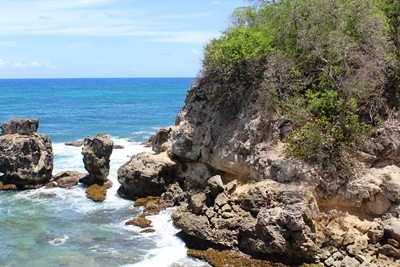
The National Park spans 7, 300 hectares of land stretching from Archer’s Bay, St. Lucy (pictured) to Consett Bay, St. John. (FP)

Park to preserve & conserve Natural Heritage

When the average person hears of a park, they instantly think of an area where children play, one that is equipped with slides, see-saws, swings and other recreational items. However, the Barbados National Park brings a completely different dimension to that concept.
Barbados’ Physical Development Plan Amended 2003 defines the National Park as one which “encompasses a wide range of land use activities, from forestry and conservation to tourism, resource extraction and village settlements, and includes many unique wild landscapes”.
In the words of former Chief Town Planner, Lionel Nurse: “It is an area that is different from the rest of Barbados because of its geology and typography. It is perhaps the most spectacularly beautiful part of the country. It is an area that has some challenges for normal development…”
He also described the National Park as an area which was “specially crafted by the work of human beings and nature of a particular time, within a particular historical and cultural context. This combination of human activity… and outstanding landscapes and ecological assets, makes a very special area”.
The National Park spans 7,300 hectares of land stretching from Archer’s Bay, St. Lucy, to Consett Bay, St. John, and encompasses the Scotland District.
It captures some of Barbados’ most popular attractions and valued natural treasures, such as the Welchman Hall Gully, Jack-in-the-Box Gully, and Harrison’s Cave all in St. Thomas; Turner’s Hall Woods, St. Andrew; Codrington College, St. John; the Barbados Flower Forest in St. Joseph; and the Morgan Lewis Mill, St. Andrew.
“So this is a special area. It is perhaps the most isolated area in Barbados. It is peripheral to the major developments within the country. For these reasons, it was always a special place and should be treated specially and differently,” the former Chief Town Planner pointed out.
However, Mr. Nurse made it clear that the Barbados National Park was not a reserve for animals, a restricted area or one where land had to be acquired. “…Most of the National Park area is private property and it will remain that way,” he stated.
He added that while major industrial-type developments would not be allowed in the National Park, there would be a greater emphasis on agriculture, conservation and tourism, particularly that relating to recreation sites, sightseeing, hiking, walking trails, and visiting historical sites.
“So that you have activity that can be economically beneficial and is pleasant, but you preserve the quality and characteristics of the area without destroying it,” Mr. Nurse said, while noting that like all other parks in the country, the National Park would also be controlled by the planning laws.
He explained that the main idea behind the concept of the National Park was centred on how the area would be managed so it could be of benefit to everyone, while at the same time preserving and conserving its natural beauty. To achieve this, Mr. Nurse said participation and cooperation between the general public and landowners would be critical.
He suggested that this could be done through the formation of working agreements between landowners and Government through its various agencies, or between landowners and themselves and the general public, to allow for broad access to the countryside beauty without infringing on the private rights of individual landowners’ privacy.
The Barbados National Park was officially launched by Prime Minister Freundel Stuart on June 1, at the Natural Heritage Department, the agency with overall responsibility for its management.
Mr. Nurse said the concept of Barbados having a National Park was one born as far back as 1977 following feasibility studies conducted on the country’s landscape.
He added that a detailed study entitled: The Barbados National Park was conducted in 1983, and it was included in a revised Physical Development Plan in 1986 for the first time, accounting for the first recognition of the park.
This was followed by a number of study tours, and improvements to the proposed park system that were included in the 2003 revised Physical Development Plan.
The former Chief Town Planner said the Environmental Special Projects Unit, now the Natural Heritage Department, was created to implement the Barbados National Park and all the related natural heritage conservation areas.
That department was also charged with coordinating the work on national biodiversity, and has since formed linkages with the National Conservation Commission to set up and manage National Park visitor centres.


LUCELEC gives the opportunity to interns

Quintin Son - LUCELEC Intern

LUCELEC gives more students the opportunity to intern for the summer.

Castries, June 23, 2016Thirty-one year old Quintin Son may not fit the profile of your average intern. One of forty-one (41) interns chosen for the St. Lucia Electricity Services Limited (LUCELEC) Summer Employment Programme, Son is working in the LUCELEC Generation Department.
Having just completed a mechanical engineering course at the Sir Arthur Lewis Community College, Son is older than his fellow interns, many of whom are on vacation from secondary schools, the Sir Arthur Lewis Community College, and university. They are also more likely to be in their late teens or early twenties. But Son is not daunted. He says the opportunity to work in his chosen field at LUCELEC is one he intends to take full advantage of.
“I believe working here will give me an edge because everyone shares knowledge and it is a continuous learning process. And while school taught me mechanical engineering theory, this internship is giving me practical experience I know will make me better in my chosen profession,” he says.

Marie-Claude-Honore - LUCELEC Intern
Marie-Claude Honore – Intern at LUCELEC

Twenty year old Marie-Claude Honore says the same. Having just completed a pre-engineering course at the UWI St Augustine campus in Trinidad, Honore wants to be an engineer. An intern in the LUCELEC Planning Department she says what she is learning will give her a professional edge. The internship is also teaching her how to function in the world of work.
“This is my first time getting formal work experience, getting insight into the corporate world where I am working with other people in an environment that is very different and I am learning a lot. It is an experience I will not take for granted, one I am very grateful for,” she says.
Beginning in the early 1980’s and throughout the years, the LUCELEC Summer Employment Programme has nurtured hundreds of Saint Lucian youth and is a tangible opportunity for students to get an appreciation for the demands of working in an environment that places a premium on efficiency.
The interns have been stationed in various Departments across the company and all students will write monthly reports of their employment experience. For those on school internships, reports will be submitted to their respective schools.
This year, the LUCELEC Summer Employment Programme began on June 1 and will end on August 31, 2016.

Enhancing the Education Sector in Grenada

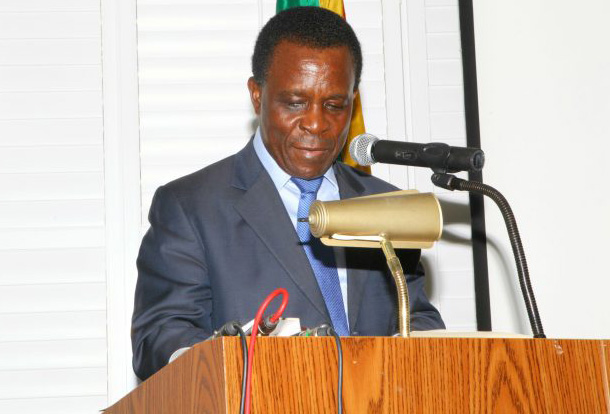
Prime Minister of Grenada, Dr the Right Honourable Keith Mitchell, speaks during the opening ceremony of the Project Launch Workshop for phase one of GEEP on June 15 in Grenada.

At the J.W. Fletcher Catholic Secondary School in Grenada, 217 boys and girls have been making do with inadequate space.  Teachers and students work together creatively to make the best of the eight classrooms, spread across two blocks. But this arrangement is not suitable for optimal outcomes in the education sector in Grenada; nor does it meet regional best practice standards.
For this reason, J.W. Fletcher is one of six schools across the country that will be expanded or rehabilitated as part of the Grenada Education Enhancement Project (GEEP), funded by the Caribbean Development Bank (CDB). Teachers and students look forward to the construction of two new blocks which will provide three classrooms, administrative space, labs for Building Technology and Electronics, and rooms for Music, Art, Technical Drawing and Counselling.
GEEP was launched on Wednesday, June 15 in St. George’s, Grenada where Dr the Right Honourable Keith Mitchell, Prime Minister of Grenada reaffirmed the duty of the Government and the right of the child to quality education.
“If we truly believe that every child deserves that kind of opportunity, and that every society deserves to have students who can access those kinds of opportunities, then our collective effort becomes extremely clear. Our work is to make sure that opportunity is not just a possibility, but a promise. Opportunity is a right that inspires educators to truly devote their lives to empowering our children. It is a right that encourages parents to expect their child will graduate from secondary school and college and succeed in life, even if the parents never had that chance themselves. A Government’s work is not done until we have lived up to that promise,” Dr Mitchell said.
In addition to J.W. Fletcher, other schools to be improved are: Grenada Seventh Day Adventist Comprehensive; Bishop’s College in Carriacou; Presentation Brothers’ College; St. Joseph’s Convent, St. George’s; and St. Joseph’s Convent in Grenville.

JW Fletcher Catholic Secondary School
Students of the J.W. Catholic Secondary School, one of six schools across the country that will be expanded or rehabilitated as part of the first phase of GEEP, funded by CDB.

The expansion and rehabilitation work is part of Phase One of the GEEP for which a loan of USD15 million and a grant of USD533,000 have been approved by CDB’s Board of Directors.  It complements the Government of Grenada’s efforts to address the substantial need for improved education infrastructure.
“The implementation of the project will allow our Ministry to be better positioned to serve its stakeholders at all levels, and to take on a professional approach towards the conduct of the business of education. The country on a whole will benefit by way of improving the availability and relevant professional skills. It is therefore my expectation that the beneficiaries of this timely investment, will seize the opportunity to make maximum use of the opportunities afforded,” said the Honourable Anthony Boatswain, Grenada’s Minister of Education and Human Resource Development.
Grenada was so badly affected by Hurricanes Ivan and Emily in 2004 and 2005 respectively, that some damaged schools have not yet been restored and some continuing to be housed in temporary structures.  Some of the country’s secondary schools, originally operated as primary institutions, must be expanded if the country is to achieve universal secondary education.
The Project also aims to enhance the quality, relevance and effectiveness of instruction and includes a component for training and professional development for approximately 1,700 teachers and principals.
Patricia McKenzie
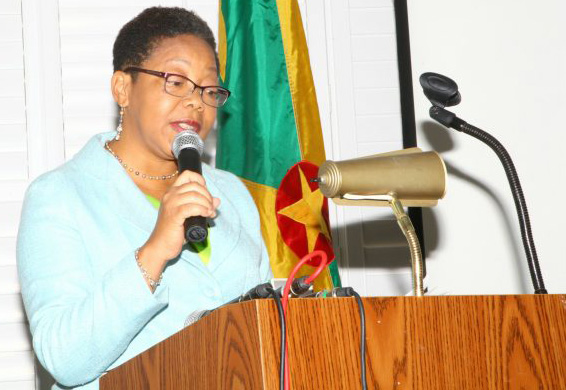
Patricia McKenzie, Vice-President (Operations), CDB delivers remarks during the opening ceremony of the Project Launch Workshop for the first phase of GEEP. During her speech, McKenzie noted Grenada’s progress in reaching several targets for basic education, including achieving universal secondary education in 2012.

Patricia McKenzie, Vice-President (Operations) at CDB lauded Grenada’s work and leadership in education:
“The experience of many countries has amply demonstrated the power of human capital development to expanding economic opportunities and reducing poverty.  Likewise in Grenada, education attainment is strongly correlated with economic gains and lower poverty rates.  Consequently, the government of Grenada has been investing approximately 5.2 percent of GDP annually on education, spending ECD102.1 mn, in 2015, higher than any other sector and among the highest in the OECS.  As a consequence of the significant investment you have made in education, Grenada has made tremendous progress in reaching several measureable targets for basic education – achieving universal secondary education in 2012, reaching the Caribbean-specific Millennium Development Goals in 2015 and virtually eliminating enrolment disparities between males and females, you have demonstrated leadership in this area,” Mrs. McKenziesaid.
The Project is now officially underway, with construction expected to begin by 2017.

Local businesses defrauded by Cyber Criminals

Cyber Crime

The Office of National Drug and Money Laundering Control Policy (ONDCP) is warning Antiguan businesses to be aware of a scam that re-directs payments for invoices submitted by email.

1. The ONDCP has received reports from local businesses that their customer invoices have been intercepted and emailed to their clients with substituted bank account information allowing the funds to be directed into accounts set up by the fraudsters. It would appear that businesses affected have had their computers or email accounts hacked, enabling the interception to occur and the fake invoices to be sent in place of the real ones. Usually, the fraud is not detected until the customer is alerted by complaints from suppliers that payments were not received.
The Scam
 

  • Scammers hack into vendor’s/supplier’s email accounts and obtain information such as customer lists, bank details and previous invoices.
  • The hacker, purporting to be your supplier, sends an invoice to your business and requests a change to usual billing arrangements and asks you to transfer money to a different account, usually by wire transfer.
  • The email may look to be from a genuine supplier and often copies a business’s logo and message format. It may also contain links to websites that are convincing fakes of the real company’s homepage or links to the real homepage itself.
  • The scam may not be detected until you receive a complaint from your legitimate supplier that they have not received payment.

Protect yourself – Do’s and Don’t’s

  • DO have a clearly defined process for verifying and paying accounts and invoices.
  • DO ensure your staff is aware of this scam and understand how it works so they can identify it, avoid it and report it.
  • DO double check email addresses – scammers can create a new account which is very close to the real one; if you look closely you can usually spot the fake.
  • DO use contact details that you already have on file for the business.
  • DO telephone your supplier business to seek verification if you think an email is suspicious.
  • DO confirm any changes to the supplier’s original email address on file or changes in payment information. Calling them on known phone numbers can alert them that fraudsters may be trying to intercept the payments.
  • DO check your IT systems for viruses or malware – always keep your computer security up-to-date with anti-virus and anti-spyware software and a good firewall.
  • DO NOT seek verification via email – you may be simply responding to the scammer’s email or scammers may have the capacity to intercept the email.
  • DO NOT call any telephone number listed in the email as it may also be fake.
  • DO NOT pay, give out or clarify any information about your business until you have looked into the matter further.

Businesses are urged to be on the alert for this type of fraud. The important safeguard is to establish anti-fraud measures that independently double check if a regular supplier provides different bank account details for the payment of invoices. Vendors and suppliers who send billing instructions via email are also encouraged to establish verification protocols with customers for any changes to email and payment details.
Report
Businesses which may be victims of this type of fraud can contact the ONDCP at 562-3255 or 562-3256.

Ministry receives major injection to fight the Zika Virus

Zika Virus

Ministry of Health & Environment receives major injection to fight the Zika Virus.

With the Zika Virus spreading its wings across the region, Minister of Health and the Environment, Molwyn Joseph has announced that 1.2 million dollars has now been made available to help keep the Zika Virus at bay.
Joseph made the disclosure during a national clean-up symposium at his Redcliffe Street Office.
The meeting attracted key representatives from the Central Board of Health, the Antigua and Barbuda Defense Force, the National Solid Waste Management Authority, the Royal Police Force and other Ministry of Health technicians.
Minister Joseph said the majority of the funds will go towards the island wide clean-up campaign and the elimination of breeding sites for the Aedes Aegypti Mosquito.
“We are bringing all the resources to fight this vector and Antigua and Barbuda will be the first OECS Country to take this kind of precautionary measure. As a matter of fact, the Government is so serious about this that the Ministry has been allocated 1.2 million dollars for us to spend to fight this enemy of the state”, Joseph said.
The massive clean-up exercise will target all types of waste materials from old cars, derelict buildings, garbage, bulk wastes, building materials, to old tyres and house hold appliances.
The gutters in and around St John’s will be heavily targeted as well and a rat eradication program will also come on stream in the city.
Minister Joseph said it will not be a onetime event but rather a constant bombardment and attack against the deadly insect.
“This is not just an exercise that we will do today and turn our backs tomorrow, but we are in this for the long haul because we want to eliminate the breathing sites of this Aedes Aegypti Mosquito”, Joseph disclosed.
Minister Joseph also revealed that the August 13th and 14th clean-up activity will provide at least one hundred temporary jobs and the campaign will be done on a constituency level in conjunction with the Member of Parliament for the area.
In conclusion, Joseph told the meeting that there is a genuine link between the health of the nation and the cleanliness of the country, therefore the Government is taking a holistic approach to both Antigua and sister island Barbuda.
“You will find that most of the clean-up work were done in Point, Villa, Greenbay and Grays Farm areas but what the government has concluded is that if we are to address and respond to health threats, we have to start looking at the nation as a single space”, Joseph stated.
The health minister also spoke of some grim figures coming out of St Vincent and the Grenadines where some seventeen (17) pregnant woman tested positive for the Zika Virus in that country.

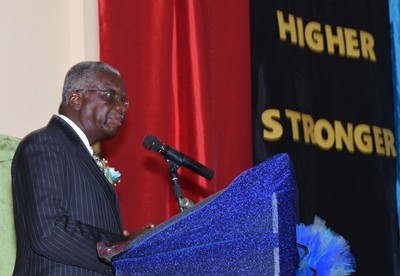
Place more value on Human Life

Prime Minister Freundel Stuart addressing the Reynold Weekes Primary School’s graduation ceremony at the BWU's Labour College today. (C.Pitt/BGIS)

Prime Minister Freundel Stuart is concerned about the role violence seems to be playing in the resolution of disputes at certain levels of the society.

Mr. Stuart expressed his concerns today to the media, after delivering the feature address at the Reynold Weekes Primary School’s Graduation Ceremony at the Barbados Workers’ Union Labour College, St. Philip.
The Prime Minister said: “It does nothing for the reputation of Barbados to have human life devalued in the way in which I see it being devalued in cold blood by certain elements, admittedly a small element in the society. But that small element can do Barbados’ reputation untold damage…I am not at all happy with these developments.
“I think the society has to come together at all levels, recognise that we are all under threat if this approach to life takes hold in Barbados.
The people who are carrying out these acts of violence …are products of our homes, they are products of our schools, in some cases they are products of our Sunday schools, and they are certainly products of our communities. And, if after passing through all of those processes, this is what we end up with, it means that we are failing at various levels of our social interaction, and we have to get back to the drawing board and pay more attention, from the time children are in nursery school, to what is happening with them.”
Mr. Stuart expressed the view that parents should become a little more vigilant than perhaps they were inclined to be. He reiterated that if the nation was materially successful, but deficient and wanting in terms of values and the character of its people, then all of the material comfort could be destroyed overnight.
“Therefore, I think that we have to wake up. This is not a problem as some would want to rush to say for the Government, it is not a problem for the Opposition, it is not a problem for any individual segment or sector of the society, this is a problem for everybody, and we all have to come together… to fight it,” he stated.
The Prime Minister said that in the same way certain persons had the courage to fight and lose their lives for what they wanted, when what they wanted was “the wrong thing”, those who wanted “the right thing” had to be equally determined to fight for it and risk their lives if necessary.
“But you can’t have a segment of the society willing to fight to lose their lives to do the wrong thing and we who are interested in doing the right thing go and hide in some corner, unwilling to fight or afraid to fight.
We have to fight back in this society and as Prime Minister I am prepared to lead that because I don’t think that that direction for this society is going to pay off in the long run,” he charged.

Historic Bridgetown To Mark 5th Anniversary

World Heritage
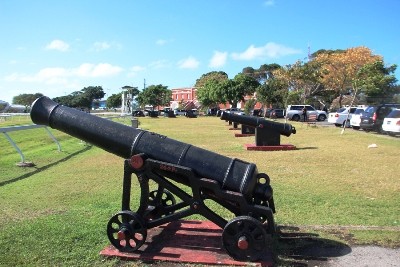
Historic Bridgetown and its Garrison. (FP)

Saturday, June 25, will mark the 5th anniversary of the inscription of Historic Bridgetown and its Garrison on the UNESCO World Heritage List.

To celebrate the occasion, Historic Bridgetown will be transformed into a cultural hive of activity with performances by popular artists, fashion shows, food and arts and craft displays.
From noon, Independence Square will be the focal point of activity, with exhibitions of heritage artefacts, heritage-related products and services, and art.
Members of the public will also witness the much talked about ‘Changing of the Sentry’, which will be staged at 3:30 p.m. Then, at 4:00 p.m., attention will shift to Heroes Square, where the Ceremonial Delivery of the Last Canes will signal the official start of the Crop Over Festival.
The anniversary activities will form part of City Fest, which is an annual celebration coordinated by the National Cultural Foundation to launch the Crop Over Festival.

School Rehabilitated Bathroom Facilities

Primary School Bathroom

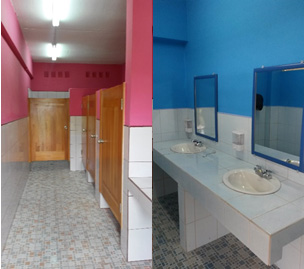
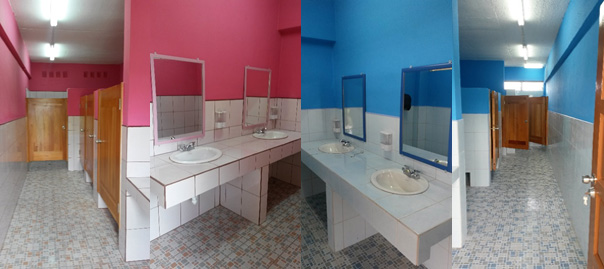
Students & Teachers of Trinity Methodist Primary School Benefit from Rehabilitated Bathroom Facilities.

The rehabilitation of the boys, girls and teachers bathroom facilities was funded by the Government of Belize at a cost of $$59,544.50 under the Commonwealth Development Initiative (CDI).
This means that students, teachers, and school administrators will now have access to improved hygiene and sanitary bathroom facilities with basic amenities. The school project entailed the upgrading of two bathroom facilities – student bathrooms are equipped with toilet, hand-washing, and shower facilities for males and females measuring approximately 25 feet x 12 feet each; and a staff bathroom located on the ground floor containing a single unit.
In recognition of ensuring a healthy school environment a water, sanitation and hygiene (WASH) program coupled by a bathroom maintenance program is being facilitated by the Ministry of Education, Culture, Youth and Sports to ensure optimal hygiene and sustainability needs of the school.
A notable feature of the project is that the school, designated as a hurricane shelter by the National Emergency Management Organisation (NEMO) will now be equipped with improved sanitary facilities.
The completion of this school project also demonstrates, and underscores, Belize’s commitment to fulfilling the United Nations Millennium Development Goal No. 2 that aims to “Achieve Universal Primary Education” and Target No. 5; which is to ensure that boys and girls of school age will be able to complete a full course of primary schooling.
The Belize Social Investment Fund (BSIF) in collaboration with the Ministry of Education, Youth and Sports, and the school community implemented the school project as part of its mandate to work in line with the Government’s strategy in addressing the basic needs of Belizeans in the area of primary education. BSIF is an implementing agency of the Government of Belize.
School Bathroom
Inauguration of the bathroom facilities will be held at 2:00 p.m. on Thursday 23 June at Trinity Methodist Primary School, Belize City.
About Trinity Methodist Primary School (TMPS) is a public school with a current student population close to 200. It originated with 36 students and 6 teachers in 1989; and is operated under the Methodist School Management.

Audio Theme