

Home Blog Page 164

Regional Geographic Data Strategy

Data Strategy

OECS Commission facilitates talks towards Regional Geographic Data Strategy.

Castries, June 24, 2015- The OECS Commission recently conducted a virtual Geographical Information Strategy or GIS Symposium which is part of plans towards a Regional Geographic Data Strategy.
The virtual GIS symposium on Wednesday June 22nd 2016, is described as a pioneering initiative to lay the foundation for a fully developed regional data ecosystem.
Various agencies and individuals involved in data gathering particularly in the area of location data were part of the exercise.
The activity also intended to discuss the relationship between data and the location from which the data is acquired to help inform more effective interventions for social, economic and environmental development.
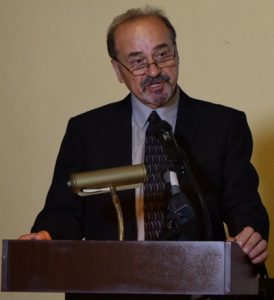
OECS Director General Dr. Didacus Jules says given the reality of today’s interconnected economies, data assimilation and the convergence of meaningful results is paramount to enable more informed decision making at all governance levels: “Member States have started incorporating technology enabled decision-support systems into the fabric of national development plans and the next step will involve the strategic harmonisation of data-ecosystems across all sectors and countries in our sub region. This will improve the region’s capacity to make informed decisions at both the national and regional level.  It will also contribute significantly to the OECS’ ability to be more proactive and effective in shaping and managing the region’s development agenda. For the first time in the OECS, we have completed a comprehensive needs assessment as a tangible step on the path to a regional geographic data strategy.”
All OECS Member States, individuals and agencies in the development sector as well as others associated with data management are among those who stand to benefit.
The OECS Commission’s virtual Geographical Information Symposium also discussed harmonized technological platforms and standards as well as governance and communication systems for a cross fertilization of ideas to keep the data in its purest form and help avoid statistical errors.
High demand for Bachelor of Education Programme

Teacher education
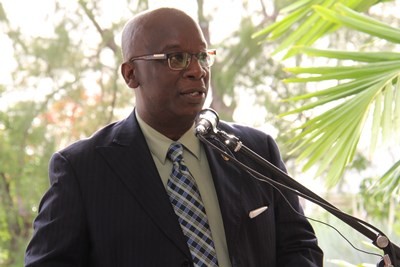
Minister of Education, Science, Technology and Innovation, Ronald Jones. (FP)

High demand for Bachelor of Education Programme.

There is a high demand for the Bachelor of Education (Primary) programme, expected to start in September at Erdiston Teachers’ Training College.

This was revealed today by Minister of Education, Science, Technology and Innovation, Ronald Jones, following an address to the new intake at the College who will be undertaking several programmes this academic year.
“The demand is great, both from the schools for the evening programme and from those who are coming ‘green’ into the system,” Mr. Jones said.
He explained that the new degree would give persons who are exiting either secondary school – either fifth or sixth form – or Barbados Community College, a chance to make an early determination if they wanted to teach.
“If they want to teach, a cohort would come straight from those institutions into the programme, which will start in September this year. It means that in four years’ time, there will be able to go straight into the class-room, already trained, already equipped.
We are moving away from taking people ‘green’ – with just academic qualifications – into the classroom and then training after, which we call post-service training. “We are doing pre-service and not post-service training. …There will be 60 of those persons who will be coming ‘green’, and then we are going to be [training] another 60 in an evening programme for those who are in the schools who have the associate degree, which is the two-year teacher training degree,” he said.
The Minister further pointed out that by 2018 or 2019, a cohort of about 60 student teachers would be in the system who are Bachelor of Education-equipped for the primary section, and by 2020, those who are ‘green’, who have done the Bachelor of Education, would follow.
Reiterating what he said in Parliament earlier this week, the Education Minister stressed that by 2020, he wanted all of the teachers who were still in the system to be trained, whether at the Diploma of Education level or having a Teacher Training qualification.
Revealing that the Ministry’s aim was to train some 1,000 out of 3,000 teachers in about three years, he also stated where there was a need for faculty at the Training College, this would be increased.
On the latter point, Mr. Jones stressed: “But right now we have a permanent establishment here with some posts not filled because we didn’t need them at the time. So, the opportunity is there to fill those posts but where they might not be filled, Erdiston also uses what we call a part-time cohort of educators to deliver special needs education, nursery education, and general interest programmes.
“So, they would work out the best strategy to ensure that a common curriculum runs across the particular programme that you have within the system.”

CROSQ needs commitment from Region to Help Develop World Class Quality

CROSQ

CROSQ needs commitment from region to help develop World Class Quality.

 Mr. Pat Paladino
Mr. Pat Paladino

If the CARICOM Regional Organisation for Standards & Quality (CROSQ) is to press ahead to aid the development of quality goods and services across the region that trade and compete internationally, regional governments and businesses need to play their part.
That was the view of accreditation expert, Mr. Pat Paladino, as he addressed a symposium to mark World Accreditation Day in Guyana this week.
Mr. Paladino, addressing an audience that included Minister of Business, Mr. Dominic Gaskin, regional leaders in quality infrastructure development, as well as regulators and private sector business leaders, acknowledged the role that the two major accreditations in Guyana; one in Jamaica and one in Grenada utilising CROSQ’s Caribbean Cooperation for Accreditation (CCA) Scheme, had played in pushing quality to the forefront of discussion.
He also highlighted the Caribbean Network of Conformity Assessment Bodies (CANCAB) another programme created by CROSQ to assist the development of the region’s conformity assessment bodies, namely the inspection, testing and certification entities within both the private and public sector.
Additionally, said the international accreditation expert, the National Standards Bodies of Belize, Suriname and Jamaica, had all been certified to the ISO 9001 quality management system, with the assistance of CROSQ, but all this work was only the start of what was needed in the region.
 
“The CARICOM and CARIFORUM Regions have much more to do to be able to ensure that all quality and quality-related services are available within the regions. There are many more standards to adopt or adapt and many more conformity assessment bodies to accredit. There is a need for the development of capabilities within the NABs for product, services and personnel certification bodies and inspection bodies.
 
“It is also necessary to obtain international recognition of the National Accreditation Bodies for certification and inspection bodies. Each one is a formidable task, but I have confidence that the organizations are up for the task,” said the accreditation consultant.
 
“All this work and the achievements will go to waste if there is no uptake by government or business. That is the policies and programmes developed must be embraced and put to use. Regional standards that are harmonized internationally must be adopted at the national level. National regulations must start to reference the use of these standards and address qualification of organizations to the international standards.
 
“The time is now to show such commitments. Without your commitment it will become extremely difficult for Caribbean organizations to be competitive in international and regional markets,” he added, congratulating the Guyana National Bureau of Standards (GNBS) on the tremendous work it had done in the country thus far.
 
Head of Conformity Assessment at the Bureau, Mrs. Candelle Walcott-Bostwick noted the high demand in the country for quality management services and accreditation services, since the recent accreditations of the Guyana Rice Development Board’s Central Laboratory and the Eureka Medical Laboratories Inc. in Georgetown, with the assistance of the bureau, CROSQ and funding partners.
 
Likewise, Technical Officer for Accreditation with CROSQ, Mr. Stephen Farquharson, made a call for labs wanting to move to accreditation status to contact the local focal point at the GNBS to access the services CROSQ could provide to begin the process.
 
He noted that CCA Scheme and the CANCAB mechanism were both created under the European Union’s 10th European Development Fund Technical Barriers to Trade Programme, and additional funding partners like the Caribbean Development Bank, the UK Department for International Development, as well as the Centres for Disease Control under various programmes, had enabled the assistance to be provided to the labs and bureaux that had received certification or accreditation. This assistance, he noted, was available to others seeking it.
 
Furthermore, like Mr. Paladino, he underscored the importance of the focus on quality to breaking barriers and opening new markets for products and services for the countries of CARICOM and CARIFORUM, and protecting the general welfare, health and safety of consumers and the environment.
 
The CROSQ officer noted that the organisation was in the process of cooperating and collaborating on a common regional quality policy and strategy of development that was needed in the region and for which close public and private sector linkages with the bureaux of standards would be needed.

BSIF continues to empower teachers

SIF

Belize Social Investment Fund – BSIF continues to empower teachers with skills training to achieve educational excellence.

Certification Exercises for teachers who successfully completed training in Early Childhood Development (ECD) and Quality Child Friendly School Initiative (QCFSI) will be held in the Southern District at the United Community Primary School in San Roman, Stann Creek District at 10 a.m. on Friday June 24.
The school project was designed to strengthen teachers’ skills in order to prepare them to deliver the curriculum in a more effective and efficient manner. Furthermore, training teachers in Early Childhood Development will provide opportunities and experiences for three and four year old children to learn in a safe, secure, comforting, caring, stimulating and multicultural environment for children of Santa Cruz and surrounding communities.
The purpose of this early childhood training is to empower teachers as well as sensitize parents so as to develop children in the preschool stage of Santa Cruz Village in the following context: socially, culturally, spiritually, emotionally, mentally, physically, and intellectually through play, child centered activities, and child focused programs to support a healthy holistic child development.
It is envisioned that teachers being trained, will have a positive impact, and encourage children to play in order to communicate, develop, explore, discover, experiment and inquire about the world.  Children will also be stimulated to learn to acquire developmentally, appropriate skills, concepts, positive attitudes, and values that will become the foundation for a smooth transition into primary school and their life cycle.
The Belize Social Investment Fund in recognition of forging strategic partnership as it relates to capacity building of Belize’s human resources; collaborated with the Ministry of Education, Culture, Youth and Sports.  Thus, the 12 weeks training was administered by Stann Creek District Education Center.
The Early Childhood Education training project is an initiative undertaken by BSIF in contributing to the empowerment and strengthening of the education system in the South. It is being funded by the Government of Belize as a Sub-Project under the Basic Needs Trust Fund 7, Caribbean Development Bank.
Belize Social Investment Fund is government’s poverty-reduction flagship addressing the basic needs of Belizeans through socio-economic initiatives and community empowerment.

PAHO's new arbovirus control strategy

PAHO

The four-tiered strategy focuses on priority areas of detection, prevention, response and research.

The Pan American Health Organization is responding to zika with a strong, four-tiered strategy to support its countries, according to Dr. Sylvain Aldighieri, PAHO’s incident manager for zika.
In a briefing to members of PAHO’s executive committee this week, Aldighieri said that PAHO has sent 88 experts on 53 missions to countries and territories, focusing on priority areas of detection, prevention, response and research on zika. He said much research needs to be done to define the absolute risk for congenital malformations and to describe the clinical spectrum of Zika congenital infections.
PAHO Director Dr. Carissa F. Etienne said that PAHO will continue to provide leadership and coordination of the Zika response.
“Our challenge will continue in the medium and long-term on Zika. Aedes aegypti is a very elusive vector with high infestation rates, but we are fully committed to [working with] our member states.”
The PAHO executive committee, chaired by Ecuador’s minister of public health, also advanced on a new strategy to prevent and control arboviral diseases including dengue, chikungunya, yellow fever, and Zika, all of which have had major impacts in the Americas.
Dr. Marcos Espinal, head of Communicable Diseases and Health Analysis at PAHO, said that despite control efforts, dengue continues to increase, with 14 million cases and 7,000 deaths recorded between 2000 and 2014, and chikungunya has caused more than 1.7 million cases since it arrived in the region in December 2013.
“We must build on the current integrated management strategy for dengue prevention and upgrade it to a strategy for Arbovirus prevention and control,” said Espinal.
The new strategy, likely to gain final approval at PAHO’s Directing Council in September, focuses on strengthened surveillance, early detection of emerging and reemerging arboviruses, integrated control, improved detection and diagnosis, and improved control of the mosquito vectors of these diseases.
“[PAHO] mounted timely and effective responses to a number of disasters and outbreaks, building upon its vast experience in disaster management,” Dr. Etienne said. “We were able to work with partners to ensure strong support for our affected member states.” Dr. Etienne also highlighted the importance of an “integrated approach for the prevention of zika, dengue, chikungunya and yellow fever” in the new Regional Strategy for Arboviral Disease Prevention and Control.
This week’s committee deliberations will determine the final agenda to be discussed during the 55th Directing Council of PAHO, which will meet from Sep. 26 – 30. The executive committee is composed of nine member states elected by the Pan American Sanitary Conference or the Directing Council of PAHO for overlapping periods of three years. Its current members are Antigua and Barbuda, Argentina, Bahamas, Chile, Costa Rica, Ecuador, Guatemala, Trinidad and Tobago, and the United States.

National Family Month family fair

National Family Month
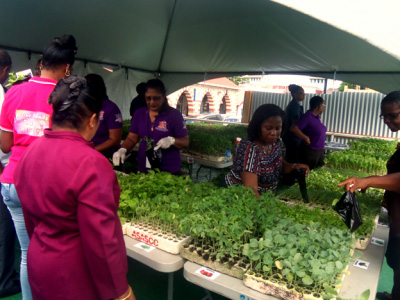
Staff of the National Family Services Division of the Ministry of Social Development and Family Services distribute seedlings to participants during the Ministry’s Family Fair on Harris Promenade, San Fernando. (Photo courtesy the Ministry of Social Development and Family Services)

NFSD hosts family fair in San Fernando in commemoration of National Family Month.

June 24, 2016: “Healthy and Happy Families” is what the National Family Services Division of the Ministry of Social Development and Family Services is advocating for its ongoing celebration of National Family Month. As part of its scheduled activities, the Division hosted its second Family Fair on Harris Promenade, San Fernando on Friday June 17, 2016.

The event attracted scores of residents from communities in and around San Fernando, interested in the many exciting activities and giveaways of the day. The Fair which promoted and encouraged family togetherness, recreation and playtime, included free blood pressure and sugar testing and the opportunity for engaging families to interact and discuss health issues with medical professionals from various departments of the South West Regional Health Authority. Persons were especially guided on maintaining a healthy diet and reproductive health.

Also, representatives of the Ministry of Sport and Youth Affairs encouraged persons to participate in fun-filled family friendly activities for all-round family well-being.

However, it was the distribution of seedlings to participants that was hailed as a highly successful endeavour. In fact many persons remarked that it was in fact a very “brilliant idea” especially since it encourages persons to grow their own food in an effort to promote healthier eating and saving on the family’s daily food expense. As such, short-term seedlings such as, tomatoes, broccoli, cauliflower, ochro, patchoi and celery among others were available at no charge to persons who visited the Fair on Harris Promenade. The air was filled with exuberance as two visitors to the fair embarked on entertaining staffers and other visitors with their soulful singing.

Also, as a perfect end to the Fair’s successful day of activities, workers of our second city celebrated the culmination of their hectic workweek with an enjoyable game of bingo or danced through the afternoon.

Christine Lagarde on the U.K. Referendum

U.K. Referendum

Ms. Christine Lagarde, Managing Director of the International Monetary Fund (IMF), issued the following statement on the U.K. Referendum:

“We take note of the decision by the people of the United Kingdom. We urge the authorities in the U.K. and Europe to work collaboratively to ensure a smooth transition to a new economic relationship between the U.K. and the EU, including by clarifying the procedures and broad objectives that will guide the process.
“We strongly support commitments of the Bank of England and the ECB to supply liquidity to the banking system and curtail excess financial volatility. We will continue to monitor developments closely and stand ready to support our members as needed.”

T&T’s goods off to Venezuela

Food for Venezuela
Food items being loaded on an aircraft before being sent to Venezuela. (Photo courtesy the Ministry of Trade and Industry)

First shipment of T&T’s goods off to Venezuela.

June 23, 2016: Amidst the inclement weather, rice, frozen chicken, ketchup, powdered milk, mayonnaise and pasta totalling sixty-eight (68) tons of food have left Trinidad and will be received by the President of the Bolivarian Republic of Venezuela, Nicolas Maduro Moros who will be visiting the Eastern Zone of Venezuela today.
These products came from our local manufacturers Arawak and Company Limited, VEMCO Limited, and Trinidad Parboil Limited/Old Mac Agro Supplies Limited.
The shipment is estimated to continue throughout the coming upcoming week with products from John Dickinson and Co. (W.I) Limited; National Canners Limited; National Flour Mills and Coconut Growers Association Limited.

VEMCO
VEMCO’s products being offloaded.

150 Megawatts of Renewable Energy

Renewable Energy

Gov’t Looks to add 150 Megawatts of Renewable Energy.

The Government will be advertising requests for proposals (RFPs) for the supply of an additional 100 megawatts of renewable energy during the course of the year.
Minister of Science, Energy and Technology, Dr. the Hon. Andrew Wheatley, made the announcement during his contribution to the 2016/17 Sectoral Debate on June 21 in the House of Representatives.
He said the RFPs will be invited once the licence with Eight Rivers Energy Company Limited has been completed.
Dr. Wheatley informed that the Government will also seek an additional 50MWs in a separate waste-to-energy request for proposal.
“These are key moves towards the diversified energy mix and a competitive supply to deliver 30 per cent of the generation to the grid from renewable by 2030,” he said.
The Office of Utilities Regulation (OUR), earlier this year, selected Eight Rivers to build, own, and operate a solar energy plant in Negril, Westmoreland.
Minister Wheatley told the House that the Government is looking to finalise a licence and Power Purchase Agreement (PPA) with the company to supply 33 megawatts (MW) of solar energy to the national grid at US eight and a half cents per kilowatt (kW).
The price, he said, represents the lowest for renewable energy supply in Jamaica’s history.
The US$50-million investment will employ approximately 200 persons during the construction phase, with 50 persons to have permanent jobs.
Construction is slated to begin in 2016/17 and the first supply to the grid to begin in 2018.
Meanwhile, Minister Wheatley told the House that two renewable energy projects are to be commissioned within a few weeks.
These are a 20MW photovoltaic plant by WRB Enterprises in Content, Clarendon, with capital investments of US$65 million; and the BMR Wind Farm at Munroe in St. Elizabeth, implemented through capital investments of approximately US$78 million.
“Together, Content Solar, BMR and the recently commissioned Wigton III 24MW Wind will add over 80MWs of renewable energy to the energy mix, putting us on track to having 15 per cent renewable capacity to the grid by 2020,” he said.

Venezuelan scholarship recipients return

medical scholarships

Saint Lucian students awarded medical scholarships had to be brought home because of existing conditions in Venezuela.

The Ministry of Education, Innovation, Gender Relations and Sustainable Development wishes to advise the general public that Saint Lucian students who were awarded scholarships to pursue medical degrees in the Bolivarian Republic of Venezuela had to be brought home by the Government of Saint Lucia because of existing conditions in Venezuela.
The welfare of our students at any educational institution is priority for the Government of Saint Lucia. The government is exploring alternative options, and once the students satisfy the matriculation requirements of an accredited university, these students will be able to pursue higher education.

Audio Theme