The Public is hereby notified that in keeping with changes in international oil prices and Government’s application of the modified market pass-through petroleum pricing mechanism, the retail price of gasoline, diesel, LPG 20, 22 and 100 lb cylinders has changed. The retail price of kerosene remains unchanged. The price changes take effect from Monday, July 20, 2020.
GASOLINE increased from $2.53 to $2.63 per litre or $11.50 to $11.95 per gallon
Kerosene remains unchanged at $1.57 per litre or $7.15 per gallon
Diesel increased from $2.30 to $2.35 per litre or $10.44 to $10.68 per gallon
20 Pound Cylinder (9.07 kg) increased from $27.01 to $27.35 per cylinder
22 Pound Cylinder (9.98 kg) increased from $29.71 to $30.09 per cylinder
100 Pound Cylinder (45.36kg) increased from $155.93 to $159.37 per cylinder
The Public is informed that the next adjustment of the retail price of fuel products will be on Monday, August 10, 2020.
On Tuesday, July 14, 2020 Saint Lucia recorded a positive case of COVID-19. The individual is a 27 year old male, a returning national who arrived in Saint Lucia on Friday, July 10, 2020. Upon arrival, he was tested and placed in institutional quarantine. Upon receipt of the results, the individual have been transferred to the respiratory hospital for isolation and related supportive care. He is currently doing well. The risk to people in quarantine and staff of the facility is assessed as low given the infection prevention and control guidelines in place at the quarantine site.
As we move to the fifth phase of the re-opening of the economy which is of the highest risk to the population, we anticipate the introduction of cases with both returning nationals and tourist arrivals. Therefore, we remind the public on the importance of the protocols as we continue to manage COVID-19. All sectors are encouraged to adhere to the public health protocols which includes the recommended 6 ft. physical distancing, regular hand washing with soap and water and the proper use of a face mask/scarf. At this stage most sectors have re-opened, the public is reminded that mass crowd events are still closed.
Nationals and visitors are asked to adhere to the protocols that have been put in place. This effort will play a significant part in minimizing the threat of COVID-19. The Ministry of Health is working in collaboration with the Ministry of Tourism and recently convened an emergency meeting to ensure the reinforcement of the protocols for guests at all approved COVID-19 certified accommodations.
The Ministry of Health and Wellness once again reiterates the importance of quarantine as a measure to minimize the risk of transmitting COVID-19. This action is expected to protect the health and safety of every individual within our country. As it stands right now, the policy for passengers returning to Saint Lucia outside the Caribbean bubble is to undergo institutional quarantine. However, some passengers may qualify for home quarantine based on certain requirements. Passengers who will qualify for home quarantine include minors (less than 18 years) and families with young children; individuals with underlying medical conditions or disabilities; persons coming from low-risk areas and persons whose homes meet the criteria for home quarantine.
The public is asked to cooperate and encourage family members and friends who have return from overseas and are presently in quarantine to remain at home for the 14 day duration. The names of all persons in home quarantine will be forwarded to the Royal Saint Lucia Police Force to support with the enforcement of compliance. The public is advised that they should alert the nearest police station or the Ministry of Health and Wellness at 468-5349/ 468-5342/ 468-5312 with information in relation to anyone who breaches home quarantine guidelines.
The Ministry of Health and Wellness will continue providing regular updates on COVID-19.
For more information please contact the Office of the Chief Medical Officer or the Epidemiology Unit, at 468-5309/468-5317 respectively
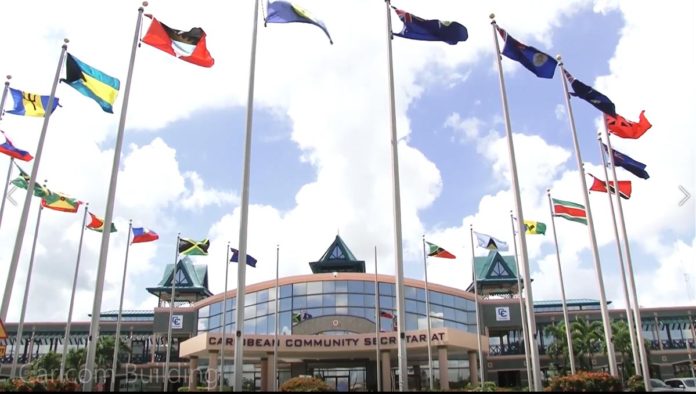
The Caribbean Community (CARICOM) has managed the challenges posed by the COVID-19 pandemic to great effect, ensuring that its cases have been kept low relative to larger and more affluent parts of the international community.
CARICOM Member States have been ranked among the best in the world in their response to the pandemic in many global assessments. There has been no complacency as they maintain their science-based approach to containing this virus.
As at 10 July 2020 the figures show that CARICOM Member States and Associate Members with a combined population of about 19 million, had recorded just over 9,000 positive cases from which almost 5,000 had recovered, and there were only 220 deaths. Active cases in thirteen Member States were in single figures, and in double figures for a further three, with only one Member State above a thousand.
CARICOM is attributing this success to the coordinated regional approach across the 20-member grouping, the swift and deliberate actions taken by its leadership, and the expert guidance and support from its specialised Community Institutions.
CARICOM Heads of Government began their engagement from January 2020 when regional interest in the disease first began to develop) and continued to collaborate on best approaches to combat the spread, as the first cases reached the Region in March. Their Ministers of Health began a series of Special Emergency Meetings from 3 February from which a regional protocol establishing minimum standards for dealing with the COVID-19 virus emerged.
This work was guided by the CARICOM Secretariat and the Community Institutions and their international partners led by the Caribbean Public Health Agency (CARPHA) and including the CARICOM Implementing Agency for Crime and Security (IMPACS), the Regional Security System (RSS) and the Caribbean Disaster Emergency Management Agency (CDEMA). The Pan American Health Organisation (PAHO), continues to be a major partner.
As Member States’ Ministries of Health steadily built up their own testing capacity, the Regional Security System facilitated the transportation of their samples to CARPHA’s Trinidad and Tobago-based testing facilities that uses World Health Organization (WHO) recommended procedures for testing, verification or validation.
The Community’s evidence-based response efforts to COVID-19 were heavily underpinned by daily surveillance and modelling from the George Alleyne Chronic Disease Research Centre at the University of the West Indies. The Centre worked closely with CARPHA to provide critical scientific statistical analysis used to guide Member States understanding of the disease processes (cases, deaths, outbreak growth rates etc) and non-pharm interventions to determine management of measures to restrict or re-open. The daily monitoring also helped to guide changes to national responses including decisions by governments on easing the controls they put in place.
Direct presentations were made to special emergency meetings of CARICOM Heads of Government, and to CARICOM Health Ministers through the Council for Human and Social Development (COHSOD).
CDEMA, through its long-standing Regional Response Mechanism, has been coordinating the logistical arrangements for critical COVID-19 related supplies. A specialised Core Coordination Cell (for Health), which also includes CARPHA, the CARICOM Secretariat and PAHO was established for this this purpose.
In May, as Region began preparing to ease COVID-19 restrictions, CARPHA and CARICOM IMPACS teamed up to train front-line security officers across Member States on measures to protect themselves in the line of duty.
The virtual training equipped the officers on the use of Personal Protective Equipment (PPE) particularly in the conduct of their daily duties at ports of entry and with investigations. The training, hosted in collaboration with the Caribbean Basin Security Initiative – Connect programme, reached more than 500 front-line workers from various security divisions – police, prisons, customs, immigration and military.
CARICOM IMPACS and the Regional Security System further teamed up to help Member States prevent and mitigate the spread of the COVID-19 to prisons and correctional facilities, with air-lifted supplies of sanitary and other COVID-19 related supplies during May and June. The donated items included infrared thermometers, and cleaning products including bleach and hand sanitisers. The Region has to date avoided outbreaks of the disease among its prison populations.
Going forward, the Caribbean Community has been offered access to the African Union Medical Supplies Platform, a procurement system for additional supplies and equipment in the fight against COVID-19. The Platform provides immediate access to an African and global base of vetted manufacturers and procurement strategic partners at more competitive costs.
CARPHA, through its Tourism/Travellers and Health Programme, has facilitated training sessions in the critical tourism sector while also using the programme to help restore visitor confidence in the Region’s tourism product. It has also published other guidelines to assist with facilitating reopening of Member States, including Interim Guidance for Domestic Workers and an Interim Guidance document on Resuming Office Operations.
The IMPACS operated Joint Regional Communications Centre, which provides advanced passenger information, has been allowing for better management at the ports of entry across the region though collaboration with port health authorities.
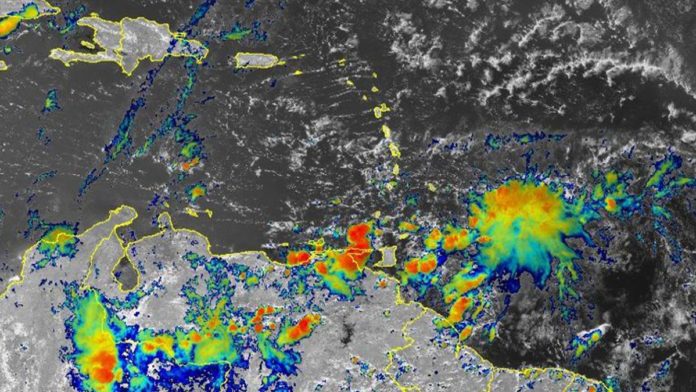
A tropical wave continues to produce disorganized showers and
thunderstorms several hundred miles east of the Windward Islands.
Some slight development of this system is possible today before
environmental conditions become hostile for development on Tuesday.
The wave is forecast to move through the Lesser Antilles on Tuesday
and could produce locally heavy rainfall and gusty winds on some of
those islands.
* Formation chance through 48 hours…low…10 percent.
* Formation chance through 5 days…low…10 percent.
The Public is hereby notified that in keeping with changes in international oil prices and Government’s application of the modified market pass-through petroleum pricing mechanism, the retail price of LPG 20, 22 and 100 lb cylinders has changed. The retail price of gasoline, kerosene and diesel remains unchanged. The price changes take effect from Monday, June 29, 2020.
GASOLINE remains unchanged at $2.53 per litre or $11.50 per gallon
Kerosene remains unchanged at $1.57 per litre or $7.15 per gallon
Diesel remains unchanged at $2.30 per litre or $10.44 per gallon
20 Pound Cylinder (9.07 kg) increased from $25.82 to $27.01 per cylinder
22 Pound Cylinder (9.98 kg) increased from $28.40 to $29.71 per cylinder
100 Pound Cylinder (45.36kg) increased from $144.05 to $155.93 per cylinder
The Public is informed that the next adjustment of the retail price of fuel products will be on Monday, July 20, 2020.
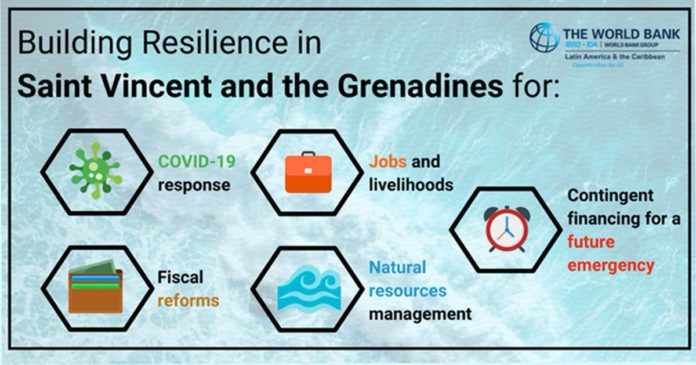
World Bank Approves Financing to Strengthen Saint Vincent and the Grenadines’ Economic Resilience and Disaster Preparedness
The World Bank Board of Executive Directors approved yesterday US$40 million for the Second Fiscal Reform and Resilience Development Policy Credit with Catastrophe Deferred Drawdown Option (Cat DDO) for Saint Vincent and the Grenadines. The quick-disbursing operation supports the country’s program to strengthen fiscal sustainability and enhance climate and disaster resilience to future shocks. It also supports Saint Vincent and the Grenadines’ response to the COVID-19 pandemic.A $20 million Cat DDO component provides a contingent line of financing in case of future natural or health-related disasters.
“This operation supports the efforts of Saint Vincent and the Grenadines to maintain fiscal resilience and protect lives and livelihood during the COVID-19 pandemic, which has led to severe socio-economic impacts.”
“The contingent financing component protects people against the effects of a natural disaster and helps the country become more disaster-resilient,” said Tahseen Sayed, World Bank Country Director for the Caribbean.
Saint Vincent and the Grenadines has been affected by loss of economic activity due to the COVID-19 prevention measures. The country is also at high risk of natural hazards, especially hurricanes. This new financing supports reforms that strengthen the legal and institutional frameworks for disaster risk management, protect jobs and livelihoods, and enhance fiscal resilience. The operation also supports reforms to protect the country’s coastal and marine assets by supporting sustainable use of natural resources.
This is the second in a series of two fiscal resilience development policy credits for Saint Vincent and the Grenadines. The financing, which is from the International Development Association (IDA), is interest-free with a maturity of 40 years, including a grace period of 10 years. The Cat DDO funds will be available to be partially or fully drawn down after a declared emergency within the next three years and it can be renewed for an additional three years.
Response to Public Concerns on Price Increases at Massy Stores (SLU)
Massy Stores (SLU) has always been and remains fully committed to serving the nation and our valued customers particularly at this extremely difficult time in our country’s history and well into the future. Staff and customer welfare remain paramount for the company and we continue to do everything we can (in keeping with national COVID 19 safety protocols) to provide a safe and quality shopping experience for everyone who visits our locations.
In the last few months and more so in recent weeks, Massy Stores have received feedback from customers expressing their dissatisfaction over general price increases at the supermarkets. The tone of the feedback from letters received and messages placed on Social Media point to a high degree of concern and frustration over this matter.
We acknowledge that there have been price increases on many products. While some of the issues related to pricing predate our Covid 19 experience, factors linked to the pandemic have further exacerbated those increases. We wish to advise that there are two main direct factors driving price increases:
Supplier price increases brought on by recent unprecedented global demand, in addition to factors affecting the production capability of manufacturers. Those factors are heavily affecting food supply chains across the globe and no geographic space has been spared. A simple search of global supermarket price increases would provide some insight into this situation
The implementation of the Article 164 trade regime in January, pre-covid, which saw certain categories of products imported into St. Lucia (from outside the OECS and Belize) attracting duties as high as 100%. The implementation of Article 164, on its own, caused unprecedented price increases and when subsequent increases by suppliers due to “Covid-19”, are added to this, the price impact is nothing short of extreme.
Supplier Price Increases:
From the onset of the global pandemic, Massy Stores have been very mindful of the effect that the extraordinary demand for a number of products was having on the global supply chain. In a press release dated March 16, the company advised that there could be some price increases in the future given the supply chain challenges.
Over the last few months, our purchasing executives have and continue to work very closely with suppliers to keep prices as competitive as possible. This, in the face of mounting challenges across various product categories, some of which are basic and essential items. Given the scale of the coronavirus crisis and the rate at which it has evolved, maintaining a steady food supply chain has its own share of challenges.
A critical focus for us has been to do all we can, so that no matter what, there is sufficient food in the country and on the supermarket shelves. We have had to identify the items that are critical to the food supply and negotiate actively to try to secure reasonable commitments from suppliers. We have also developed relationships with new suppliers
where existing suppliers were or suspected of being unable to meet demand. Further, we have strengthened our relationship with local manufacturers, distributors and farmers to ensure buffer stock to manage potential shortages.
While these efforts have resulted in some gains, the reality is that, worldwide, the cost of groceries continues to rise sharply. In the last three months, we have received formal notification of price increases from over twenty of our major suppliers covering the breakfast, snack, juice, milk, fresh and processed meats, vegetables, pet food, household, haircare and beauty categories. Some of these increases have already taken effect and others are imminent. Suppliers have cited various reasons for increases including production and raw material costs, compounded by increases in inland freight costs in some instances.
Added to that, fears and scarcity caused by COVID-19 have resulted in a lot of uncertainty about supply, availability and logistics. This has forced us to be proactive and forward buy, in some cases, at higher prices than what traditionally obtained pre-COVID 19. In general, Massy Stores has felt the adverse impact of absorbing a large number of increases at great cost to the organization and in the instances where these increased costs could not be fully absorbed; we have had no choice but to pass on the increases.
Article 164:
With the introduction of the Article 164 trade regime in January of this year, the cost of flour, pastas, curry powders and aerated waters imported from outside of the OECS and Belize have increased significantly. The significant price increases are due to changes in the tariff and duties paid on these products. The duties on the products that fall in those categories increased, from an average of 20% – 25%, to, in all instances, 70 or 100 %. The increased duties under Article 164 are part of government regulations to support local manufacturers; however, the effects of such increases are out of the company’s control. Recognizing that hundreds of items within the store fall under the four categories mentioned, and despite the significant increase in the landed costs of the items, Massy Stores has made every effort to minimise the “extent” of the price increases wherever it is reasonably possible to do so.
At this time, it is important to advise customers that the prices of locally manufactured items would not have changed as substantially and this is an opportune time to further support local producers and manage the cost of grocery shopping
Massy Stores Promise and Purpose
Massy Stores wish to reiterate that we are not engaged in any form of price gouging or unfair trade practices, as this is not in keeping with the Company’s values. Although we have incurred significant increases in operational costs inclusive of port charges, security, cleaning and sanitation and transportation, among others, Massy Stores have not allowed these to affect our product pricing.
Massy Stores remain fully committed to ensuring that we maintain an adequate supply of food for our nation, and that good quality, wholesome food products are available to customers at fair market prices. The company’s promotions and specials have continued as a means of giving customers options to save money on their grocery. Later this week, some additional price reduction, discounts and bargain offers will be rolled out to ensure there are relevant and exciting consumer-valued offers at the stores.
Massy Stores take our role as market leaders quite seriously, and have spared no effort to lead by example during the peak of the Covid crisis. In that regard we acknowledge the unwavering commitment of our team members to exceptional levels of service during what is no doubt a most difficult time in the history of the world.
Our support to agencies like the Salvation Army, and a range of other charitable and service-based organizations will continue, to help bring much needed relief to many of the island’s underserved communities. Along with our staff of over 1300 persons (who are also customers), we will continue to serve St. Lucian families with the best of standards guided by our values. Massy Stores simply ask that you judge us fairly.
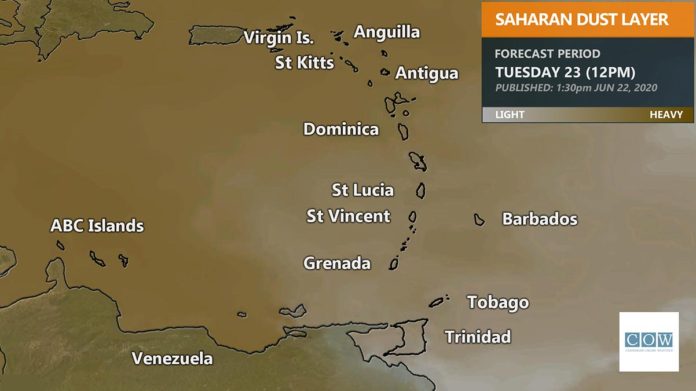
Dense layers of Saharan dust are still present over the Lesser Antilles. Concentrations should start gradually reducing by this evening over #Barbados, then further west from Trinidad northward to Martinique by early Tuesday and the ABC Islands by Tuesday evening.
Further north from Dominica to St. Kitts and Barbuda should see an improvement by Wednesday AM and from Statia northward to Anguilla and westward to the Virgin Islands sometime on Thursday.
Please NOTE: there will be fluctuations in concentrations over time and residents within the CAI should also expect another moderate layer of dust to be over the islands by next week.
Please continue taking necessary precautions to protect yourself and others in your care from this change in air quality.
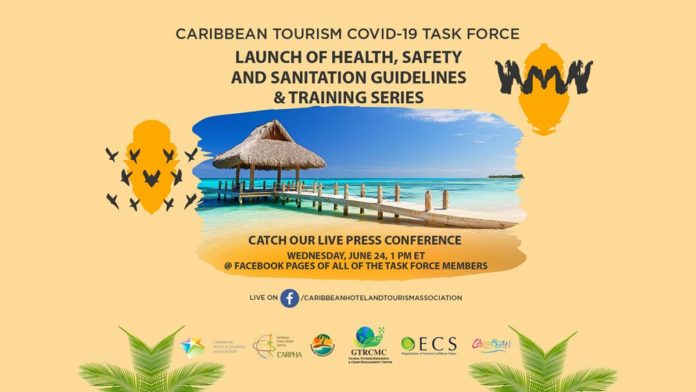
WHY: The Task Force is launching core health and safety guidelines, protocols and training with easy-to-use checklists for the Caribbean, aimed at protecting residents and visitors in the reopening and continued operation of tourism services.
Participants in Wednesday’s press conference include:
Moderator: Frank Comito, CEO and Director General, Caribbean Hotel and Tourism Association
Patricia Affonso-Dass, President, Caribbean Hotel and Tourism Association
Dr. Joy St. John, Executive Director, Caribbean Public Health Agency
Dr. Lisa Indar, Assistant Director, Surveillance, Disease Prevention & Control Division, Caribbean Public Health Agency
Neil Walters, Acting Secretary General, Caribbean Tourism Organization
Dr. Didacus Jules, Director General, Organisation of Eastern Caribbean States Commission
Dr. Lloyd Waller, Executive Director, Global Tourism Resilience & Crisis Management Center
Two Vincentian nationals jointly charged for the offenses of Money Laundering and Conspiracy to Commit Money Laundering by having in their possession, cash amounting to $10,000.00 Euros have pleaded guilty.
Lamar Condice, 35 years and Elvis Harold, 29 years, both Fishermen of Clear Valley (St. Vincent) appeared at the St. George’s Magistrate’s Court on Thursday 18th June, 2020 to answer to the charges where they pleaded guilty and were fined five thousand dollars each, to be paid forthwith, in default, one year at Her Majesty’s Prisons.
Condice and Harold were nabbed by officers attached to the Northern Division on Sunday 14th June, 2020 following the interception of a blue fishing boat at Diamond Rock.
The men and the boat were taken to Harvey Vale, Carriacou, where a search was conducted resulting in the confiscation of approximately ten thousand dollars Euros.