Cuba asks CHTA for help in establishing Cuban hotel association.
Cuba has requested assistance from the Caribbean Hotel and Tourism Association to launch its own hotel association.
CHTA president, Karolin Troubetzkoy said during a recent visit to Havana, CHTA executives met with Luis Miguel Diaz Sanchez, Cuba’s Vice Minister of Tourism.
“Even though our trip was full of important meetings and pleasant experiences, that specific request indicates progressive-minded regional leadership from Cuba,” Troubetzkoy said.
Other matters discussed during the visit, which coincided with the Cuba International Tourism Fair (FITCuba), included the development of sustainable tourism and the need for regional cooperation to build a stronger Caribbean brand.
Government of National Unity congratulates Kittitian sprint star Kim Collins on historic win in Germany
Basseterre, St. Kitts, May 30, 2016 (SKNIS): Prime Minister Dr. the Honourable Timothy Harris and his Cabinet have congratulated Kittitian sprint star Kim Collins on his historic win in Bottrop, Germany, on Saturday May 28, where he placed first in the 100 meters, clocking a time of 9.93 seconds.
Mr. Collins’ performance makes him the fastest man over age 40 to ever clock under 10 seconds.
Speaking at his monthly press conference on May 30, Prime Minister Harris hailed the “record-breaking” performance of Mr. Collins and said that he congratulates all those who have worked with him to achieve such a feat.
Mr. Collins first represented St. Kitts and Nevis at the Leeward Islands Senior Championship at Warner Park in Basseterre in 1994 at the age of 18. Having won the 100 meters at the said meet in a time of 10.40 seconds, Mr. Collins launched an international career that is now in its third decade. His illustrious career has seen him win medals at almost every major international track and field meet, including gold medals at the 2002 Commonwealth Games in England and 2003 World Championships in France.
Twenty-two years after his first remarkable encounter at Warner Park, Collins continues to amaze the world by his dedication, diligence and continued pursuit of excellence. He continues to make Kittitians and Nevisians proud.
Government ready to assist Grenadian students in Venezuela
ST. GEORGE’S, GRENADA, MAY 30, 2016, GOVERNMENT INFORMATION SERVICE (GIS): – The Government of Grenada has expressed to the seven students currently studying on scholarships in the Republic of Venezuela, its readiness to facilitate their return to home country, given the current economic and social challenges that the Venezuelan society is undergoing.
The majority of students, for now, however, have indicated a willingness to complete their studies, in spite of those challenges.
The Ministries of Education and Foreign Affairs are in constant contact with the students. Grenada’s Ambassador to Venezuela, Ambassador Hassan Hadeed, continues to visit them and provide the needed material and other support.
Moreover, the parents of the students have been fully engaged and kept abreast of the situation.
On Monday May 23, 2016, a meeting was convened by the Ministers for Foreign Affairs and Education to brief the parents and guardians of the students and to assure them that the Government of Grenada is prepared to take necessary action, at any given time, to ensure the well-being of the students.
The Government of the Bolivarian Republic of Venezuela remains a friend and ally of the Government of Grenada and its people. In this regard, we are hopeful that there will be a peaceful resolution to the current political challenges.
What is anticipated to be an equally beneficial relationship between the University of Maryland Eastern Shore and the Dominica State College, DSC began with the signing of a memorandum of understanding between the two colleges earlier this month.
The agreement will result in student and faculty exchanges, research partnerships and the facilitation for the exchange of scholarly information between the two institutions.
GIS News spoke with President of the Dominica State College, Dr. Donald Peters, who says these are just some of the benefits that will come from this historic agreement.
He says ultimately the aim of the DSC is to help reduce the cost of higher education for Dominicans.
“We even talked about joint degree programmes in the future which is the trend in the 21st century. Higher education is expensive and a lot of universities cannot afford to put on a programme but if another one has the programme, they can work together to minimize the cost and one of them will issue the degree. We want to go in that direction too.
“Because higher education is expensive for residents and more so Government since a lot of people want to get money from Government to go overseas to study, it’s important that we minimise that cost,” he explained.
The University of Maryland Eastern Shore is a university within the Maryland public higher education system and it is also a land grant institution which means that it is also funded by the United States Federal Government.
Dr Peters says the university is therefore suited to help Dominican students by providing academic programmes for professions in the country’s two main industries: agriculture and tourism.
“The University of Maryland Eastern Shore is a land grant university. That means that their responsibility to the state is to help farmers, engineers and others to create employment and boost the economy of the state.
“They’re almost 100 years old so with that kind of experience, we can benefit from them. Dominica State College [doesn’t have] the resources to produce those programmes: the labs, farms and others so we are ready to do this.”
Dr. Peters went on to say, “There is a 24 room hotel on the campus which they use as a lab to train their students. People stay there and pay the rates for all the amenities of a commercial hotel. This is one of the areas where we can train our students in hospitality administration.”
The Dominica State College already has partnerships with several universities both in Canada and the United States.
There are also plans to create partnerships with even more universities in the future.
As a precursor to its Fourth Call for Proposals, the Competency-based Training Fund (CBTF) will host an Information Workshop on Wednesday, June 15, at the Savannah Beach Hotel, Hastings, Christ Church.
The workshop, which runs from 8:30 a.m. to 1:00 p.m., is aimed at equipping prospective applicants for funding, namely training providers and employers, with the tools required for submitting a training proposal for this cycle of the competitive funding programme.
Speakers at this workshop will include representatives from the TVET Council, the Inter-American Development Bank (IDB), and the Barbados Employers Confederation.
Additionally, there will be a networking/interactive session where participants can liaise with the CBTF technical consultants about utilising their ideas to create better applications.
Among the topics to be covered are: How to submit a superior proposal; Procurement; Building Relationships; and Technical and Vocational Education and Training (TVET).
In November 2012, the IDB and the Government of Barbados entered into a loan for the implementation of the Skills for the Future Program (SFTF).
Its overall objective is to support the Barbados Human Resource Development (HRD) Strategy (2011-2016), with an emphasis on improving the quality and relevance of secondary and post-secondary education and the effectiveness of TVET.
The CBTF is part of Component 1 of the SFTF Program. It funds the development of occupational standards within the various employment sectors and encourages the general acceptance of National Vocational Qualifications.
Through partnerships between employers and training institutions, the CBTF facilitates training to enhance an individual’s knowledge and skills in a specific occupational area upon which their competence is assessed.
The CBTF funds competency-based training proposals up to BDS$500,000 each, via a competitive scheme based on fully disclosed selection criteria.
Already, the CBTF has held three Calls for Proposals. These were undertaken in April 2014, September 2014 and March 2015. A total of 106 proposal submissions were received from partnerships of employers and training providers, of which 25 proposals were selected for funding totaling BDS$14 million to benefit approximately 4,000 trainees.
May 30, 2016: The Trinidad and Tobago Securities and Exchange Commission, TTSEC announced the appointment of its new Board of Commissioners in accordance with Sections 10 and 12 of the Securities Act 2012.
The TTSEC Board consists of: NAME STATUS
Mr. Douglas Mendes Commissioner and Chairman
Ms. Enid Zephyrine Commissioner and Deputy Chairman
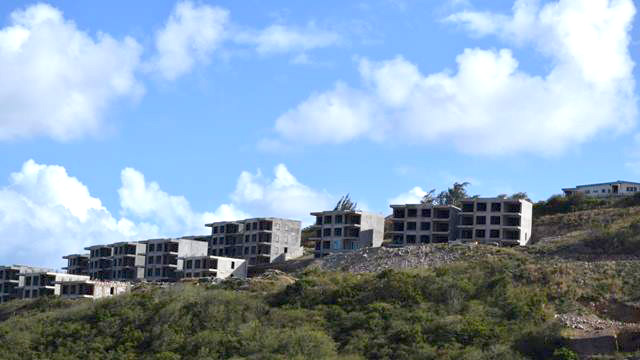
Pirate's Nest Resort under construction at Frigate Bay is one of the ongoing projects mentioned by PM Harris.
St. Kitts-Nevis registers strong economic performance; Strong investor confidence
Basseterre, St. Kitts, May 30, 2016 (SKNIS): Prime Minister of St. Kitts and Nevis, Dr. the Honourable Timothy Harris has reassured nationals and investors that the government will remain focused on continuing the trend of growing jobs, income and economic growth.
At a press conference on Monday (May 30), the prime minister quoted from a press release from the International Monetary Fund (IMF) issued at the completion of the 2016 Article IV Consultation in St. Kitts and Nevis conducted from April 20 – May 03.
It said that “macroeconomic performance remained strong in 2015” and the “economy grew at an estimated 5 percent, in line with 2015 Article IV projections, following two consecutive years of strong growth around 6 percent.” The release added that tourism, wholesale and retail numbers were positive and supported economic growth, inflation turned negative, and the “fiscal position remained in surplus at an estimated 5 percent of GDP.”
“We were the best in the region for 2015,” Dr. Harris said, comparing growth rates in other countries across the Eastern Caribbean Currency Union (ECCU). The figures on economic performance also compare favourably to the wider sub-region. According to statistics from the United Nations Economic Commission for Latin America and the Caribbean (UNECLAC), St. Kitts and Nevis was described as a leading performer among all countries except for Panama.
“Mexico, Jamaica, Trinidad [and Tobago], Brazil, Bahamas all of those countries come after us in terms of their economic performance in 2015,” Prime Minister Harris said.
The IMF projects that the positive trend will continue in 2016 with estimates of 3.5 percent growth.
“My government of course will not take all the credit,” Prime Minister Harris added. “The people of St. Kitts and Nevis, our citizens, residents and visitors alike must take credit because it is our collective responses as consumers, investors, producers and government that make and break the economy. One thing is sure, our economy is moving ahead and we are grateful that work is continuing on a number of projects.”
These include construction projects on a number of resort/hotel projects that when completed will provide hundreds of direct and indirect jobs for locals and generate economic activity. Locals were encouraged to take advantage of these opportunities as they become available.
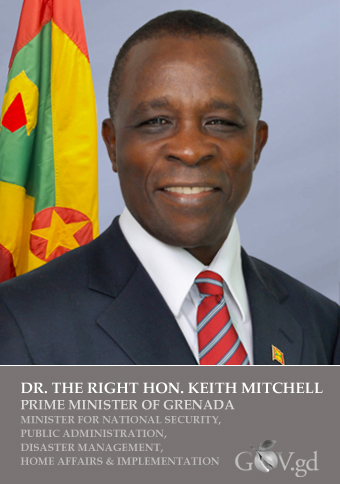
New figures prove Mitchell government did not plunder NIS.
ST. GEORGE’S, GRENADA, May 30, 2016 – GIS: Newly released figures have exonerated the Keith Mitchell led government against oppositions claims that it had plundered the National Insurance Scheme (NIS).
The figures, released in parliament, also confirmed the sale of more than 50 million dollars in state assets by the previous Tillman Thomas administration, who also fell consistently, fell short of paying its contributions to the NIS.
Prime Minister Mitchell says the figures, which include 75 million dollars in treasury bills obtained from the NIS, have cleared his administration in the face of opposition claims which were not substantiated.
In 2010, the state contribution to NIS was 16.5 million, about 1.5 million short of the required amount.
The following year the government again fell short of the required amount by more than 8 million dollars.
In 2012, the government paid 5.4 million when they were expected to pay 18.4 million, a whopping 13 million dollar shortfall.
However things changed for the better when the new Mitchell led administration assumed office in 2013.
State payment to NIS was 16 million dollars that year as opposed to the 19 million while in 2014, 19.5 million was paid, slightly short of the 20.2 million.
However, in 2015 government made amends for previous year’s short fall by paying 25.6 million instead of the 19.7 due for that period.
Additionally, the previous government took 15 million dollars from NIS in treasury bills in the years 2009, 2010, and 2011, while in 2012 that figured jumped to 59.6 million.
In 2013, the state took 20 million dollars in treasury bills from NIS.
“We had part of that so we were partly responsible for the 20 million dollars Treasury bill in 2013,” Prime Minister Mitchell stated.
Assets sold by the previous administration include government’s shares in Grenada Breweries limited and Cable and Wireless, former site of parliament, Old drill yard, Sandino Plant and the former St. James Hotel.
Sites for a former Television station and radio station were also sold including land and properties in more than three parishes as well as a St.George’s property which did not belong to the government.
All told, assets sold by the previous Tillman Thomas administration amounted to more than 50 million dollars. “This is the picture of the team outside there who are charging this government with selling everything.”
Surinamese students observe CSME implementation in Dominica
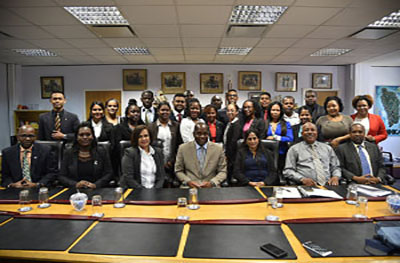
A group of 20 university students from Suriname spent this week in Dominica observing and learning about Dominica’s implementation of the single economic and trading space of CARICOM states known as the CARICOM single Market and Economy or CSME.
The group and facilitators of this exercise debriefed the public at a press conference on Thursday, May 26th.
This initiative, according to Salas Hamilton, Communications Specialist at the CARICOM Secretariat, stems from the body’s cognizance that it must do more to educate the populations about CARICOM.
In April 2015, students of the Dominica State College were part of a similar exercise in St. Lucia.
From 2008 to now, all 12 CSME states have had representatives visit sister states for the sake of education.
Suriname, a CARICOM member and more developed country was selected to visit Dominica as an OECS and CARICOM member and lesser developed state.
“Where we are in CSME is a critical stage in our development as a region because although we speak about the OECS and Dominica, we understand that it is because of coming together as region that we have 15 million people. So this week we looked at the different sectors in Dominica to find out just how the implementation of CSME is happening,” Hamilton explained.
He listed agenda items as visits to the Ministry of Justice, Immigration and National Security, Departments of Labour and Immigration, the National Accreditation Board, Digicel, Flow, First Caribbean Bank, Coalition of Service Industries, the Hon. Prime Minister and Ross University.
“It’s always easy to sit in a classroom and speak theory but the best means of public education is when you can catch a plane and go to another country. As we move towards tighter integration, [having a practical sense of what the matters that we put into our laws (The Revised Treaty of Chaguaramas] means is important.”
One student, Afanaisa Kensenhuis, shared her findings at the end of the week of activities.
“The aim of the project was to investigate the extent of implementation of CSME in Dominica and to look for business opportunities offered in Dominica and in the single market. We went to different companies and institutions and they gave us ideas of how the CSME is implemented and the challenges that they face.”
She listed some challenges, “Dominica is also part of the OECS so they are more likely to do business with OECS countries, and there’s a lack of awareness about the opportunities in CSME. Shipping and a single currency are the two biggest challenges.”
Shiva Basropansingh, another student of the Anton de Kom University, shared the differences and similarities which he has observed on the mission.
He said, “You are bottling mineral water and in Suriname we do that as well but we don’t export water, maybe we can do that.
“In agriculture, Dominica is processing a few agricultural products but in Suriname we are processing a lot of fruits and vegetables to end products. We have juice factories, factories to conserve fruits and make syrups and factories to process milk. Some of these factories export their products.”
He compared his country’s booming agro-processing industry to Dominica’s.
“When you don’t see money in a business, you won’t study it so maybe [some students] should visit Suriname to see what we are doing over there and how you can make money with agricultural products and come back with some ideas to…get Dominica further.”
The group included bachelors and masters students of the fields of agro-processing, law, the sciences, finance, business and animal husbandry from different educational institutions in Suriname.
Suriname’s Female CARICOM Youth Ambassador was also a part of that group.
The students will report their diagnoses to the CARICOM Secretariat for review. Those findings will also be shared with the universities and colleges in Suriname and the other CSME member states.
Dominica’s Ambassador to CARICOM and the OECS, His Excellency Felix Gregoire hosted the group on Dominica’s behalf.
Although community choirs in Barbados are not “fully embraced” by today’s youth, Minister of Social Care, Constituency Empowerment and Community Development, Steve Blackett, believes the activity still plays a crucial role in society as it “builds community cohesion”.
Mr. Blackett shared these thoughts last Sunday while addressing the Community Development Department’s 45th Anniversary Service of Song, at Restoration Ministries.
The Minister acknowledged the work done by the department and the co-host of the evening’s proceedings, the Community Choirs Association.
He commended the contribution of the officers of the Community Development Department, whom he said worked tirelessly with the choirs over the years to ensure their sustainability.
The Ministry, through the Community Development Department, has assisted the Community Choirs Association from its inception, through training workshops and a number of choir competitions.
Addressing the success of these initiatives, Mr. Blackett stated: “The Community Choirs Association truly exemplifies the tenets of community development, as it has with the requisite training become less dependent on the assistance of the Community Development Department”.
He noted that community choirs had been in the “annals of our history” as far back at the 1930’s, and it was therefore “only fitting” that such an organisation which is synonymous with community development, join with the Community Development Department as a partner in its celebrations.
The Service of Song featured performances by the St. Thomas Community Choir, St. Stephen’s Community Choir and the National Assistance Board Choir, among others.