The Ministry of Agriculture, Fisheries, Forestry, the Environment and Sustainable Development is currently implementing a five-year Global Environmental Facility funded project entitled, “Management and Protection of Key Biodiversity Areas Project”. One of the key components of the project is to support forest protection and sustainable forest management.
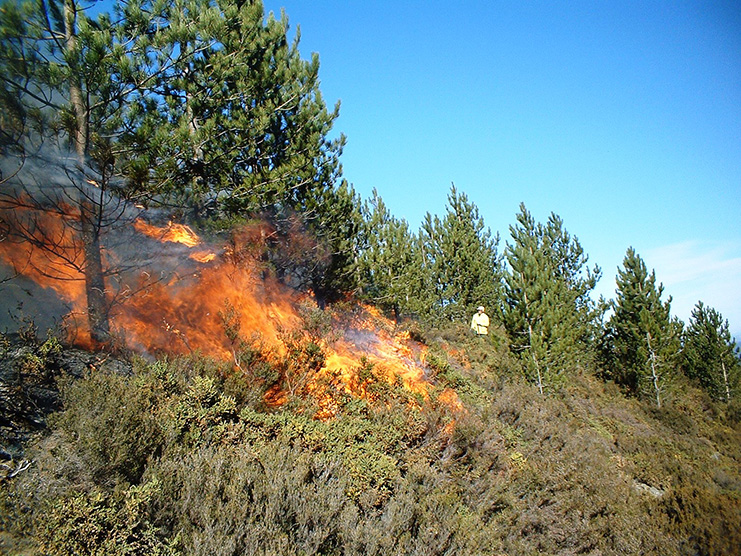
Earlier this year a firm from California, Fire Management Consultant International, was hired to train personnel from the relevant regulatory agencies, NGOs, and protected areas co-managers in enforcement and forest fire reduction techniques for rapid response team. Two one-week training sessions were held from the 16 th to the 27th of May. The class room sessions were held at the Aguada Hotel in Santa Elena Town and the field component was held at the D’Silva Forest Station in Mountain Pine Ridge Forest Reserve. A total of 49 persons were trained. Participants came from the Forest Department, Department of the Environment, Ministry of Agriculture, Ya’axche Conservation Trust, Program for Belize, Corozal Sustainable Future Initiative, and the Rancho Dolores Economic and Development Group.
The training came at a critical time when the country is being affected by unwelcome smoke from forest fires. The participants were taught different techniques of fire suppression and how to plan for a planned burn. It is expected that the persons trained will use the knowledge and skills to train farmers on how to plan for a burn so as to avoid so many get-away forest fires. Forest fires do not only affect human health, but they also destroy the flora and fauna of the country.
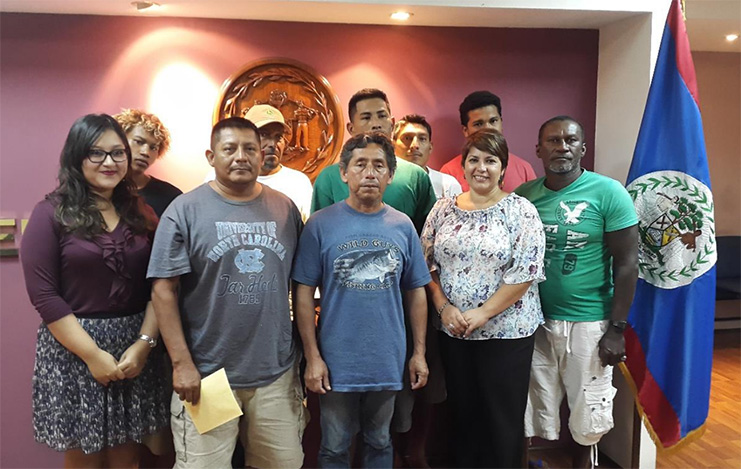
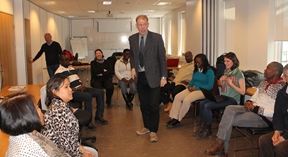
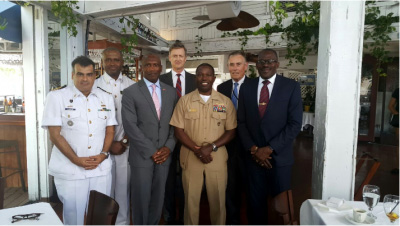
Eight (8) Belizean nationals with members of the diplomatic staff of the Embassy of Belize in Guatemala (second right -
Mrs. Margaret Juan, Deputy Chief of Mission, left - Ms. Amaris Contreras, First Secretary).
Update on Belizeans Detained in Guatemala
Belmopan, Belize. May 30th, 2016. As an update to Friday evening’s report on the eight (8) Belizeans detained in Guatemala, the Embassy of Belize in Guatemala City has reported that this morning the eight (8) Belizean nationals have been allowed to travel to the Embassy in order to facilitate their travel documents, pending deportation proceedings, for their return to Belize. All individuals are once again confirmed to be in good health and it is expected that the group will be deported back to Belize by road later this week.
Belize City, Friday, 27 May 2016 (CRFM)—Caribbean economies are poised to benefit from a region-wide initiative to expand seafood market share, through the implementation of food safety measures to enable countries to get a bigger piece of the global pie, worth an estimated US$130 billion annually.
Caribbean countries, including the Bahamas, Belize, Grenada, Guyana, Jamaica, Suriname, and Trinidad and Tobago, are now capitalizing on a coordinated approach to broaden the gateway to the growing market. CARIFORUM (CARICOM and the Dominican Republic) now exports about US$400 million worth of fish and seafood annually. Rainforest Seafoods is a leading Caribbean producer and exporter based in Jamaica with operations in Belize. It exports safe seafood to the EU. (Photo: Rainforest Seafoods)
Belize and Jamaica are two Caribbean seafood exporters already tapping into markets controlled by the European Union (EU)—a tough market to access because of stringent standards which require that countries have systems in place to ensure that their exports are not only safe for consumption but also free from harmful pests and pathogens.
In the case of Belize, which has traditionally exported shrimp to the EU, it is moving to export conch to that market for the first time, according to Endhir Sosa, Senior Food Safety Inspector, Belize.
Sosa was among the eighteen professionals from CARIFORUM who recently received management training on Sanitary and Phytosanitary Measures (SPS) in Iceland. The training was offered under the capacity-building component of an EU-sponsored project to implement SPS Measures under the 10th European Development Fund (EDF) regime. The Inter-American Institute for Cooperation on Agriculture (IICA) and the Caribbean Regional Fisheries Mechanism (CRFM) are collaborating to implement the fisheries component of the project. Demystifying SPS
Sosa broke down the meaning of this very technical term, which could just as well be the acronym for ‘safe and profitable seafood’: “In a nutshell, it’s just a series of procedures, of guidelines, of requirements, that one needs to implement to basically prove that what they are producing is safe,” the food safety expert commented.
“Confidence is what is key! It is what everybody seeks when it comes to the purchase and consumption of food products,” he said, adding that, “SPS is one of those routes where you can establish that confidence in your product.” BAHA monitors seafood processed for trade (Photo: BAHA)
Sosa notes that, “Once you have an established SPS system in place and it is vetted and it’s shown to be functional, that will open markets locally, regionally and internationally. “
This has been the case for Belize: “When BAHA [the Belize Agricultural Health Authority] first started in 2000, you could count the number of countries we were exporting to on your hand. It wasn’t more than 5 to 7. Today, thanks to SPS, thanks to the confidence that our SPS program has put into our products, not only fish, the markets have increased almost three-fold. Now we have a little over 30 markets,” Sosa said. Building SPS capacity
Chairman of the Caribbean Fisheries Forum, Denzil Roberts, who is also the Chief Fisheries Officer in Guyana, notes that: “The fisheries sector within the CARIFORUM region continues to play an important role in rural development, food and nutrition security, income generation and foreign exchange earnings. However, it must be recognized that there is a paucity of skilled personnel within the region to further develop the sector in keeping with the emerging challenges.”
The intensive two-week training course recently held in Iceland served to help fill this knowledge gap in the Caribbean.
Susan Singh-Renton, the CRFM’s Deputy Executive Director, notes that, “The CRFM/UNU-FTP SPS Management Course has been very successful in achieving its objective of exposing CARIFORUM Fisheries and Agricultural Health and Food Safety experts to the key lessons and best practices of the Icelandic fishing industry in producing safe and wholesome fishery products of an international standard.” Thor Asgeirsson, Deputy Programme Director at UNU-FTP, talks with CARIFORUM SPS professionals in wrap-up (Photo: CRFM)
She added that, “At the close of the course, participants reflected on and also documented how they would apply what they had learned to improve fisheries SPS management in their home countries.”
Jeannette Mateo, Director of Fisheries Resources at the Dominican Council for Fisheries and Aquaculture (CODOPESCA) in the Dominican Republic, suggested that nationals in her country, such as biologists, inspectors, fisheries officers and consumer protection agents, should be trained in basic concepts of SPS.
For his part, Roberts hopes that the trainees will immediately begin to impart what they have learned to others in their national networks. Roberts furthermore hopes that trainees will implement internationally recognized safety standards for seafood, thereby safeguarding the health of the local population while ensuring market access to meet global market demands.
Singh-Renton said that the CRFM will also strive to do its part to provide follow-up regional support for improved SPS management for the region’s fishing industries, including facilitating continued networking among the course participants. Gatekeepers guard against food fraud
“One of the more frequent but often overlooked problems within the Caribbean is food fraud and mislabeling,” notes Dr. Wintorph Marsden, Senior Veterinary Officer in Jamaica’s Ministry of Industry, Commerce, Agriculture and Fisheries.
Marsden said that Jamaica is considered a major transshipment hub for fish and fishery products to the wider Caribbean region, and so the burden is on Jamaica, as a first point of entry, to implement a system of verification of products entering its food chain.
To combat food fraud, it is an absolute necessity to introduce traceability, said Marsden. This can now be done electronically, with modern systems of recording, such as the use barcodes, radio-frequency identification (RFID) tags and other tracking media within the production chain.
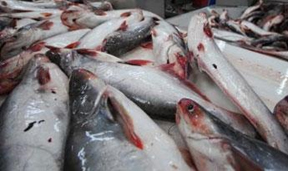
In the Dominican Republic, Mateo’s job is to review all the supporting documentation for seafood imports and exports. She has observed, though, that, “Some of these documents might have statements to make the consumers believe that they are getting a high-quality product while they are actually getting products with less quality and deliberate mislabeling.” Vietnam catfish often passed off as grouper in the Caribbean (Photo: VASEP)
An example, she said, is fish from the genus Pangasius, a catfish primarily sourced from the Asian market, which is being sold cheaply in the region and marketed at times as “grouper”—not only at supermarkets but also at some restaurants.
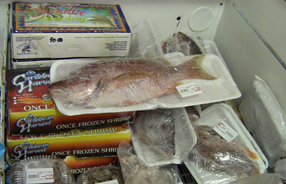
“While in Iceland, I learned that deliberate mislabeling of food, the substitution of products with cheaper alternatives, and false statements about the origin of foods, are all food Buyers opt for local snapper or imported seafood from the same freezer at a Belize supermarket (Photo: CRFM)
fraud,” Mateo said.
“This is relevant to the Dominican Republic and the Caribbean, where imported fish are in some cases marketed at lower prices than the local ones, not only due to the lower production cost of fish products such as tilapia and Pangasius (catfish – sold as ‘basa’ or ‘swai’) in comparison with those produced in the country, but also because of unfair practices in trade,” Mateo said.
She said that as a result of the Iceland training, the Dominican Republic is now in the final stage of building an improved national SPS system for fishery and aquaculture products which was initiated with the support of the government of Chile. Safe and healthy food also vital at home
Whereas the move to implement SPS measures was originally focused on export trade, regional experts also indicate that they are vital to food safety and health even within our region.
“The Caribbean is known to be a huge importer of food products,” Sosa noted. “We have to look after our population, we have to look after the health of our people, we have to look after the health of our environment and our agricultural products; and thus SPS—although at this point it is mostly the industrialized countries that are pushing it, that are requiring it—should be really and truly across the board.”
Science-based risk assessment and risk analysis of imports are also key in protecting vital agriculture and fisheries industries.
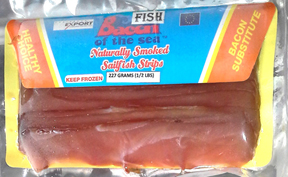
“We have been mandated with the task of being the gatekeepers when it comes to food safety and agricultural health and we take that responsibility very seriously. Sometimes the public will get angry with us, because they truly don’t understand why we are doing this. ‘Why can’t I bring this across the border?’ But the realization is that if a disease [is introduced], it could potentially destroy an entire industry—whether it be, for example, bringing across poultry with avian influenza, or bringing in diseased shrimp—it could wipe out an entire multi-million-dollar industry,” Sosa warned. Positioning small producers for export Southern Fishermen’s Cooperative in Grenada adds value to fish to produce smoked bacon for export to regional and international markets (Photo: CRFM)
Sosa noted that SPS measures were initially geared towards industrial markets but now they are encouraging small producers to position themselves for export by implementing SPS Measures.
“They might not have the finance to construct an elaborate facility, but we can start with the basics,” said Sosa, pointing to “good manufacturing practices and the sanitation standard operating procedures,” which, he said, would build confidence in products from even small producers.
More importantly, he said, implementing SPS measures is the first step that producers will need to make to even think about trading on the world market.
BASSETERRE, ST. KITTS, MAY 28th, 2016 (PRESS SEC) – Prime Minister Dr. the Honourable Timothy Harris is pleased to once more update citizens and residents on matters of national interest.
The Prime Minister’s monthly press conference will be held on Monday, May 30th from 10:00 am in the Parliamentary Lounge at Government Headquarters.
It will be broadcast live on national media and attended by the press corps who will ask questions for the benefit of the listening and viewing public.
The Honourable Prime Minister will take the opportunity to address developments arising from his recently concluded visit to the Republic of China (Taiwan), as well as the strong state of the economy, the administration of the severance fund, the upcoming parliamentary session, the progress of police investigations, and law and order.
(Press release courtesy of the Office of the Press Secretary)
Prime Minister says Workers Must Keep Up With Technology
Prime Minister, the Most Hon. Andrew Holness, says it is incumbent on the public and private sectors to ensure that workers keep up with the changing technology in today’s competitive world.
“If firms have people employed, but the technology is changing and there is no deliberate instrumental approach to ensure that they (firms) adjust to the technology quickly, so as to preserve those jobs, then the people are going to lose their jobs,” Mr. Holness said.
Addressing the 34th annual Convention of the Jamaica Employers Federation (JEF) at the Montego Bay Convention Centre on May 27, the Prime Minister said the Government will have to assist companies to be able to spot the changes in technology, helping them to respond and also to train their existing staff to adjust.
“If the education system is not responsive enough to turn out the skills that businesses need, then it is not an unemployment problem, but an unemployability problem. That is a failure of the signaling mechanisms between firms and schools,” Mr. Holness noted.
The Prime Minister said more needs to be done by way of surveying the labour market, in an effort to create and provide an accessible labour market information system.
“This would certainly help with the allocated efficiency of our labour market. That alone could knock off one or two percentage points from our unemployment rate,” he added.
Meanwhile, the Prime Minister said he will be having further consultations with the JEF to chart the way forward on the road to prosperity, adding that an educated and a well informed society is a recipe for success.
“The policy of this government is to engage and have dialogue with the stakeholders. We can’t treat things in isolation and do things without engaging you the stakeholders. When we work in unison and speak with one voice, then the possibilities are endless,” Mr. Holness said.
Prime Minister Dr. the Honourable Timothy Harris pictured with the Governor General and members of the Police High Command
BASSETERRE, ST. KITTS, MAY 28th, 2016 (PRESS SEC) – In a statement issued last Saturday, May 21st, Prime Minister Dr. the Honourable Timothy Harris reaffirmed his Team Unity administration’s support for the nation’s security forces and pointed out that the Ministry of National Security is the beneficiary of one of the largest allotments in the Government’s EC$608.3 million budget.
“That is why we engaged the Bramshill Policing Advisers to provide training, mentoring andinvestigative assistance in solving crimes and homicides in particular. That is why we have invested in a new K-9 Unit. That is why we are pursuing the expansion of CCTV. That is why we increased the risk pay for our security forces by 20 percent. That is why we have enhanced the Royal St. Christopher & Nevis Police Force’s communications abilities with the commissioning of the Motorola digital radio system,” Prime Minister Harris said in the statement.
For the first time in St. Kitts and Nevis, the agencies within the Ministry of National Security are able to communicate over a wide area via radio handsets. At the Prime Minister’s monthly press conference on April 20th, 2016, Dr. Harris said that, as at that date, his administration had spent EC$3.2 million on a Motorola digital radio system.
“We’re talking about roughly 700 radios, so it is a very big project,” Mr. Reuben Pollock, Telecommunications Officer in the Ministry of National Security, said this week. “An officer can speak with a colleague in Gingerland, Cotton Ground or Charlestown from Basseterre, likewise in Sandy Point, Old Road, Tabernacle, Cayon or Frigate Bay. We’ve never had that capability before,” Mr. Pollock added.
The Telecommunications Officer elaborated: “Previously, we relied heavily on the phone. We had radio communication in place, but point-to-point. In Basseterre, we have a repeater that covers a five-mile radius, so you would have been able to talk to somebody in Stapleton’s Village, St. Johnston’s Village, Bird Rock, and so forth, but beyond that you weren’t able to reach them. That would be five miles right or left to whichever repeater that you were closest to, but you never had the privilege of sending it [a digital signal] that far [as we can now] because of the topography of the islands.” The repeater that Mr. Pollock mentioned is an electronic device that receives a signal and retransmits it over some distance at higher amplitude.
A system was therefore designed for the Ministry of National Security to mimic the cellular telephone system and therefore overcome obstructions from mountains that previously hindered their communications, said Mr. Pollock, adding that, “We have extended it to about 25 nautical miles offshore from anywhere around St. Kitts and Nevis, to assist Coast Guard operations. So this is another benefit. If there is a rescue effort at sea, the Coast Guard should be able to communicate with us from that distance.”
Emergency medical services (EMS) and the accident and emergency (A&E) departments at the local hospitals are also being equipped with radios, to enable a faster response in preparation for incoming patients. Hand-held radios for EMS and base radios for the hospitals will facilitate a level of collaboration that did not exist before between the emergency medical services and the hospitals’ A&E departments.
This all forms part of what Prime Minister Harris said in his statement last Saturday, May 21st. Dr. Harris said that his Team Unity administration firmly believes that an integrative, interdepartmental approach must be taken and all hands are required to be on deck in mobilizing effective responses from the government and, in particular, the Ministry of National Security.
(Press release courtesy of the Office of the Press Secretary)
A series of PSAs launched by PAHO for the International Day of Action for Women´s Health promotes prenatal care and saving lives.
In recognition of the International Day of Action for Women´s Health (May 28), the Pan American Health Organization (PAHO) is launching a series of public service announcements (PSAs) with Mexican singer Lila Downs to promote prenatal care and prevent maternal deaths.
“Today and every day in the Americas, 16 women will die because of complications related to pregnancy or childbirth, and postpartum hemorrhage or bleeding is one of the main causes,” said Lila Downs in the PSA, referring to a preventable but lethal problem that primarily affects women in vulnerable social situations or remote areas of the Americas. “If you´re pregnant, visit your health care provider at least four times during your pregnancy,” Downs advises. “Together, we can bring maternal deaths in the Americas down to zero.”
The PSAs, available on YouTube and Vimeo in Spanish and English, are part of PAHO´s #ZeroMaternalDeaths campaign, which aims to mobilize the region of the Americas to end preventable maternal deaths. In the Americas, one in five maternal deaths is due to obstetric hemorrhage.
“Lila Downs´ support will help us reach more women, their partners and family members to raise awareness of the importance of prenatal care for the well-being of mothers and their babies,” said Andres de Francisco, Director of PAHO´s Family, Gender and Life Course Department. “We want women to have access to quality periodic medical checkups during all three trimesters, as well as when they´re not pregnant, so that health professionals can anticipate, detect and successfully treat possible complications that put mothers´ and babies´ lives at risk.”
Downs, a multiple Grammy-award winner, also appears in another PAHO PSA geared toward health workers who care for pregnant women. That message makes recommendations on preventing maternal mortality, highlighting the need to provide pregnant women with timely and appropriate care, to respect their world vision and culture, to inform them about the symptoms and warning signs of hemorrhage, to avoid unnecessary Caesarian sections and to
help them prevent unwanted pregnancies.
Countries in the Americas have reduced maternal mortality considerably since 1990, yet 5,500 women still die every year from complications of pregnancy and childbirth. The majority of these deaths could be avoided by expanding access to timely and quality care and addressing economic, geographic and cultural barriers.
In the Americas, more than 90 percent of births take place in health care institutions, and nearly 90 percent of all pregnant women attend at least four prenatal checkups, the minimum recommended by WHO. However, among adolescents and young women aged 15 to 24 years, complications related to pregnancy, childbirth and immediately following birth remain among the top four causes of death in the region.
The Zero Maternal Deaths by Hemorrhage project started in 2014 in Bolivia, Guatemala, the Dominican Republic, Haiti and Peru, countries where rates of maternal death from hemorrhage are among the highest in the continent. The initiative focuses on promoting prenatal care and humanized birth, improving quality of care through training on obstetric emergencies, facilitating the transfer of patients with complications, and ensuring the availability of safe blood. A number of other countries have also joined or expressed interest in joining the project, including Brazil, Ecuador, Honduras, Mexico and Paraguay.
PAHO, which serves as the Regional Office of the Americas for the World Health Organization, is working with its member countries on the creation of a new women´s health agenda, with the goal of identifying women’s priority health needs and ensuring comprehensive care.
May 27, 2016: The Ministry of National Security wishes to inform the media that National Security Minister Major General (Ret’d) The Honourable Edmund Dillon is attending a two-day Joint Inter-Agency Task Force (JIATF) SouthCom meeting in the United States following an invitation from the Government of the United States.
This meeting is to further bi-lateral relationships in the areas of intelligence sharing as well as international crime fighting strategies.
The Ministry of National Security sees this visit as critical as it will position Trinidad and Tobago in a way that will assist its intelligence and crime fighting agencies in the fight against crime locally and internationally.
Minister Dillion is expected to return to Trinidad and Tobago tomorrow, Friday, May 27th, 2016.
St. Kitts National Youth Parliament Association (S.K.N.Y.P.A) with Governor Timothy N. J Antoine, at the ECCB Headquarters
Basseterre, St. Kitts- In an effort to increase the social awareness about the role of the Eastern Caribbean Central Bank, the St. Kitts National Youth Parliament Association (S.K.N.Y.P.A) met with Governor Timothy N. J Antoine, at the ECCB Headquarters Bird Rock, Basseterre.
At the highly anticipated meeting, the newly instated Governor acquainted himself the prestigious youth organization and its activities undertaken to achieve it mandate of youth involvement in nation building.
Governor Antoine shared that it is the duty of the Eastern Caribbean Central Bank, to educate the public about the performance of the Currency Union. The Governor along with a team of representatives from the institution, shared a presentation about St. Kitts- Nevis’ economy referencing its present state, achievements and potential for improvements in certain sectors. During the presentation, the executive members of S.K.N.Y.P.A shared questions and comments about the way forward for the nation to ensure that the growth and development experienced in St. Kitts- Nevis is sustained.
To conclude, the morning’s proceeding the Governor and the President of S.K.N.Y.P.A, Mr. Azard Gumbs exchanged words of commitment for a greater partnership with the youth organization.
The St. Kitts National Youth Parliament will soon commence its 15th Anniversary celebrations since its inception in September 2001. The Youth Parliament has debated in the National Assembly key legislature, volunteered with various profit and non profit organizations and conducted number of programmes that seek to equip youth with various life skills.
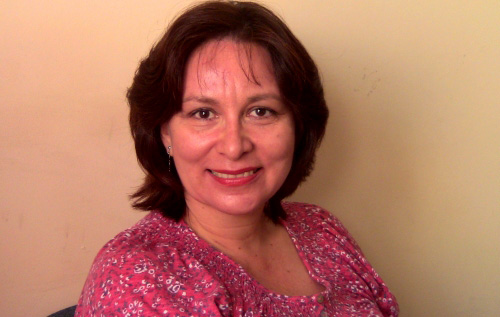
Claudia Stella Beltrán Turriago, the economist who has been engaged to lead a new study to look at the impacts of rising cost factors offishing operations, such as labor, fuel, fishing gear, repair and maintenance, and capital, completed the first leg of field work in Belize today.
While in Belize, she had a chance to conduct surveys with fishers from various communities around the country. The Belize Fisheries Department assited with surveys in more remote parts of the country, such as the far north and the far south. It is expected that the Belize survey will have canvassed fishers from as far noth as Chunox, Corozal, to as far south as Punta Gorda, Toledo.
After leaving Belize today, Claudia returns home for a few weeks before moving on to Suriname and Barbados for more fieldwork. Finally, she will move on to St. Kitts and Nevis and to St. Vincent and the Grenadies.
Remote surveys will also be conducted in Guyana, Grenada, Colombia and Trinidad and Tobago.
The consultant told the CRFM that her visit to Belize was “very successful.”
After the study is completed, a policy brief will be prepared for action by Caribbean leaders. The brief will highlight the major findings and recommendations, including policy options and strategies to increase efficiency, productivity and sustainability of the fisheries and aquaculture sector, while reducing economic risks.
The beneficiary countries are the 17 states which are members of the Caribbean Regional Fisheries Mechanism, as well as countries covered by a UN/FAO project on the Sustainable Management of Bycatch in Trawl Fishing in Latin America and the Caribbean (the REBYC-II LAC), funded by the Global Environment Facility (GEF).