
Home Blog Page 193

Childfund Caribbean donates supplies to government departments

Child Fund Donation

After Dominica was badly hit by Tropical Storm Erika last year, ChildFund Caribbean played its part by assisting victims.

On the heels of another hurricane season they have decided once again to give generously to three government departments.
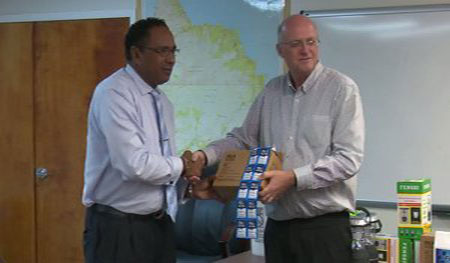
On Monday, 23rd May, at a handing over ceremony at the Office of Disaster Management in Jimmit, a presentation was made to the Ministry of Health, Ministry of Education and the Local Government Department.
Gelina Fontaine, Officer in Charge of Childfund Caribbean remarked that ChildFund has supported Dominica with more than $150 USD, with food, other necessary health and household supplies like clothing. “Now we have water purification sachets, water bottles, pails, solar power lanterns, potable chargers and first aid kits and other items.” she stated.
Hon Minister for Health, Dr. Kenneth Darroux, is grateful for the items and says it will go a long way.
“It is always a pleasure when civil societies can partner with the government of any country especially in times of disasters. There were many lessons learnt from Erika and we hope that these contributions, no matter how small they are, will go a long way in responding to disasters.”
Twenty- four first aid kits and 250 water bottles were presented to the Ministry of Education; 100 solar power lanterns, 45 solar chargers, 40 emergency radios and 24 first aid kits to the Local Government department and over 4K boxes of water purification sachets along with over 700 five gallon pails to the Ministry of Health.
Rising Healthcare Costs Impacting GDP

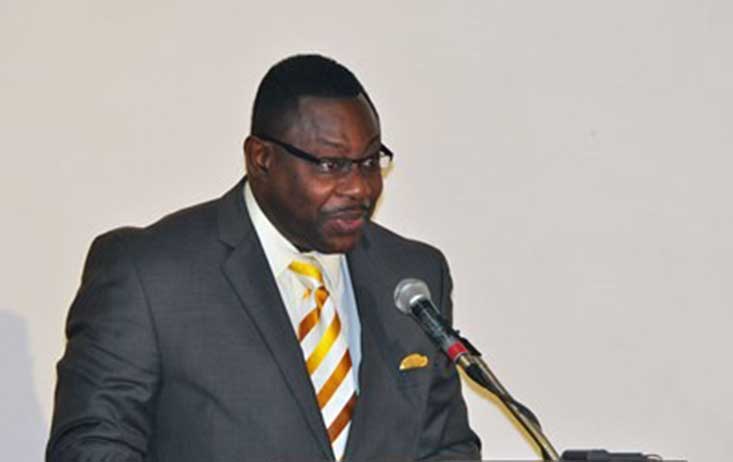
John Boyce
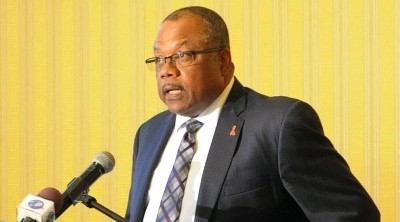
Minister of Health, John Boyce. (FP)

Barbados is losing 2.6 per cent of its Gross Domestic Product due to healthcare costs and productivity losses in respect of diabetes and cardiovascular diseases alone.

This was revealed by Minister of Health, John Boyce, as he addressed the 69th World Health Assembly in Geneva, Switzerland, this week.
He told the Assembly that last year Barbados hosted a mission of the United Nations Inter-agency Task Force on the Prevention and Control of NCDs, and the Task Force had endorsed recommendations made in the Barbados NCD Strategic Plan.
He identified some of these as the scaling up of actions to reduce obesity, hypertension, diabetes and cardiovascular disease; and the proposed implementation of a comprehensive regulatory framework to improve the nutritional quality of food and beverages. Mr. Boyce said that particular attention was being paid to childhood obesity, the precursor to most non-communicable diseases.
A childhood obesity plan, which identified roles for civil society, faith-based organisations, the private sector and academia, was being implemented, he announced, with five strategic lines of action. These were the strengthening of breast feeding practices, physical activity, and dietary, regulatory and fiscal policies.
The Health Minister told his audience that Barbados recognised that transforming the world necessitated a reversal of negative trends and the reinforcement of health-enhancing behaviours by all populations at each stage of life.
“For smaller developing countries, whose capacity is restricted by limited resources, domestic, regional and international partnerships provide the greatest opportunity to build the capacity necessary to realise the 2030 SDG (Sustainable Development Goals) Agenda,” he submitted.
Touching on the issue of climate change, Mr. Boyce said: “We are now in the middle of a real-time scenario, mitigating the direct impact of global warming with the rapid spread of Zika, a newly declared global health emergency.” This challenge followed closely, he said, on the heels of two other mosquito-borne diseases, dengue and chikungunya, and their infiltration into temperate climates.
He called therefore for urgent adherence to the Paris Agreement of the United Nations Framework Convention on Climate Change and further appealed to developed countries to urgently meet their obligations of financial and technical support to less developed and more vulnerable countries.

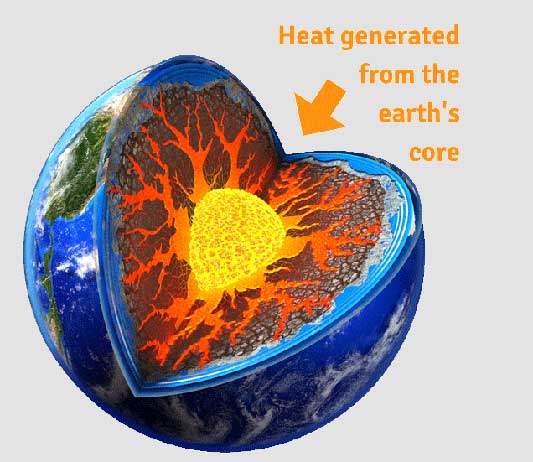
Government moving forward with the Exploration of Grenada's Geothermal Potential

Geothermal Energy

ST. GEORGE’S, GRENADA, Monday, May 23, 2016: In Keeping with the Geothermal Support Partnership Framework Agreement that was signed in 2014, between the Governments of Grenada and New Zealand, aimed at facilitating the exploration and eventual use of geothermal energy the following have now been completed:

  • The review of previous studies;
  • The undertaking of extensive geochemical, geophysics and geological surveys;
  • Analysis of the institutional, legislative and regulatory frameworks for undertaking environmental and social impacts relative to developments requiring such; and
  • Preliminary analysis of the infrastructural capacity relative to facilitating access of equipment, to the potential site.

In July 2015 at the Grenada Geothermal Partner’s Forum, the presence of a high temperature geothermal reservoir of about 4 – 8km2, located North of Mt. St. Catherine was confirmed. It was also stated that this reservoir has a potential temperature between 220-2400C or higher, which if correct, is of a capacity to generate between 15-20 megawatts (MW) of power.
Within the first quarter of 2016, experts from both Japan International Cooperation Agency (JICA) and JACOBS (New Zealand), completed:
–         a second Geoscience report on the status of the Geothermal resource;
–         a Geothermal Resources Development Roadmap; and
–         a preliminary civil engineering survey;
They also held consultations with officials from the Ministries of Finance and Energy; Works; Health; Agriculture and officials from the statutory bodies whose work involve environmental and social issues pertaining to the Geothermal process.
During the period April 4th – 8th, Mr. Aoki Issei – JICA’s Deputy Director for Central America and the Caribbean and his Deputy, Mr. Nakayama Shun visited Grenada and held meetings with environmental and social stakeholders and paid a courtesy calls to the Permanent Secretary and other senior officials of the Ministry of Finance, exploring the progress to date on Grenada’s geothermal initiative. It was agreed that the immediate next step in this process will be the hosting of broad based Geothermal Forum before the second half of 2016.
The Ministry takes this opportunity to record its appreciation to all who have participated in the process thus far.
The Government of Grenada welcomes the bilateral cooperation and the technical assistance provided by friendly Governments, and takes this opportunity to acknowledge its gratitude to the Governments of New Zealand and Japan through JACOBS New Zealand Ltd., and JICA respectively, for their demonstrated cooperation and collaboration in this initiative.
To date, in excess of US$1M has been spent to date by these Governments on the Grenada Geothermal process.

Hon. Senator Phipps to attend 69th World Health Assembly

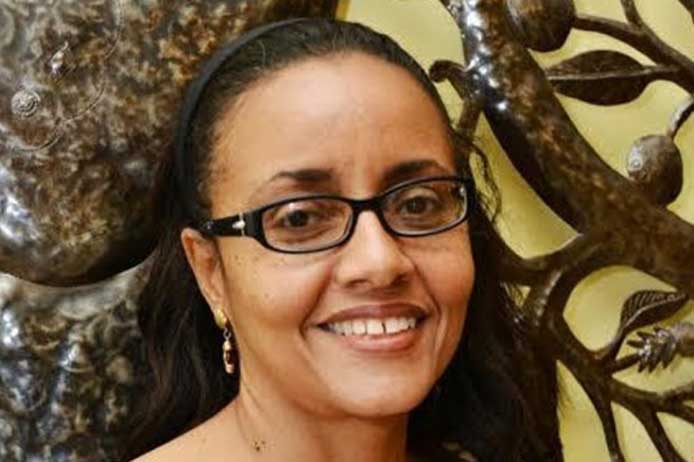
Wendy Phipps
Honourable Senator Wendy Phipps

BASSETERRE, ST. KITTS, MAY 22ND, 2016 (PRESS SEC) – Honourable Senator Wendy Phipps, Minister of State in the Ministry of Health et al., is in Geneva, Switzerland to attend the 69th session of the World Health Assembly from Monday, May 23rd to Saturday, May 28th.

The World Health Assembly (WHA), which is attended annually by ministers of health, heads of state and civil society leaders, takes place at the United Nations’ Palace of Nations.  The WHA is the supreme governing body of the World Health Organization (WHO).  This year’s theme is “Transforming Our World: The 2030 Agenda for Sustainable Development.”
During the World Health Assembly, delegations representing the WHO’s 194 member states agree upon formal resolutions that are to guide the work of the World Health Organization. Essentially, they set health priorities and policies for the entire world.  Each member state of the World Health Organization gets one vote in the Health Assembly.
All countries that are members of the United Nations become members of the World Health Organization upon accepting its Constitution.  St. Kitts and Nevis became a member of the UN on September 23rd, 1983 and the country accepted the WHO’s Constitution on December 3rd, 1984.
Senator Phipps is scheduled to participate in a number of events focused on key global health issues during the sidelines of the 69th World Health Assembly.  One such side event is the Commonwealth Health Ministers Meeting, which will be held today, May 22nd, under the theme “Health Security and Access to Universal Health Coverage.”
This week, the Minister of State will share the experiences of St. Kitts and Nevis with her international counterparts and learn about healthcare initiatives being implemented in other countries.
(Press release courtesy of the Office of the Press Secretary)

NEPO makes hurricane preparedness priority

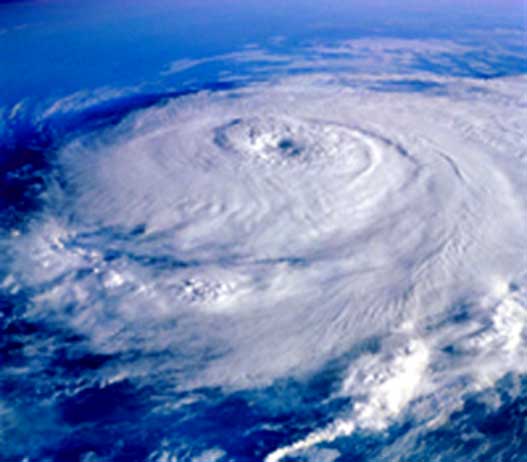
Hurricane

The National Emergency Planning Organization (NEPO) held a meeting to discuss the official start of the 2016 Atlantic Hurricane season. The meeting was held at the Emergency Operations Centre on Friday, May 20th.

NEPO, the agency in Dominica responsible for disaster management meets ahead of the start of the season to review the state of preparedness.
Hon Prime Minister, Dr Roosevelt Skerrit, believes that it is very important for emphasis to be placed on hurricane preparedness.
“We have to take this hurricane season seriously not only because of the seriousness of the storms but the fact is that our country still is largely vulnerable as a result of Tropical Storm Erika. So we’re not, from an environmental standpoint, on strong footing as we were before August 27, 2015. It will require a greater level of responsibility and focus on our part to ready ourselves because we have no control over any disaster. We cannot stop it from happening but we can minimize the impact by preparation,” he said.
The Hon. Minister responsible for Disaster Management, Rayburn Blackmoore, says citizens should always be prepared for the hurricane season especially as a national collective.
“We want to ensure that all the organs of the National Emergency Planning Organization are fully functional and that we move into high gear with preparations and your ability to respond particularly when we get to the peak of the period in late July.”
Hon Blackmoore spoke of the destruction of Tropical Storm Erika and hopes that lessons were learnt from this experience.
“Dominica is not an easy place to develop because of its very difficult terrain. We have done tremendous work to rebuild our infrastructure. You may recall that before Erika, 65% of our road network was in great condition. We are not shaken to a point where we cannot bounce back. I am hoping that we take this thing seriously and that we have learnt from Erika and we do not revert to old practises.”
Acting National Disaster Coordinator, Fitzroy Pascal, says the period leading up to this event has been fruitful.
He noted that that preparations for this hurricane season are more intense, referencing the devastation caused by Tropical Storm Erika.
“NEPO meets annually before the hurricane season. We are hoping that we can increase the frequency of meetings also at the subcommittee levels. There are nine subcommittees which have chairpersons and inform NEPO,” he said.

Blackett: The Fight Against HIV/AIDS Continues

Steve Blackett
Minister of Social Care, Constituency Empowerment and Community Development, Steve Blackett. (FP)

Barbados has seen a gradual downward trend in the rate of new HIV infections, and a reduction in the number of AIDS-related deaths, but “the fight is not over”.

Minister of Social Care, Constituency Empowerment and Community Development, Steven Blackett, made this assertion last Saturday at the Red Ribbon Awards Ceremony marking the 15th Anniversary of the National HIV/AIDS Commission, at Almond Bay, Christ Church.
The ceremony was also used to recognise and honour a number of unsung heroes who played their part in the National AIDS Programme, and contributed to the fight against the disease.
“HIV remains a significant challenge because it mainly affects adults between the ages of 15 and 49 who constitute the most productive workforce…There are a number of key populations who have heightened vulnerability to HIV infection and addressing the needs of these groups lies at the heart of this new fight,” Mr. Blackett explained.
Addressing the awardees, he stated: “For 15 years, you have given your utmost in an effort of showing compassion to those infected and affected by HIV. You have gone above and beyond the call of duty and through it all you have remained committed to ensuring that your input, your interaction, your invaluable time would bring solace to those with who you came into contact.”
While the Minister acknowledged that the tokens they received were “no way near the true value” of what they deserved, he pointed out that their reward came from “seeing another family fed, seeing children attend school regularly and well attired, and ensuring that a roof is over the head of someone who is less fortunate”.
He emphasised the need for more “devoted individuals” to follow in their footsteps, and work with the National AIDS Programme to “wrestle HIV to the ground”.

Barbados Prepares For 2016 Hurricane Season

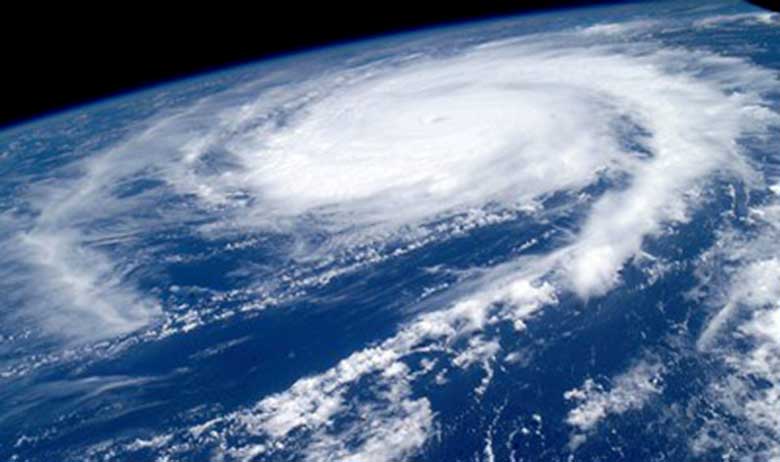
Hurricane

As Barbados prepares for the June 1 start of the 2016 Atlantic Hurricane season, the Department of Emergency Management will host its annual press conference on Wednesday, June 1, at its Warrens, St. Michael office, beginning at 10:00 a.m.

Acting Deputy Director, Robert Harewood, will deliver remarks, while Deputy Director of the Barbados Meteorological Service, Sonia Nurse, will present the 2016 outlook. A representative from DEM’s volunteer arm will also make a presentation during the press conference.
This year, the DEM will focus on the theme: The Next 50 Years: Making our Communities Resilient to Natural Hazards.

Gov’t Remains Committed to Protecting the Rights of Jamaicans

Jamaica Flag

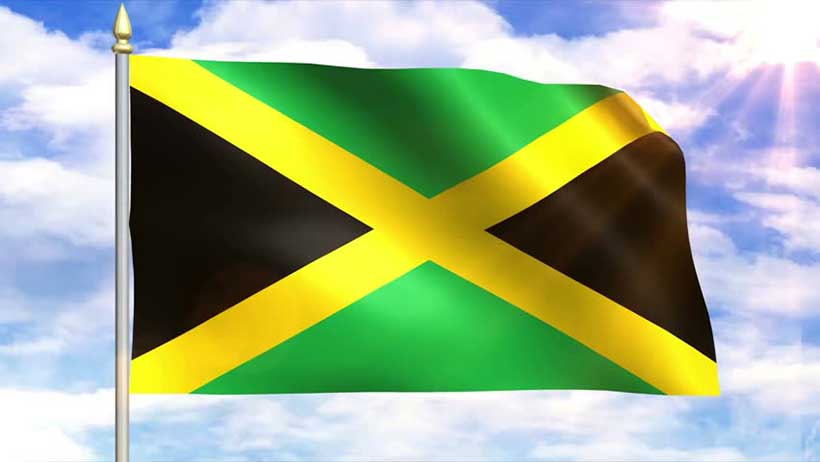
Minister of Foreign Affairs and Foreign Trade Senator the Hon. Kamina Johnson Smith says the administration is continuing to work on resolving issues relating to the treatment of Jamaicans who are denied entry into Trinidad and Tobago.

Several Jamaicans have complained about being mistreated by immigration officials at Trinidad’s Piarco International Airport after they have been refused entry to the country.
In a statement to the Senate on Friday (May 20), Senator Johnson Smith said the Government remains committed to protecting the rights of all Jamaicans and has been dealing with the matter at the bilateral and regional levels.
She noted that following discussions at the bilateral level, Minister of Foreign and CARICOM Affairs, Senator the Hon. Dennis Moses had assured that steps would be taken by July 2016 to improve the situation at the Piarco International Airport.
The Senator, who is also Leader of Government Business in the Senate, informed that the Government of Trinidad and Tobago has already begun preparations to establish a facility at its Piarco International Airport to accommodate persons overnight, including Jamaicans, who have been denied entry into the country and are awaiting return flights to their home countries.
“The (Trinidadian Foreign) Minister, since we last spoke and wrote to each other, has indicated through the High Commissioner of Trinidad and Tobago and through the Permanent Secretary…that they have started the work. They have identified the areas (for the facility) and the plans are being worked on,” she said.
Trinidad had also promised to convene in June 2016, a customer service training workshop for airport staff, including immigration officials and other frontline employees, such as security who interact on a daily basis with passengers.
Senator Johnson Smith said she was also informed that the training courses are now being (designed) for delivery.
She noted that Trinidad’s commitment to improved conditions “have been taken as an initial positive step towards dealing with the issue of free movement which has dominated bilateral relations with Jamaica and that country over the last few years.”
The Senator pointed out however, that denial of entry is not a Jamaica issue. She said that while there is a high rate of denial to Jamaicans, with 326 being refused entry to Trinidad and Tobago during 2015, and 113 during the first quarter this year, she noted that more Guyanese have been refused entry than Jamaicans.
Meanwhile, at the regional level, Senator Johnson Smith informed that at Jamaica’s request, the item “Treatment of Caribbean Community (CARICOM) Nationals Travelling in the Region” was returned to the agenda of the 42nd Session of the Council for Trade and Economic Development (COTED), which was held in April this year.
COTED promotes trade and economic development of CARICOM and oversees the operations of the CARICOM Single Market and Economy (CSME).
She said under the item, Jamaica called for the full implementation of the decisions taken at the 39th Session of COTED held in November 2014. Those decisions identified steps to be taken by Member States and the CARICOM Secretariat to ensure that the CSME Free Movement Regime operates in the interest of all CARICOM nationals.
It was also decided at the 42nd Session of COTED that, among other things, Member States should comply with the decisions taken at the 39th Session of the COTED, in particular that the inherent dignity of all CARICOM nationals must be respected and the basic level of treatment, in keeping with international norms and standards, must be adhered to in the event of a denial of entry into CARICOM jurisdictions.
Additionally, it was decided that the CARICOM Committee of Ambassadors should develop a protocol that would outline the steps to be taken in those instances when CARICOM nationals are denied entry into another CARICOM Member State and the assistance that can be accessed immediately before being returned to their home country.

ROC elects 14th-term president

Dr Tsai Ing-wen
Dr Tsai Ing-wen - President of the Republic of China (Taiwan).

President Tsai stated her administration’s commitment to strengthening regional peace and stability.

Dr. Tsai Ing-wen of the Democratic Progressive Party was, on May 20, inaugurated as the 14th-term President of the Republic of China (Taiwan).
In her address at the inaugural ceremony, President Tsai laid out her vision for Taiwan’s future and elaborated on the policy goals of her administration.
Regarding the ROC’s foreign policy, President Tsai stressed her desire to bring Taiwan closer to the world while upholding the universal values of peace, freedom, democracy, and human rights.
Taiwan will continue to deepen relations with friendly democracies including the US, Japan, and European nations. It will also proactively participate in international economic and trade cooperation, as well as free trade negotiations. Furthermore, Taiwan will contribute to fostering environmental sustainability.
President Tsai stated her administration’s commitment to strengthening regional peace and stability, and emphasized the importance of fostering closer economic links with other Asian countries. As part of this commitment, President Tsai announced a new southbound policy to broaden exchanges in the areas of technology, culture, and commerce.
In her address, President Tsai also touched on various domestic issues, such as pension and judicial reform, long-term care mechanisms, and transitional justice.

Computer Science is an area for girls

Charles Cyrus
Director of the National Council on Science and Technology, Charles Cyrus. (FP)

Director of the National Council on Science and Technology (NCST), Charles Cyrus wants to see more girls involved in Computer Science in schools across the island.

Speaking last Friday at the start of a training session in coding for students at St. Alban’s Primary School, Mr. Cyrus said he shared the same view as Christine Murakami, Head of the visiting delegation from Columbus Girls’ School, in Ohio, which is providing the computer training.
Ms. Murakami, the Computer Science and Technology teacher, had earlier stated that her primary objective was to get girls everywhere involved in Computer Science, as they were under-represented.
Agreeing that this was actually a global problem, Mr. Cyrus said: “It is a problem in Barbados that we don’t see as many girls getting introduced to or interested in Computer Science. It is also kind of peculiar. We have girls going to do Computer Science but they don’t end up in careers in Computer Science. I think based on the fact that you want to increase the numbers going into Computer Science, you have to start somewhere.
“In addition to that, we know that we are moving towards a knowledge-based society – a society in which information and communications technology (ICT) is very pervasive, everywhere, and the need for it will continue to grow.”
Alluding to the training at St. Alban’s, he said it was better to prepare students at the earliest for what they would encounter in the world of work.
“In terms of computer coding there are some generic things that you get to do, such as problem solving, team work and critical thinking – putting things together – and those are skills and competencies that are required generally in the knowledge-based society. So, you are building those skills and competencies from as young as possible and hopefully it goes throughout the school system.”
The project with Columbus Girls’ School is an initiative of the NCST, and its key objective is to demonstrate how ICTs can be integrated into the classroom to improve problem solving, while facilitating efficiency and productivity.
This week will see Ms. Murakam, and her team continuing to expose the Class Threes and Fours at St. Alban’s to the use of the XO Touch laptop tablet computer in the classroom.
They will be provided with instructions on the features and capabilities of the system, following which students will design and execute a Social Studies project for Barbados’ 50th Anniversary of Independence.

Audio Theme