


TRINIDAD : April 25, 2016: The Tobago House of Assembly (THA) has not yet received its full parliamentary allocation for the third quarter in fiscal 2016.
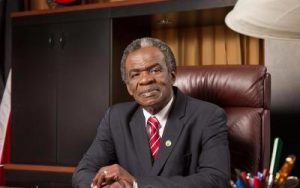
The Ministry of Finance has forwarded funds for one month’s recurrent expenditure and little more than one month’s funding for its development programme. However, Chief Secretary Orville London told reporters at Wednesday’s post Executive Council media briefing wages and salaries to Assembly workers remain a priority.
According to the THA Act, the Ministry has to forward the Assembly’s quarterly allocations “en bloc”—or all together—at the beginning of the quarter.
“There is a problem with the THA finances,” London explained. “Usually and legally, the Tobago House of Assembly receives its parliamentary allocation from the Ministry of Finance ‘en bloc’ and in advance. “This did not happen in this particular quarter. In fact, funding was received the middle of this month; we received one month of funding under recurrent and one month and a half funding under the development vote,” London said.
London said Secretary of Finance and Enterprise Development, Assemblyman Joel Jack, discussed the matter with Minister of Finance Colm Imbert while they were at a conference in the United States.
The Chief Secretary added: “The reason of course is the reason put forward in the mid-term review, where the government is operating in a scenario where they can only spend what they collect.
“With the unavailability of the $9 billion overdraft, the government has no flexibility and therefore only what it collects it can spend, so although we are concerned and of course challenged, I think we are aware of what the real situation is.”
London said Imbert has assured the THA that the rest of the allocation should come within the next four weeks. Officials in the Finance Division have indicated that the situation, although difficult, is not “totally unmanageable”.
“I have every confidence that we would be able to treat with the major priorities in the short term,” London said.
“As the rest of the country, we recognise two things: we hope the situation is going to improve but the reality is that it is unlikely to improve in the short term.”
London said the THA is monitoring the situation, and will make the necessary adjustments, as well as keep Tobagonians notified.
“We do not think that at this point in time there is any need for any serious adjustments beyond what was made when we spoke to the island after the first seven percent cut,” London added.
Wages a priority for THA despite funding challenges
Standardizing online vacation home rentals


ST. LUCIA: The Caribbean Hotel and Tourism Association has released a resource guide to support efforts to create a level playing field with the informal accommodation sector.
The Saint Lucia Hotel and Tourism Association (SLHTA) is applauding the efforts of the Caribbean Hotel and Tourism Association (CHTA), to find solutions to address the challenges and opportunities presented by the rapid rise of the online vacation home rental industry and other sharing economy businesses being fueled by hosting platform companies like Airbnb and Uber.
The CHTA has released a resource guide to support efforts to create a level playing field with greater standardization through the regulation of the informal accommodation sector, and its engagement in local public and private sector tourism development efforts.
On March 8, the SLHTA presented a position paper titled “The Sharing Economy: Developing our Alternative Accommodation Sector in Saint Lucia” to the Ministry of Tourism, Heritage and Creative Industries calling for greater attention to be paid to this emerging sector.
Noting recent information from the Saint Lucia Tourist Board that this sector now accounts for 15 percent of arrivals locally, SLHTA President Sanovnik Destang posits that the “SLHTA is fully supportive of the need to create a level playing field and looks forward to working with government to advance the recommendations provided as well as the CHTA report.”
Destang explained that regional growth in this sector is not simply driven by a desire to source cheaper accommodation, but also out of a desire for an authentic experience, and because travelers are more independent minded in their travel planning.”
The Caribbean has seen explosive growth in the short-term vacation home rental business. Taking advantage of new technology platforms, many residential owners throughout the world are sharing in tourism revenues by providing accommodation through marketplaces or host platforms such as Airbnb, VRBO, and HomeAway which have emerged as the industry’s top leaders.
Airbnb, in particular, recorded more than 25,000 listings in the Caribbean as of February 2016 and is projecting significant regional growth this year for this sector. Aruba saw the number of visitors using non-traditional accommodations (private homes, apartments, villas, condominiums) in 2015 jump from 24 percent of visitors to 33 percent. Destinations such as the Dominican Republic, Cuba, Puerto Rico, Guadeloupe, Jamaica, Cancún, Martinique and Barbados feature the most listings on Airbnb with continued growth projected throughout the entire region.
Locally, the Saint Lucia Tourist Board has also noted increases in arrivals to this sector last year.
“As many governments throughout the world have experienced, the sharing economy made possible by these hosting platforms is happening whether or not we choose to embrace it and it presents new opportunities for the industry as well,” said CHTA President Karolin Troubetzkoy.
“This leaves us with two options: we can allow it to develop as an under-regulated market and lose out on tremendous opportunities, or we can bring all the players to the table to work out solutions to the benefit of all concerned parties,” added Troubetzkoy.
“CHTA has endeavored to take a positive, constructive and balanced approach to the guide, welcoming this rapidly developing accommodations sector but also calling for a fair play arrangement regarding taxation and some measure of standards beyond those applicable to residences. CHTA is not calling for there to be the same detailed and sometimes onerous regulatory requirements for hotels, but for a level of regulation beyond those which simply apply to private residences. These are commercial enterprises regardless as to how one looks at it and the welfare of the guest and health, safety and reputation of the host property, the hosting platform, and the destination must be considered,” according to Troubetzkoy.
The guide provides the region’s public and private sector tourism stakeholders with a summary of the key issues surrounding the sharing economy, its impact on the tourism sector globally as well as regionally, and the opportunities presented by this emerging accommodations sector.
It offers solutions and new approaches for the Caribbean’s NHTAs and governments to consider when regulating and regularizing this emerging industry. And it sets the stage for engaging the emerging accommodations sector in organized public and private sector efforts to protect and grow the tourism industry.
The proliferation of Airbnb and other such hosting platforms is also beginning to effect airlift capacity to some destinations. In some cases, increased airline load factors have reduced the number of seats available for traditional hotel guests or have driven up the cost of air tickets. “Therefore, it is important that we account for this growing accommodations sector in our research, product development, airlift development, and marketing efforts in order to plan accordingly,” noted Troubetzkoy.
Increasingly, governments throughout the world are working in partnership with local tourism industry stakeholders and hosting platform companies such as Airbnb, taking a proactive approach to addressing challenges and concerns. With the support of companies like Airbnb, destinations are adopting new measures to address standardization and regulation of home vacation stays.
Underscoring the untapped potential for Caribbean jurisdictions experiencing budgetary challenges, a 2016 Airbnb study estimates that the 50 largest cities in the US would have collected an additional $200 million in occupancy taxes in 2015 if taxation measures and supporting collection and enforcement protocols were in place.
At the same time, concerns over the safety and well-being of both travelers and their non-traditional hosts are also prevalent. Traditional hotel and taxi businesses operate with strict property and insurance liability requirements and must meet stringent safety, cleanliness and operational standards, which are kept at a voluntary minimum for most home rental operators
“The sharing economy presents tremendous entrepreneurial possibilities for more Saint Lucians as it fills airplanes, diversifies and supplements the accommodation stock and boosts the fortunes of tours, attractions and independent restaurants as these guests are more likely to explore our island while supporting other micro enterprises,” said Destang.
April 26 is World Intellectual Property Day


BARBADOS: Members of the public are reminded that tomorrow, Tuesday, April 26, is World Intellectual Property Day.

And, to mark the occasion, the Corporate Affairs and Intellectual Property Office (CAIPO) will host two events – an open day and a panel discussion at its Baobab Tower, Warrens, St. Michael, headquarters.
The open day, which starts at 10:00 a.m. and runs until 4:00 p.m., will take place in the car park and will be themed: Digital Creativity: Culture Reimagined.
On display will be a diverse range of products, showcasing different aspects of intellectual property, by small business owners, persons from the creative sector and students from the Science Department at the Barbados Community College.
Cultural presentations by Dancin’ Africa; dramatic pieces by two NIFCA award winners; health checks; as well as Addington Forde reading his Ossie Moore stories, will also take place throughout the day.
The next event will be a panel discussion on the topic: Copyright and Related Rights, the Emerging trends in the Digital Environment and the Challenges for Enforcement. It will take place in the Christ Church/Bridgetown Conference Room, 5th Floor, Baobab Tower, from 2:00 to 4:30 p.m.
Panellists include Registrar of CAIPO, Heather Clarke; Senior Coordinator, Intellectual Property, Science and Technology Issues, Malcolm Spence; Chief Executive Officer, Copyright Society of Composers and Publishers, Erica Smith; Attorney-at-Law, Fiona Hinds; representative from the Caribbean Broadcasting Union, Sonia Gill; representative from Flow (Barbados), Janelle King; and calypsonians Stedson ‘RPB’ Wiltshire and Anderson ‘Blood’ Armstrong.
A special invitation has been extended to all artistes, performers, broadcasters and persons in the telecommunications industry to attend the discussion.
theresa.blackman@barbados.gov.bb
ESW Will Improve Business In Barbados


 BARBADOS: Higher levels of efficiency and transparency, greater revenue collection and improvements in domestic trade facilitation and trade logistics, are just some of the benefits of the Barbados Electronic Single Window (ESW), which is expected to be completed on January 25, 2017.
This disclosure came from Project Coordinator of the Barbados Competitiveness Programme, Terry Bascombe, who said the ESW was expected to profoundly transform the nature of private sector/public sector relations and interface.
He added that it should therefore be seen as a tool for promoting good e-governance in Barbados.
Mr. Bascombe stated during a press conference Thursday: “The most immediate and direct benefits will accrue to traders, who stand to gain significantly from the anticipated improvement in the supply chain associated with the importation of goods into and exportation of goods out of Barbados.”
An electronic single window is an environment that facilitates the electronic submission of standardised international trade and transport-related documents to a single point.
The Barbados ESW, which is being implemented by A-T Solutions, a US-based firm owned by the PAE conglomerate, will provide a single online interface for the exchange of trade-related documents between the trading community and relevant regulatory agencies.
The Project Coordinator explained that within this environment, all transacting parties would be able to fulfil their import, export and transit-related regulatory requirements online from anywhere, once they have internet connection.
“Duplication of entry will be eliminated as entries need only to be submitted once. ESWs are known to have improved trade facilitation and trade logistics in many countries worldwide, including our neighbouring Trinidad and Tobago,” he noted.
He pointed out that ESW environments were usually supported by a trade document management system (TDMS) and disclosed that one would be developed, which would track, manage and store inside the ESW, the digital version of all paper-based documents.
He added that the TDMS, which should be completed in June this year, together with the ESW, would pave the way for a paradigm shift from a paper-filled to a paperless trading environment.
“At present, the number of all import and export-related paper documents total in excess of 190. Since the start of the programme, all of the paper documents produced by Barbados’ government agencies have been converted to an electronic form and are being integrated into the ESW.
“On-going business re-engineering efforts will reduce the number of these electronic forms even further by the programme’s completion. Ultimately, making these forms electronic eliminates the need for the physical distribution of over 30,000 trade-related licences, permits and certificates. This will generate cost savings to the private and public sectors in Barbados,” he disclosed.
More than 30 stakeholders in the public and private sectors, as well as the trade unions, are involved in the ESW. They include the Ministries of Agriculture, Food, Fisheries and Water Resources; Finance and Economic Affairs; Health; Home Affairs; and Tourism and International Transport; as well as the Barbados Chamber of Commerce and Industry; the Barbados Brokers and Clerks Association, the Barbados Shipping Association and the Barbados Manufacturers’ Association.
sharon.austingill-moore@barbados.gov.bb
Caribbean Endemic Birds Festival 2016 begins

DOMINICA: The laws and protected areas to help conserve the Caribbean birds is the highlight of this year’s Caribbean Endemic Birds Festival 2016.

This year marks the 13th year Dominica is joining in the celebration of the festival since it began in 2001.
The festival is observed throughout the Caribbean from Earth Day, April 22nd to International Biodiversity Day, May 22ndunder the theme, “Spread your wings for bird conservation.”
The Hon Minister for Agriculture and Fisheries, Johnson Drigo, during his address in observance of the month’s activities, encouraged the protection of our endemic birds especially after the negative impacts of our island from natural disasters.
“It would be beneficial to observe more than ever all sections of the Wildlife Act which in a nutshell demands that we do not hunt in protected areas nor during closed seasons. Furthermore, respect other sections of the relevant laws which warn against the young and eggs in their nesting areas. Keep yourself informed concerning the Wildlife Act, the Forest Laws and National Parks and Protected Areas Act. Strictly observe which wildlife can be and cannot be hunted during the open season,” he said.
The Sisserou and the Jaco Parrot are two endemic species which should never be captured or interfered with in the wild. These two specially protected endemic birds are of great national importance since the Sisserou Parrot is Dominica’s National Bird and is on the Coat-of-Arms and both the Jaco and Sisserou Parrot are endemic to Dominica.
Over the years, the Forestry, Wildlife and Parks Division has organized and executed a number of activities geared towards increasing public awareness and sensitization of the need to observe laws and regulations designed for the protection, conservation and well-being of birds.
“This year’s program includes field trips to bird’s habitats and acquiring knowledge pertaining to bird management and sustainability; birding with Petite Savanne, Mahaut, and Coulibistrie Primary Schools; a presentation on the on-going research on the Purple Throated Hummingbird and the interaction with the two Heliconia species on Dominica. The program also includes the annual hiking and birding trip with the hiking clubs on the island, a chorale speech competition with the 4H clubs, and the popular boat trip to Pointe des Foux to view breeding colonies of seabirds.” 
The Hon Agriculture Minister urges the general public to participate in the activities organized by the Forestry Division.
He said “You can all also play your part by informing yourselves on Dominica’s bird conservation laws; the endemic and special birds in Dominica and how they are protected by conservation laws. Report suspicious poaching and illegal trade and participate in an activity to enhance habitat or protect birds in your community, such as a site clean-up or tree planting.”
Hon Drigo stated that since the preservation of the country’s heritage is the responsibility of nationals, it is only reasonable that citizens help to repair and mitigate the damage caused to our environment.
Dominica’s first chief minister laid to rest on Saturday, 23rd April
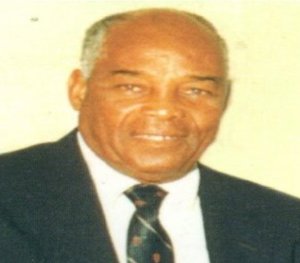
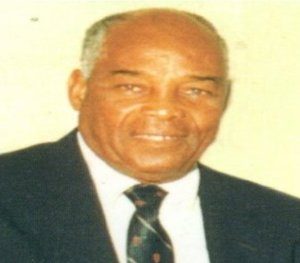
DOMINICA: Dominica’s first Chief Minister, Franklin Andrew Merrifield Baron was laid to rest at the Roman Catholic Cemetery following a state funeral at the St Gerard’s Hall Chapel in Roseau on Saturday April 22nd.
Mr. Baron passed away on 9th April, 2016 at the age of 93; he was laid in state at the State House Conference Centre on Friday 22nd April.
Among those attending the state funeral last weekend, were H.E the President of Dominica Charles Savarin and Mrs. Savarin, the Hon. Prime minister Dr Roosevelt Skerrit, the Hon. Speaker of the House Alix Boyd Knights and other members of parliament as well as family and friends.
The first Chief Minister was born in Portsmouth and was educated at the Portsmouth Government School, the Dominica Grammar School and St. Mary’s Academy.
He was involved in the first exports of bananas after World War II, after he joined his father’s import/export company A.A. Baron and Company as manager.
Former Chief Minister Baron was also a founding member of the Dominica Banana Growers Association.
In the 1940s he served on the Roseau town council and won the Roseau South seat in the 1954 and 1957 general elections.
When the ministerial system of government was introduced in March 1956, Baron was made Minister for Trade and Production. The next year he founded the United People’s Party (DUPP) and formed the government.
In constitutional changes resulting from the 1959 constitution, which came into effect in January 1960, Baron became Dominica’s first Chief Minister and Minister for Finance.
When the Dominica Labour Party won the general elections in January 17, 1961, Baron lost his seat. He quit active politics and returned to business, tourism and real estate.
He remained active in the community; however, and was the prime mover in the Rotary Club’s construction of a psychiatric unit to replace the out-dated St. Luke’s Psychiatric Home.
The first Chief Minister served as High Commissioner to the court of St. James, London and was ambassador to the UN, OAS and the US.
Baron leaves to morn his wife Sybil Baron and eight children including Minister for Foreign Affairs and CARICOM Affairs Francine Baron and former Parliamentary Representative for the Soufriere Constituency, Frederick Baron.
Jamaican Benefits from Mexican Scholarship


JAMAICA: Twenty-eight year-old Georgina Singh is proof of the successful and enduring diplomatic relationship existing between Jamaica and Mexico, over the last 50 years.
Ms. Singh, a recipient of the 2005 Call for Scholarships from the Mexican Government to foreigners, is an example of the value both countries place on tertiary education.
In 2006 and at age 17, Ms. Singh journeyed to Mexico to pursue an undergraduate degree in Government and Political Studies, majoring in Public Management at the University of Guadalajara in the State of Jalisco.
Recounting her initial exposure to a new environment, Ms. Singh said a bag her mother packed containing biscuits and other goodies, came in handy during some difficult moments.
Tours of Mexico and a behind the scenes look at aspects of Government, as a result of an internship, were among the highlights of her stay while studying in the Mesoamerican country.
Formative school lessons in Spanish in Jamaica were a big help.
“By then I could function very well in reading and writing,” said the St. Andrew High School for Girls alumna in a JIS News interview. She had obtained a grade one in the Caribbean Examination Council (CXC) Spanish examinations.
Sharing similarities between Jamaica and Mexico, Ms. Singh stated that both countries enjoy a love for spicy foods.
“I think they would use it more than us, because even in sweets and fruits they tend to use chili powder. They have a drink called Agua de Jamaica (Hibiscus Tea), which reminded me of Sorrel,” she said. A love for sports is another similarity both countries enjoy.
“Mexico’s culture is also diverse like ours. There are several indigenous groups in Mexico that constitutes the heart of their culture,” said the honour graduate.
During Ms. Singh’s stay in Mexico, support from fellow Jamaicans and other Caribbean friends, were keys to overcoming homesickness.
Ms. Singh, who is an Assistant to the Mexican Ambassador to Jamaica, Her Excellency, Cecilia Jaber, is encouraging Jamaicans to take up a Mexican scholarship. Entries into the scholarship programme are to open shortly.
She believes that the scholarship programme will deepen ties between Jamaica and Mexico.
“The Mexican Government has been a close partner of Jamaica and they have been very supportive of Jamaica’s effort to provide persons with opportunities for tertiary education. Scholarship opportunities fall under the Co-operation Programme of the Mexican Government,” she stated.
March 18 marked 50 years of diplomatic relations between the two countries.
Throughout this year, collaborative efforts between both countries Foreign Ministries and Embassies will result in a number of photo and culinary exhibitions, craft displays and cultural festivals. Jamaica and Mexico will also hold a meeting of the Jamaica/Mexico Bi-National Commission in Mexico City, in May 2016.
International Labour Organization discusses Social Protection with PS Bailey-Sobers
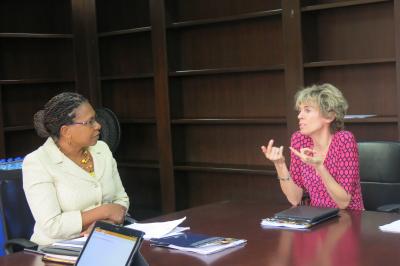
TRINIDAD: April 25, 2016: Representatives of the International Labour Organization (ILO) paid a courtesy visit on Permanent Secretary Jacinta Bailey-Sobers at the Ministry of Social Development and Family Services on Thursday April 21, 2016 to discuss issues surrounding social protection in Trinidad and Tobago.
Accompanying ILO’s Director of the Social Protection Department, Isabel Ortiz, were her colleagues, Mr Ariel Pino and Ms Claudia Coenjaerts, Director ILO Decent Work Team Caribbean.
Ms Isabel Ortiz and her team indicated that they are engaging with a number of countries to ensure social protection for vulnerable persons. She further suggested that the Ministry’s poverty consultations be used to highlight the importance of an integrated social protection response in this country. She also highlighted that while many countries dependant on oil and gas revenue, like Trinidad and Tobago have felt the impacts of the downturn, it was imperative that Trinidad and Tobago develop an overarching system to assist those who are affected.
Mr. Ariel Pino, expressed his organization’s willingness to provide assistance to the Ministry by means of strategic tools that will help develop the Ministry’s ability to track expenditure and refine the Ministry’s targeted approach to social protection. PS Sobers articulated that an evaluation and review of the programmes and initiatives offered by the Ministry is intrinsic to better targeting individuals who need assistance most. Bailey-Sobers welcomed the delegation’s offers of assistance and expressed the Ministry’s willingness to collaborate with the ILO in an effort to add value to the lives of the indigent and vulnerable in Trinidad and Tobago.
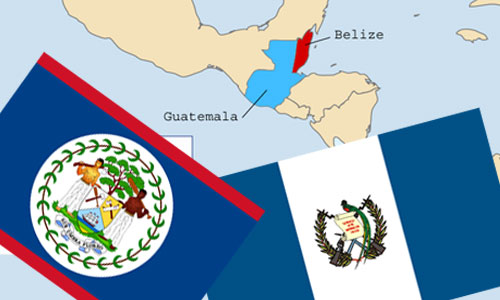
Tensions between Belize and Guatemala

BELIZE:
Statement by the Hon. Dean Barrow, Prime Minister of Belize
on Recent Increase in Tensions between Belize and Guatemala
Press Conference
Biltmore Plaza Hotel
April 25, 2015
We have just concluded a meeting of the National Security Council of Belize, and this is a follow-on from the meeting held on Friday when I was in New York, and in which I participated by phone. I am wholly satisfied, based on the NSC’s review of all the facts and its discussion of the pathway forward, that the immediate crisis provoked by Guatemalan President Jimmy Morales’s extraordinary address to his nation after the exchange of fire between Guatemalan civilians-who fired first-and the BDF leading to the death of a Guatemalan minor, is over. I am convinced that diplomacy, Belize’s invocation of the Confidence Building Agreement, and its call for peace and the de-escalation of the threat and tension created by the Guatemalan response and the measures that had been announced by President Morales, has worked. Our position has been noted and supported by the international community, and ultimately accepted by Guatemala. There has therefore been success in defusing the situation to a point where the return to normalcy has begun, and the two countries can start again to work on the reiteration and expansion of the protocols governing the complex relations between us.
I had already reported to the nation by phone on Friday from New York on my meetings and discussions that day with the Deputy Secretary-General of the United Nations; the Secretary-General of the OAS; the Secretary General of CARICOM; and, most importantly, President Jimmy Morales of Guatemala.
I repeat now that President Morales committed to me his agreement to our mutual de-escalation of the tensions that had arisen over the Cebada incident. It is true that he maintained at all times his strong and vigorous protest over what he described as the unprovoked BDF attack on innocent Guatemalan civilians and the ‘murder’ of the Guatemalan minor; and it is true that he repeatedly insisted on the need for justice for Guatemala and its citizens. But it is also true that I placed on record, and repeated throughout, the fact that the BDF patrol had come under fire first, and had responded in self-defense, firing in the direction from which they had been shot at. I made the further point that the civilian members of FCD, who had accompanied the patrol, confirmed the BDF’s version of events. I regretted the unfortunate loss of life of the Guatemalan minor but recollected that the BDF had several times before come under fire in that very area from armed and dangerous Guatemalans engaged in illegal activities and pillaging of Belizean forests, environment and resources. Our military had every right to defend itself and our patrimony.
I also pointed out that the OAS had already commenced an impartial investigation into the incident, and suggested that Belize would be willing, as we had done in a similar incident some time ago, to seek additional expert forensic help from the Americans to aid the OAS inquiry. Belize and the BDF had nothing to hide in circumstances where our actions were necessary and justifiable.
President Morales said that the killing of Guatemalans by the BDF could not continue, and that Guatemala must protect its citizens and would, among other things, seek redress for the death of the minor from the Inter American Human Rights Commission. But he agreed with me that while the OAS inquiry and Guatemala’s petition to the Human Rights Commission were proceeding, it was absolutely necessary to dial down the tension between our two countries. He therefore committed again to de-escalation, and accepted that I would make public to Belize and to the international officials to whom I would speak, his commitment.
Yesterday afternoon I consulted once more by phone with OAS Secretary-General Almagro, who briefed me on a meeting he had just held with President Morales. The SG reported that President Morales had also confirmed to him Guatemala’s commitment to de-escalate and proceed in peace with Belize as we try to work through our difficulties.
Then last night the Guatemalan Foreign Minister spoke to our Foreign Minister and repeated the position of his President regarding the commitment to peace and de-escalation.
It is on the basis of all this, Ladies and Gentlemen, that I say that any immediate danger has passed and our nation can, for the moment, rest easy.
Of course, our diplomatic outreach must continue full force. Baroness Scotland, the new Secretary-General of the Commonwealth, visits Belize later this week. I will fully brief her and ask for a meeting of the Commonwealth’s Standing Ministerial Committee on Belize. Foreign Minister Elrington attends the UK/Caribbean meeting on Friday in the Bahamas, and will brief a CARICOM caucus convened for the morning of that meeting. I see the Mexican Ambassador this afternoon and our American and British friends are fully in the picture. I will also on Wednesday have a visit from, and update, Canada’s High Commissioner to Belize.
President Morales and I agreed that as we go forward an operational modality must be found to eliminate the possibility of conflict between our two countries in the Adjacency Zone, and especially on the Sarstoon. The work will proceed in that regard at both the military and political levels.
Before I take your questions let me conclude by thanking Belizeans for the solidarity and resolve that was evident as the crisis was unfolding. The statements made by the Leader of the Opposition, and various organizations and social partners, were also extremely helpful. Finally, I thank the Security Forces of this country for their steadfastness in daily carrying out their job of protecting our country in the face of overwhelming odds.
Address to launch Vaccination Week in the Americas 2016

ST. KITTS: The 14th VACCINATION WEEK IN THE AMERICAS (VWA) & THE 5TH WORLD IMMUNIZATION WEEK
Monday, April 25, 2016
By Hon Wendy C. Phipps, Minister of State with Responsibility for Health, Social Services, Community Development & Gender Affairs
In a letter dated February 23, 2016, Director of the Pan American Health Organisation (PAHO), Dr Carissa Etienne, announced that the 14th Vaccination Week in the Americas (VWA) will be observed during the period April 23-30, 2016. Dr Etienne further announced that 2016 will also mark the 5th year in which the global community will celebrate World Immunization Week, an inter-related activity being coordinated by the World Health Organisation (WHO).
Vaccination Week 2016 is being celebrated in the Americas under the theme “Go for the Gold! Get vaccinated!” Our Federal Ministry of Health is advised that the selection of this year’s slogan was inspired by the 2016 Olympiad set to take place in Brazil in August. As such, citizens of the Americas – which includes our CARICOM region – are strongly being encouraged to protect themselves, their loved ones and their communities by getting vaccinated – as a means of preventing at least 25 vaccine-preventable infectious agents or diseases. Currently, some 2-3 million deaths are prevented annually due to immunization. As such, efforts must be maintained to close the immunization gap and achieve global vaccination targets by 2020.
As we use this week to showcase the benefits of vaccination to the people of our Country we should, in simple terms, remind the public of the basics about vaccination or immunization. Essentially, we should note that vaccines refer to weakened or killed microorganisms that can cause diseases (i.e. pathogens), that are designed to assist the human body in fighting the said diseases. Everyone can be assured that vaccines do not make individuals sick. Instead, vaccines are designed to prepare our immune system to fight off disease when we become exposed to powerful or full-blown pathogens.
As the people of St. Kitts and Nevis join the rest of the international community to celebrate Vaccination Week 2016, we should remember that our Federation has had a long history of health promotion and preservation via the administration of vaccines. Our archives can attest to the fact that a small pox vaccination campaign would have been implemented here in the early 1800s.
Over time, our national immunization programme has boasted of much success, thereby reducing disease burden and facilitating costeffective public health interventions. To be precise, over the past 35 years our vaccination coverage has remained high. Current coverage now ranks at or about 97% – although the rate 100% coverage was attained in the 1980s and beyond. This consistent success rate is no small feat, and is due in large measure to the following realities, for which we should be grateful:
1) Sustained public confidence and support placed in our national immunization programme;
2) The solid foundation laid by committed, well-trained and professional public health nurses;
3) Strong and clear governmental support;
4) Reliable and strategic partnerships between public health care administrators, civil society, and international donor agencies such as PAHO and WHO; and
5) Continuing public education and awareness of our people on the benefits of vaccination.
These combined efforts have, over time, resulted in both the elimination of diseases such as measles, small pox and polio, and serious curtailment of the impact of other well-known diseases and infectious agents such as Yellow Fever, Cholera, Whooping Cough or Pertussis, Hepatitis A and B, Tetanus and Diphtheria. As we should be well aware, new and aggressive research is now under way across the globe as the awareness, incidence and impact of other infections such as Zika are developed throughout the Americas.
In spite of the significant milestones and inroads made in (a) the research and development of vaccines; (b) successful, national immunization coverage; and (c) the discovery of new vaccines and treatments for emerging strains of illnesses and diseases, all of our national, regional and international efforts would be limited, at best, if individuals do not take and maintain a proactive approach in the management of their own health care and those of their loved ones. It stands to reason that we must preserve the gains we have achieved while closing the gap of unvaccinated individuals who often live on the margins of society, are classified as indigent, and are more likely than others to suffer from inequalities of various forms. It has been documented by PAHO that since the inception of Vaccination Week in the Americas in 2003, more than 580 million persons of various ages have been vaccinated. This is a remarkable achievement and must be sustained in the long-term.
Here in St. Kitts and Nevis we must continue to do our part to (a) encourage parents and guardians to vaccinate their infants and school-aged children; (b) ensure that there is adequate governmental support to finance our national immunization programme; (c) protect our citizens before they travel abroad to areas where certain diseases are prevalent; and (d) protecting our borders by ensuring that minimum vaccination standards are maintained by travelers seeking to access our ports of entry. These efforts must work in tandem with our personal practice of ensuring that (a) our environment and neighbourhoods are hostile to vector-carrying organisms and insects; (b) our water supply remains safe; and (c) our food security is given the highest priority. Through these combined efforts, we would be doing our small part in helping to prevent the estimated 1.5 million deaths that could be avoided if global vaccination coverage is improved. We would also be making a dent in the global statistic of approximately 18.7 million infants who still miss routine immunization for preventable diseases such as Diphtheria, Pertussis and Tetanus.
An impactful array of activities have been planned locally to celebrate Vaccination Week in the Americas, all of which have received the full endorsement of our Federal Government. Here are some of the highlights:
Launch of the 3rd Edition of the Expanded Programme on Immunization (EPI) in St. Kitts and Nevis (Monday, April 25th)
Launch of a One-minute Vaccination Advertisement featuring local athletic icons (Monday, April 25th)
Start of Vaccination Week in the Americas survey, done by our community nursing staff (Monday, April 25th)
Vaccination of Cabinet Members and Permanent Secretaries against Yellow Fever (Tuesday, April 26th)
National Switch Day – from the use of Trivalent Oral Polio Vaccine (toPV) to Bivalent Oral Polio Vaccine (boPV) – (Tuesday, April 26th)
Training of New Health Workers on EPI emphasis re: the Cold Chain System (Thursday, April 28th)
Health Fairs in Basseterre and Charlestown (Friday, April 29th). This activity involves vaccination of workers at the Parks and Beaches Unit on St. Kitts, HIV Rapid Testing, Health Education, and Blood Pressure and Blood Sugar Testing.
I wish to use this opportunity to encourage all of our citizens and residents to support the various activities planned for Vaccination Week in the Americas 2016. I also encourage everyone to feel empowered to freely access the services of the 11 health centres on St. Kitts and six (6) in Nevis regarding all of your healthcare needs. Please be assured that our community-based nurses and District Medical Officers (DMOs) are here to serve you, the public.
As Minister of State with Responsibility for Health, Social Services, Community Development and Gender Affairs, I am pleased to declare Vaccination Week in the Americas 2016 officially open.
May God bless the people of St. Kitts and Nevis with exceptionally good health and wellness.