CARICOM Heads of Government want easier CSME Administrative Procedures.
The Caribbean Community (CARICOM) Secretariat is reviewing CARICOM Single Market and Economy (CSME) administrative procedures to recommend ways of making them more simple and harmonized where possible. A consultation is planned for 26 September 2018 in Barbados and key stakeholders will assess the procedures as recommended in the CSME Review presented last year to CARICOM Heads of Government.
The CARICOM Heads had agreed the principles of non-discrimination among others should govern the further harmonization and simplification of the administrative procedures for the core CSME regimes. The CARICOM leaders have also mandated that the CSME administrative actions should not unnecessarily prolong the period for finalizing acceptance of the Skilled Community national.
Participants at the one-day workshop will compare their own experiences in moving within the region to the present procedures as implemented by CARICOM Member States and make recommendations where possible. The report from the consultation will be tabled at a meeting of the Council for Trade and Economic Development (COTED) scheduled for November 2018.
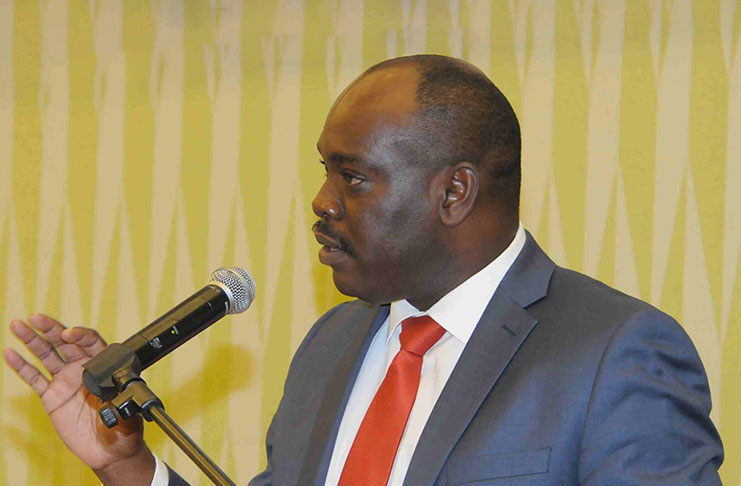
Minister in the Ministry of Finance, Ryan Straughn, addressing the Barbados Stock Exchange’s Sixth Annual Conference on Corporate Governance and Accountability at the Hilton Barbados Resort today. Minister Straughn was speaking on behalf of Prime Minister Mia Amor Mottley. (B.Hinds/BGIS)
Those persons who bought savings bonds three years ago under the marketing campaign will not be affected by Government’s debt restructuring.
Minister in the Ministry of Finance, Ryan Straughn, emphasised this point today, saying
Government would protect their interests as all responsible administrations were meant to do.
Mr. Straughn made the comments as he delivered the feature address on behalf of Prime Minister Mia Amor Mottley, at the Barbados Stock Exchange’s Sixth Annual Conference on Corporate Governance and Accountability, at Hilton Barbados Resort.
He told his audience: “It is important to point out that the Government of Barbados has decided to ring fence those holders of savings bonds on the basis that the principles of good corporate governance were not followed. The fact that the minimum deposit rate was reduced in such dramatic fashion, whilst almost simultaneously offering the public the opportunity to earn a return of 5.5 per cent, was simply too good to pass up.
“However, the fact that none of the persons who bought the said securities were told that the Central Bank of Barbados at the time was printing $50 million per month to finance Government’s expenditure, represented certainly in my mind, a breach of trust. In other jurisdictions, such a deliberate lack of financial disclosure would lead to someone heading to a correctional facility, dressed perhaps in orange.”
Mr. Straughn added that Government had created a special instrument for pensioners with Government securities, so they would receive principal payments over the next four years. He stated that Government was cognisant that many individuals with bonds might not have read the detailed prospectus when they purchased their existing securities. He gave the assurance that Government would endeavour to further sensitise the public as to the signals to look for before committing one’s hard earned monies.
He noted that Government’s recent announcement that it had reached a Staff-Level Agreement with the International Monetary Fund might have appeared that it was done in a short period of time.
“But in reality, this has been the result of two years of careful monitoring of the rapid economic decline and planning on our part to make sure that this became a reality. It must be said very clearly, that the reaching of the IMF Staff-Level Agreement is an important signal to the market that Barbados is on its way back,” he declared.
He reminded his audience that Government took the decision on June 1, 2018, that the country should undergo a comprehensive debt restructuring exercise, including both foreign and domestic securities. Mr. Straughn said that to the objective observer and investor, any glance at the financial balance sheet of Barbados could conclude that the country was insolvent and that clear and decisive steps were needed to effectively address the situation.
Prime Minister supports launch of Special Victims Unit and Abuse Hotline.
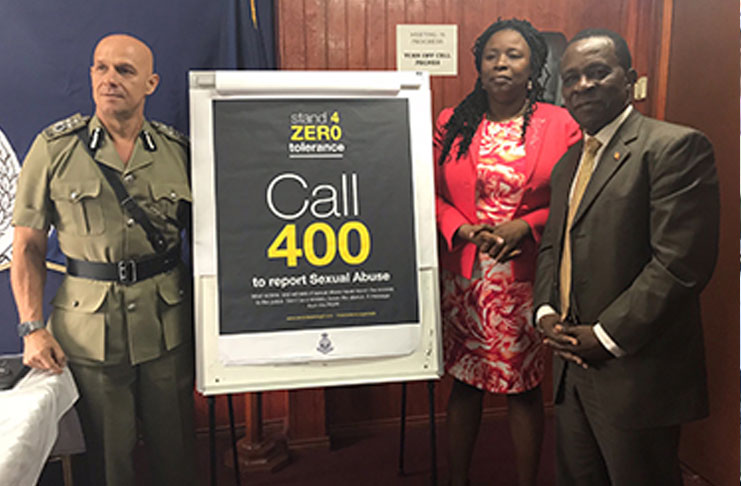
Prime Minister, Dr. the Right Honourable Keith Mitchell has affirmed Government’s full support for the newly launched Special Victims Unit within the Royal Grenada Police Force and the Sexual Abuse Hotline.
Speaking at the launch ceremony on Thursday, Dr. Mitchell said it is important that all citizens are protected. “A country that does not protect its citizens, especially the most vulnerable, is a country that is doomed to failure,” he said, adding, “you can have all the economic success but if you ignore the problems faced by the vulnerable and those crying for help, you will face enormous problems.”
Dr. Mitchell believes the new unit and hotline send the right message of “a caring society that
accepts responsibility for those who are vulnerable”.
Dr. Mitchell commended Minister for Social Development, Hon. Delma Thomas for her passion and commitment to addressing the plight of the vulnerable and mobilising stakeholders. He also acknowledged the initiative of the Acting Police Commissioner, Edvin Martin and his team in establishing the Special Victims Unit to address sexual violence, intimate partner violence and child abuse.
The Prime Minister said effectively dealing with domestic violence and sexual abuse requires a collaborative effort and he called on the population to stop protecting perpetrators of abuse. “People criticise the police for not doing enough but what can the police do when the persons with responsibility for protecting children are covering up for those who are committing these crimes against our young people.”
Dr. Mitchell further stated, “I think the new unit and the hotline will go a long way in addressing the issue and we have to continue to do whatever we can and to invest more. We also need the private sector involved, everyone has a stake in this. Our society would not make the progress it ought to make, if we are not collectively confronting this problem.”
Dr. Mitchell also underscored the need for proper training for persons dealing with matters of domestic violence and sexual abuse, noting that persons must be sensitive when dealing with such cases.
Minister Thomas in her remarks, said the launch of the unit will bring police response to domestic violence and sexual to the next level and make it easier for victims to access protection and support services.
She warned offenders that it will not be business as usual. She said, “this unit will also hold offenders accountable because valid evidence of each reported case will be collected, compiled and presented to the court.”
Minister Thomas also noted that the unit is part of a larger national effort which fits within the National Strategic Action Plan to Reduce Gender-Based Violence and the National Gender Equity Policy and Action Plan.
She said, “In the past few years, with the support in international partners and local corporate citizens, we reformed laws and policies; undertook studies; developed action plans; trained staff of key entities and partners; purchased equipment; and carried out consistent public sensitisation campaigns. This has awakened our attention as a people to make the reports and seek more and better services to address these forms of violence that had been hidden for far too long.”
Acting Police Commissioner, Edvin Martin said sexual and violent crimes pose a significant threat to society and the prevalence of these crimes has been increasing. He revealed that 259 sexual related crimes were reported between January and July 2018, 13% more than the same period in 2017
Mr. Martin said, “Whether the statistics are a consequence of an actual increase, or the result of greater reporting, what is certain is that those crimes are unacceptably high and a direct affront to the social and moral order of society and must be stopped.”
He noted too that, “In most cases, the accused is well known to the victims; they are either family, associated by friendship or personal friendships. The violations are a clear manifestation of a lack of control by perpetrators, a lack of respect for women and an abuse of the male to female authority and power balance.”
Wednesday’s ceremony included the unveiling of a Sexual Abuse Hotline, the number for which is 400. The infrastructure for the hotline which will be activated on September 24, is facilitated by FLOW. The number 400, symbolises the stand for zero tolerance of sexual abuse. The concept is the brainchild of Hexive Creative Agency Limited.
Prime Minister Mitchell adds his voice to encourage Youth to support CCJ.
Prime Minister, Dr. the Right Honourable Keith Mitchell added his voice this week to efforts to encourage the nation’s support to support the Caribbean Court of Justice – CCJ.
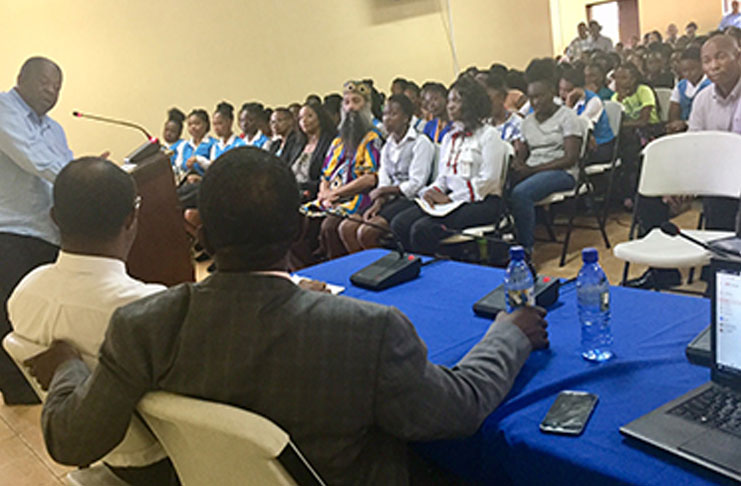
Dr. Mitchell attended an interactive session hosted by the CCJ Advisory Committee at the T. A. Marryshow Community College this week, where former CCJ President, Justice Dennis Byron was the guest speaker.
Addressing students in the packed room, Dr. Mitchell said a vote in support the CCJ is a vote for the future of the country. He reiterated that there is nothing political about acceding to the CCJ as the final appellate court.
“It is unfortunate that when issues of national importance are before us, sometimes petty political interests come into play. The CCJ is above and beyond partisan political interests. This is not a NNP issue, it is not an NDC issue, this is a national issue. Don’t let anyone tell you anything different, this is about you, it’s about your future,” the Prime Minister stated.
Dr. Mitchell encouraged active engagement of the nation’s youth in matters pertaining to the CCJ. “The CCJ is not just about this period in our history; it’s about the future of the country. That is why I believe it’s necessary for you to be actively involved in what this means and how it affects your future; how what is now our final court is affecting your present and your future.”
The Prime Minister expressed confidence in the population to make the right decision and in the CCJ to adequately dispense justice. “I am convinced that we are mature enough, we are capable enough and we are clear about what is best for us. I am clear that we have the quality of jurists and personnel within our region that we should as a Caribbean people have our own final court in our hands.”
In addressing the college students, Sir Dennis Byron encouraged them to begin envisioning a world where they are the leaders. He shared that as a young man, he looked forward to the day when the region would have control of the judiciary.
Opting for an interactive approach, Sir Dennis addressed questions relating to the impartiality of the court, the role of the CCJ in spearheading reform in the judicial process, equal access to justice and ensuring that justice is equitable for all.
On the subject of bias and impartiality, Sir Dennis noted that if there is an appearance of bias, not even actual bias, it is the duty of the judge to recuse himself/herself from the case. Regarding concerns about judgments against government, he noted that several orders have been made against regional governments and in all cases, these have been honoured.
In addition to its mission to promote and protect the rule of law as a court of final appeal, the CCJ has also played a critical role in spearheading reform in the judicial process. Here in Grenada, the CCJ assisted with the design of a system to address a serious backlog in civil cases which was successfully implemented over an 18-month period, resulting in the total elimination of the backlog.
Sir Dennis said the CCJ has proven that it is responsive to the needs of the society and is willing to take action that will have a direct impact on the lives of the people. “We have already demonstrated in Grenada that practical problems that affect the society, we can remedy them immediately and be available for immediate action to support improvements in the way justice is done.”
Sir Dennis also addressed a second gathering on Tuesday evening at the Deluxe Cinema in
Grenville.
November 6, 2018 is the date set for the national referendum to determine whether or not the Caribbean Court of Justice (CCJ) will replace the Privy Council as the final Court of Appeal for Grenada. A number of public awareness activities are being held in the run-up to the referendum.
The CCJ Advisory Committee invites everyone to attend a High Level Meeting at the Grenada Trade Center on Wednesday August 29th, 2018 at 6:00pm.Prime Minister Mia Mottley will be delivering an address to the audience concerning The Caribbean Court of Justice (CCJ).The Theme of this Conference “Brake the Chains of Colonialism for a United Caribbean”
The 2019 National Budget of Trinidad and Tobago, will be presented in the House of Representatives by the Honourable Colm Imbert, Minister of Finance, on Monday, October 1st 2018 from 1:30 p.m.
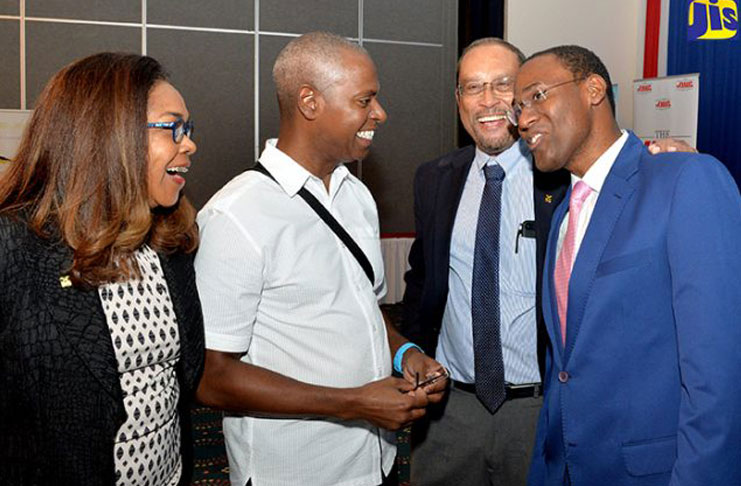
Finance and the Public Service Minister, Dr. the Hon. Nigel Clarke (right), shares a joke with President and Chief Executive Officer, Massy Group, E. Gervase Warner (second left), during the Private Sector Organisation of Jamaica (PSOJ) annual economic forum
Finance Ministry Drafting Policy to Respond to Natural Disasters.
Finance and the Public Service Ministser, Dr. the Hon. Nigel Clarke, says the Ministry is drafting a Public Financial Management for Disaster Risk Policy and Framework, for submission to Cabinet.
Addressing the Private Sector Organisation of Jamaica (PSOJ) annual economic forum at The Jamaica Pegasus hotel in New Kingston on Thursday (September 20), he said the Policy aims to strengthen Jamaica’s response to natural disasters through a streamlined national approach that will, as best as possible, facilitate the availability of dedicated resources for recovery.
Dr. Clarke informed that the Policy will be tabled in Parliament following Cabinet’s deliberations, and emphasised that the Government wants to “ensure that we have consensus [through a national approach] because natural disasters affect us all”.
He said that Jamaica and other Caribbean countries are vulnerable to natural disasters, citing Sunday’s (September 16) 4.6 magnitude earthquake that shook sections of the island.
The Minister said data from the Association of Caribbean States (ACS) show that the Caribbean recorded 165 natural disasters between 1990 and 2008, “and as we know from our experience… natural disasters result in unplanned expenditure”.
Noting that events like Hurricane Gilbert, which devastated the island in 1988, “only occur once every several decades,” the Minister said data and experience show that they “cost [countries like] Jamaica tremendously”.
Additionally, he said natural disasters can overwhelm public resources and potentially set small countries back “for years”.
Dr. Clarke said Jamaica has undergone and sacrificed too much in the quest to reduce debt, attain fiscal stability and exit a programme relationship with the International Monetary Fund (IMF), to risk facing the potential threats and risks posed by natural disasters, without having adequate safeguards in place.
These, he noted, have been “tremendous” over the last several years. They include contingent credit claims and catastrophe bonds, which the Minister said have ensured the availability of funding and other resources to alleviate resulting dislocation and inconveniences.
“Clearly, there is no [contingency] that can insulate us 100 per cent from all risks for all times… but we must begin [somewhere]… and as our fiscal space opens up, we can take on more and more protection,” he added.
Dr. Clarke said with the Public Financial Management for Disaster Risk Policy and Framework in place, “we can build on top of, within the scope of our fiscal resources, the products that can help us to alleviate the impact of natural disasters”.
He maintained that Jamaica’s quest for economic independence and resilience will require that, in addition to the monetary strength and fiscal discipline that are institutionalised, “we also have an institutionalised response to natural disasters [and] the financial risk posed by natural disasters”.
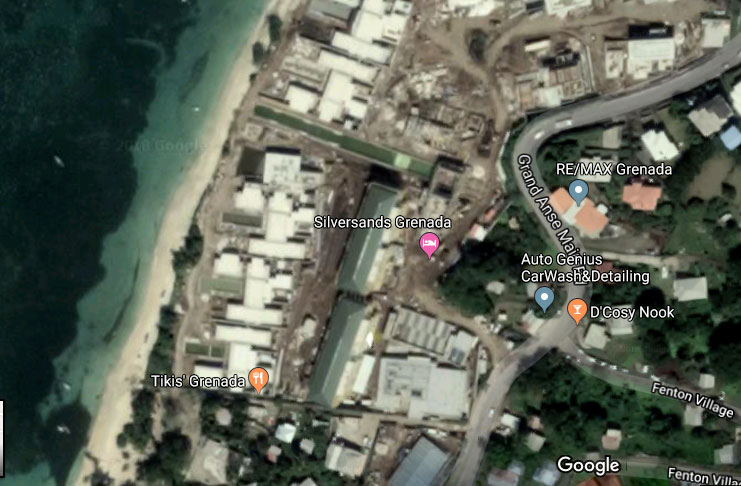
Ministry of Finance requests adjustment to Silver Sands Project.
The Ministry of Finance Planning, Economic and Physical Development has requested specific adjustments to the Silver Sands Development Project following discrepancies identified.
The ministry has been consistently holding discussions with the team of the Silver Sands Development Project, since September 3, 2018, with a view to addressing variances to the project that were not approved.
On Monday, September 17, 2018, following a high-level meeting attended by the leadership of the ministry, the Head of the Physical Planning Unit and the team from Silver Sands, the delegation visited the project site to ascertain the necessary remedial action.
On-site, the Ministry of Finance further assessed the situation and provided guidance to the developer on the specific adjustments required.
Following the site visit, the developer complied with the advice of the team and immediately proceeded to undertake the recommended adjustments.
The Ministry of Finance continues to be vigilant that all developments across the country adhere to approvals granted.
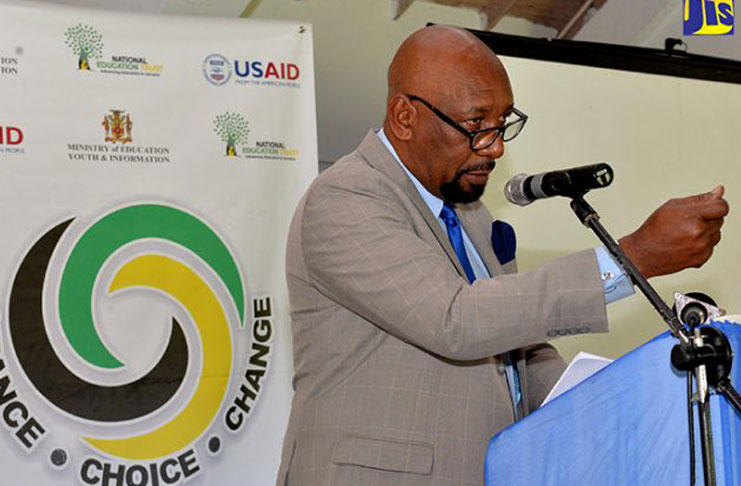
Minister of State in the Ministry of National Security, Hon. Rudyard Spencer, addresses the opening ceremony for the ‘Chance, Choice, Change (Triple C)’ Day Camp
Minister of State in the Ministry of National Security, Hon. Rudyard Spencer, says the Government is taking the formation and participation in gangs very seriously and the security forces will be going after gang leaders and apprehending them.
“We will be diminishing their status as heroes within the communities; they will face the full force of the law. Their assets will be seized and any assets [that] they have placed in the names of family members will also be seized. We will ensure that those who align themselves with organised criminal groups will be punished and will be relentlessly pursued,” he said.
Mr. Spencer was speaking at the opening ceremony for the ‘Chance, Choice, Change (Triple C)’ Day Camp on Wednesday (September 19) at the Caymanas Golf and Country Club, St. Catherine.
The Criminal Justice (Suppression of Criminal Organisations) Act, popularly called the ‘anti-gang’ law, is being reviewed to provide clarity about how a gang will be declared and special measures in court proceedings to protect witnesses.
The law makes provision for the disruption and suppression of criminal organisations, outlines offences in order to restore a sense of security in the Jamaican society and strengthen the capacity of law-enforcement agencies to deal with crime more effectively.
The Triple C Day Camp formed part of activities for Anti- Gang Week 2018 being observed from September 16 to 21 under the theme: ‘Gang Life equals no Life.’
More than 50 students who are in conflict with the law and are on probation, attended the one-day camp, which featured special presentations by members of the Counter-Terrorism and Organised Crime (C-TOC) Branch of the Jamaica Constabulary Force (JCF) and representatives from the United States Agency for International Development (USAID).
The intervention was organised by C-TOC in collaboration with the Safety and Security Unit of the Ministry of Education, Youth and Information and the Department of Correctional Services (DCS).
A 2017 study undertaken by the Ministry of National Security reported that there are 274 gangs operating in Jamaica with some 9,000 members. Seventy-seven of these gangs are considered major organised criminal enterprises.
The report also stated that there are growing numbers of children within schools who are involved in or associated with gangs.
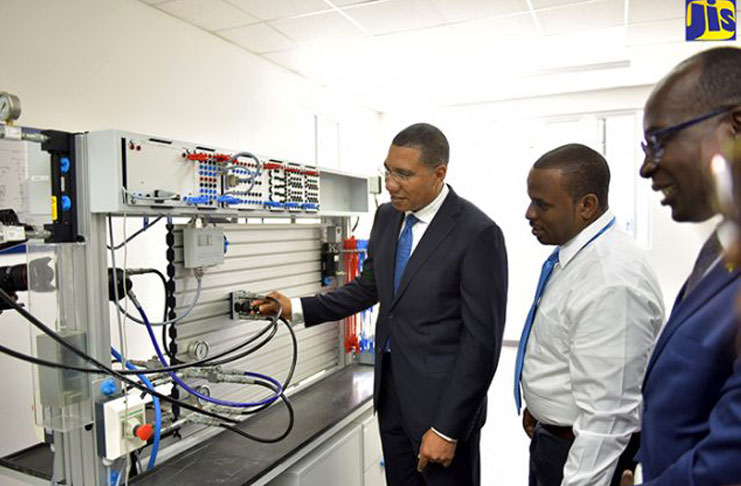
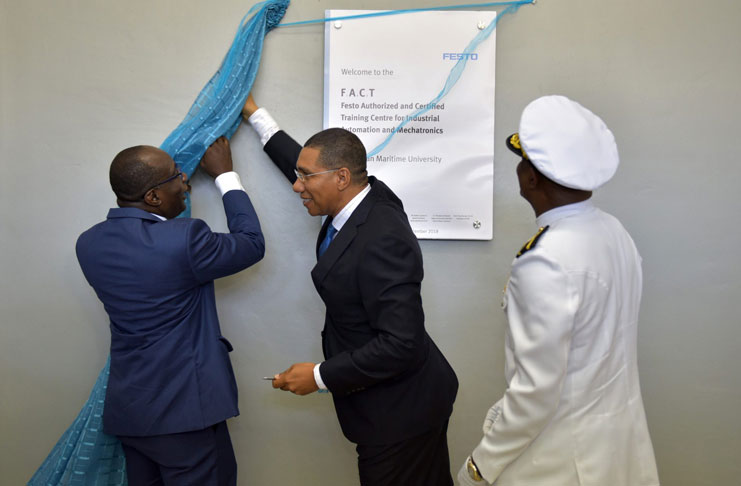
Prime Minister, the Most Hon. Andrew Holness (left), tries out a hydraulic training device in a laboratory at the Festo Authorised and Certified Training (FACT) Centre located at the Caribbean Maritime University (CMU) in Kingston.
PM Opens Festo Training Centre at CMU.
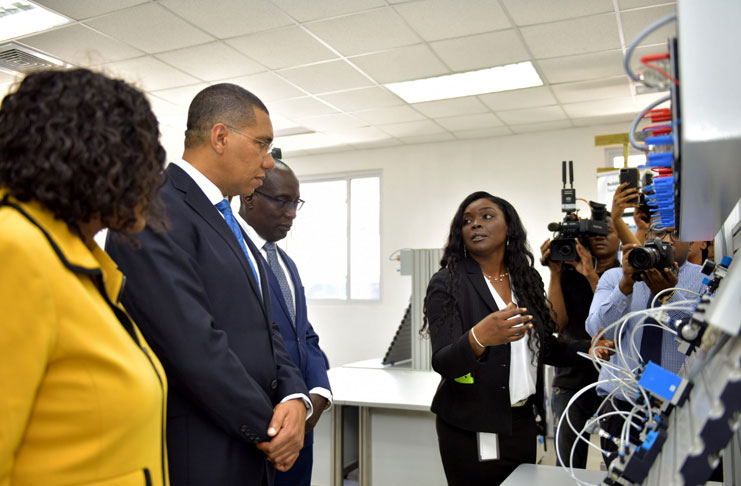
Prime Minister, the Most Hon. Andrew Holness, on Wednesday (September 19), officially opened the region’s first Festo Authorised and Certified Training (FACT) Centre at the Caribbean Maritime University (CMU) in Kingston.
The state-of-the-art facility, which will deliver international certification in industrial automation and mechatronics, is the result of a partnership between the CMU and globally renowned German training institute, Festo Didactic.
The Centre, which is the largest to be established globally, has the capacity to train and certify more than 4,000 students annually.
Prime Minister Holness, who delivered the keynote address, said the facility’s development is consistent with Jamaica’s commitment “to develop our human resources, so [that] they are second to none and to develop our institutions, so that they are modern and internationally competitive”.
He noted that the world is on the cusp of the fourth industrial revolution, which integrates physical, digital and biological technologies, and the scope and complexity of transformation requires that “we must be cutting-edge and ensure that high standards are the norm and not the exception”.
He said the Centre will ensure that graduates are “instilled with analytical and creative habits of thinking and an aptitude for discernment and sound judgement that can guide them through a lifetime of achievement and success”.
“It is through equipping our human resources to be productive and competitive that we will attain the potential and will for positive growth and development,” he pointed out.
In his remarks, Education, Youth and Information Minister, Senator the Hon, Ruel Reid, said the FACT Centre has provided the Caribbean with the largest cutting-edge engineering training capacity.
“The CMU, as we all know, has already soared to national, regional and international acclaim… and now partnering with Festo… will bring the university to even higher heights. I am confident that this addition to the CMU campus will yield fantastic results,” he added.
Festo Didactic Regional Director for the Americas, Dr. Theodoros Ktistakis, noted that the FACT Centre’s opening culminates six years of discussions with the CMU, and will provide training opportunities for young people in a “modern and motivating environment”.
He said that the training and certification that will be provided at the CMU, through the FACT Centre, “will have worldwide acceptance”.
“The training facility, which we inaugurate today, and the CMU’s team, which are trained and certified, are the guarantors that education and skills development correspond to international standards. Festo, as a long-time partner of CMU, will constantly support you and will be at your side,” he assured.
For his part, CMU President, Professor Fritz Pinnock, described the FACT Centre’s establishment, as a “journey with a vision”, adding that “this is only the beginning, as we [will be] leapfrogging into the future” through the training and certification provided.
Other key partners in the development of the FACT Centre include the PetroCaribe Development Fund, which provided US$402 million of the US$700-million-plus expenditure on the facility, and HEART Trust/NTA, which will partner with the CMU in programme delivery.
New Council Appointed for the National Competitiveness and Productivity Council – NCPC.
The Government of Saint has announced new members for the National Competitiveness and Productivity Council. Productivity and competitiveness remain as top priorities for the Government of Saint Lucia and the members are fully committed to building on the successes of the previous Council as well as birthing new approaches and initiatives towards the continued enhancement of national productivity and competitiveness levels.
Heading the Council is Mr Gerard Bergasse, Island Manager for St Lucia Tropical Shipping. Mr Bergasse is an active member of the St. Lucia Chamber of Commerce and has also served on the Boards of the St Lucia Air and Sea Ports Authority and the National Insurance Corporation.
The other members of the Council are:
Private Sector:
Mr Brian Louisy, Executive Director, Chamber of Commerce
Mr Nicholas Barnard, Managing Director, St Lucia Linens
Public Sector:
Ms Jemma Lafeuille, Acting Director, Research and Policy, Department of Finance
Ms Nancy Francis Charles, Director, Investment Coordination Unit, Department of Commerce
Trade Unions/Employers
Mr Cyprian Montoute, President, St Lucia Civil Service Association and Vice President of the Trade Union Federation
Dr Malcolm Charles, Chartered Management & HRD Consultant, Director & Past President of the St Lucia Employers Federation
Academia
Ms Theodora Sylvester, Lecturer at the Sir Arthur Lewis Community College