
Home Blog Page 120

Message of condolence from CARICOM

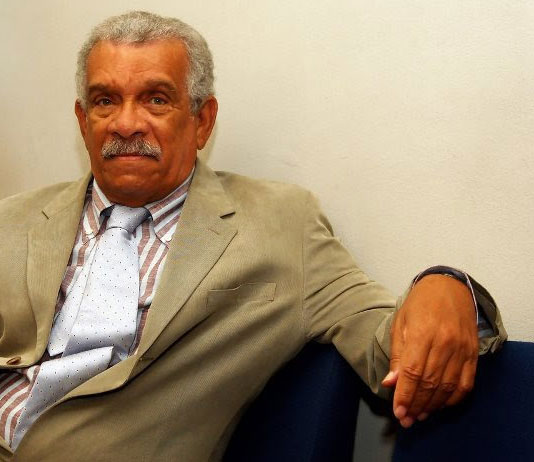
Sir Derek Walcott

Message of condolence from the secretary-general, caribbean community (CARICOM) Ambassador Irwin Larocque on the passing of Sir Derek Alton Walcott, KCSL, OBE, OCC.

On behalf of the Caribbean Community (CARICOM), I wish to express profound sympathy on the passing of internationally acclaimed Caribbean poet and playwright, Saint Lucian born, Nobel Laureate, Sir Derek Walcott, OCC.
Sir Derek, a prolific and accomplished writer who received the Nobel Prize for Literature in 1992, has left a void in the tapestry of Caribbean literature and theatre, after more than seven decades of producing inspiring literary works in essays, poetry and plays.  The boy prodigy, who published his first poetry collection aged 14, evolved into a global literary legend
Sir Derek was among the first recipients of the Community’s highest award, the Order of the Caribbean Community (OCC) in 1992.  He was also highly decorated with national and international honours, most notably Officer of the Order of the British Empire (OBE) in 1972; and Knight Commander of the Order of Saint Lucia (KCSL) in 2016.
To the Caribbean Community, Walcott was a true Cultural Icon, a gift from Saint Lucia to the Region and the world.  He embraced the entire Caribbean as his own.  His lyrical poetry and penetrative plays resounded with the rhythm and spirit of the Caribbean Civilisation.
A quintessential Caribbean writer, Walcott is perhaps most celebrated for his epic poem, Omeros (1990), which received widespread global acclaim from publications such as The Washington Post and The New York Times Book Review, which chose Omeros as one of the “Best Books of 1990”. His play Dream on Monkey Mountain (1970) was produced on NBC-TV and performed off-Broadway in 1970 and 1971, respectively, and also won the prestigious Obie Award for “Best Foreign Play” in 1971.  He also left an enduring legacy in theatre by founding the Trinidad Theatre Workshop in 1959 and the Boston Playwright’s Theatre in 1981.
In addition to the Nobel Prize, Walcott also won many literary awards over the course of his sterling career, including a MacArthur Foundation “genius” award (1981); the Queen’s Gold Medal for Poetry (1988); the W. H. Smith Literary Award for Omeros (1990); the Anisfield-Wolf Book Award for Lifetime Achievement (2004); the T.S Eliot Prize (2011) for his book of poetry White Egrets; and the Griffin Trust for Excellence in Poetry Recognition Award in 2015, among several others.
The Caribbean Community wishes to express sincere condolences to the family of Sir Derek Walcott, the Government and People of Saint Lucia and the artistic community of the Caribbean on the tremendous loss of a gifted and inspiring Caribbean writer.  We salute this distinguished son of our Region, whose presence in our midst will be greatly missed.

Early Warning System coming to help Caribbean fishermen

Early Warning System

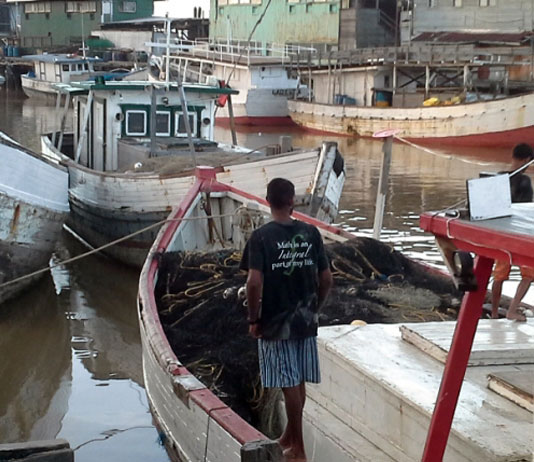
Early Warning System coming to help Caribbean fishermen cope with Climate Change Risks.

The challenges of climate change and variability faced by fishermen and women in four Caribbean countries are to be addressed through early warning system and emergency response tools being developed under the Caribbean Regional Track of the Pilot Programme for Climate Resilience (PPCR).
The ICT solution, which is being developed by the ICT4Fisheries Consortium in collaboration with the Caribbean Regional Fisheries Mechanism (CRFM), will work to reduce risks to fishers’ lives and livelihoods posed by climate change and climate variability. The ICT4Fisheries Consortium is a multidisciplinary team comprising members from The University of the West Indies (UWI) St. Augustine and Cave Hill Campuses, the University of Cape Town and the Caribbean Network of Fisherfolk Organizations.
Possible impacts of long term climate change trends and short term extreme weather events on Caribbean fisheries include damage to fishing and aquaculture community infrastructure, including roads, harbours, farms and houses caused by sea level rise and stronger storms, as well as unsafe fishing conditions and loss of life at sea as a result of strong storms and hurricanes, according to a 2015 study published by the Food and Agricultural Organisation (FAO). Other hazards that are believed to be influenced by climate, such as sargassum seaweed, are also of deep concern to fishers.
The ICT-based early warning system is expected to reduce fisher folks’ vulnerability to the impacts of climate change. Using an application for mobile phones, fishers will be able to receive early warnings of risky weather and sea conditions. The mobile application will also be used to encourage fishers to share their local knowledge to support and improve climate-smart fisheries planning, management and decision-making. The system will be integrated within existing national disaster risk management and emergency response frameworks, and its main focus will be on communications.
St. Vincent and the Grenadines, Grenada, Dominica and Saint Lucia are the four regional PPCR countries in which the early warning system for fishers will be developed. The system will take into account the specific situations of target countries. ICT4Fisheries will not only develop and deploy the tools but will also provide training in their use and administration to country and regional level stakeholders.  The system should be in place by 2018.
The Caribbean PPCR is a regional programme that consists of six individual country pilots in Dominica, Grenada, Haiti, Jamaica, St Lucia and St Vincent and the Grenadines, and a regional track of activities which supports resilience building in these countries and, will also provide benefits to the wider Caribbean.
The Caribbean Regional Track of the PPCR is working to improve regional processes to acquire, store, analyse and disseminate climate relevant information and to pilot and scale up innovative climate resilient initiatives in the region, under the coordination of the University of the West Indies, Mona Office of Research and Innovation (UWI MORI). Funds are provided through the Inter-American Development Bank (IDB).
The programme’s activities are spread across four components being co-implemented by five regional institutions.  The early warning and emergency response system for fishers is being developed under component four which supports climate change adaptation initiatives in key sectors, including the Marine Sector. Under this component, co-implementing partner CRFM,an inter-governmental regional fisheries organization that promotes and facilitates responsible and optimal utilization of the region’s fisheries and other aquatic resources, is focusing on activities to reduce the impact of climate-related risks on the Caribbean’s fisheries industry.
http://crfm.int/

OECS backs Specialty Caribbean Expo

Caribbean Expo - 2017

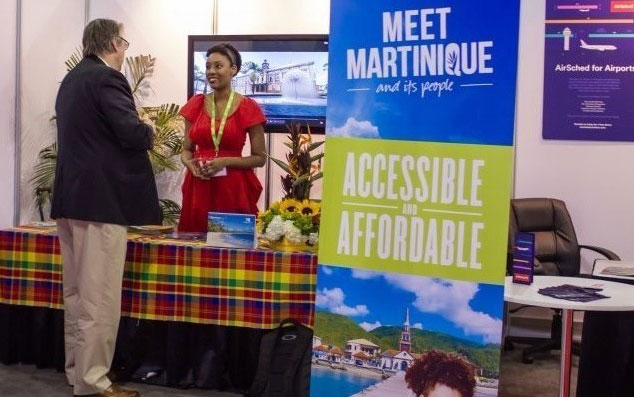
Martinique Exhibiting at Routes Americas - 2017Caribbean Expo: Products, Services, Music and Fashion take the Spotlight.

Over Fifty SMEs from across the OECS will showcase their products and services at the Specialty Caribbean Expo to be held at the Daren Sammy Cricket Ground from March 9 – 12. They are being supported by the OECS Commission through its Competitive Business Unit – CBU. The Expo, which is being held under the theme: “A Unique Buying Experience”, will feature high quality, innovative products and services of the region.

The OECS CBU is collaborating with St. Lucia’s Trade Export Promotion Agency (TEPA) and Ministry of Commerce in staging the Specialty Caribbean Expo. Marlon Marie, acting head of the CBU said: “The Specialty Caribbean Expo is a clear manifestation of regional cooperation as it brings together the OECS and one of the leading trade promotion agencies, working with SMEs and governments in all Member States in this most extensive engagement.”  Marie says the Expo serves as a platform to show the output of the various sub-components of the private sector programme under the Economic Integration and Trade of the OECS Region Project funded by the 10th European Development Fund (EDF) and the governments of the OECS.
“For us, this is a most important and critical milestone for which we owe a great debt of gratitude to the EU and the governments of Member States as we continue to build the competitiveness of our SMEs to take full advantage of trade opportunities in the single space of the Economic Union.”
Specialty Caribbean Expo will facilitate networking between exhibitors, importers, buyers, distributors, wholesalers and relevant trade agencies in search of new products and services. Featured Sectors include Information Technology (IT), Music, Agro-Processing and Agri-Business, Fashion, Professional Services, Film, and Construction. Approximately 150 exhibitors from the OECS will meet and engage buyers from the UK, Canada, USA, Guadeloupe, Trinidad, Jamaica, Barbados, Martinique and Saint Lucia. Local buyers include major hotels on the island, Massy Stores, Massy Distribution, and Sea Island Cotton Shop.
The OECS Commission will use the opportunity of the Expo to formally launch several of its major outputs from the 10th EDF Programme, including a Music Compilation from a Regional Song Writers Camp, a new online management information database system for the private sector, three (3) films in production by regional film makers from its film development programme, as well as a video on cultural development in Member States.
In addition to exhibiting their products and services, the Expo provides a unique opportunity for exhibitors and others to attend master-classes and workshops on key developmental and trade issues. The Expo will feature an Entertainment Segment where emerging talent in music and fashion will be showcased to buyers from Europe and North America. Service providers in the ICT sector will also have an opportunity to build interest among potential consumers of their services.
The opening day, Thursday 9th March, will be a dedicated Buyer Day. It will culminate with a Business Mixer. Business to Business (B2B) meetings are scheduled to optimize the level of networking between exhibitors and buyers throughout the four day exposition. Key partners assisting TEPA with the mobilization of Buyer Missions are the OECS Commission, the British Caribbean Chamber of Commerce (BCCC), and Conseiller en Développement International.

Ministry Signs Agreement with SESB – Solar Energy Solutions Belize

SEBS - Solar Energy Solutions Belize

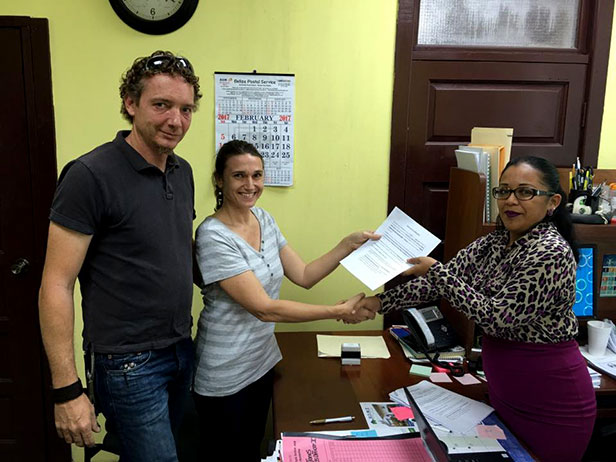
Ministry of Public Service, Energy and Public Utilities Signs Agreement with Solar Energy Solutions Belize.

The Ministry of the Public Service, Energy and Public Utilities and the Solar Energy Solutions Belize (SESB) of Belmopan signed an article of agreement on Tuesday, March 7, 2017, to establish power service connections in the Cayo District.
The service connections will be for power stations to 40 houses and installation of wiring of the said 40 houses in La Gracia Village in the Cayo district. Signing on behalf of the Government of Belize was Chief Executive Officer in the Ministry of the Public Service, Energy and Public Utilities Dr. Peter Allen, and on behalf of SESB was Director of Sales & Operations Silvan Kuffer. Service connections have already commenced.
SEBS- Solar Energy Solutions Belize SEBS- Solar Energy Solutions Belize

Message from CARICOM to commemorate International Women’s Day

CARICOM

Message from the Caribbean Community secretariat to commemorate International Women’s Day, 8 March, 2017.

The Caribbean Community joins with the global community in celebrating International Women’s Day 2017. The theme for this Forty-Second observance is #BeBoldForChange; a clarion call for all citizens of our Region and the world to play their part in forging more gender inclusive, just societies.
Over the past four decades, Member States of our Community have made legally binding commitments through various conventions and agreements to fulfill obligations related to human rights, gender equality and the empowerment of women. These include the 1979 Convention on the Elimination of All Forms of Discrimination Against Women (CEDAW) and the 1995 Beijing Declaration and Platform for Action. The 2030 Agenda for Sustainable Development (SDGs) recognizes in profound ways that the achievement of gender equality and the empowerment of women and girls is crucial for targeted world progress towards poverty eradication and indeed represents a call for the world to #BeBoldForChange.
The recent 20 year Review of the Beijing Platform for Action in 2015, highlighted some areas of progress related to gender equality and empowerment of women in the Caribbean region. These include new legislation to address gender based violence; women’s increased participation and achievement at secondary and tertiary levels of education; increased representation of women in governments, particularly in the public service and reduced maternal mortality and the spread of HIV.  However, persistent challenges in enforcing the principles of equality and non-discrimination were highlighted in several areas important to the development of our region, including:

  • women’s full participation in paid employment as wage discrimination persists with women earning on average 19 percent less than men;
  • governance remains tilted in favour of male leadership in the public and private sectors; and
  • gender-based violence continues with great intensity and impacts on the health, social and economic well-being of families, particularly women and children.

Many countries in CARICOM have taken ‘bold steps’  to enact legislation to promote the rights of women in conformance with the CEDAW Convention and based on CARICOM Model Legislation in eight areas, namely citizenship, domestic violence, equality for women in employment, equal pay, sexual harassment and sexual offences, inheritance, maintenance and maintenance orders. Several countries have also introduced national gender policies to guide the work of the national gender machineries and mainstream gender across the work of government.
The World Economic Forum has reported in the Global Gender Gap Index, 2016 that some CARICOM Member States, namely Barbados, The Bahamas, Jamaica and Trinidad and Tobago have made progress towards closing the gender gap by between 72 – 74%. The Index is based on four key areas – health, education, the economy and politics. The overall global forecast is that the gender gap won’t be closed completely until 2186, some 169 years from now! This signals that there is much more work to be done.
Being ‘Bold for Change’ signals the need for deliberate steps by all to realise gender equality. As a Community, let us redouble our efforts: men and women, boys and girls, to embrace that bolder and more transformative agenda with strong partnerships among government, the private sector and civil society.  The time for your advocacy and activism, is now!
Today, let us salute the women in our Caribbean Community and all over the world as we celebrate International Women’s Day 2017!

Montserrat Student wins ECIT Logo Competition

ECIT
ECIT Logo

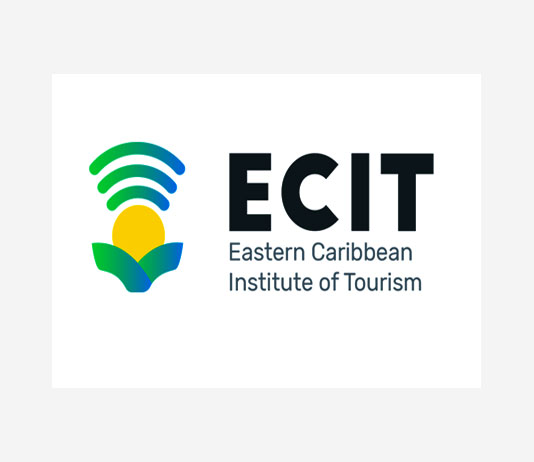
Winning Logo depicts ECIT as a virtual platform.

Dexter Small
Dexter Small

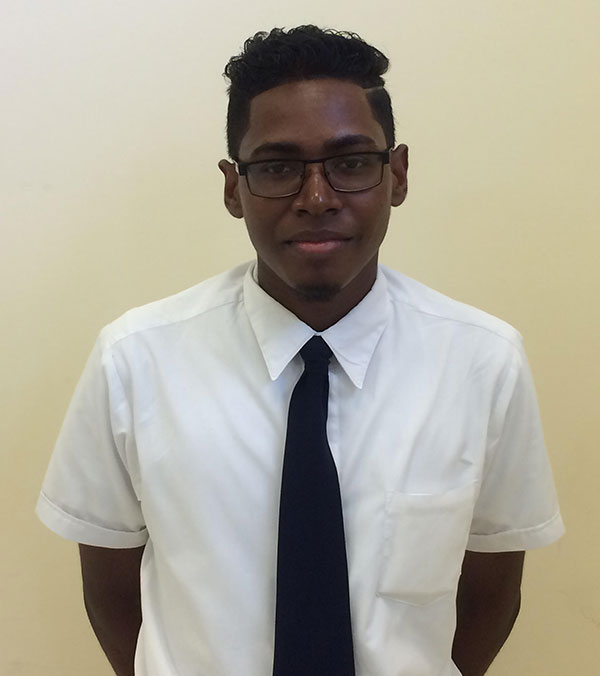
Dexter Small, a 19-year-old student of the Montserrat Community College  has designed the Logo for the Eastern Caribbean Institute of Tourism (ECIT). Dexter’s design was the Winning Entry out of 20 submissions from across the OECS. The Logo Competition was open to students enrolled in the ECIT’s nine partner institutions across OECS Member States. The winning logo was selected based on the following criteria: relevance, originality, and aesthetic quality.

The Winning Logo depicts the ECIT as a virtual platform, illustrated by the wifi signal. The logo also contains aspects of tourism (sun) and an aspect of education, represented by a book. Dexter’s submission was selected as the ECIT Logo, principally for its creativity and simplicity.  He was awarded a cash prize of EC $1000. 00 for his design.
Dexter,  whose major is Information Technology, has a passion for computer programming and graphic designing. His career goal is to become a Software Developer and Graphic Designer. Commenting on his winning entry, Dexter said: “I saw this competition as an opportunity to hone my skills in this field, and gain some experience. Winning has motivated me to continue to learn and grow as a graphic designer.”
ECIT member institutions participating in the Logo Competition were the Dominica State College, the  Clarence Fitzroy Bryant College (St. Kitts & Nevis), the Montserrat Community College, the T.A. Marryshow Community College (Grenada), the H. Lavitty Stout Community College (BVI),  and the St. Vincent and the Grenadines Community College.
ECIT has been conceptualised as a statutory inter-governmental tourism and hospitality virtual training and educational institution serving all OECS Member States. It comprises nine (9) partner institutions across OECS Member States. Each partner institution will operate a centre of excellence in a specialised area of tourism and hospitality education and training.
ECIT will work collaboratively with the public and private sector and relevant individuals and entities to meet and allow access to the specialised education, training and knowledge needs of the tourism and hospitality sector in the OECS region, with network activities managed and coordinated from a central hub, located at the Montserrat Community College.
The Eastern Caribbean Institute of Tourism is being established with funding from the European Union, through its 10th EDF programme of Economic Integration and Trade of the OECS region.

Empowering Women in a changing World

Women's Month - 2017

Belize, Women’s Month 2017

[Click to Down Magazine]

International Women’s Day/Women’s Month 2017 Message

Hon. Anthony "Boots" Martinez

Hon. Anthony Martinez, Minister of Human Development, Social Transformation and Poverty Alleviation International Women’s Day/Women’s Month 2017 Message.

Each year on March 8th we join the global community in commemorating International Women’s Day: a day on which the world celebrates the social, economic, cultural and political achievements of women. In Belize, we have designated the entire month of March as Women’s Month. March is the month of stock taking on gender issues, as we not only celebrate the many achievements of our Belizean women, but we also reflect on the progress made in gender equality and equity and renew our commitment to the continued advancement of women.
The theme for this year’s women’s month, “Empowering Women in a Changing World: Planet 50:50 by 2030”, focuses on the impact that rapid changes in technology and globalization is having and can have on the status of women. These changes present opportunities and threats to the advancement of women. Along with all the positives that can be gained from an ever shrinking and increasingly interconnected world, also comes global fiscal and trade policies, that lead to increased informality and instability of labour markets and negative environmental impact; all issues that are shown to disproportionately affect women.
If we look at global statistics, women and girls make up more than half the world’s population and are often more deeply impacted than men and boys by poverty, climate change, food insecurity, lack of healthcare, embedded societal practices, discrimination and global economic crises and changes. These global realties are reflected by our own local situation.
With the new global 2030 roadmap and Sustainable Development Goals (SDGs) approved by UN member states, we must look at how women are affected by the proposed goals and how we accelerate the effective implementation of the SDGs, specifically taking into account SDG 5: Achieve gender equality. This particular goal speaks to the empowerment of all women and girls if we are to ensure a change to ensure a planet 50:50 by 2030. More importantly is the widespread consensus that progress in achieving any and all of the SDGs will be stalled if women’s empowerment and gender equality is not prioritized. How then do we as a country take action as partner in the global movement to ensure a planet 50:50 by 2030?
The Government of Belize has worked and continues to work in achieving gender equality and empowerment of women and girls and has made some progress towards promoting gender equality and the empowerment of women. There is gender parity among males and females at primary and secondary school levels and in fact female participation in education has now begun to outstrip that of males, especially at the tertiary level. The proportion of women employed in the non-agricultural sector has seen a modest increase from 38.7 per cent in 1995 to 41.7 per cent in 2007, signaling the opening up of labour markets to women. The Labour Amendment Act No. 3 of 2011, provides for the equitable treatment of women in the labour force.
As a champion for change, the Ministry of Human Development, Social Transformation and Poverty Alleviation continues to fight the embedded inequities that impede the achievement of equality and equity for women in Belize by building on past achievements and supporting ongoing national efforts. The Ministry continues to partner in advancing sensitization of gender based violence in schools through its safe school program; creating support mechanisms and resources for survivors of gender-based violence, ensuring a multi sectoral and comprehensive response to gender based violence through the strengthening of the national Gender Based Violence Committee and the establishment of district gender based violence committees whose work is underpinned by a national action plan.  Social safety nets for vulnerable women and children have been expanded; partnerships for the elimination of gender based discrimination at all levels of society have been cultivated; child protection and family support programs have been strengthened. The Ministry is also building partnerships with other agencies with the goal of supporting women’s economic empowerment and financial independence.
The commemoration of International Women’s Day and the celebration of Women’s Month give us good reasons to reflect on advances in women’s rights around the world and in Belize. However, “empowering women in a changing world” demands much more innovation and initiative. The challenge is to ensure that women and girls are poised to capitalize on the opportunities presented by the changes in today’s world.  Hence the call for the empowerment of women to ensure that they are able to not only advocate for themselves, but can be advocates for those around them. All stakeholders, policy makers and community need to play an active role in these changing times that often limit or hinder women’s advancements.   As we celebrate this month, let us consider how we break down barriers and build bridges that support greater education, better health, and career advancement, representation in political and economic decision-making processes and stronger communities for our women. Most importantly, let us consider how we not only empower women and girls, but also engage men and boys, to collectively work together in accelerating gender equality and equity by 2030.

Happy Women’s Month!


OECS discuss Ocean Governance and Policy

Eastern Caribbean Regional Ocean Policy being fine-tuned.

Representatives from Anguilla, Antigua & Barbuda, British Virgin Islands, Dominica, Grenada, Montserrat, St. Kitts & Nevis, Saint Lucia, and St. Vincent and the Grenadines, participated in the Sixth Meeting of the OECS Ocean Governance Team (OGT 6), held at the OECS Commission, Saint Lucia, February 13 – 17, 2017. Representatives of the United Kingdom (UK) Hydrographic Office (UKHO), UK National Oceanographic Centre (NOC), the World Bank Group, Commonwealth Secretariat, and the Caribbean Regional Fisheries Mechanism also participated in the Meeting, which focused on strengthening ocean governance frameworks and identification of strategic partnerships to support blue growth, and transition to a blue economy in OECS Member States.

Participants engaged in strengthening coordinating mechanisms for ocean governance through the preparation of a Revised Terms of Reference for the Ocean Governance Team, and draft documents to support the establishment and strengthening of national ocean governance through an inter-sectoral coordinating mechanism.
The Meeting reviewed the status of implementation of the Eastern Caribbean Regional Ocean Policy (ECROP) and its 3-Year Strategic Action Plan, inclusive of the OECS Fisheries Management and Development Strategy and Implementation Plan. Participants agreed on the process for the revision of ECROP to include ‘new’ OECS regional policy, goals and priorities. April 30th 2017 was agreed as the date for completion of the OECS Hydrographic Scoping Study, which involves finalizing of a regional OECS Hydrographic Report, nine (9) National Hydrographic Reports, and preparation of a Project Proposal to seek donor support to implement the recommendations in the reports.
Participants were apprised of plans for the Caribbean Regional Oceanscape Project (CROP) to leverage funds for a broader comprehensive set of activities to support economic and social transformation throughout the OECS and the wider Caribbean. They contributed to the feasibility assessments for development of comprehensive Marine Spatial Plans (MSP) under Component 1 of CROP, to be executed by the OECS Commission.
Participants also identified areas for collaboration among existing programmes and projects, including the ECROP, CROP, the Ocean and Natural Resources Advisory Division of the Commonwealth Secretariat, the United Kingdom Commonwealth Marine Economies Programme (CMEP) and the Caribbean Large Marine Plus Ecosystem (CLME+) Project. Funding support for the Meeting was provided through the CLME+ project and CMEP. The UNDP/GEF CLME+ Project is a 5-year project (2015-2020) being implemented by the United Nations Development Programme (UNDP) and co-financed by the Global Environment Facility (GEF). CMEP is a UK Government funded programme to support development of the marine economies in small island developing states. CROP is funded by the Global Environmental Facility (GEF) and is being executed by the World Bank and the OECS Commission.
A follow-up meeting to help Caribbean countries unlock the full economic potential of the seas, took place at Commonwealth Headquarters, Malborough House, London, from February 21 – 22, 2017.  The conference of international stakeholders, organised by the Commonwealth Secretariat and the World Bank, brought together the OECS Commission along with partners and donors from the UK. The Caribbean Regional Oceanscape Project (CROP) is being developed by the World Bank in conjunction with the OECS, and the Commonwealth Secretariat. It is set to support five countries: Grenada, St. Kitts & Nevis, Saint Lucia, St. Vincent and the Grenadines, and Dominica.
Dr. Pawan Patil, Senior Economist at the World Bank, says his organisation (the World Bank) and the Commonwealth Secretariat “recognise the need and interest of countries to derive sustainable economic value from their ocean space.” Dr. Patil is of the view that “the blue economy is a frontier for sustainable development for the future.”

Prime Minister calls for “functional cooperation”

Allen Chastanet at 64th Oecs Authority Meeting

Prime Minister Hon. Allen M. Chastanet, on Friday, called for the Organization of Eastern Caribbean States (OECS) to tackle the problems of the region head-on.

Speaking during the 64th meeting of the OECS Authority, the Prime Minister stressed the importance of quality education, healthcare, and a sense of security.
“The state of our own economies is depriving citizens of the lifestyle and the services they deserve. Are we satisfied that all the citizens of the OECS enjoy a world class education?  Are we satisfied that they all have access to proper healthcare? Are we satisfied that they all can live in safety? Are we satisfied that they have every opportunity for economic prosperity?” he asked.
Mr. Chastanet went on to speak of rising debt and the cost of interest, that has prevented the region’s investments in education, infrastructure, healthcare, and crime prevention.
“We are running unsustainable governments,” he said. “We talk about economic growth, but since the recession many of our countries have struggled with consistent economic growth [which] makes it much more difficult to do some of the things we want to do.
“From a Saint Lucian perspective, when I come to these meetings I come with the expectation that the OECS, through functional cooperation, can help to alleviate some of those problems. As small states, the percentage of monies that we are paying towards salaries and towards the bureaucracy of our own governments suggest that we have to have functional cooperation. Why have we not had it? Can we continue to have our own embassies all over the world? While I appreciate and respect the need to have our own individuality maybe through the ambassador, can’t we have functional cooperation within the office, where the research and technical officers are on a shared basis?”
He also suggested collaborating to reduce crime, with a singular forensic laboratory and a shared database; and called for more cooperation in healthcare with the suggestion of a singular health insurance program; as well as in education, to encourage innovation and entrepreneurship.
Climate change, he said, also “demands that the SIDS (Small Island Developing States) form a unified force in this world.”
The 64th meeting of the OECS Authority was held on March 3, in Saint Kitts.

Audio Theme