
Home Blog Page 195

Navigating the Caribbean Sea: Charting new paths for better trade, business and cooperation

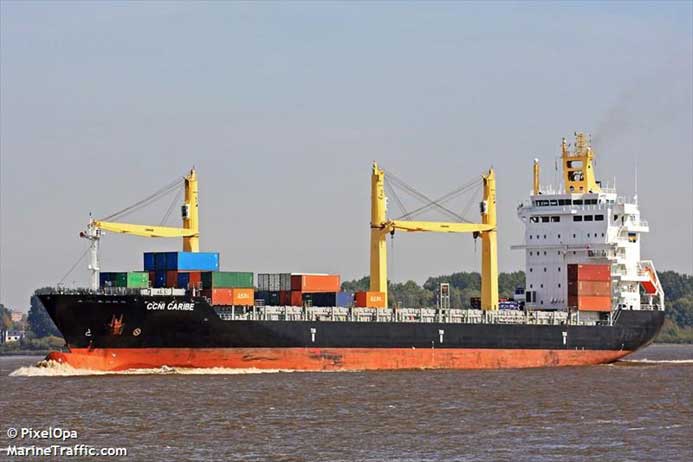
CCNI CARIBE

Maritime transport is widely considered to be the backbone of world trade.

UNCTAD’s Review of Maritime Transports 2015 report estimates that 80 per cent of global trade by volume and over 70 per cent of global trade by value are transported by sea and handled by ports worldwide.  For most developing countries these shares are even higher.  A fundamental requirement for the safe transportation of goods is adequate nautical charting. However, despite heavy reliance upon maritime transport to facilitate international trade, many developing regions do not have adequate cartographic or mapping coverage.  (Johnston, 2011)
The Greater Caribbean region has extensive commercial interests in not only merchant shipping but also fisheries, aquaculture, minerals, energy and tourism. Given such interests, there is a growing demand for reliable hydrographic surveys and coverage which provide reliable and up-to-date hydrographic information.
What is Hydrography and why is it important to the Greater Caribbean Countries?
According to the International Hydrography Organisation (IHO), hydrography is defined as:“….the branch of applied sciences which deals with the measurement and description of the physical features of oceans, seas, coastal areas, lakes and rivers, as well as with the prediction of their change over time, for the primary purpose of safety of navigation and in support of all other marine activities, including economic development, security and defence, scientific research, and environmental protection.”
Hydrography involves measuring the depth of the water and locating the position of all the navigational hazards that lie on the seafloor, such as wrecks and rocks.  This is primarily achieved through the use of specialised ships and boats operating echo sounders and sonars, as well as survey aircraft fitted with lasers.  Hydrography also involves measuring the tide and the currents.
The most well-known application of hydrographic information is for creating nautical charts to be used for navigation. Hydrographic information is required for the safe, efficient and sustainable conduct of every human activity that takes place in, on or under the sea. The IHO outlines such human activities to include:

  • resource exploitation – fishing, minerals
  • environmental protection and management
  • maritime boundary delimitation
  • national marine spatial data infrastructures
  • recreational boating
  • maritime defence and security
  • tsunami flood and inundation modelling
  • coastal zone management
  • tourism
  • marine science

Hydrographic surveying data forms the basis for Special Marine Infrastructure Data which is used for Bathymetry, Marine Geology, Water Column and Oceanography. Bathymetry is an integral component of hydrography which involves the study of the “beds” or “floors” of water bodies, including the ocean, rivers, streams, and lakes.
Hydrographic services can be seen as a both a fundamental enabler and an important boost to several aspects of economic development.  Its direct and indirect benefits are not traditionally recognized for their economic contribution given the difficult to quantify their impact.  The economic benefits of hydrography to the Greater Caribbean Region can be seen in important sectors such fishing and aquaculture. Here, the information that hydrography can provide to ensure efficient use of these resources is vital. The fishing sector employs over 142, 000 persons directly and indirectly across the Region. It also earns an estimated US $150 million in regional exports per year. Fish is also an important protein source for domestic consumption in many countries. Commercial fishermen benefit from accurate charting through safe navigation, knowledge of preferred fish habitats, locating wrecks and other hazards that can interfere with nets, and improving the speed and efficiency of on-load/offload operations. Bathymetry is a critical component of the characterization and delineation of fish habitats, as well as, the proper location and extent of aquaculture areas. (Connon & Nairn, 2010)
Mineral resources include sand, gravel, oil, and other economically important resources found on, or below, the ocean floor.  Connon & Naim (2010) assert that hydrography, by definition, characterizes the nature of the seafloor and therefore is a direct contributor to the discovery of areas of mineral resources available for exploitation.  As mentioned above, commercial shipping is the primary method of trade for ACS countries. The region has over 50 ports (varying levels of global functionality) with 132 container shipping services annually. Hydrography is therefore critical to ensuring better efficiency in business and trade facilitation.
Despite the proven value of hydrographic services, many Caribbean countries do not have adequate hydrographic capacity or access to the necessary training, given the large financial burden associated with such services. However, for those with such capacity, the provision of hydrographic support can be a great area for cooperation. The ACS supports such regional cooperation in the interest of trade. As part of the Trade Directorate’s 2nd phase of Interconnectivity for Improved Trade Facilitation and Short-Distance Maritime Transport in the Greater Caribbean(SDMT) Project, Mexico, through the Mexican Directorate of Hydrography of the Marine Secretariat (SEMAR by its acronym in Spanish) has generously offered to lead the Strengthening of Hydrographic Capacities in Mesoamerica and the Caribbean (FOCAHIMECA) Project.  This project entails capacity building (postgraduate studies, seminars and workshops), and exchange of hydrographic information (bathymetry and data processing, as well as creating, printing and distributing nautical charts of the countries of the region).
The most recent capacity building workshop was held in Campeche, Ciudad de Carmen, Mexico at the 3rd Mexican Hydrographic Convention hosted by SEMAR held 27th-29th April, 2016. The convention focused on the use and operation of equipment and hydrographic software with presentations from SEMAR as well as Mexican and international organisations and companies with expertise in hydrography.
Representatives from the following 17 countries participated: Antigua and Barbuda, Costa Rica, Dominica, Dominican Republic, El Salvador, Grenada, Guatemala, Guyana, Haiti, Honduras, Jamaica, Nicaragua, Panama, Saint Lucia, Saint Maarten, Saint Kitts & Nevis and Saint Vincent & the Grenadines.
The Association of Caribbean States remains committed to improving trade facilitation and encouraging trade relations amongst the Member States through hydrographic capacity building. For 2016, there are three more FOCAHIMECA workshops which are open to the relevant maritime and hydrographic authorities in the ACS Member States.  The ACS thus looks forward to the continued support and participation of the Caribbean in these activities and to the overall improvement of the Region’s hydrographic capacity.
Alberto Duran Espaillat is the Director of Trade Development and External Economic Relations and Cherise Trotman is the Trade Research Assistant of the Association of Caribbean States. Any comments or feedback should be submitted to feedback@acs-aec.org
(Press release courtesy of the Ministry of Foreign Affairs on behalf of the Association of Caribbean States (ACS)
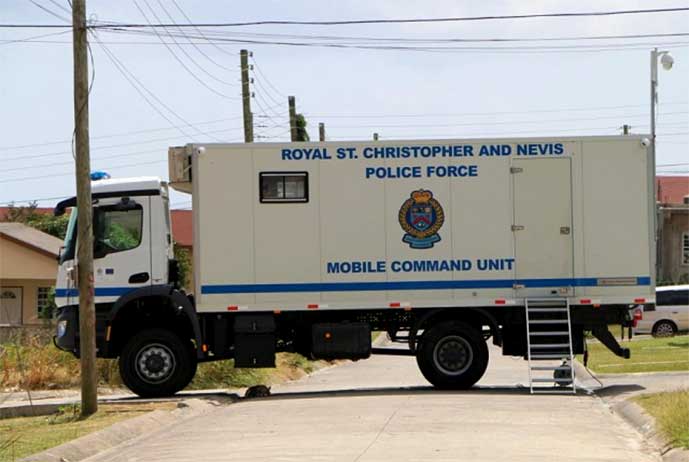
Police high command meets to address citizen safety

Police Mobile Unit

Basseterre, St. Kitts, May 21, 2016 (RSCNPF):  The High Command of the Royal St. Christopher and Nevis Police Force held an emergency strategy meeting on Saturday (May 21) to address and curtail the continuation of a number of criminal activities that have occurred over the last days.

Immediate action has been taken to put more officers in our communities.
Deputy Commissioner Hilroy Brandy said, “effective immediately, all rest days, vacation, and leave have been suspended for our officers.  All officers have been recalled to their stations and units.  Training at the Police Training Centre has been suspended in an effort to ensure greater presence on our streets in Basseterre, Charlestown and in our communities.”
He added, “stop and searches of persons of interest, vehicular check points, increased patrols both foot and mobile.”
Deputy Brandy echoed the continuing call for the community to become engaged in the fight against crime and criminal activity in our communities and asked for the support of the support of all citizens and residents. “We ask for the continuing support of our citizens and residents as we work towards ensuring citizen safety.”
“If you have information with regards to acts of crime and criminal activity, please call the Police with that information.  You can do so by calling any Police Station in the federation or Crime Stoppers, our confidential hotline, at 1-800-8477 to share the information,” added, Deputy Brandy.
(Press release courtesy of the Royal St. Christopher and Nevis Police Force)

IMF Welcomes Increase in Income Tax Threshold

IMF

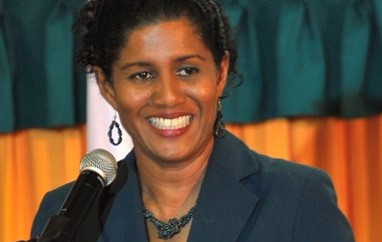
Head of the International Monetary Fund (IMF) Staff Mission Team to Jamaica, Dr. Uma Ramakrishnan, has welcomed the Government’s implementation of the amended personal income tax threshold, describing it as a “bold step” in restructuring the revenue regime.

Phased implementation of the new regime, which commences on July 1, will see the threshold increase to $1.5 million by the start of the 2017/18 fiscal year, on April next year.
Details of the undertaking were outlined by Finance and Public Service Minister, Hon. Audley Shaw, during his opening 2016/17 Budget Debate presentation in Parliament on May 12.
Speaking at the IMF quarterly review media briefing at the Ministry of Finance and the Public Service in Kingston on Friday, May 20, Dr. Ramakrishnan said the shift from direct to indirect taxes “will reduce the marginal and average tax rates for the majority of the income taxpayers, improve (productivity), and encourage workers.”
Additionally, the Mission Head said the decision to implement measures to safeguard revenues and debt sustainability were also “bold and essential”.
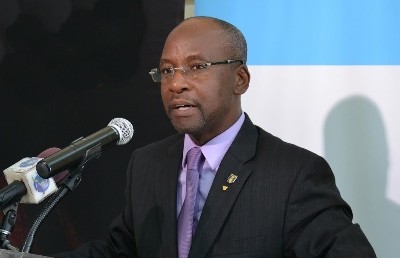
Mr. Shaw, who also spoke at the briefing, noted that the decision to revise the threshold was aimed at “promoting equity, efficiency and uniformity in the tax system.”
In thanking the IMF for its technical support provided in this undertaking, Mr. Shaw said it was the “first step in our efforts” to shift the source of revenue generation from direct to indirect taxes.
Dr. Ramakrishnan suggested, however, that the administration give consideration to strengthening provisions to protect the poor and vulnerable, prior to implementing the second phase of the threshold.

Policies Must Address Youth Unemployment

Esther Byer Suckoo
Minister of Labour, Social Security and Human Resource Development, Senator Dr. Esther Byer Suckoo. (FP)

“Any policy ramifications in Barbados must seek to reduce the growing and worrisome phenomenon of increasing youth unemployment.”

This assertion came recently from Minister of Labour, Social Security and Human Resource Development, Senator Dr. Esther Byer Suckoo, as she addressed the second breakfast meeting to discuss the draft National Human Resource Development (NHRD) Policy at the Radisson Aquatica Resort.
Dr. Byer Suckoo told the representatives from private and public sector agencies attending the meeting that the proposed NHRD policy came at a time when young Barbadians were facing rising levels of unemployment, and therefore offered a possible reprieve by creating opportunities for training and career advancement.
The aim of the policy, she explained, was to build a cadre of globally competitive citizens, catering to the youth, unemployed persons and those with special needs or disabilities.
The Senator continued: “A competent and robust workforce is the sine qua non for sustainable economic growth and releasing the potential of all Barbadians… Relevant competencies will fuel innovation and entrepreneurship…which are proven catalysts for increasing self-reliance, independence and employability.”
School leavers without workforce entry qualifications; graduates lacking communication skills; as well as adults hoping to chart a new career path, are also expected to benefit from the policy’s objective of lifelong learning.
The Labour Minister added that the policy would also allow persons to have access to a developing National Qualifications Framework, focusing on training areas including Film and Video, Animation, Events and Entertainment Technology and Crop Production.

Lashley: Support Creative Institutions

Stephen Lashley
Minister of Culture, Sports and Youth Stephen Lashley. (FP)

The incentives offered under the Cultural Industries Development Act should encourage investors to assist in the development of artistically-focused learning institutions.

This suggestion came yesterday from Minister of Culture, Sports and Youth, Stephen Lashley, as he delivered remarks at the opening reception for the Second International Dance Conference and Season of Dance at the Errol Barrow Centre for Creative Imagination (EBCCI) at The University of the West Indies Cave Hill Campus.
Mr. Lashley encouraged prospective investors to finance the arts programmes of institutions such as the EBCCI and Barbados Community College (BCC).
“Now is a good time to do it; the Cultural Industries Development Act does provide avenues for attracting investment for cultural products that are approved,” he stated.
The Minister added that it was important for organisations looking for investment opportunities to provide this kind of support to artistically-geared educational institutions, as it would also assist in the positioning of their brand.
He noted that public funding was not sufficient, and in fact, should not be the only source of assistance to such educational institutions, given their overall importance.
“They’re extremely important because we have to be able to have institutions that are focused on specific areas of building the capacities. Training is a very important aspect of it…therefore the role of the EBCCI as well as the BCC is very critical and indispensable in helping us along the journey, both at the level of cultural policies and what we’re doing with the Cultural Industries,” he said.
Stating that his Ministry recognised the importance of the cultural industries to the development of Barbados and its economy, Mr. Lashley said through the National Cultural Foundation, programmes of varying types would continue to be created to provide persons interested in the arts with opportunities to enhance their skills.
He highlighted the Dance Summer Internship Programme, which was conceptualised by Dr. John Hunte, one of the curators of the International Dance Conference.
The programme gives individuals who are enrolled in tertiary institutions and dance fraternities an opportunity to increase their skills and gain knowledge from locally and internationally trained instructors.

St. Kitts and Nevis better equipped to mitigate impacts of climate change

Denison-Paul
T. Denison Paul, Acting Manager and Water Engineer at the Water Services Department

Basseterre, St. Kitts, May 20, 2016 (SKNIS): Farmers and residents in St. Kitts and Nevis are better equipped to withstand climate change-related impacts such as extreme droughts and flooding due to the implementation of climate-smart technologies.

This was achieved under the US$9.5 million “Rallying the Region to Action on Climate Change (RRACC) Project in the Organization of Eastern Caribbean States (OECS).
During the official closing ceremony on (May 18) at the St. Paul’s Primary School, for the St. Kitts leg of the RRACC project T. Denison Paul, Acting Manager and Water Engineer at the Water Services Department, said the Department of Environment was tasked with the implementation of the project. The Water Services Department offered technical assistance and the OECS was responsible for oversight.
“When this project was conceptualize several years ago, Kittitians paid the lowest rate for water in the region [and] we still do,” said the acting manager, while noting that the average Kittitian was still of the view that the island had an infinite supply of freshwater. “There was little or no onsite water storage at homes or businesses. Rain water harvesting was a foreign and laughable idea.”
Mr. Paul noted that the project was comprised of several components. These included formulating a water conservation plan; training of local water auditors; the Do Just One Thing Public Awareness Campaign; and the retrofitting of three public institutions with climate-smart tools.
The Honourable Ian Patches Liburd, Minister of Public Infrastructure, Post, Urban Development and Transport, said that the government was extremely pleased to facilitate the project and it looks forward to phase two.
“I’m happy as well that the retrofitting has derived some results in the reduction of water usage,” said Minister Liburd. “And I hope and trust and I know that we are going to replicate this project throughout the length and breadth of the Federation.”
Laura Griesmer, U.S. Deputy Chief of Mission to Barbados, the Eastern Caribbean and the OECS, said that approximately US$1.4 million in assistance was dedicated to building climate change resilience within the Federation’s water sector.
In addition to implementing water-efficient solutions, citizens and residents alike took initiatives to reduce water use, resulting in valuable water savings in 2015. A master drainage plan was developed in Nevis and the island was provided with early warning systems to track floods through the installation of a Flood Early Warning and Data Analysis Station. This included the installation of four flood monitoring stations in vulnerable areas and one central data analysis hub.
The programme was funded by the United States Agency for International Development (USAID) and implemented by the OECS Commission.

SLBS Metrology Lab tour

Metrology Day

Physics students from six secondary schools will visit the National Metrology Institute in observance of World Metrology Day.

Saint Lucia will join the rest of the world in marking World Metrology Day today, under the theme “Measurements in a Dynamic World.”
The Saint Lucia Bureau of Standards (SLBS) which is also the National Metrology Institute is marking the observance with a focus on students in science – specifically Physics.
The SLBS has invited Form 4 (Grade 10) Physics students in the north of the island from six secondary schools to visit its Metrology Laboratory where physics is applied in the verification and calibration of measuring instruments. The SLBS will extend the visit to schools in the south in October, during the observation of World Standards Day.
Metrology is the science of measurement. Metrology and the use of the International System of Units or metric system of measurement is part of the Physics syllabus of the Caribbean Secondary Education Certificate (CSEC) administered by the Caribbean Examinations Council (CXC).
It is hoped that the visit to the Metrology Laboratory will inspire the next generation of metrologists, physicists and engineers.
The commemoration of World Metrology Day 2016 is particularly poignant for the SLBS. In November 2015 Saint Lucia became the first Caribbean country and smallest nation in the world to receive the prestigious International Organization of  Legal Metrology (OIML)  Award for Excellent Contributions in Legal Metrology in Developing Countries. Legal metrology is the application of  legal requirements to measurements and measuring instruments. The OIML is the world’s premier intergovernmental treaty organization for legal metrology.
The Saint Lucia Bureau of Standards is keen to work with students, to support interest in science, and to raise awareness and promote an appreciation for quality and standards.

St. Alban's Students Learn Computer Coding

Students Learn Computer Coding
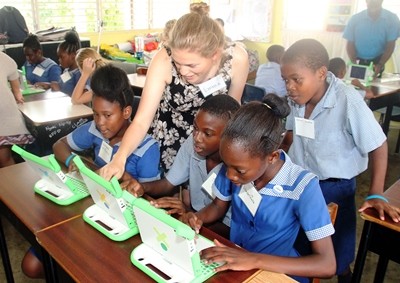
St. Alban's students learning about coding from a representative of the Columbus Girls School this morning. (C.Henry/BGIS)

Students at St. Alban’s Primary School in St. James are receiving training in coding, thanks to a visiting delegation from Columbus Girls’ School, Columbus, Ohio, United States.

The training, which started today for Class Threes and Fours, will see them being taught coding via the use of the XO Touch laptop tablet, a specially designed computer for children.
It is a small, robust and attractive piece of technology which is Wi-Fi enabled and allows for collaboration among students in the classroom.
Head of the delegation from Columbus Girls’ School, Christine Murakami, said it was not their first project outside the US, as they had also assisted the US Virgin Islands and Ghana. She added that her team had as its objective to see others, especially girls everywhere, understanding the value of Computer Science.
Stating that they were excited about teaching in Barbados she said: “We are going to specifically teach the programme called Scratch, designed to be an introduction to computer programming for kids… It is very kid-oriented; it is very easy to understand and you don’t have to type or worry about mis-spelling your words because everything is drag and drop and it’s like fitting puzzle pieces together.”
She added this would be followed next week by the students concentrating on a project for the island’s 50th Anniversary of Independence.
Information Technology Coordinator of the St. Albans School, Curtis McConney, said it would allow students to create something towards celebrating Independence at the school.
“We are doing two things. We are trying to get them to think logically, that is where the [computer] programming comes in, but we are also trying to integrate a part of our social studies syllabus and a part of our heritage as well, in bringing forward the 50th Anniversary celebrations within this project,” he explained.
Pointing out that the computer programming was the first of its kind in a primary school, Mr. McConney added: “Coding is a part of everything in ICT (Information Communications Technology). For every programme that exists it had to start with code. Code is the mortar or the foundation of every programme and something as simple as the operating system on your phone – for instance, Android – is made up of code….the coding is what makes ICT possible…”
According to him, St. Alban’s was thinking of a game for the 50th Anniversary of Independence that would either be in the form of a multiple choice or True and False and based on facts about Barbados.
The thirty-five XO Touch laptops brought to the island by the delegation will all remain in Barbados at the disposal of the National Council for Science and Technology, for continual training of local primary school students.

Residents accept Gaboo Lands offer

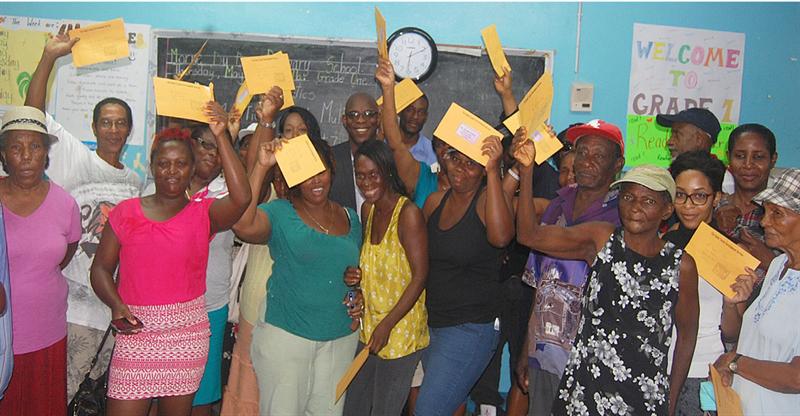
Gaboo lands residents

The Gaboo Lands Rationaliza¬tion Project involves the subdivision of the land into 34 residential lots.

Residents of Gaboo Lands at Morne du Don are now certain about the future of the unplanned development.
Min­ister for Physical Development, Housing, and Urban Renewal, Hon. Stanley Felix, convened a com­munity meeting with Morne du Don residents last Thursday to provide in­formation concerning the status of the Gaboo Lands Rationaliza­tion Project.
The project, initiated and funded by the Government of Saint Lucia, involves the subdivision of the land into 34 residential lots in accor­dance with the approved ratio­nalization plan for the area.
On May 12, offer letters were distributed to existing residents for land ownership and pay­ment options for the purchase of the aforementioned lots. Residents attended in large num­bers and after being presented with the various options, each opted for a solution that best fit their needs.
Following the meeting, residents said they were satisfied that the min­istry had taken their current and future needs into consideration. They now look forward to be­ing able to plan their futures.

Local Rum Boost At BNC 2016

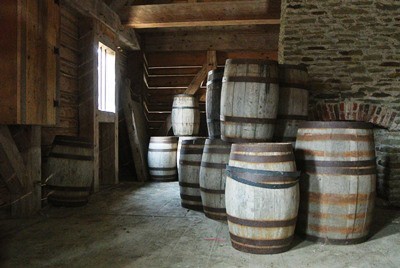
Barrels of rum

Barbados’ rum products will get major exposure at the upcoming Barbados Network Consultation (BNC) 2016, the 4th Diaspora Conference, which will take place from July 31 to August 5 at the Lloyd Erskine Sandiford Centre.

Speaking during a press conference today to launch the BNC at her Ministry, Minister of Foreign Affairs and Foreign Trade, Senator Maxine McClean, explained that the idea was to create a rum café which would highlight the significance of the rum industry to this country and what it offers in terms of export opportunities.
Adding that Barbados was often called ‘the home of rum’, the Minister said that while Barbados was currently celebrating 50 years of Independence, the rum industry pre-dated Independence, and persons needed to fully appreciate and understand the role the industry had played in the development of this country.
Other highlights of the conference will include a Youth Career Showcase to be held on Wednesday, August 3. The Minister noted that this would be a highly interactive event, focusing on Science, Technology, Engineering and Mathematics (STEM), as well as the arts.
Senator McClean also revealed the theme for this year’s BNC was One Nation, One Family – Celebrating 50 Years of Independence – Shaping Global Citizens. She pointed out that this theme was chosen as part of the brand for the consultation, which was One Nation One Family, and encompassed Barbadians who were on island, across the diaspora, had never left Barbados, or had left and returned.
“This year we are celebrating 50, and most importantly because it is a diaspora conference, a conference which brings us all together, it also is seeking to recognise a very special characteristic and a special goal which is to shape global citizens…Barbados has a very significant population outside of Barbados, significant in number, but also significant in its contribution to its adopted home.
The idea is to maintain close ties with all Barbadians…and to provide clear mechanisms through which Barbadians at home and abroad can engage each other and contribute to the ongoing development of Barbados,” she clarified.
The BNC is described by officials at the Ministry of Foreign Affairs and Foreign Trade as the premier conference for Barbadians, Barbadian descendants and friends of Barbados abroad and at home. It is expected to create opportunities to share information and ideas, for creative initiatives to be discussed, and for Barbadians, both at home and in the diaspora, to network.
Persons may go to the official website of the Barbados Network Consultation 2016 for further information on the conference or to register. Queries can be sent to bnc2016@foreign.gov.bb.

Audio Theme