The organization advocates increased access to advanced degree programs, inter-professional education and lifelong learning opportunities for the region’s nursing workforce.
On the anniversary of Florence Nightingale’s birth, May 12, the Pan American Health Organization/World Health Organization (PAHO/WHO) observed International Nurses Day.
For the observance, PAHO called on member countries to transform nursing education as part of efforts toward universal health.
“Nurses are fundamental to health systems delivering the vast majority of healthcare services, yet our region is facing serious nursing shortages, and we are not taking full advantage of the nursing workforce that we have,” said PAHO Director Carissa F. Etienne. “We need to increase the numbers of nurses but in addition, we need to improve nursing education and practice to fully develop and utilize nurses’ skills, knowledge and experiences.”
Nurses account for 60-89 percent of the healthcare workforce and deliver up to 90 percent of all healthcare services. They serve as frontline providers in health promotion, prevention, treatment and rehabilitation in both well-served and underserved areas.
Currently in Latin America and the Caribbean, most nurses are trained either at the Baccalaureate level as licensed or registered nurses, or as auxiliary and technical nurses with Associate degrees. Graduates of masters programs in nursing typically end up teaching or in management rather than in clinical care. Only 10 countries in Latin America and the Caribbean offer doctoral programs for nurses, three-quarters of which are concentrated in Brazil.
As a result, PAHO/WHO urged its member governments to transform nursing education and practice in their countries by updating nursing curricula to better address the primary health care needs of the population; incorporating inter-professional education and greater focus on primary health care into nursing curricula; instituting programs for advanced practice nurses (APN) and implementing a key role for them in primary healthcare services; promoting higher education and advanced degrees for nurses; and by creating lifelong educational opportunities for nurses.
Experts said these changes help reverse the healthcare provider shortage, strengthen the nursing workforce, and speed progress toward universal health by increasing the cost-effectiveness, efficiency and quality of health services.
As part of its technical cooperation in this area, PAHO currently facilitates country-to-country partnerships dedicated to building competencies for nursing faculty and is supporting the development of a set of nursing competencies for APN education. In addition, PAHO coordinates an annual Advanced Practice Nursing Summit, where nursing leaders from throughout the Americas gather to promote the implementation of the APN role in primary health care.
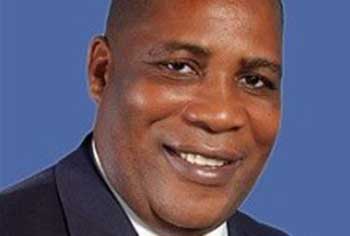
Minister of the Environment and Drainage, Dr. Denis Lowe. (FP)
Minister of the Environment and Drainage, Dr. Denis Lowe, has been nominated as Vice President to represent the Latin America and Caribbean region on the Bureau of the 2nd United Nations Environment Assembly (UNEA).
That nomination took place in Cartagena, Colombia, during the 20th Meeting of the Forum of Ministers of Environment of Latin America and the Caribbean in March.
The Minister said he was looking forward to advancing the region’s environmental and sustainable development agenda.
“I view my term on the Bureau as an opportunity to deepen relations and cooperation between English and Spanish-speaking countries of Latin America and the Caribbean region,” he stated.
During that meeting, Dr. Lowe called for the region to be “true to its people, the planet, peace, prosperity and partnership”, and stressed that citizen engagement was a critical factor in the process of achieving the national sustainable development goals.
He also reminded his ministerial colleagues that the effective implementation of the environmental sustainability dimension of the recently-adopted Agenda 2030 for Sustainable Development required political champions for environmental sustainability at the national level.
Dr. Lowe is presently heading a team at the upcoming global environment policy-making forum which gets under way in Nairobi, Kenya, from Monday, May 23, where approval for his nomination will be sought.
Once approved, Dr. Lowe will hold the office for two years, and join his colleague, Minister of the Environment of Costa Rica, Dr. Edgar Gutierrez Espeleta, as the new representatives for the Latin America and Caribbean region group (GRULAC). Mr. Espeleta has been nominated as President to the UNEA.
The Forum of Ministers of Environment of Latin America and the Caribbean was established in 1982 by the United Nations Environment Programme as the political forum for Environment Ministers of the region.
The Forum analyses and reviews critical issues on the international environment agenda, and seeks to develop regional strategies to address them. It acts as the region’s environment policy-making body. Barbados served as President of the Forum from 2000 to 2002.
Effective Monday, May 23rd 2016, traffic will be redirected for the reconstruction of the West Bridge.
Just a month ago, the Hon. Prime Minister Doctor Roosevelt Skerrit, at a ground breaking ceremony for the reconstruction of the West Bridge announced that work would begin this month. A contract for $18m was signed with NSG Management and Technical Services Ltd for the construction of the bridge.
Assistant Superintendent of Police, Richmond Valentine, gave a demonstration of the new traffic route to take effect on Monday, May 23rd.
The police also intend to move bus stops around the city to accommodate the construction of the bridge.
The Portsmouth, Salisbury and Marigot bus stops will remain on River Bank
St. Joseph Bus Stop will be relocated to River Street, the Mahaut bus stop to Great George Street and Goodwill and Fond Cole bus stops will remain as is.
Kalinago Territory and Castle Bruce bus stops will be moved to the bus lot opposite Raffoul’s Hardware in Pottersville.
Assistant Superintendent of Police, Richmond Valentine, is advising motorists that they will experience some level of inconvenience. He cautioned them to drive with care, attention and consideration for other road users.
Officer Valentine is appealing to motorists to comply with the traffic signs that will soon be placed at the affected locations.
May 20, 2016: On Thursday 19th May 2016 the Minister of National Security Major General (Ret’d), the Honorable Edmund Dillon gave the Feature Adress during the Trinidad and Tobago Police Service Passing Out Exercise for Batch no. 527 at Golden Grove Prison at 3PM.
Read the full transcript of the Minister’s speech below.
“Good afternoon
It gives me great pleasure to address you today on this momentous occasion. I heartily congratulate you the one hundred and eighty-three (183) recruits Batch #527. Let me formally welcome each of you to the ranks of this great institution. You will know better than anyone the joy of this feeling, a sense of accomplishment after completing a rigorous training programme gearing towards enhancing your intellect as well as instilling discipline and fortitude.
Let me also applaud your instructors who administered over your training and character development in an attempt to pass on to you the culture of the Prison Service and prepare you to perform as expected as men and women of honour. They will feel a sense of pride looking on at you in formation before us in a most magnificent display.
I take the opportunity to pay tribute also to your family, friends and well-wishers for the support and encouragement they would have no doubt extended to you upon your decision to apply to the service and throughout your training period. This support however does not end
today for these recruits will need the continued encouragement of their loved ones as they press on in serving the country through these challenging times.
Recruits, as you proudly join the ranks of the Trinidad and Tobago Prison Service, I thank each of you for choosing to serve your beloved country in this manner. We remain fully aware that the vocation of a Prison Officer can be dangerous. You enter the service at an especially volatile time, a time when our nation experiences an upsurge in criminal activity, some of which emanate behind prison walls.
As guardians of our democracy you are called to duty and are tasked with the responsibility to protect the society and prevent crime by facilitating opportunities for the rehabilitation of offenders in a safe and secure environment. Your charge includes ensuring the discipline of inmates, searches and seizures. I re-commit my support to you in addressing the reduction of the risks you face in executing this charge as the country looks to you to uphold the high standards expected and beyond.
I tell you today as your Minister of National Security that the Government of Trinidad and Tobago sees the Trinidad and Tobago Prison Service as an important arm of national security. As such my Ministry has identified as a matter of priority, the need to address the matters related to prison reform by developing a Policy on Prison Management that will address the Overall Correctional System; Physical Facilities; Health Services at the prisons; Rehabilitation of Offenders; Security management services and Prison Officer security.
We will pursue this primarily through a two-pronged approach of policy development and infrastructural upgrade.
A new policy for prison management is being framed to address prison legislation and prison conditions. This policy will aim to transform the current penal system to bring it on par with contemporary international laws and best practices. The intention is to develop a system that provides an environment in which inmates have a real opportunity to turn their lives around, thereby reducing the rate of recidivism.
The Government of Trinidad and Tobago and leaders in Criminal Justice understand that inmates also require help to move forward with their lives. In fact, for greater success rates after their release from prison, this Government is looking at a reintegration and reformation network of committed agencies and individuals who are dedicated to helping those released from incarceration to experience life as productive law abiding citizens.
Effecting this requires public policy to overhaul the penal system, as well as collaborating with organizations who work tirelessly to get inmates to turn their lives around, thereby reducing the syndrome of the proverbial revolving door.
Consistent with this policy approach and my Ministry’s commitment to adopting a Reintegrated Penal Policy we will work alongside the Attorney General and Minister of Legal Affairs and his team to reassess efforts by revisiting the existing Prison Rules of 1943, introducing a system of parole, community corrections, a youth justice system, probation and mediation – all elements of a system that is restorative.
We have all agreed that very high and growing prison populations are simply not sustainable. Given that a significant amount of crimes are committed by repeat offenders, it is self-evident that Rehabilitation of offenders and their effective preparation for re-entry into the society is critical for a reduction in recidivism and crime-management generally.
In addition to our commitment to policy improvements, my Ministry pledges continued support the Commissioner of Prisons in important infrastructural and equipment upgrades aimed at improving delivery systems in the Trinidad and Tobago Prison Service, geared towards greater security conditions for prison officers are well as creating more humane conditions for inmates.
At this juncture I must commend the Commissioner of Prisons on the on-going work of the Trinidad and Tobago Prison Service in their mandate to hold and treat offenders, in leading a continued administration of cognitive, technical and vocational rehabilitative programmes at institutions under the remit of the Trinidad and Tobago Prison Service, aimed at equipping offenders for reintegration into society.
A number of unsung programmes are conducted in the nation’s prisons that enable inmates to develop themselves in the areas of academics and technical vocation. Programmes such as music, art, agriculture, sewing and tailoring just to name a few.
The Trinidad and Tobago Prison Service has been collaborating over the years with several Non-Governmental Organisations (NGOs), such as Vision on Mission, with respect to rehabilitative and reintegration efforts. Several programmes are conducted within the prisons in this regard. I therefore also thank these NGOs for their willingness and efforts. Your good work is highly appreciated.
While we make interventions in creating a more humane environment for inmates we take recognition that such an environment also redounds to the possible positive well-being of our Prison Officers who are tasked with the responsibility to hold and treat offenders in a manner that evokes transformation.
In examining holistic reform we have not forgotten our Prison Officers. The Ministry has heard your concerns and once again commit to ensuring your safety and security by addressing the needs identified.
I wish to reassure the Prison Service today of the Ministry’s support, commitment and deep appreciation of the efforts and sacrifices Officers have made over the years and on a daily basis for this country. I assure you that this Government will continue to effect measures aimed at improved security for our prison officers.
We intend to focus considerable attention in the coming years, on ensuring that the Prison Service has the required manpower, access to modern security methodologies, equipment and physical infrastructure to carry out its mandate professionally and efficiently.
The Ministry of National Security remains committed to making proactive interventions to protect the people of Trinidad and Tobago.
From an operational perspective the Ministry has administered over a number of programmes as a preventative measure which may redound to decreasing future prison population such as:
1. The Military-led Academic Training (MILAT) programme, an initiative of the Trinidad and Tobago Defence Force and
2. The Civilian Conservation Corps.
3. The Trinidad and Tobago Cadet Force.
4. The Citizen Security Programme.
5. The National Mentorship Programme
In the same token of preventative initiative’s let me thank the Commissioner and his team for their work in the Prison Youth Clubs as we create a new consciousness in our youth by mentorship so that they are led away from a life of crime and become productive citizens to the benefit of our economy and development.
Ladies and Gentlemen having identified possible policy prescriptions, reform mechanisms and preventative measures you will understand that prison reform is no easy feat or overnight task.
Therefore my Ministry commits to collaborate with criminal justice institutions in addition to the prison service, such as the Judiciary, Director of Public Prosecutions and Police Service for best results going forward.
Recruits, view today as the beginning of a remarkable journey. When the going gets though and the challenges mount, remember that you have answered to call to serve with fearlessness, compassion and integrity. Stay the course and walk the straight and narrow always. From this day you assume duty, you stand in a position of great influence as you promote change among inmates and help make a positive difference in reforming their lives.
Serve with pride, serve with dignity and upright deportment, so that you set a fine example for those that aspire to join the prison service and set about the wheels in motion to encourage the youth to serve this nation as you do.
I thank you and may God continue to bless our great nation.”
The agriculture minister predicts an increase in agriculture business and the use of local foods.
Agriculture Minister, Moses Jn Baptiste, has said that he is pleased with the performance of the sector, despite a few downsides.
“We have seen agriculture increase value added by seven percent in this year’s estimates and seen double digit growth in almost every area,” he said, nothing that there was a slight decrease in chicken and fish landings.
Jn Baptiste said that the progress now recorded in terms of sales to hotels and supermarkets, has a lot to do with efforts made to standardize the operations of farmers. He explained that as a result of the long-running farmer certification program, farmers are more aware of what they need to do to produce quality food; and that there is a greater awareness of standards, due largely to the work of the Saint Lucia Bureau of Standards to develop product standards for the agriculture industry.
The minister opined that Saint Lucia can look forward to an increase in the consumption of safe, healthy local food, and an increase in the number of businesses in agriculture. He spoke of an increase in the use of local food in the school feeding program, and the need for emphasis on essential oils.
The minister said that millions of dollars plus employment can also be had from chicken production.
Statement by the Office of the Prime Minister of St. Kitts and Nevis, Dr. the Honourable Timothy Harris Re: Increased Fees at Commercial Banks
By law, it is the role of the Eastern Caribbean Central Bank (ECCB) to supervise and regulate all banking activity within the Eastern Caribbean Currency Union (ECCU), and the Governments within the region do not have any authority to regulate bank charges and fees. Those are properly contractual matters between banks and their customers, and are informed by prevailing market conditions.
The Monetary Council and the Board of Directors govern the work of the ECCB. The Monetary Council comprises eight Ministers of Finance, one from each member government within the Union. Prime Minister Dr. the Honourable Timothy Harris, who is the Minister of Finance in St. Kitts and Nevis, has sat on the Monetary Council since February 2015. It is also worth mentioning that the issue of bank fees is a longstanding one that has come before the Monetary Council on a number of occasions, including during the tenure of the former government.
Indeed, at the ECCB Monetary Council’s 80th meeting on October 31st, 2014, according to the issued Communiqué, “Council expressed concern with regard to commercial bank charges and indicated that some action needed to be taken to address this matter.” In attendance at this meeting was the Minister of Finance of St. Kitts and Nevis who is now the leader of the Opposition.
My Government has been made aware that banking fees have now been increased and/or new fees introduced at some commercial banks operating within St. Kitts and Nevis and the wider Caribbean region. These increases and those proposed have led to unease among the population, and some customers are exercising their right to withdraw their funds. The fee structures being proposed in St. Kitts and Nevis are similar to those also being proposed in other territories of the Caribbean, and customers in some of those jurisdictions have responded also with unease.
The politicization of this matter is therefore regrettable, and must be seen as a desperate and irresponsible attempt to undermine public confidence in the country’s banking system, which the International Monetary Fund (IMF) just last week commended as being stable.
The Team Unity Government’s legislative agenda also received excellent reviews from the IMF. According to the IMF, “Implementing the new Banking Law, ratified by the Parliament in 2015, will raise capital cushions and enable the ECCB to conduct consolidated and risk-based supervision. Further strengthening of the supervisory frameworks would help capture weaknesses in growing market segments.”
It also bears mentioning that all of the Opposition Members of Parliament vociferously opposed the passage of the Banking Bill, which was gazetted in August 2015. The Banking Act, which is uniformly in force throughout the ECCU, ensures the safety and soundness of the financial system by enhancing the powers of the ECCB.
At its 83rd meeting on November 6th, 2015, the Monetary Council agreed that, in the short to medium term, a Working Group should be formed to review commercial bank fees and charges, and that moral suasion should be used to encourage restraint in the banks’ setting of fees. It was also agreed that a revision of the ECCB’s Code of Best Practice for financial institutions licensed under the Banking Act was needed in order to make specific sections legally enforceable. It was further agreed that, in the long term, an Office of the Ombudsman for Financial Services should be established.
I am advised that on or about May 3rd, 2016, the Eastern Caribbean Central Bank announced that it had set up a committee to examine the issue of commercial bank fees. This committee was formed at the behest of this Government, as well as colleague Governments in the Eastern Caribbean Currency Union.
My Government regrets any inconvenience or hardship caused to our public by any new or increased fees at commercial banks and urges the recently established ECCB Committee to expedite its consideration and report on this important issue.
Whilst we await the work of the ECCB Committee, I appeal to our citizenry to remain calm and to exercise prudence in dealing with their private banking affairs. All banks operating within St. Kitts and Nevis are financially strong and are well regulated by the ECCB. The people of St. Kitts and Nevis can be assured that the health of our banking sector is good and that this Government, having already passed and shortly to bring into force the new Banking Act, will continue to take the necessary legislative and policy actions to support the ECCB and the banking sector in St. Kitts and Nevis.
I also urge all persons of whatever political persuasion, and commentators, to be prudent and sensible in their words and actions, bearing in mind that the issue of commercial banking fees predates this Unity Government. Irresponsible utterances and actions will do nothing to ensure that our banking sector remains strong and continues to serve the people of St. Kitts and Nevis.
(Press release courtesy of the Office of the Press Secretary)
Deputy Prime Minister, Sir Louis Straker, is leading a delegation of four to the Republic of China on Taiwan for the Inauguration Ceremony of the 14th President and Vice President of the Republic of China on Taiwan.
The Delegation also includes – Sir Louis Straker’s wife, Linda Straker; Minister of Health, Wellness and the Environment, Luke Browne and Parliamentary Secretary in the Ministry of Education, Deborah Charles.
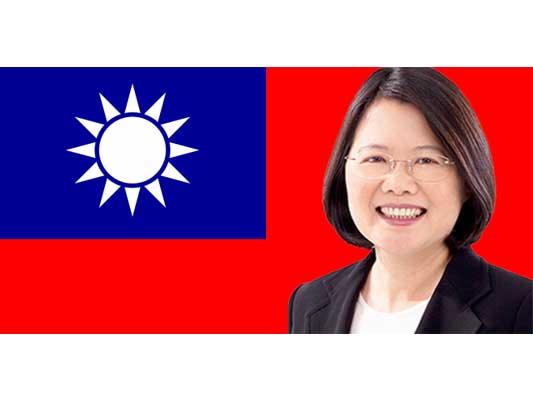
The new President, Tsai Ing-wen and Vice President, Chen Chien-jen, will be swearing in Saturday, May 21st, at the Presidential Office Building in Taipei. St. Vincent and the Grenadines and the Republic of China on Taiwan established diplomatic relations in August 1981.
May 20, 2016: The Consumer Affairs Division (CAD) has embarked on an extensive education drive to ensure that consumers are aware of their rights and responsibilities. Given that we live in a free market economy, and a world driven by consumers, the power is yours to make educated choices.
The first quarter of 2016 saw the resolution of complaints (at a value of $893,233.92) on behalf of consumers, by CAD. A total of one hundred and ninety-two (192) complaints were received during the period January 1, 2016 to March 31, 2016, with fifty-seven (57) being closed as at March 31, 2016. Of the one hundred and ninety-two (192) complaints, one hundred and one (101) were reported at the Port of Spain office, fifty-two (52) at the San Fernando office, fifteen (15) at the Arima office, eleven (11) at Couva office, seven (7) at the Penal office, five (5) Point Fortin office and one complaint was reported via email. Compared with the previous year, January – March 2015, there was a decrease of 14.3% in reported complaints.
The category with the most complaints for the first quarter of 2016 was Category D–Electronic Equipment with fifty-nine (59) complaints of the total. This was followed by Category B – Major Appliances with forty five (45) of the total number of complaints. Other categories with a significant number of complaints were Category J – Construction & Hardware, with eighteen (18) complaints and CategoryA – Motor Vehicles and Accessorieswith thirteen (13) complaints.
The Division also received and treated with a total of six hundred and seventy-eight (678) enquiries for the period.
As we seek to continue providing redress where redress is due for the consumers of Trinidad, we continue on our drive to educate you, the consumers to make informed purchases.
We invite you to reach out to the Division and request a visit, to be educated about your rights and responsibilities. Contact us at 800-477, Facebook keywords consumeraffairstt or email us atconsumeraffairstt@gov.tt
St. John’s, Antigua and Barbuda: May 19, 2016 A two day Regional Workshop on Intellectual Property opened in Antigua and Barbuda on Thursday. The Competitive Business Unit (CBU) of the OECS Commission has orgainsed the seminar at the Heritage Hotel in St. John’s.Close to 25 representatives of businesses and entrepreneurs in music, film, fashion, agro-processing, light manufacturing, and professional services from across OECS Member States are attending the seminar which targets SMEs in the creative and goods sectors.
Business Development Officer at the CBU for the Creative Industries Sector, Sobers Esprit sees the area of intellectual and industrial property as being critical to the creation of wealth and adding value to the production of goods and creative industries especially at a time of increased global competiveness in these sectors: “The critical need to protect the intellectual property of OECS businesses and to be able to use IP to enhance the competiveness of our businesses as we make greater efforts to access markets across the globe for our products and services. We need therefore to build capacity of our entrepreneurs in ways to use and better manage their IP assets in-order to take full advantage of their creative and intellectual capital.”
The OECS workshop on Intellectual Property is serving as a means of increasing the knowledge and skills of entrepreneurs in various aspects of intellectual and industrial property rights to include trade-marks, industrial designs, trade secrets, patents, geographical indications inclusive of recipes, new inventions, phrases and symbols, copyright and related rights to include collective management and protection for music, film, fashion, handicraft and performing arts and other artistic works. It will provide insights into ways for SMEs to be able to register and protect their IP assets and to acquire new knowledge on ways to manage these assets to maximize their income and generate revenue from their creative endeavours.
The workshop is being facilitated by Trinidadian entertainment and copyright attorney Carla Parris with the support of the Deputy Registrar of the Antigua and Barbuda Intellectual Property Office, Conliffe Clarke. There will also be a presentation on the history and role of collective management and the role of ECCO by Mc Carthy Marie of the Eastern Caribbean Collective Organization for Music Rights (ECCO).
SMEs will have the opportunity to join the live broadcast online while other interested persons have been asked to contact the CBU for more information.
At the end of the workshop, the CBU hopes to establish an online forum to continue dialogue on the subject and to get more SMEs engage in an on-going dialogue to address gaps and critical issues which requires clarification and further insights.
This two day Regional Workshop on Intellectual Property is part of the programme of activities under the 10th European Development Fund (EDF) Regional Integration for Trade of the OECS.
Ms. Christine Lagarde, Managing Director of the International Monetary Fund (IMF), issued the following statement today ahead of the first World Humanitarian Summit being held in Istanbul, Turkey, May 23–24:
“The need for humanitarian assistance has reached levels not seen since the Second World War, leaving millions of people in desperate need of support. This is one of the biggest challenges of our time. The need for fundamental change in how humanitarian aid is delivered to ensure more effective use of scarce resources is now widely recognized.
“The UN Secretary-General’s decision to organize the first-ever World Humanitarian Summit is especially timely and deserves the full support of the international community. We all need to step up our game by boosting financial support for humanitarian relief from all countries that can afford to contribute, and by improving the organization and delivery of humanitarian assistance.
“To support global efforts aimed at improving the delivery of humanitarian aid, the IMF will leverage its track record of moving quickly to support governments facing humanitarian crises. The IMF can:
Speedily disburse financial support through special facilities that do not require full economic programs—the Rapid Financing Instrument and Rapid Credit Facility. Countries that have benefited from such support in recent years include Nepal and Vanuatu.
Increase the amount of financing provided to countries with whom we already have lending arrangements, adjusting economic programs to accommodate the new demands on budgets and foreign reserves—as we have done with Jordan.
Use its Catastrophe Containment and Relief Trust to provide financing to low-income countries to meet debt service payments, as was done for Guinea, Liberia, and Sierra Leone in the wake of the Ebola outbreak.
Assist governments in designing macroeconomic policies to contain the economic fallout from humanitarian crises. This can help to provide bilateral donors with the confidence that the effectiveness of aid programs is not undermined by macroeconomic instability.
“The IMF is deepening its engagement with fragile countries by helping them build institutions that can deliver key economic services, from putting in place efficient tax systems to implementing sound public investment. We are also assisting countries exposed to natural disasters in designing macroeconomic strategies that enhance their resilience and expand their room for maneuver to respond to adverse shocks.
“Humanitarian crises require action on multiple levels—preventive engagement, relief provision, protecting and empowering those affected by crises to rebuild livelihoods. The IMF is committed to playing its full part, working collaboratively with governments and international agencies, using its financial resources, policy expertise, and technical assistance.”



 A contract for $18m was signed with NSG Management and Technical Services Ltd for the construction of the bridge.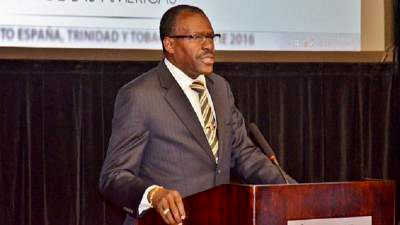



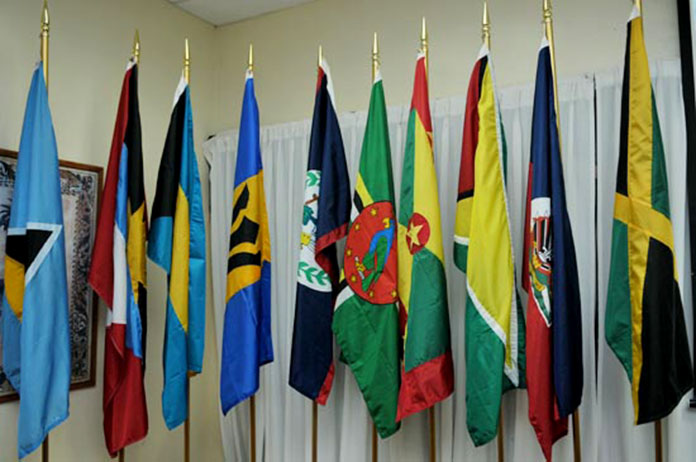
 St. John’s, Antigua and Barbuda: May 19, 2016 A two day Regional Workshop on Intellectual Property opened in Antigua and Barbuda on Thursday. The Competitive Business Unit (CBU) of the OECS Commission has orgainsed the seminar at the Heritage Hotel in St. John’s.Close to 25 representatives of businesses and entrepreneurs in music, film, fashion, agro-processing, light manufacturing, and professional services from across OECS Member States are attending the seminar which targets SMEs in the creative and goods sectors.